
October 11, 2026 · 9 min read
Amsterdam Anne Frank Walking Tour
From the Hollandsche Schouwburg through the old Jewish Quarter, past the Dockworker and the Dam, to the Anne Frank House on the Prinsengracht.
589

October 9, 2026 · 12 min read

 Teman jalan gratis
Setiap tur juga berjalan sebagai jalan kaki kelompok terjadwal yang dapat Anda ikuti di aplikasi.
Tur audio lainnya di Hoi An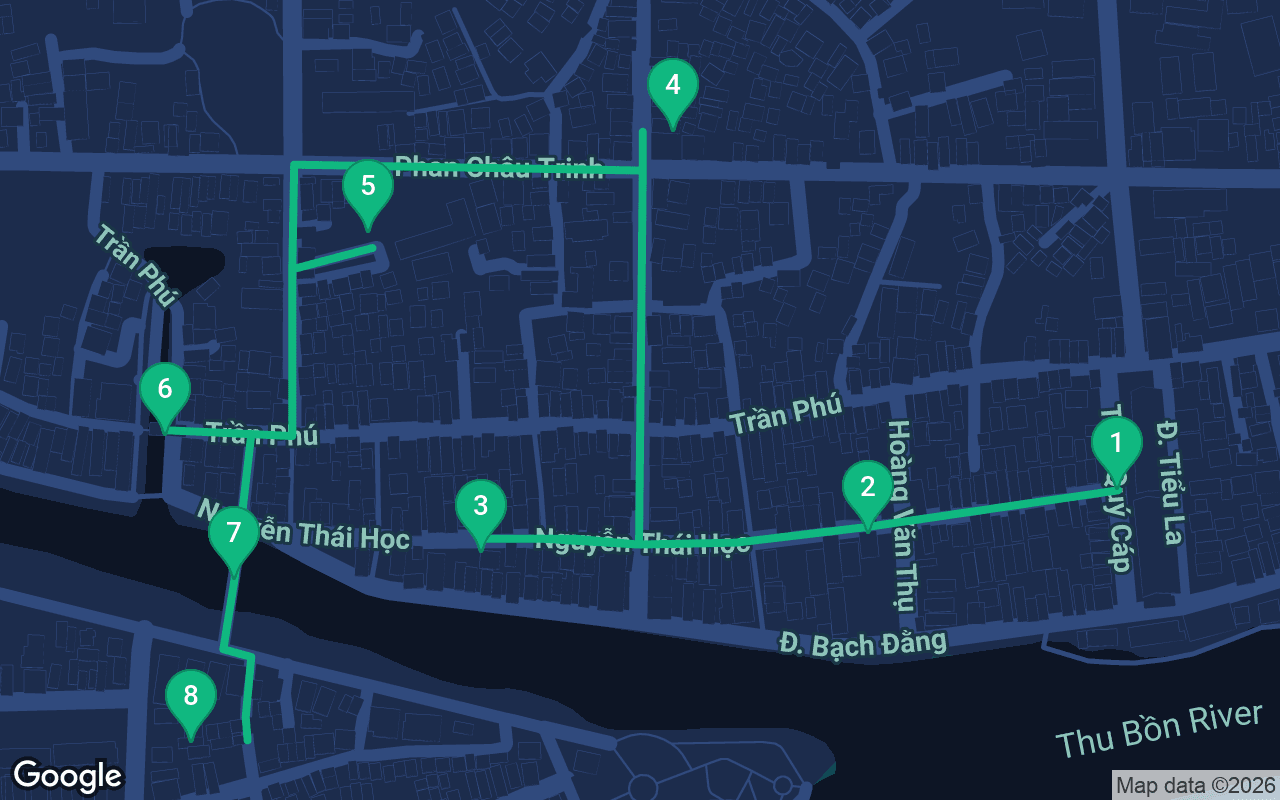
Sekitar 1,5 km, kira-kira 20 menit dengan ritme santai.
Tur ini dilengkapi narasi suara
Tekan putar pada 3 pemberhentian pertama untuk mendengarkan demo narasi 30 detik di sini. Di aplikasi, pengantar dan pemberhentian-pemberhentian ini bisa Anda dengarkan secara lengkap dan gratis, dan setiap pemberhentian membunyikan nada pemberitahuan saat Anda tiba. Seluruh tur berpemandu ini bisa Anda miliki selamanya hanya dengan $6.99, sekali beli untuk seterusnya.
Berfungsi dengan Garmin, Komoot, Strava, OS Maps, dan aplikasi GPX apa pun.
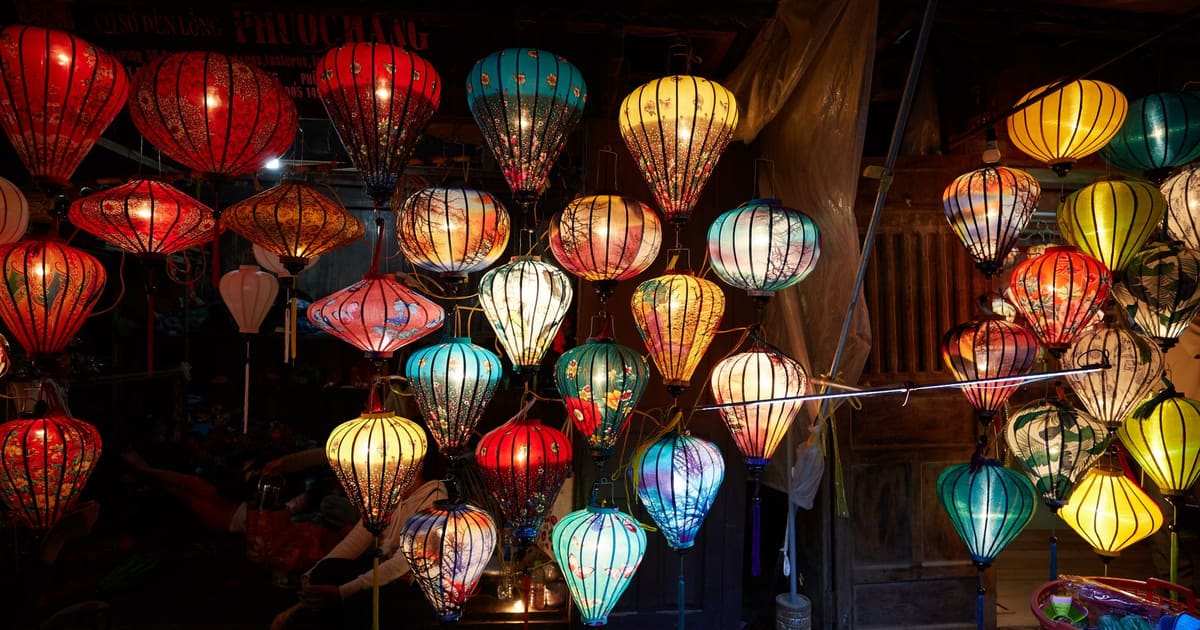
Every evening, as the light fades over the river, Hoi An does something that never quite gets old. Hundreds of silk lanterns flicker on along the old streets, yellow walls turn gold, and the water fills with the small bobbing lights of candle boats. This walk is timed for that moment. It starts at the central market, wanders west through the old merchant houses and family chapels of the Ancient Town, crosses the famous Japanese Covered Bridge, and ends across the river on An Hội islet, among the lantern stalls of the night market. The whole route is only about a kilometer and a quarter, short enough to take slowly, and one of the most atmospheric self-guided walking tours anywhere in Vietnam.
The walking takes barely twenty minutes, but give it two hours or more, because the old houses deserve time. The best plan is to start in the late afternoon, about two hours before sunset, so you can see the houses while they are open and still reach the river as the lanterns come on; opening times change, so check before you go. Most heritage sites in the old town take a coupon from the Ancient Town ticket, a strip of tabs, one per site, and the rules about which sites are included have changed more than once, so check that too. The old streets are closed to cars and, at set hours of the day and evening, to motorbikes as well, which makes the evening walk especially peaceful. The heat and humidity can be intense for much of the year, so carry water. From roughly October to December, the rainy season can flood the riverside streets, sometimes to waist height or more, so check local conditions then. The route is flat, but the evening crowds near the bridges can be thick. Take your time, keep an eye on your bag, and be patient with the queues for photographs.
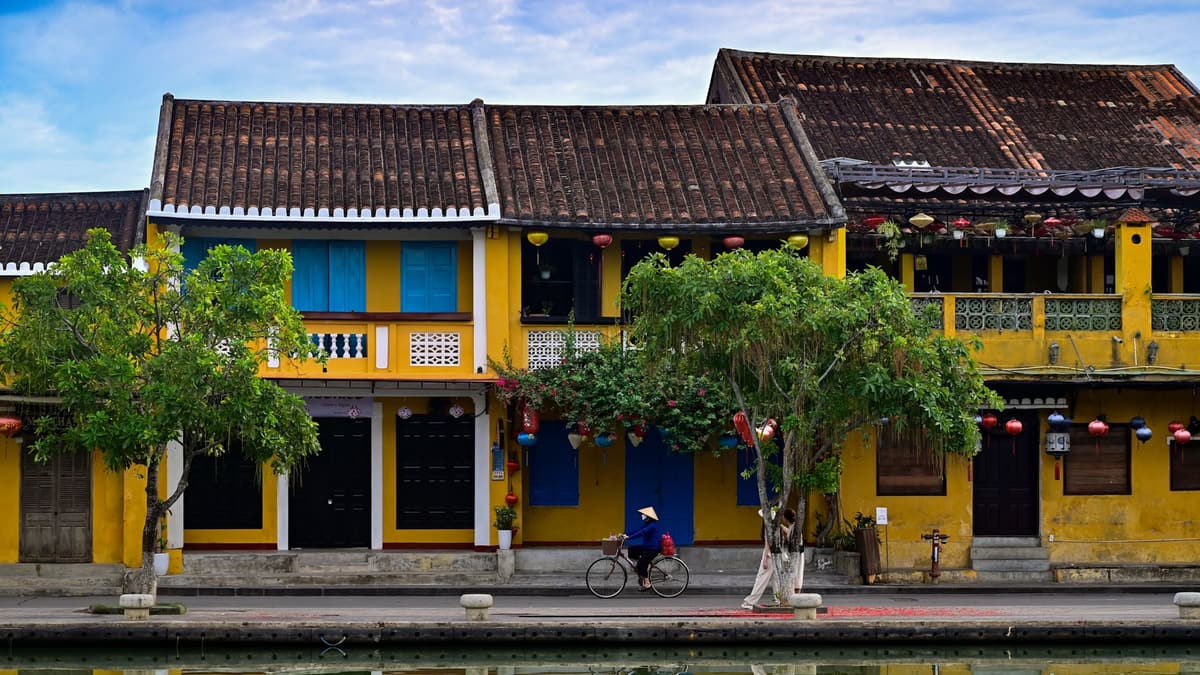
You are at Chợ Hội An, the town's central market, where the old town meets the river at the eastern end of its streets. Step in under the roofs and let your senses adjust. There are pyramids of herbs and chilies, baskets of rice noodles, piles of tropical fruit, women in conical hats selling from low stools, and the smell of broth and charcoal. The market is liveliest early in the morning, when the fish come in on the riverbank and the town does its shopping, so if you can, come back one day for breakfast. Whenever you come, look for the food stalls inside, where the dish to try is cao lầu, Hoi An's own noodles. They are thick, chewy and slightly yellow, served in a little broth with slices of pork, fresh greens and crunchy squares of fried dough. The story goes that true cao lầu can only be made with water from one old well in town and with lye from the ash of trees from the Chàm islands offshore, which is why, locals like to say, it never tastes right anywhere else. Nearby are halls of cloth, where Hoi An's tailors take orders for clothes made to measure. When you are ready, walk west along Nguyễn Thái Học, the street running away from the market parallel to the river. The museum is on your left, about two minutes along.
This long, two storey timber house is the Museum of Folk Culture, and it is one of the largest old houses in Hoi An. Notice its shape before you go in. Like most merchant houses here, it has a narrow front on the street and runs far back, all the way through the block to the riverside road behind. The front was the shop, where customers came in from the street. The middle was for family life, often arranged around a small open courtyard that let in light and air and caught the rain. At the back were the storerooms, opening toward the river, where boats could unload. Upstairs, the museum shows the everyday life of the people around Hoi An: fishing nets and farming tools, the work of the carpenters of Kim Bồng village across the river, pottery from Thanh Hà village upstream, and the costumes and rituals of ordinary families. In a town where so much is aimed at visitors, it is a good reminder of the working country that has always surrounded it. If the upstairs windows at the back are open, look out over the river, the way the merchants once watched for their boats. When you leave, continue west along Nguyễn Thái Học, crossing Lê Lợi. Tan Ky is on your left, about three minutes away.
 You are at Tấn Ký, one of the best preserved merchant houses in Hoi An, built a little over two hundred years ago and lived in by the same family for around seven generations. Family members often still welcome visitors themselves, so step inside quietly and let your eyes adjust to the dim, dark wood. Look up first. The roof is held up by a framework of beams and brackets that mixes three building traditions: Vietnamese, Chinese and Japanese, side by side, the kind of blend you only find in a port where carpenters and merchants from different countries lived as neighbors. Then look for the hanging boards inlaid with mother of pearl, where Chinese characters are formed entirely out of birds in flight, so that a line of poetry becomes a flock. Now look at the walls near the back for the flood marks. Each line records the height the river reached in a great flood, some of them startlingly high. Floods are part of life here, and the house was built for them, with an opening in the upper floor through which goods and furniture could be hauled up out of the water. To go on, walk a few steps back east to Lê Lợi and turn left, heading north. As you cross Trần Phú, glance left: the little square there is named for Kazik, a Polish architect who helped save the old town. Continue to the corner of Phan Châu Trinh, about four minutes. The chapel is on the corner.
Yang termasuk
Tur kami dirancang agar terasa meditatif dan imersif: Anda terus bergerak dan cukup mendengarkan. Tur selalu lebih seru dinikmati bersama, dan aplikasi memutar narasi secara sinkron, sehingga Anda, pasangan, dan teman-teman mendengar setiap pemberhentian pada saat yang sama.
You are at the Trần Family Chapel, a family temple for ancestor worship, built in 1802 by Trần Tứ Nhạc, a mandarin at the court of the first Nguyễn emperor, Gia Long, who served as an envoy to China.
Lanjutan pemberhentian ini ada di tur audio lengkap.
In front of you is the Bà Mụ Temple Gate, a three arched gate of red and gold rising behind a pond of lotus flowers, and very probably the most photographed spot in Hoi An.
Lanjutan pemberhentian ini ada di tur audio lengkap.
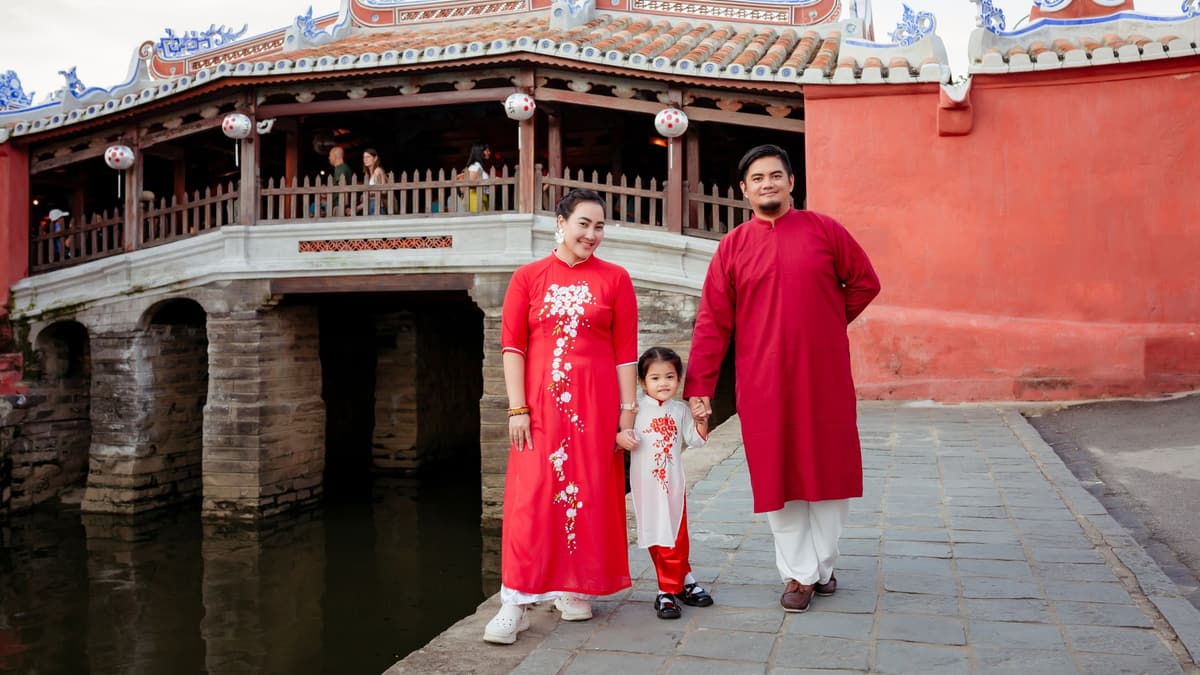
This is the Japanese Covered Bridge, which Vietnamese call Chùa Cầu, the Pagoda Bridge. It is the symbol of Hoi An, and it appears on the 20,000 dong banknote, so check your wallet.
Lanjutan pemberhentian ini ada di tur audio lengkap.
You are at the An Hội bridge, the footbridge across the river to An Hội islet, and this is the place to stop and watch the evening arrive. Walk up to the middle and lean on the rail.
Lanjutan pemberhentian ini ada di tur audio lengkap.
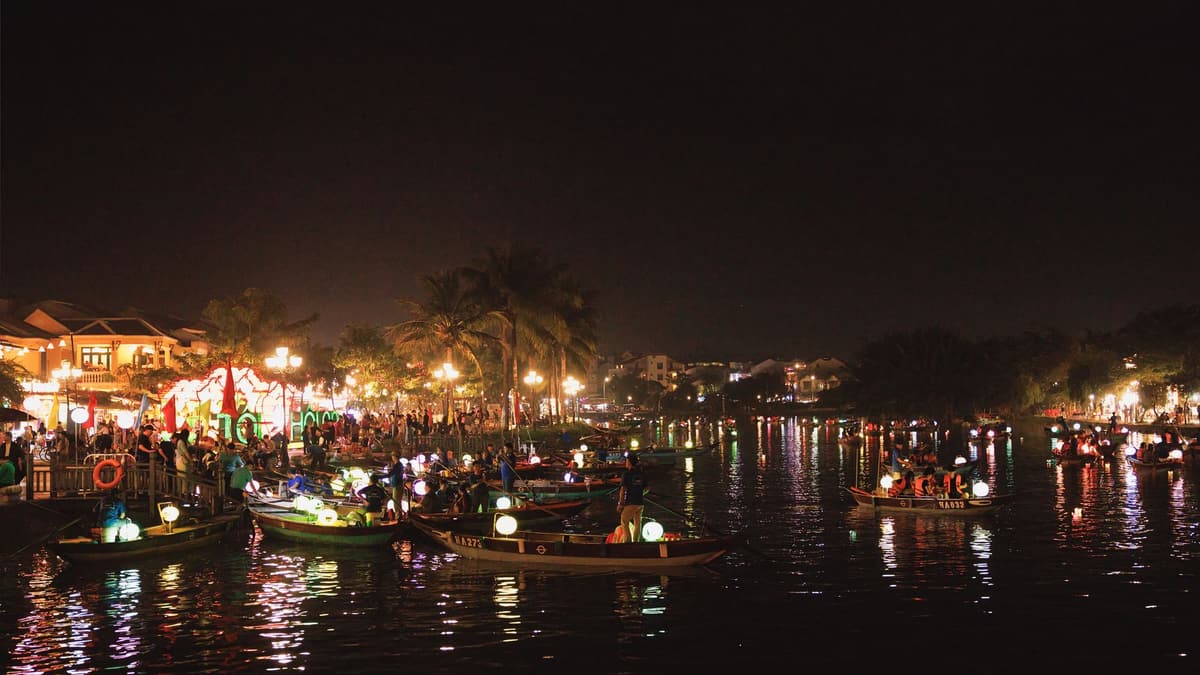
The walk ends at the Hoi An Night Market on An Hội islet, a long line of stalls under a canopy of glowing lanterns, which is exactly the scene that many people picture before they ever come to Hoi An.
Lanjutan pemberhentian ini ada di tur audio lengkap.
Lakukan jalan-jalan ini bersama orang lain pada tur terjadwal berikutnya.
Sekitar 1,5 km, kira-kira 20 menit dengan ritme santai · 8 titik henti
Teman jalan gratisOctober 11, 2026 · 9 min read
From the Hollandsche Schouwburg through the old Jewish Quarter, past the Dockworker and the Dam, to the Anne Frank House on the Prinsengracht.
October 11, 2026 · 11 min read
From Van Houten's street by the Vondelpark past Leidseplein, the Rijksmuseum passage and the famous canal bench to the Anne Frank House.

October 11, 2026 · 10 min read
Follow the last days of April and May 1945 from the Anhalter Bahnhof ruin past the Gestapo site and Brandenburg Gate to the Moltke Bridge and the Reichstag.
