
October 11, 2026 · 9 min read
Amsterdam Anne Frank Walking Tour
From the Hollandsche Schouwburg through the old Jewish Quarter, past the Dockworker and the Dam, to the Anne Frank House on the Prinsengracht.
589

October 9, 2026 · 11 min read

 Teman jalan gratis
Setiap tur juga berjalan sebagai jalan kaki kelompok terjadwal yang dapat Anda ikuti di aplikasi.
Tur audio lainnya di Phuket Old Town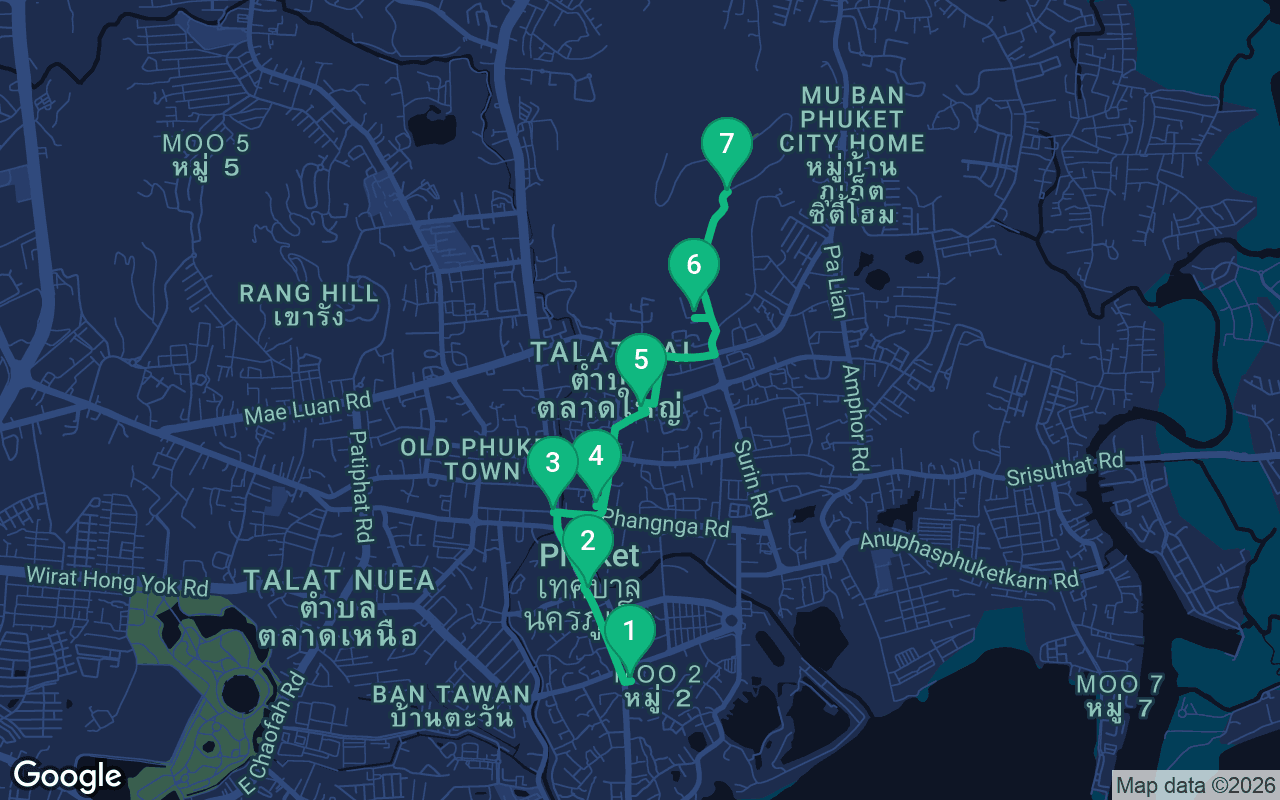
Sekitar 3,4 km, kira-kira 54 menit dengan ritme santai.
Tur ini dilengkapi narasi suara
Tekan putar pada 3 pemberhentian pertama untuk mendengarkan demo narasi 30 detik di sini. Di aplikasi, pengantar dan pemberhentian-pemberhentian ini bisa Anda dengarkan secara lengkap dan gratis, dan setiap pemberhentian membunyikan nada pemberitahuan saat Anda tiba. Seluruh tur berpemandu ini bisa Anda miliki selamanya hanya dengan $9.99, sekali beli untuk seterusnya.
Berfungsi dengan Garmin, Komoot, Strava, OS Maps, dan aplikasi GPX apa pun.
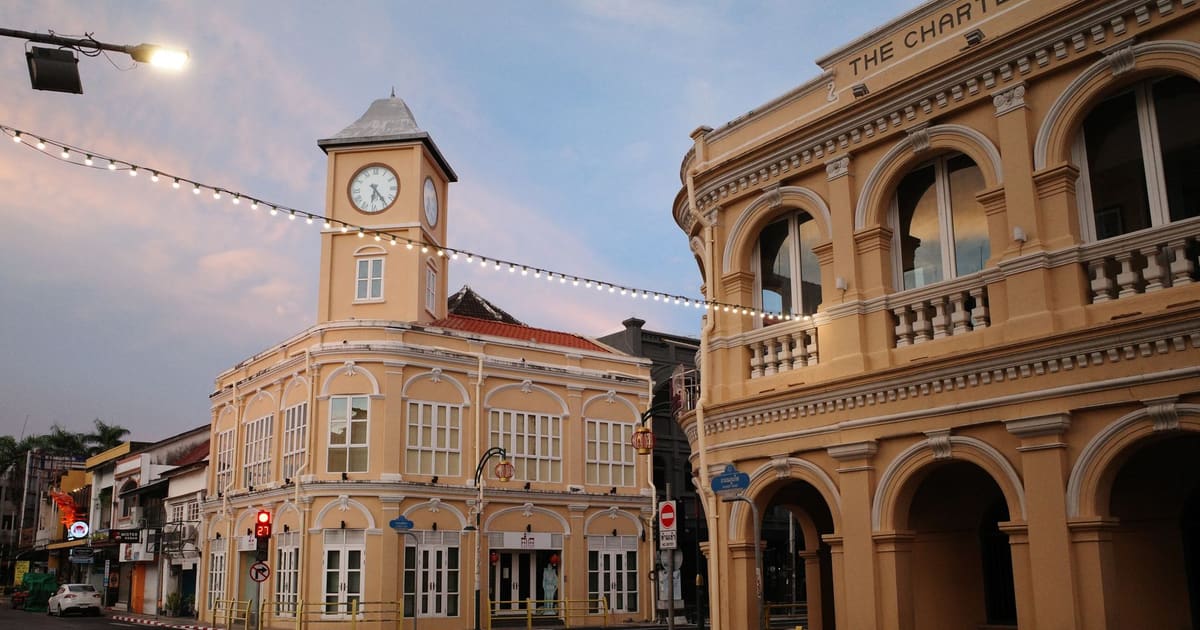
Most visitors to Phuket never leave the beaches, which is a shame, because the island's real story is written in its old capital, Phuket Town. This was a tin town, built on the ore dug from the hills and the valleys around it, and it grew rich, crowded and colorful on the proceeds. This walk crosses it from south to north. It starts at Bang Niew Shrine, one of the great stages of the island's Vegetarian Festival, passes the clock tower at Surin Circle, the old Chartered Bank and the old post office at the heart of the tin boom, then heads out through two neighborhood temples to the shrine at the foot of Toh Sae hill. It is about three and a half kilometers on flat streets, and one of the most surprising self-guided walking tours in southern Thailand, a side of Phuket that has nothing to do with sand.
The walking takes about an hour, but give it two to two and a half hours with stops. Phuket is hot and humid all year, so go early in the morning or in the late afternoon, carry plenty of water, and wear a hat; the streets have little shade apart from the covered walkways in front of the old shophouses. From roughly May to October the rains come in sudden heavy bursts, so carry something light to keep dry. The route is flat and paved, but pavements come and go, so watch for traffic at crossings and scooters pulling in. Dress for temples and shrines: shoulders and knees covered. In the Buddhist temples, take your shoes off before stepping into a hall, never point your feet at a Buddha image, and do not touch monks. In the Chinese shrines, follow any signs about shoes and photography, and step over the raised threshold at the door rather than on it. The museums on the route keep changing hours, so check before you go. If you are in town during the Vegetarian Festival, usually in late September or October, the shrines will be packed, the streets loud with firecrackers, and the experience unforgettable; bring earplugs.
You are standing in front of Bang Niew Shrine, a Chinese Taoist shrine of red pillars, gold lettering and curling roof ridges, with smoke from the incense drifting out of the open doors. On most days it is calm, a place where local people drop in to light a few sticks of incense, bow, and go on with their morning. But for nine days a year this is one of the main stages of Phuket's most famous event, the Vegetarian Festival. It falls at the start of the ninth month of the Chinese lunar calendar, usually in late September or October, and it honors the Nine Emperor Gods. The story told on the island is that in the nineteenth century a traveling Chinese opera troupe fell sick while performing in the mining district, and that they recovered after keeping a strict vegetarian diet and making offerings to the Nine Emperor Gods. The local people followed their example, and the custom spread from shrine to shrine. During the festival, believers dress in white and give up meat, alcohol and other pleasures, and yellow flags marked with red characters hang outside the stalls selling meatless food. The most striking sight is the spirit mediums. In a trance, they walk in procession through the streets with their cheeks pierced by skewers and blades, while firecrackers explode around them, and some shrines hold fire walks and blade ladder climbs. To go on, walk north-northwest along the road in front of the shrine for about six minutes. The roundabout and its clock tower come into view ahead.
You have reached Surin Circle, the roundabout with the clock tower at its center, and the point where the modern city meets the old one. Look around you. The traffic and the newer buildings belong to the provincial capital that Phuket Town is today, and the grid of older streets to the north and northwest is the town that tin built. It was not always the island's main town. For centuries the center of Phuket was Thalang, in the north of the island, and it was there in 1785 that two sisters, remembered today as Thao Thep Kasattri and Thao Si Sunthon, rallied the defenders and held off a Burmese army. Their statue stands on the road to the north of the island, and people still leave offerings there. Tin had been mined here long before then, and traded with ships from far away, but in the nineteenth century demand for it from the factories of the industrial world exploded. Tin plate was needed for cans, and for machines and much more besides, and the richest deposits on the island lay in the valleys around this part of it. Prospectors, mine owners and thousands of laborers, most of them Chinese, poured in, and a small settlement in the south of the island turned into a booming town. Stand by the clock tower for a moment and picture a town of rough mining camps, muddy streets and enormous fortunes. To go on, take the road heading north-northwest from the roundabout toward the old town. The bank stands on a corner about five minutes away.
In front of you is one of the grandest buildings in the old town, the former branch of the Chartered Bank of India, Australia and China, opened early in the twentieth century to serve the tin trade. With its colonial columns, arched windows and high ceilings for the heat, it looks like it belongs in Penang or Singapore, and that is no accident. For most of its history, Phuket's tin economy looked south to the British Straits Settlements rather than north to Bangkok. Ore and money flowed between Phuket and Penang by ship, much of the tin was smelted there, and mining families sent their children to Penang to school. A bank like this one was the hinge of that world, lending money to mine owners, changing currency, and moving profits between the island and the ports of the region. The industry changed fast around the turn of the century. Mining had been done by hand, by gangs of laborers working open pits and sluicing the ore out of the gravel with water. Then machines arrived, including huge floating dredges that scooped tin from river valleys and later from the seabed off the coast, and the scale of the business grew. Mining here has long since ended, but the wealth it made is all around you in these streets. The old bank now houses a museum of Phuket's Peranakan culture, a story for another walk. To go on, walk east along Phang Nga Road. The old post office is a small building just around the corner to your left, about three minutes away.
Yang termasuk
Tur kami dirancang agar terasa meditatif dan imersif: Anda terus bergerak dan cukup mendengarkan. Tur selalu lebih seru dinikmati bersama, dan aplikasi memutar narasi secara sinkron, sehingga Anda, pasangan, dan teman-teman mendengar setiap pemberhentian pada saat yang sama.
This small building was once the town's post office, and it is now a museum of stamps. It is modest in size and easy to walk past without noticing, which is part of its charm.
Lanjutan pemberhentian ini ada di tur audio lengkap.
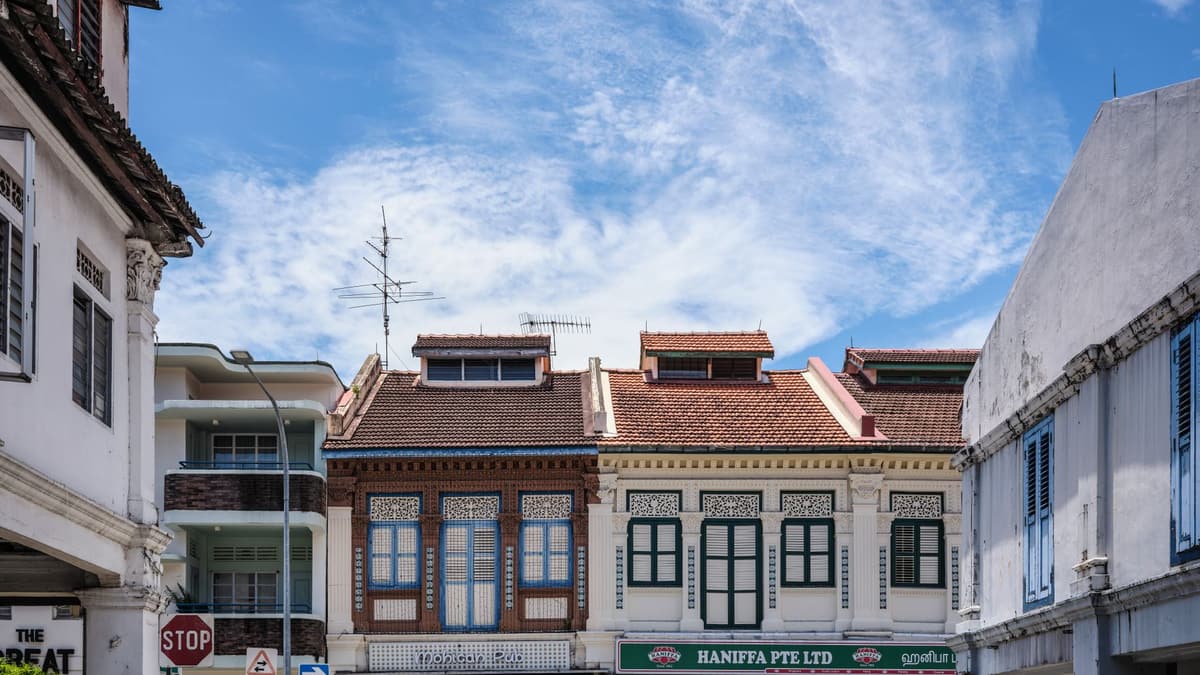
After the Chinese shrines and colonial buildings, this is a Thai Buddhist temple, and the difference is plain as you walk in through the gate. The roofs sweep up in layers, edged with gold and ending in tall, curved finials like the necks of birds.
Lanjutan pemberhentian ini ada di tur audio lengkap.
Wat Lang San is a quiet neighborhood temple, and that is what makes it worth a stop. You are now out beyond the busy center, where the shops thin out and the green slope of Toh Sae hill rises ahead.
Lanjutan pemberhentian ini ada di tur audio lengkap.
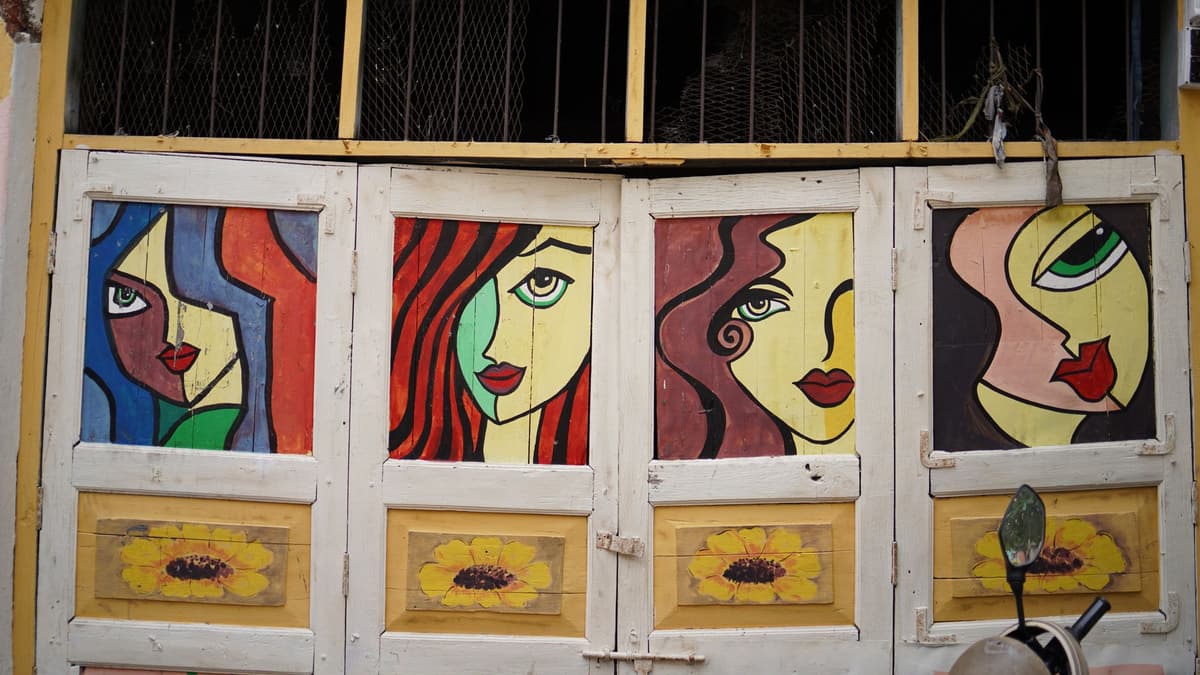
The walk ends here, at the foot of Toh Sae hill, at the shrine of the spirit believed to guard it.
Lanjutan pemberhentian ini ada di tur audio lengkap.
Lakukan jalan-jalan ini bersama orang lain pada tur terjadwal berikutnya.
Sekitar 3,4 km, kira-kira 54 menit dengan ritme santai · 7 titik henti
Teman jalan gratisOctober 11, 2026 · 9 min read
From the Hollandsche Schouwburg through the old Jewish Quarter, past the Dockworker and the Dam, to the Anne Frank House on the Prinsengracht.
October 11, 2026 · 11 min read
From Van Houten's street by the Vondelpark past Leidseplein, the Rijksmuseum passage and the famous canal bench to the Anne Frank House.

October 11, 2026 · 10 min read
Follow the last days of April and May 1945 from the Anhalter Bahnhof ruin past the Gestapo site and Brandenburg Gate to the Moltke Bridge and the Reichstag.
