
October 11, 2026 · 9 min read
Amsterdam Anne Frank Walking Tour
From the Hollandsche Schouwburg through the old Jewish Quarter, past the Dockworker and the Dam, to the Anne Frank House on the Prinsengracht.
589

October 9, 2026 · 11 min read

 친구는 무료로 함께 걸어요
모든 투어는 앱에서 참여할 수 있는 정기 그룹 걷기 모임으로도 운영됩니다.
Bangkok의 오디오 투어 더 보기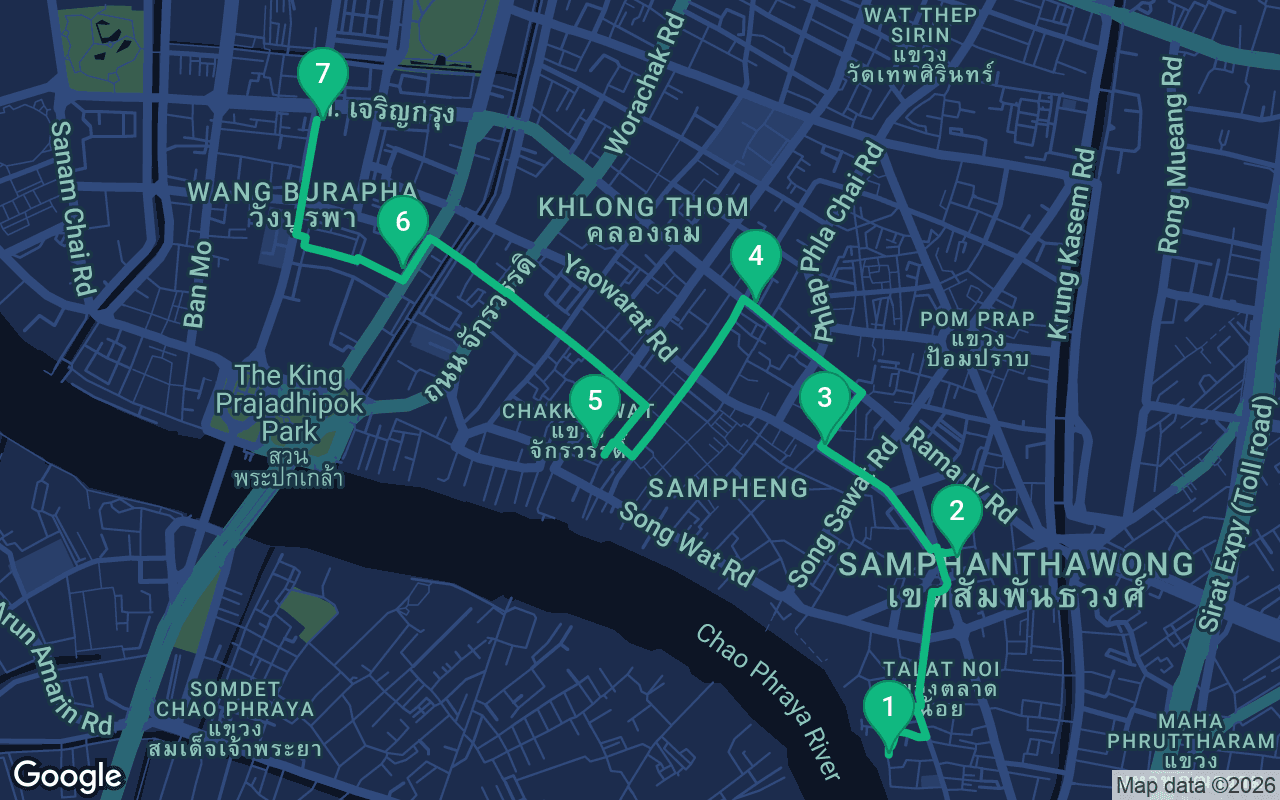
약 3.6km, 여유로운 페이스로 대략 51분 소요.
음성 가이드가 포함된 투어입니다
처음 3개 스톱에서 재생을 누르면 여기에서 나레이션을 30초 데모로 들을 수 있습니다. 앱에서는 인트로와 이 스톱들을 무료로 끝까지 들으실 수 있으며, 각 스톱에 도착하면 알림음이 울립니다. 전체 오디오 투어는 $9.99에 한 번만 구매하시면 평생 소장하실 수 있습니다.
Garmin, Komoot, Strava, OS Maps 및 모든 GPX 앱과 호환됩니다.
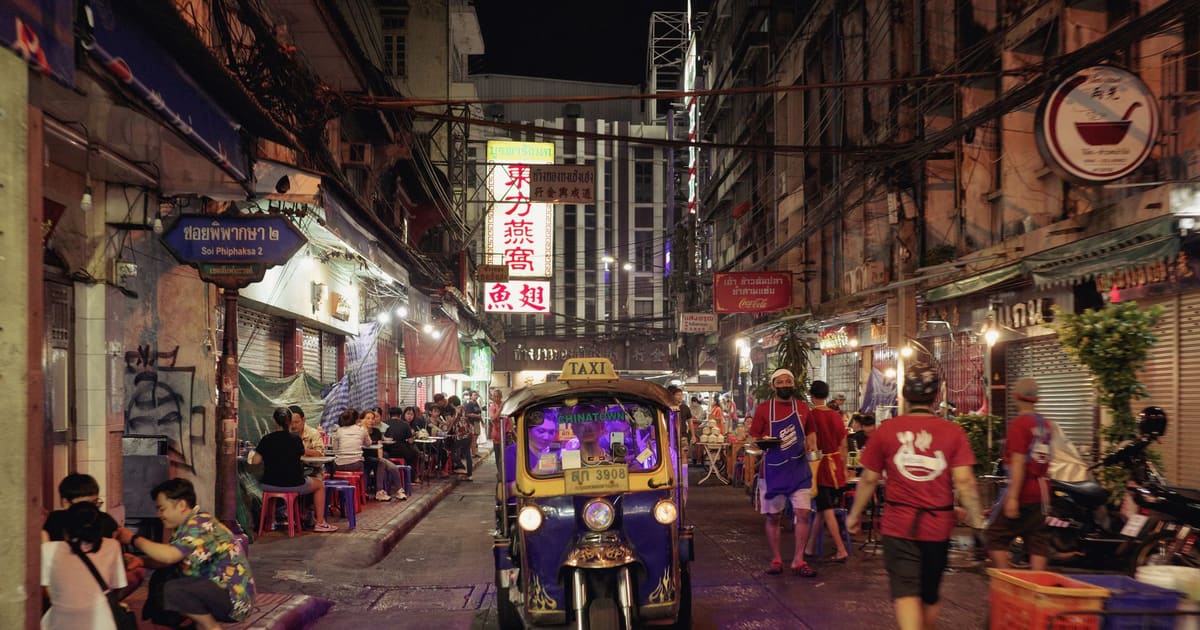
Bangkok's Chinatown is the loudest, busiest and most delicious corner of the city, and this walk crosses it in one long line from the river to the edge of Little India. It starts in the old riverside lanes of Talat Noi, calls at the temple of the Golden Buddha, follows the neon and gold shops of Yaowarat Road to the great Chinese temple of Wat Mangkon Kamalawat, threads the wholesale alleys of Sampeng to a temple with a crocodile pond, and crosses into Phahurat for the Sikh gurdwara before finishing at an Art Deco theatre. It is about three and a half kilometers and flat, one of the most absorbing self-guided walking tours in Asia, and it ends a short stroll from some of the best street food in the world.
The walking takes under an hour, but give it three, because every lane has something to stop for. Bangkok is hot and humid all year, so pick your time with care. Early morning is the coolest and the wholesale lanes are already busy. Late afternoon is the classic choice, as long as you start early enough to reach the temples before they close, because Yaowarat's street food stalls set up as the light fades, so you can finish the walk and head back for dinner. Check the temple hours before you go, along with any entry fees. The temples ask for covered shoulders and knees, so dress for them from the start, take your shoes off where you see others do so, and never point your feet at a Buddha image. At the gurdwara you will also need to cover your head. Sampeng Lane is narrow and crowded, with porters pushing loaded carts who will not stop for you, so keep to the side and wear your bag in front. Chinese New Year and the vegetarian festival in the autumn bring huge crowds and a wonderful atmosphere, so expect a slower walk at those times.
Start in the lanes of Talat Noi, the little market, a pocket of old Bangkok squeezed between Charoen Krung Road and the Chao Phraya River. This is where Chinatown meets the water, and for much of the nineteenth century the river was the whole point. Bangkok's wealth sailed in on Chinese junks, big wooden trading ships that came south on the monsoon winds with silk, porcelain and tea, and sailed home loaded with rice, sugar and sappanwood. Hokkien merchants from Fujian settled along this bank to run that trade, building warehouses and landings at the water's edge. The finest of their homes survives: So Heng Tai, a Hokkien courtyard mansion around two centuries old, its rooms set around an open court just as they would be in Fujian. The family still lives there, and part of the courtyard now holds, of all things, a swimming pool. A little further along the river, the Holy Rosary Church recalls the Portuguese Catholics who settled here early in the life of the city; its Gothic building dates from the late nineteenth century. Today the lanes trade in something else entirely, with workshops stacked high with second-hand engines and car parts squeezed between Chinese shrines, murals and cafes in restored shophouses. Then walk out to Charoen Krung Road, turn left and follow it north to the big traffic circle with the Chinese gate. Wat Traimit sits on its corner. About eight minutes.
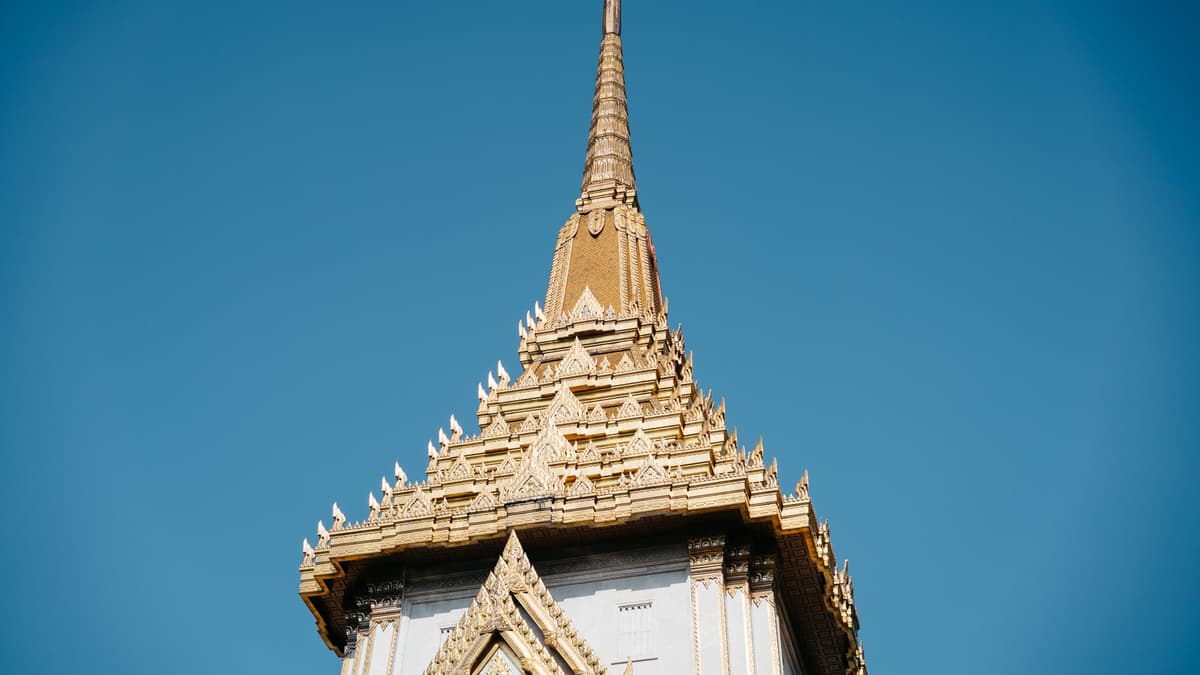 Look up at the tall white hall on the corner. On its top floor sits the Golden Buddha, Phra Phuttha Maha Suwan Patimakon. It is about three meters tall, weighs around five and a half tonnes, and is made of gold, in the graceful Sukhothai style that dates its making to several centuries ago. For most of its life nobody knew. At some point it was covered in a thick coat of plaster, probably to hide it from Burmese invaders in the age of Ayutthaya, and the secret was then forgotten. It came to Bangkok looking like an ordinary plaster Buddha and ended up at this small, little-known temple. Then, in 1955, while it was being moved into a new building, it slipped and fell, and through a crack in the plaster the monks saw a gleam of gold. The plaster was chipped away, and a plain old statue turned out to be what is often called the largest solid gold Buddha in the world. Take off your shoes and climb up to see it. The floors below hold a museum on the history of Chinatown and its people, a good place to make sense of the neighborhood you are walking through. When you come out, cross toward the Chinese gate and walk west along Yaowarat Road, the gate behind you, to the stretch where the gold shops cluster thickest. About five minutes.
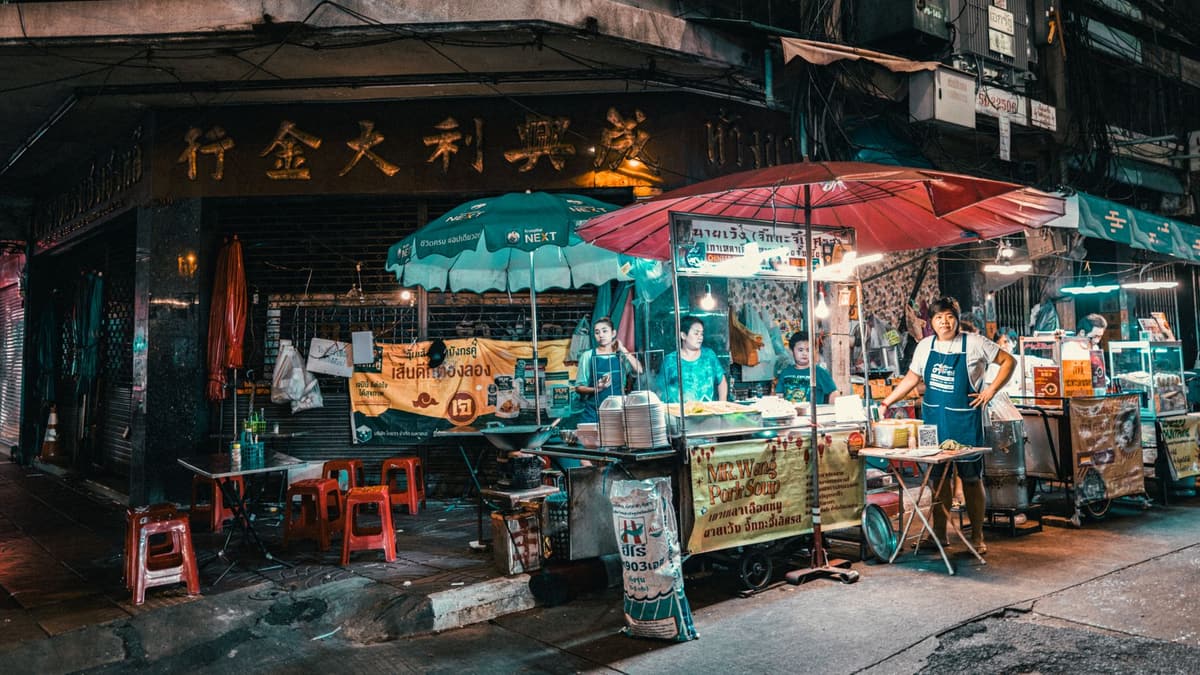
You are on Yaowarat Road, the main street of Chinatown, a curving canyon of old shophouses hung with big vertical signs in Chinese and Thai. Chinatown did not start here. It began a block south, on Sampeng Lane, when Chinese traders were moved there in 1782 to clear the ground for the Grand Palace, and Yaowarat Road was cut through about a century later, in the 1890s, in the reign of King Chulalongkorn, Rama V. Its name means young king. The people who made it what it is came mostly from one corner of southern China. Through the nineteenth century and into the twentieth, wave after wave of Teochew-speaking migrants from around the port of Shantou crossed the South China Sea, many with almost nothing, to work as dockers, rickshaw pullers, rice millers and shopkeepers. Many stayed, married and became Thai, and Teochew became the everyday language of these streets. Even King Taksin, who ruled before Bangkok was founded, had a Teochew father. The red and gold shopfronts around you are gold shops, and they are the heart of the street. Gold here is sold by weight in baht, a traditional unit of about fifteen grams, and for generations of families a gold chain has been savings, insurance and dowry in one. After dark the pavements fill with stalls selling noodles, roast duck, grilled seafood and sweets. From here, turn right up one of the side lanes to Charoen Krung Road, a block north, and turn left. The temple gate is on the street, about five minutes along.
포함 사항
저희 투어는 명상하듯 몰입할 수 있도록 만들어졌습니다. 걸으며 그저 귀 기울이시면 됩니다. 함께하면 언제나 더 좋고, 앱이 나레이션을 동기화해 재생하므로 당신과 파트너, 친구들이 모든 스톱을 같은 순간에 들을 수 있습니다.
Step through the gate into the smoke. Wat Mangkon Kamalawat, known in Chinese as Leng Noei Yi, the Dragon Lotus Temple, is the most important Chinese Buddhist temple in Bangkok.
이 스톱의 나머지 내용은 전체 오디오 투어에 있습니다.
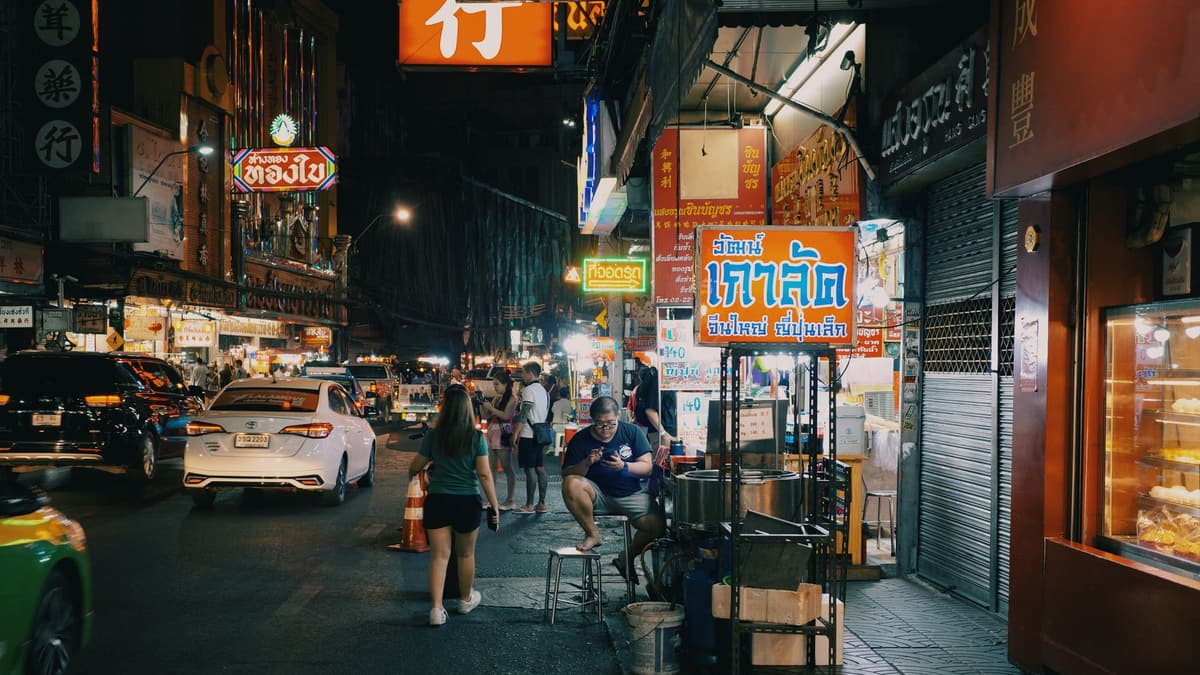
You have just crossed Sampeng Lane, and you will walk along it next, so here is its story. This was the first Chinatown, the narrow lane where the Chinese of early Bangkok built their homes and shops.
이 스톱의 나머지 내용은 전체 오디오 투어에 있습니다.
You have walked out of Chinatown and into Phahurat, Bangkok's Little India, and the change is sudden. The shop signs switch to Hindi and Punjabi, the windows fill with sari silk and wedding fabrics, and the air smells of cardamom and frying samosas.
이 스톱의 나머지 내용은 전체 오디오 투어에 있습니다.
The walk ends at Sala Chalermkrung, a white Art Deco theatre with clean geometric lines that looks as if it has wandered in from another city. Stand across the road to take it in.
이 스톱의 나머지 내용은 전체 오디오 투어에 있습니다.
다음 예정된 투어에서 다른 사람들과 함께 이 산책을 해보세요.
약 3.6km, 여유로운 페이스로 대략 51분 소요 · 7 정류장
친구는 무료로 함께 걸어요October 11, 2026 · 9 min read
From the Hollandsche Schouwburg through the old Jewish Quarter, past the Dockworker and the Dam, to the Anne Frank House on the Prinsengracht.
October 11, 2026 · 11 min read
From Van Houten's street by the Vondelpark past Leidseplein, the Rijksmuseum passage and the famous canal bench to the Anne Frank House.

October 11, 2026 · 10 min read
Follow the last days of April and May 1945 from the Anhalter Bahnhof ruin past the Gestapo site and Brandenburg Gate to the Moltke Bridge and the Reichstag.
