
October 11, 2026 · 9 min read
Amsterdam Anne Frank Walking Tour
From the Hollandsche Schouwburg through the old Jewish Quarter, past the Dockworker and the Dam, to the Anne Frank House on the Prinsengracht.
589

October 9, 2026 · 11 min read

 Vrienden lopen gratis mee
Elke tour is ook beschikbaar als een geplande groepswandeling waar je in de app aan kunt deelnemen.
Meer audiotours in Galway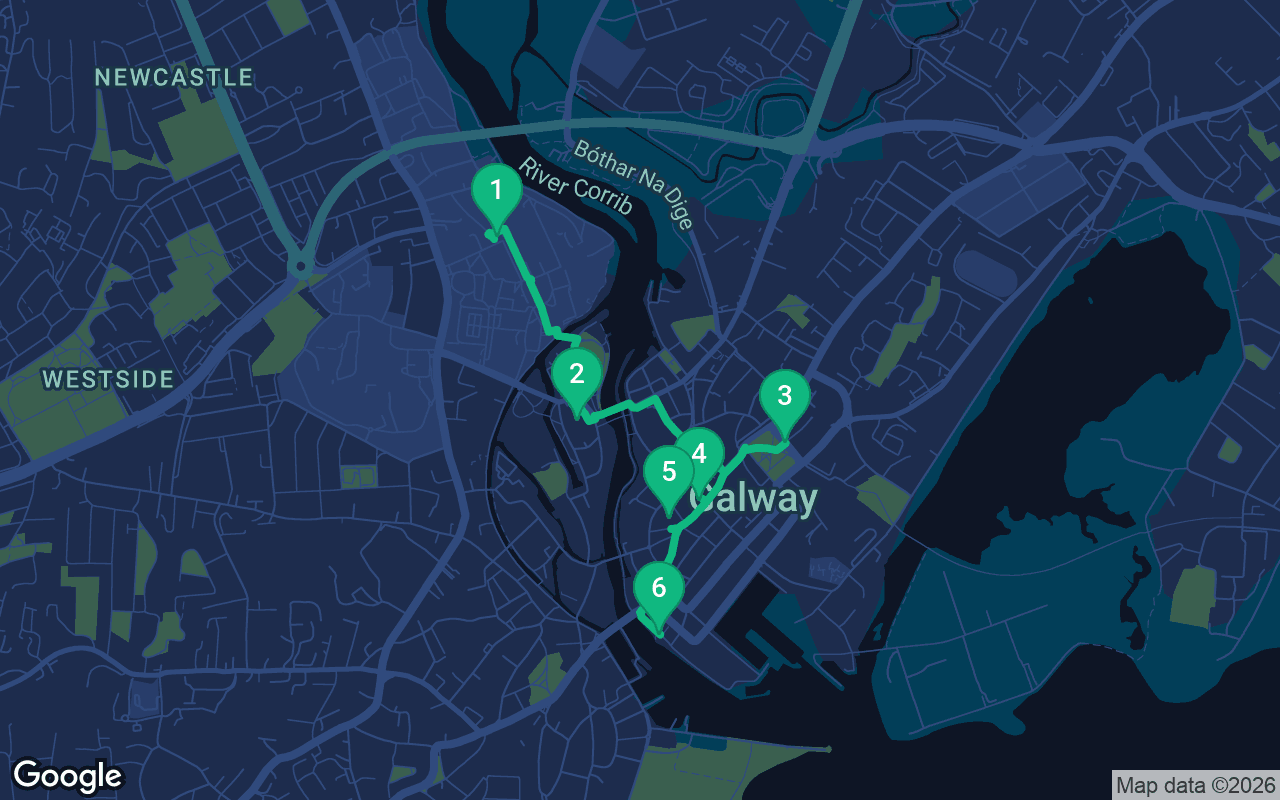
Ongeveer 2,4 km, zo'n 33 minuten op een rustig tempo.
Deze tour is ingesproken
Druk op afspelen bij de eerste 3 stops voor een demo van 30 seconden van de vertelling. In de app zijn de intro en die 3 stops volledig gratis te beluisteren, en bij elke stop klinkt een signaal zodra je aankomt. De hele tour met gids is van jou voor $7.99, een eenmalige aankoop die je voor altijd behoudt.
Werkt met Garmin, Komoot, Strava, OS Maps en elke GPX-app.
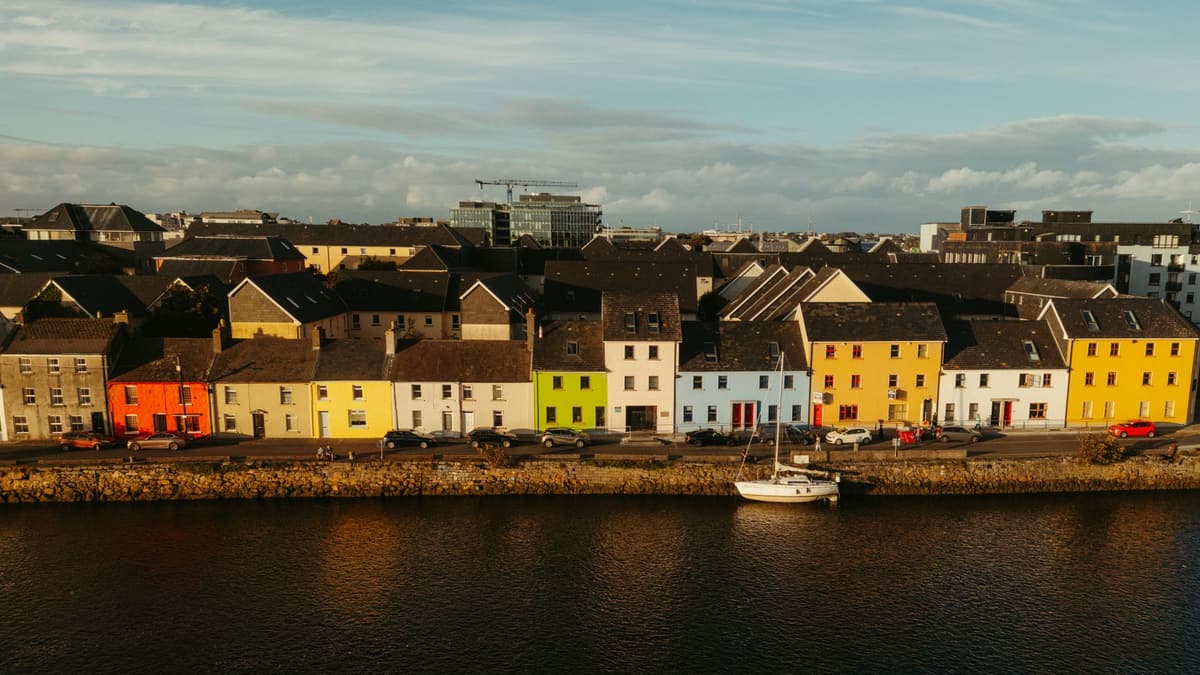
Galway sits where a short, fast river meets the Atlantic, and for a small city it carries a lot of history in very little space. This walk starts in the stone quadrangle of the university on the west bank of the River Corrib, crosses the river by the cathedral, and then drops into the old walled town of the merchant families known as the Tribes of Galway. From Eyre Square it follows the pedestrian streets past a medieval tower house and the town's great parish church, and ends at the Spanish Arch, where the river runs out into Galway Bay. It is about two and a half kilometers, roughly a mile and a half, flat and compact, and one of the easiest self-guided walking tours in Ireland to fit into a morning. The streets are full of buskers most of the day, so expect the walk to come with a soundtrack.
Allow about two hours at an easy pace, and longer if you step inside the cathedral, St Nicholas' and the city museum at the end. The walking itself takes well under an hour. The route is flat, apart from a gentle slope down toward the river at the finish, and the old town streets are paved, with some uneven flagstones in places, so comfortable shoes are enough. Galway weather changes quickly. Rain blows in off the Atlantic on any day of the year, often followed by sunshine twenty minutes later, so bring a light waterproof jacket and a warm layer rather than relying on the forecast. Mornings are the calm time on Shop Street and Quay Street. By the afternoon they fill with shoppers, students and street musicians, and on summer evenings the pubs spill out onto the pavement. July is especially busy, with the Galway International Arts Festival and then the Galway Races at the end of the month. The cathedral and St Nicholas' are working churches, so visit quietly and check before you go if you want to see inside, since services and opening times vary.
You start in the Quadrangle of the University of Galway, a square of pale grey limestone built around a neat lawn, with a tower over the main archway. Stand back far enough to take in the whole range: the pointed windows, the battlements along the roofline, the carved stone trim. It looks centuries old, and it was meant to. It was built in the 1840s in the Tudor Gothic style that the Victorians considered proper for a place of learning, and it is often compared to the colleges of Oxford. It opened in 1849 as Queen's College, Galway, one of three Queen's Colleges founded by the government, alongside Belfast and Cork. The timing is hard to forget. The college opened its doors in the middle of the Great Famine, when the west of Ireland was losing people to hunger, disease and emigration on a scale the region never recovered from. The new colleges were open to students of every faith, and the Catholic bishops of the day opposed them as godless, so for years the student numbers stayed small. The college has changed its name several times since, and since 2022 it has been the University of Galway, or Ollscoil na Gaillimhe in Irish. It has a long tradition of teaching through Irish as well as English, which suits a city that is the gateway to the Connemara Gaeltacht, where Irish is still the language of daily life. Leave the quadrangle by the main archway, make for University Road and follow it south toward the green dome you can see ahead, about eight minutes.
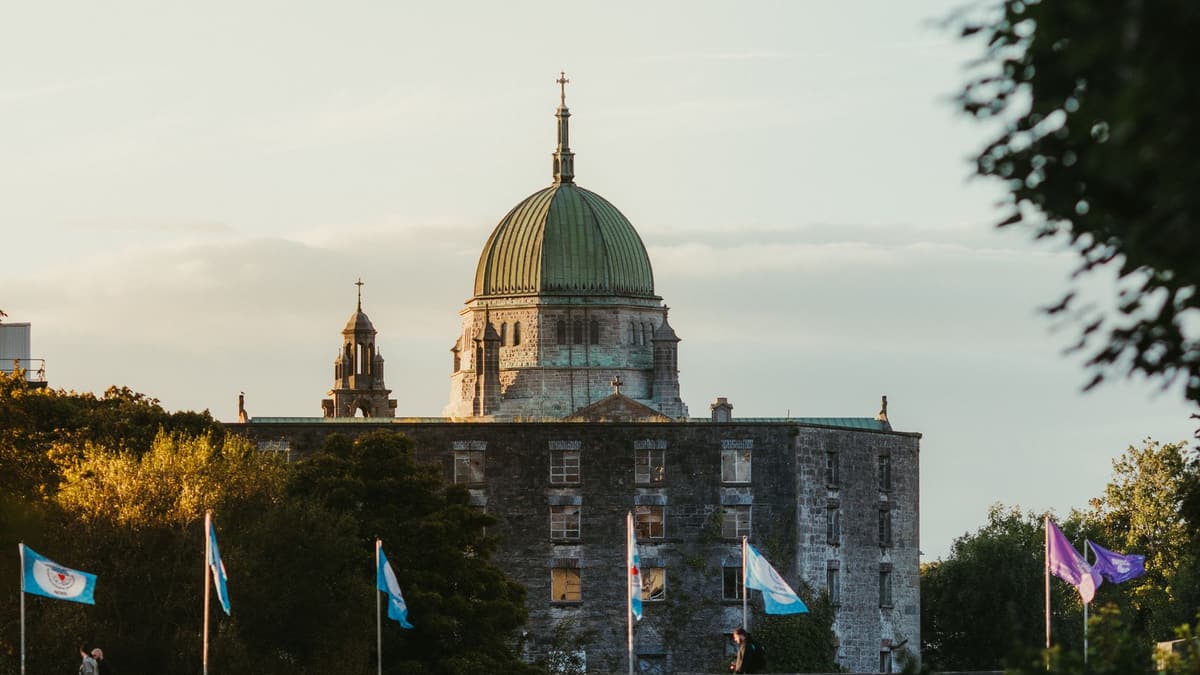
 The great grey building in front of you, crowned by a green copper dome, is Galway Cathedral, properly the Cathedral of Our Lady Assumed into Heaven and St Nicholas. It is much younger than it looks. Work began in 1958 and it was dedicated in 1965, which is why it is often called the last great stone cathedral built in Europe. The ground it stands on held the town jail, which was pulled down to make room for it. The design borrows from many periods at once, a Renaissance dome over round arches and a rose window, and people have argued for decades about whether the mix works. Inside, the walls are local limestone and the floors are green Connemara marble. In one of the side chapels, a mosaic includes John F. Kennedy beside Patrick Pearse, a sign of how Ireland saw the first Irish Catholic American president in the 1960s. Now turn to the river and the Salmon Weir Bridge. Below it, the Corrib pours over a weir with real force. This short river carries the whole outflow of Lough Corrib, the largest lake in the Republic of Ireland, to the sea in about six kilometers, making it one of the shortest rivers in Europe. The city's Irish name, Gaillimh, is usually said to come from an old name for the river. Salmon pass this weir on their way upstream, and in spring and early summer you can sometimes see them from the bridge, lying still in the current, noses pointing upstream. Cross the Salmon Weir Bridge to the east bank, pass the courthouse, and keep heading east through the streets until they open onto a big green square, about ten minutes.
This is Eyre Square, the open green heart of Galway, and its official name is John F. Kennedy Memorial Park. Kennedy spoke here in June 1963, on the visit to Ireland he made a few months before he was killed, and the park was renamed in his memory. The square itself takes its name from Edward Eyre, an early eighteenth-century mayor who handed the ground to the town. It was once a market green just outside the town wall, and if you go into the Eyre Square Centre shopping mall beside it, you can see a stretch of that medieval wall preserved inside it. Look around the square for a carved stone doorway standing on its own. This is the Browne Doorway, the front entrance of a seventeenth-century merchant's house from Abbeygate Street, moved here in the early 1900s. It carries the arms of the Browne and Lynch families, two of the fourteen Tribes of Galway, whose flags you can see flying in the square. The fourteen were Athy, Blake, Bodkin, Browne, D'Arcy, Deane, Font, French, Joyce, Kirwan, Lynch, Martin, Morris and Skerrett, mostly of Anglo-Norman descent. From the late fifteenth century, when a royal charter of 1484 let Galway choose its own mayor, they ran the walled town as a trading oligarchy, loyal to the English crown and keeping the Gaelic lords of the countryside out of power. That ended with the Cromwellian siege. Galway surrendered in 1652, and the Catholic merchant families lost much of their property to new Protestant owners. The word Tribes began as an insult from the Cromwellian side, and Galway later adopted it with pride. Leave the square at its lower west corner and walk down Williamsgate Street, which becomes William Street and then Shop Street, to the stone tower on the corner of Abbeygate Street, about five minutes.
Wat er inbegrepen is
Onze tours zijn bedoeld om meditatief en meeslepend te zijn: je blijft in beweging en luistert gewoon. Samen zijn ze altijd beter, en de app speelt de vertelling synchroon af, zodat jij, je partner en je vrienden elke stop op hetzelfde moment horen.
Stop across the street from Lynch's Castle, the tall stone house on the corner, and look up. It was built around 1500 as the town house of the Lynch family, and it is often called the finest medieval town house in Ireland.
De rest van deze stop zit in de volledige audiotour.
St Nicholas' Collegiate Church is the broad, low, grey stone church in front of you, with a pyramid spire on its central tower.
De rest van deze stop zit in de volledige audiotour.
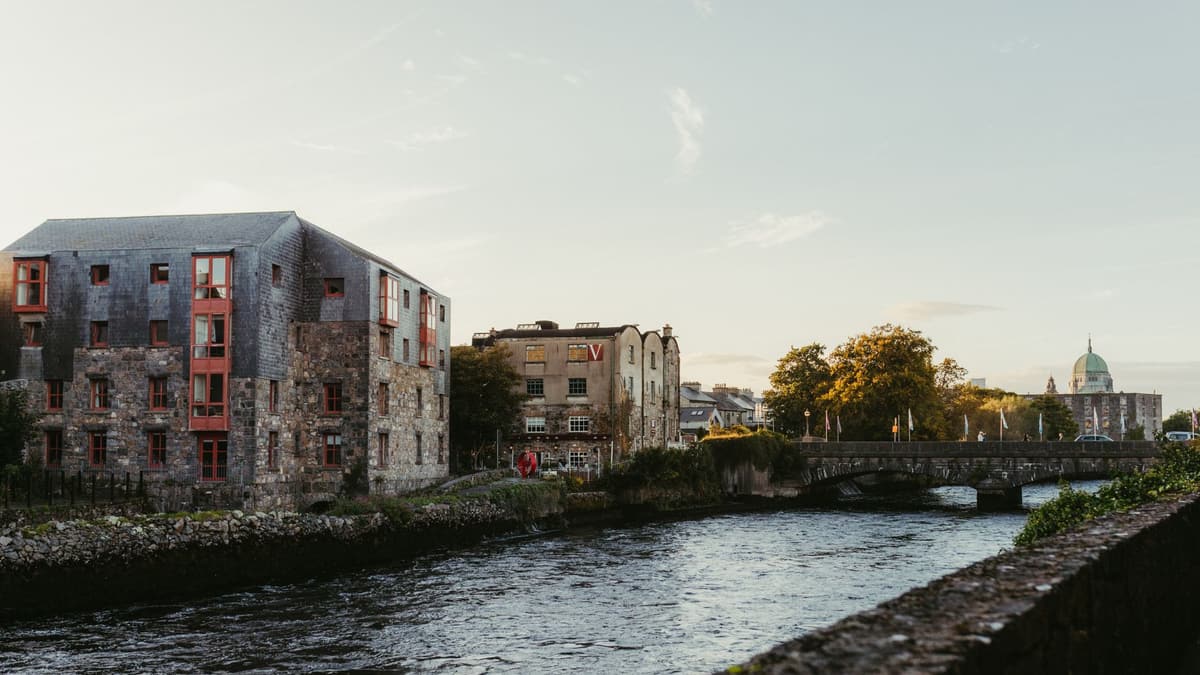
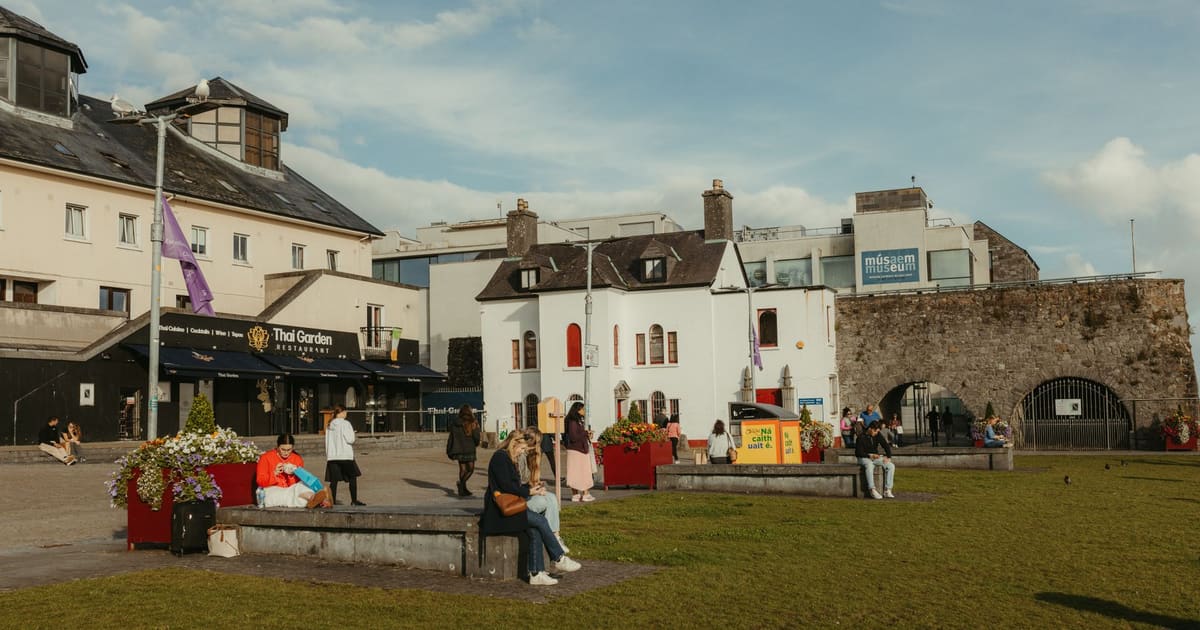
You finish at the Spanish Arch, a pair of stone arches on the riverbank at the bottom of the old town, where the Corrib makes its last rush into Galway Bay.
De rest van deze stop zit in de volledige audiotour.
Doe deze wandeling samen met anderen tijdens de eerstvolgende geplande tour.
Ongeveer 2,4 km, circa 33 minuten in een rustig tempo · 6 stops
Vrienden lopen gratis meeOctober 11, 2026 · 9 min read
From the Hollandsche Schouwburg through the old Jewish Quarter, past the Dockworker and the Dam, to the Anne Frank House on the Prinsengracht.
October 11, 2026 · 11 min read
From Van Houten's street by the Vondelpark past Leidseplein, the Rijksmuseum passage and the famous canal bench to the Anne Frank House.

October 11, 2026 · 10 min read
Follow the last days of April and May 1945 from the Anhalter Bahnhof ruin past the Gestapo site and Brandenburg Gate to the Moltke Bridge and the Reichstag.
