
October 11, 2026 · 9 min read
Amsterdam Anne Frank Walking Tour
From the Hollandsche Schouwburg through the old Jewish Quarter, past the Dockworker and the Dam, to the Anne Frank House on the Prinsengracht.
589

October 9, 2026 · 10 min read

 Vrienden lopen gratis mee
Elke tour is ook beschikbaar als een geplande groepswandeling waar je in de app aan kunt deelnemen.
Meer audiotours in Hobart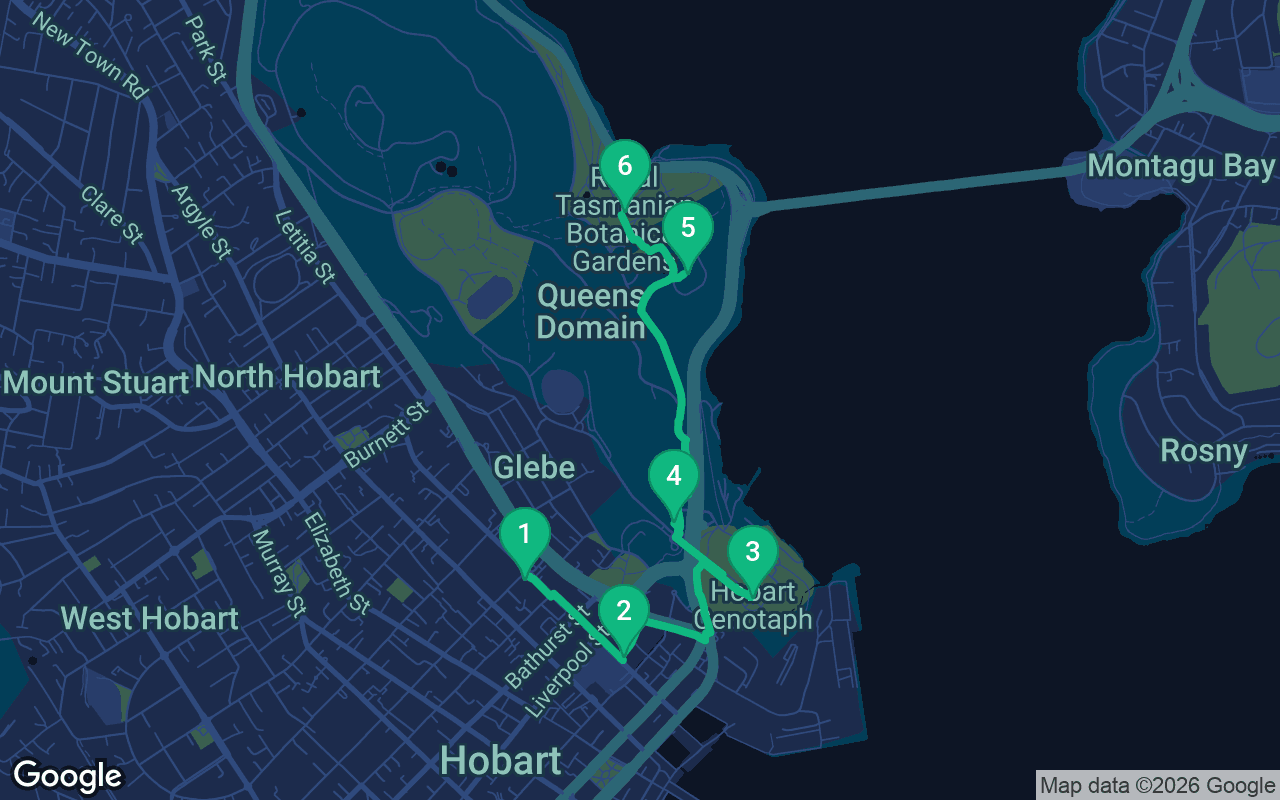
Ongeveer 3,2 km, zo'n 46 minuten op een rustig tempo.
Deze tour is ingesproken
Druk op afspelen bij de eerste 3 stops voor een demo van 30 seconden van de vertelling. In de app zijn de intro en die 3 stops volledig gratis te beluisteren, en bij elke stop klinkt een signaal zodra je aankomt. De hele tour met gids is van jou voor $8.99, een eenmalige aankoop die je voor altijd behoudt.
Werkt met Garmin, Komoot, Strava, OS Maps en elke GPX-app.
Most visitors to Hobart stay down by the water. This walk heads the other way, from a convict prison chapel on the edge of the city center, past the oldest working theatre in Australia, and up onto the Queens Domain, the big green hill between the city and the river. There you will find the city's war memorial, an avenue of trees planted for the dead of the First World War, the governor's Gothic mansion and, at the end, one of the oldest botanical gardens in the country. It is about 3.9 kilometers, close to two and a half miles, and among Hobart's self-guided walking tours it is the one with the most sky: the second half is open parkland with wide views over the river, which the muwinina people, the first people of this place, call timtumili minanya.
Give yourself two and a half to three hours, more if you take a tour of the Penitentiary Chapel or linger in the gardens, and you will want to. The first stretch is city streets. After the Theatre Royal comes a steady climb of around fifteen minutes up onto the Domain, and from there the paths roll gently along the hill before easing down to the gardens near the river. Wear proper walking shoes. The Domain is open ground, and Hobart weather turns quickly, so bring a warm layer and something for the rain even on a bright morning, and a hat and sunscreen too, because the sun here is fierce on days that feel mild. There is shade under the memorial avenue and in the gardens, but very little in between. The Penitentiary Chapel is shown by guided tour, Government House opens only on occasional open days, and the gardens and their glasshouses keep their own hours, so check all of these before you go. There are toilets and a restaurant at the gardens, which make a good place to finish.
You are standing on the corner of Campbell and Brisbane Streets, in front of a sandstone chapel with a clock tower. This was the chapel of the Hobart Town Prisoners' Barracks, the men's penitentiary its inmates called the Tench. Tens of thousands of male convicts passed through this complex after arriving in Van Diemen's Land, more than any other convict establishment in Australia. Most of the convicts shipped to the island were men, and many began their sentence here, while women were sent to the Female Factory in South Hobart. The chapel was designed by the colonial architect John Lee Archer and in use by 1833, built in the shape of a cross so that different classes of people could sit apart. Free settlers came in by their own entrance and could rent cedar pews. Convicts sat on hard benches. Beneath the floor were 36 solitary cells, so small and airless that the worst were sealed up in 1847, and the congregation upstairs complained of the noise from below during services. From 1860 the chapel held two criminal courts, and tunnels were dug so prisoners could be brought into the dock without being seen in the street. Behind the walls stood the gallows, where 32 people were hanged between 1857 and 1946, the last execution in Tasmania. The National Trust runs tours through the courtrooms, tunnels and cells. From the chapel, walk southeast down Campbell Street, toward the water, for about six minutes to the theatre.
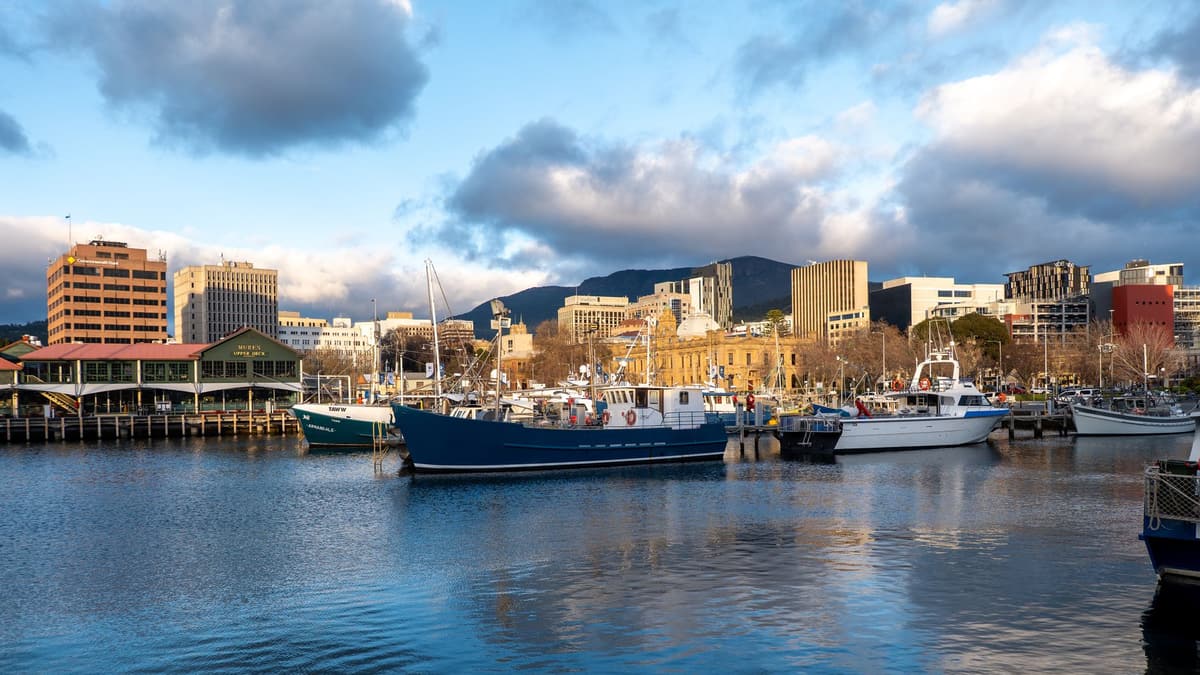
 The modest Georgian front ahead of you belongs to the Theatre Royal, which opened in 1837 and is the oldest continuously operating theatre in Australia. Its first backer was Peter Degraves, the businessman who founded the Cascade Brewery, and it was built on cheap land in a rough part of town. In those days this was Wapping, a waterside neighborhood of pubs, brothels, factories and an abattoir, and the audience in the cheap seats was as rowdy as you would expect in a convict port. The theatre survived the lot, but by the 1940s it was run down and in danger. In 1948 Laurence Olivier came to Hobart touring with the Old Vic company, fell for the little auditorium, and made a plea from the stage on opening night to save it. People listened, and it was restored. Noël Coward is said to have called it a dream of a theatre. In 1984 a fire that started backstage caused serious damage, and once again the public raised the money to bring it back, and it reopened in 1986. Theater people will tell you it has a resident ghost, an actor called Fred who is supposed to have died in a fight in the basement. If there is a show on, take any excuse to see the small, ornate auditorium inside. Walk back up Campbell Street for a minute, then turn right and follow the footpaths northeast up onto the Domain. Past the lower end of the avenue of trees, cross the long, curving footbridge over the highway and climb to the obelisk, about fifteen minutes.
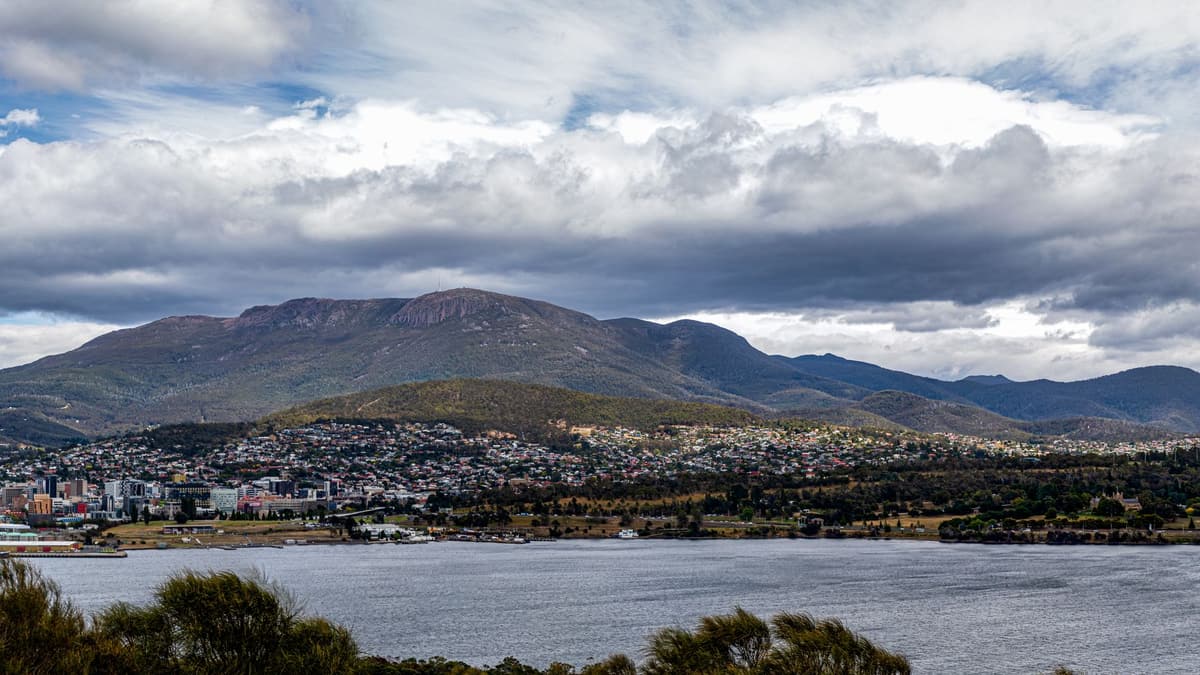
You have climbed to the top of the hill, and in front of you is the Cenotaph, a tall, plain obelisk of grey granite, around 23 meters high, standing on a stepped base. It was unveiled in December 1925 to remember the Tasmanians who died in the First World War, and later inscriptions added the wars that followed. Before that this hilltop was the Queens Battery, a gun emplacement guarding the river from 1838. Every Anzac Day, on April 25, thousands of people stand around this obelisk in the cold and dark for the dawn service, and the Last Post carries out across the water. Now turn around for the view, which is the reason the memorial is here. Below you the river opens out to the south toward the sea. Behind the city rises kunanyi, Mount Wellington, often dusted with snow in winter and sometimes wrapped in its own private weather. To the north is the long, high curve of the Tasman Bridge. Look down at the wharves too, because Hobart is one of the world's gateways to Antarctica, and you may spot the orange hull of the icebreaker Nuyina in port. The muwinina people knew this country for thousands of years before any of it was built, and the river and the mountain still carry their palawa kani names. Walk back across the Bridge of Remembrance, the way you came, to the avenue of trees on the far side, about seven minutes.
Wat er inbegrepen is
Onze tours zijn bedoeld om meditatief en meeslepend te zijn: je blijft in beweging en luistert gewoon. Samen zijn ze altijd beter, en de app speelt de vertelling synchroon af, zodat jij, je partner en je vrienden elke stop op hetzelfde moment horen.

The bridge you just crossed fixed an old wound. The Cenotaph was meant to stand beside this avenue, but when the Tasman Highway was cut through in the 1960s, the two were split apart.
De rest van deze stop zit in de volledige audiotour.
Through the trees to the river side of the path you can see the tower and pointed gables of Government House, the home of the Governor of Tasmania.
De rest van deze stop zit in de volledige audiotour.
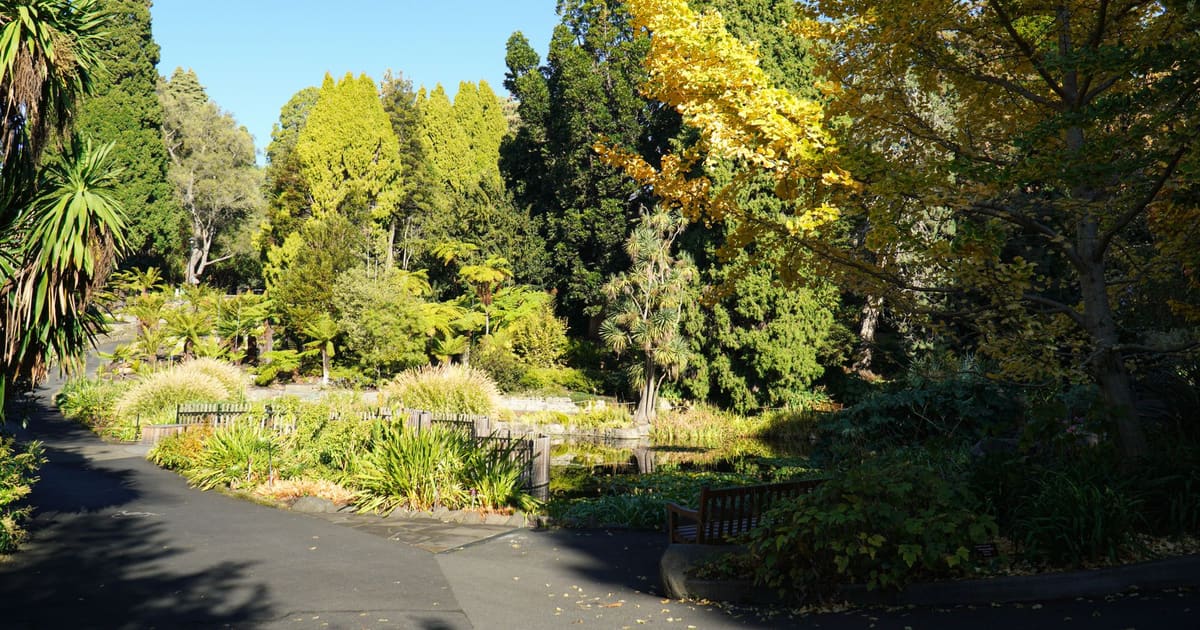
You finish in the Royal Tasmanian Botanical Gardens, founded in 1818, which makes them the second oldest botanical gardens in Australia, just two years younger than Sydney's.
De rest van deze stop zit in de volledige audiotour.
Doe deze wandeling samen met anderen tijdens de eerstvolgende geplande tour.
Ongeveer 3,2 km, circa 46 minuten in een rustig tempo · 6 stops
Vrienden lopen gratis meeOctober 11, 2026 · 9 min read
From the Hollandsche Schouwburg through the old Jewish Quarter, past the Dockworker and the Dam, to the Anne Frank House on the Prinsengracht.
October 11, 2026 · 11 min read
From Van Houten's street by the Vondelpark past Leidseplein, the Rijksmuseum passage and the famous canal bench to the Anne Frank House.

October 11, 2026 · 10 min read
Follow the last days of April and May 1945 from the Anhalter Bahnhof ruin past the Gestapo site and Brandenburg Gate to the Moltke Bridge and the Reichstag.
