
October 11, 2026 · 9 min read
Amsterdam Anne Frank Walking Tour
From the Hollandsche Schouwburg through the old Jewish Quarter, past the Dockworker and the Dam, to the Anne Frank House on the Prinsengracht.
589

October 9, 2026 · 11 min read

 Vrienden lopen gratis mee
Elke tour is ook beschikbaar als een geplande groepswandeling waar je in de app aan kunt deelnemen.
Meer audiotours in Naples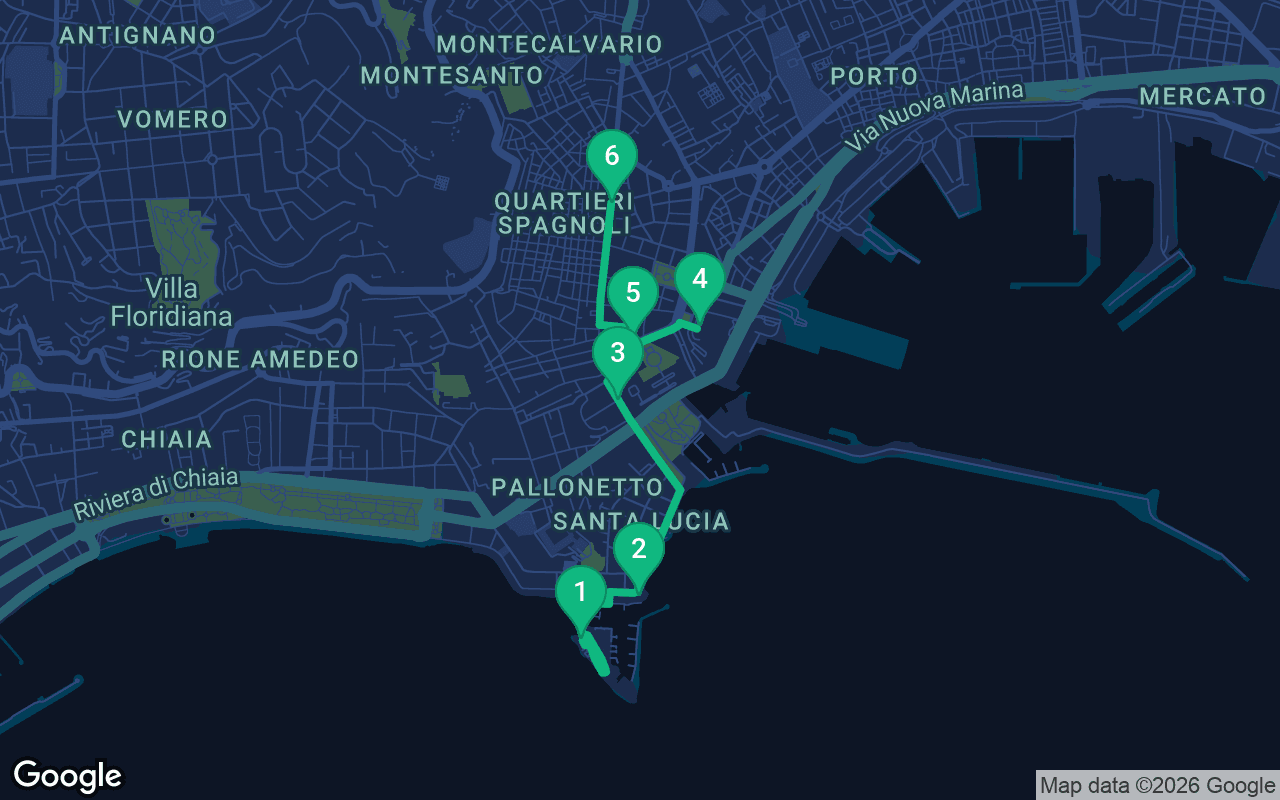
Ongeveer 2,9 km, zo'n 40 minuten op een rustig tempo.
Deze tour is ingesproken
Druk op afspelen bij de eerste 3 stops voor een demo van 30 seconden van de vertelling. In de app zijn de intro en die 3 stops volledig gratis te beluisteren, en bij elke stop klinkt een signaal zodra je aankomt. De hele tour met gids is van jou voor $8.99, een eenmalige aankoop die je voor altijd behoudt.
Werkt met Garmin, Komoot, Strava, OS Maps en elke GPX-app.
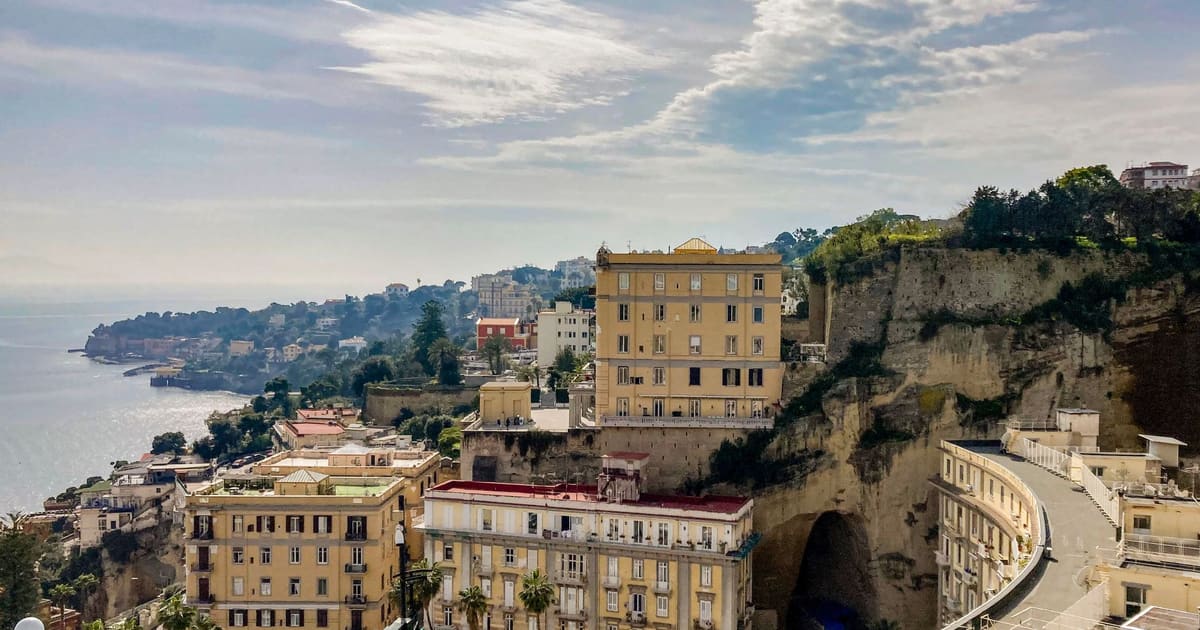
Naples has two faces. One is the tangle of ancient lanes in the old center; the other is this one, the royal city by the sea, where kings and viceroys built palaces, castles and opera houses facing the bay and Vesuvius. This walk starts on the little island where the city was born, at Castel dell'Ovo, follows the seafront to a baroque fountain with the volcano across the water, and climbs to Piazza del Plebiscito and the Royal Palace. From there it takes in the opera house, the great Angevin castle on the harbor and the glass dome of the Galleria Umberto I, before finishing underground in Toledo metro station, often called the most beautiful in Europe. It is just under three kilometers, mostly flat with one gentle climb, and it is one of the grandest self-guided walking tours you can do in southern Italy.
Allow two and a half to three hours, more if you go inside the Royal Palace or Castel Nuovo, both of which are worth an hour. The route is paved and easy, with a short uphill from the seafront to the royal square. The bay is lovely in the early morning and glorious at sunset, and there is little shade along the water, so bring a hat and water on hot days. Traffic is the main thing to watch. The seafront road and Piazza Municipio are busy and Neapolitan drivers are confident, so cross at the lights and look both ways even on one-way streets, because scooters do not always follow the arrows. Via Toledo, at the end, is pedestrian along much of its length, but delivery scooters still weave through. Keep your phone and wallet close in the crowds around the Galleria and on Via Toledo, and wear your bag in front on the metro. The palace, the castle and the opera house tours all keep their own hours and prices, and to see the best part of Toledo station you will probably need a metro ticket, so check before you go.
Stand on the causeway leading out to the honey-colored fortress squatting on the rocks in front of you. This is Castel dell'Ovo, the Castle of the Egg, the oldest castle in Naples, and you are on the very spot where the city began. The rocky islet underneath it, Megaride, is where Greek settlers from nearby Cumae first put down roots, and legend says the siren Parthenope washed ashore here after failing to lure Ulysses with her song, which is why poets still call Naples Parthenope. In Roman times the general Lucullus, famous for his feasts, had a luxurious villa on this shore, and tradition holds that the last emperor of the Western Roman Empire, the boy Romulus Augustulus, was sent here to live out his days after he was deposed in 476. Monks followed, then the Normans built the first castle in the twelfth century, and later rulers strengthened it again and again. The name comes from a medieval legend. The poet Virgil, remembered in the Middle Ages as a sorcerer, is said to have hidden a magic egg in the foundations, and as long as it stays unbroken, so the story goes, the castle and the city will stand. Walk out through the castle if it is open, for views of the bay from its terraces, and look down on the Borgo Marinari, the little fishing harbor at its foot, now full of boats and seafood restaurants. Then walk back along the causeway to the seafront, turn right along Via Partenope, and in about four minutes you reach a fountain where the road bends.
 In front of you stands the Fontana del Gigante, a triumphal arch of a fountain made in the early 1600s, when Naples was ruled by Spanish viceroys. It was carved by Michelangelo Naccherino and Pietro Bernini, the father of the more famous Gian Lorenzo, and you can pick out the coats of arms on top and the strange sea creatures spouting water into the basins below the three arches. Its name is a leftover from its first home. It originally stood up near the Royal Palace, beside a colossal ancient statue the Neapolitans called the Giant, and although the statue is long gone and the fountain was moved more than once, the name stayed, until it settled on this corner early in the twentieth century. Now turn around and look across the water. That great two-humped mountain on the far side of the bay is Vesuvius, the volcano that buried Pompeii, still active and watched day and night by scientists. To its right the Sorrento peninsula runs out to sea, and on a clear day you can see the island of Capri off its tip. This seafront, the lungomare, is where Naples comes to stroll in the evening, and in summer locals sunbathe and swim straight off the rocks below the hotels. From here, continue east along the seafront for about three minutes, then turn left up Via Cesario Console, which climbs gently and brings you out into the biggest square in the city, about eight minutes in all.
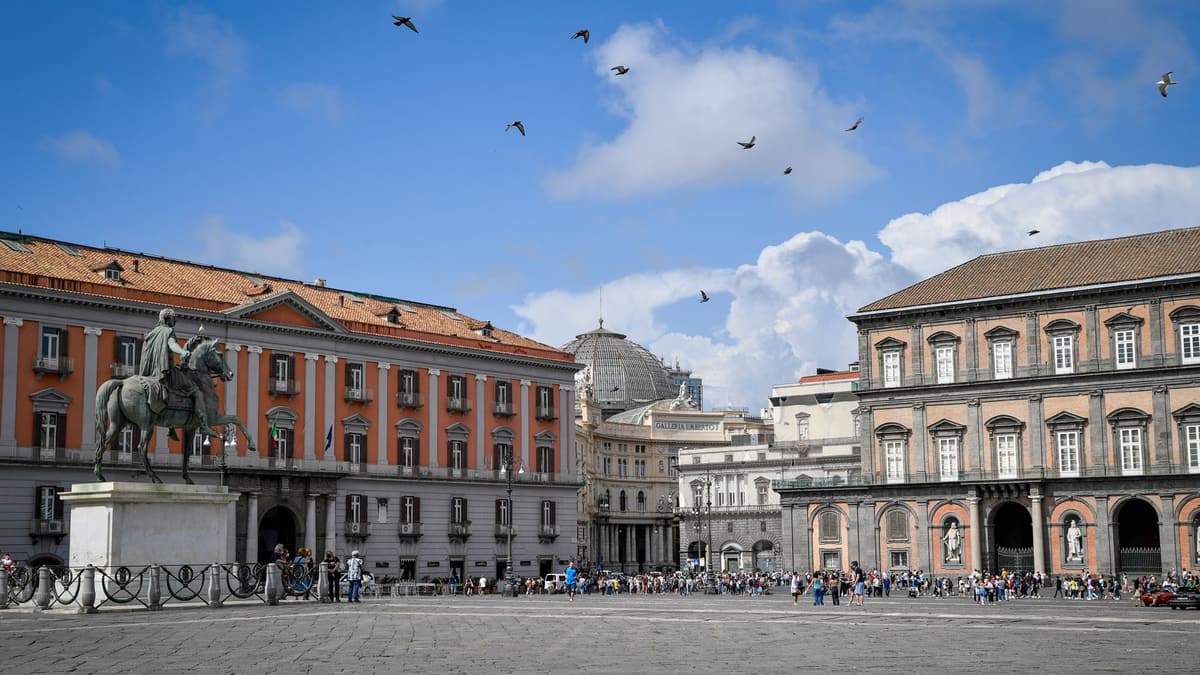
This vast, open square takes its name from the plebiscite of October 1860, the vote that made the Kingdom of the Two Sicilies part of a newly united Italy. Stand in the middle and look first at the domed church framed by a sweeping colonnade. It was begun under Joachim Murat, Napoleon's brother-in-law, who ruled Naples for a few years and planned this as a grand forum. When the Bourbon king Ferdinand returned in 1815, he turned the project into a church, San Francesco di Paola, modeled on the Pantheon in Rome, in thanks for getting his throne back. The two bronze horsemen in front of it are the Bourbon kings Charles and Ferdinand, the work of the sculptor Antonio Canova and his circle. Now turn around to face the long front of the Royal Palace, begun around 1600 for the Spanish viceroys. The eight statues in the niches along its facade are rulers of Naples across seven centuries, from the Norman Roger to Victor Emmanuel of united Italy, added in the 1880s, and it is fun to work out who they are. Where this square meets the next one stands Gran Caffè Gambrinus, the grand old café of the city, and Naples is the home of the caffè sospeso, the suspended coffee, where you pay for two and leave one for a stranger who cannot afford it. The story also goes that a pizza maker from the lanes just behind this square named pizza Margherita in 1889 for Queen Margherita of Savoy, topping it in the red, white and green of the Italian flag. Walk past the palace front to its corner and follow Via San Carlo, with the opera house on your right, down to the castle at Piazza Municipio, about six minutes.
Wat er inbegrepen is
Onze tours zijn bedoeld om meditatief en meeslepend te zijn: je blijft in beweging en luistert gewoon. Samen zijn ze altijd beter, en de app speelt de vertelling synchroon af, zodat jij, je partner en je vrienden elke stop op hetzelfde moment horen.
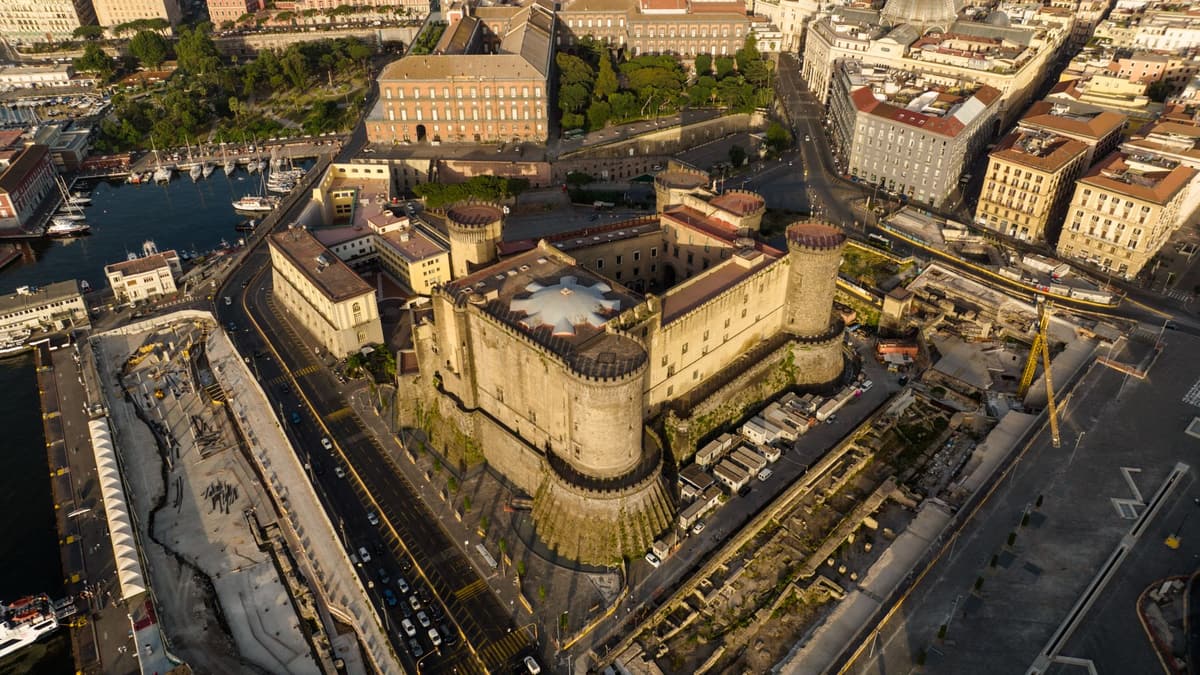
The huge stone fortress with five round towers and a moat is Castel Nuovo, the New Castle, and it earned that name in the 1270s, when Charles of Anjou made Naples his capital and needed a stronghold newer and grander than the old castles of…
De rest van deze stop zit in de volledige audiotour.
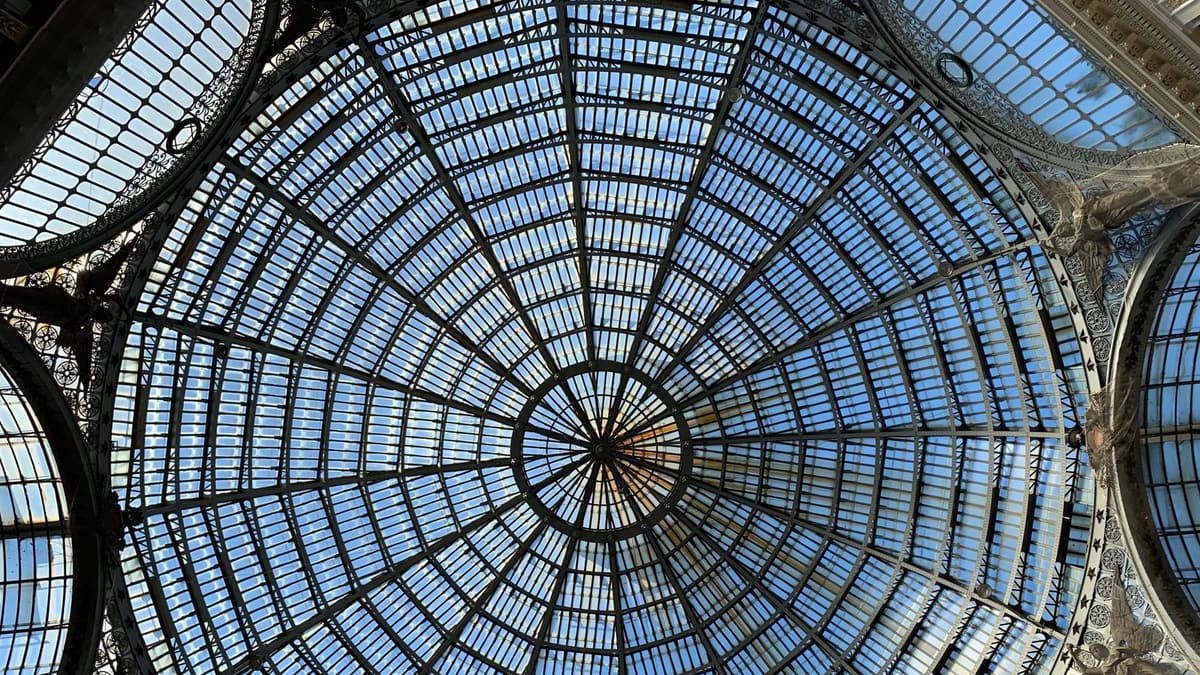
Step inside and look straight up. The Galleria Umberto I is a covered shopping arcade built in the shape of a cross, roofed with glass and iron and crowned by a dome soaring more than fifty meters over the crossing.
De rest van deze stop zit in de volledige audiotour.
You have reached Via Toledo, the long, straight street laid out in the 1530s by the Spanish viceroy Pedro de Toledo, and the steep grid of narrow lanes climbing the hill to your left is the Quartieri Spagnoli, the Spanish Quarters, built to house his…
De rest van deze stop zit in de volledige audiotour.
Doe deze wandeling samen met anderen tijdens de eerstvolgende geplande tour.
Ongeveer 2,9 km, circa 40 minuten in een rustig tempo · 6 stops
Vrienden lopen gratis meeOctober 11, 2026 · 9 min read
From the Hollandsche Schouwburg through the old Jewish Quarter, past the Dockworker and the Dam, to the Anne Frank House on the Prinsengracht.
October 11, 2026 · 11 min read
From Van Houten's street by the Vondelpark past Leidseplein, the Rijksmuseum passage and the famous canal bench to the Anne Frank House.

October 11, 2026 · 10 min read
Follow the last days of April and May 1945 from the Anhalter Bahnhof ruin past the Gestapo site and Brandenburg Gate to the Moltke Bridge and the Reichstag.
