
October 11, 2026 · 9 min read
Amsterdam Anne Frank Walking Tour
From the Hollandsche Schouwburg through the old Jewish Quarter, past the Dockworker and the Dam, to the Anne Frank House on the Prinsengracht.
589

October 8, 2026 · 11 min read

 Vrienden lopen gratis mee
Elke tour is ook beschikbaar als een geplande groepswandeling waar je in de app aan kunt deelnemen.
Meer audiotours in Savannah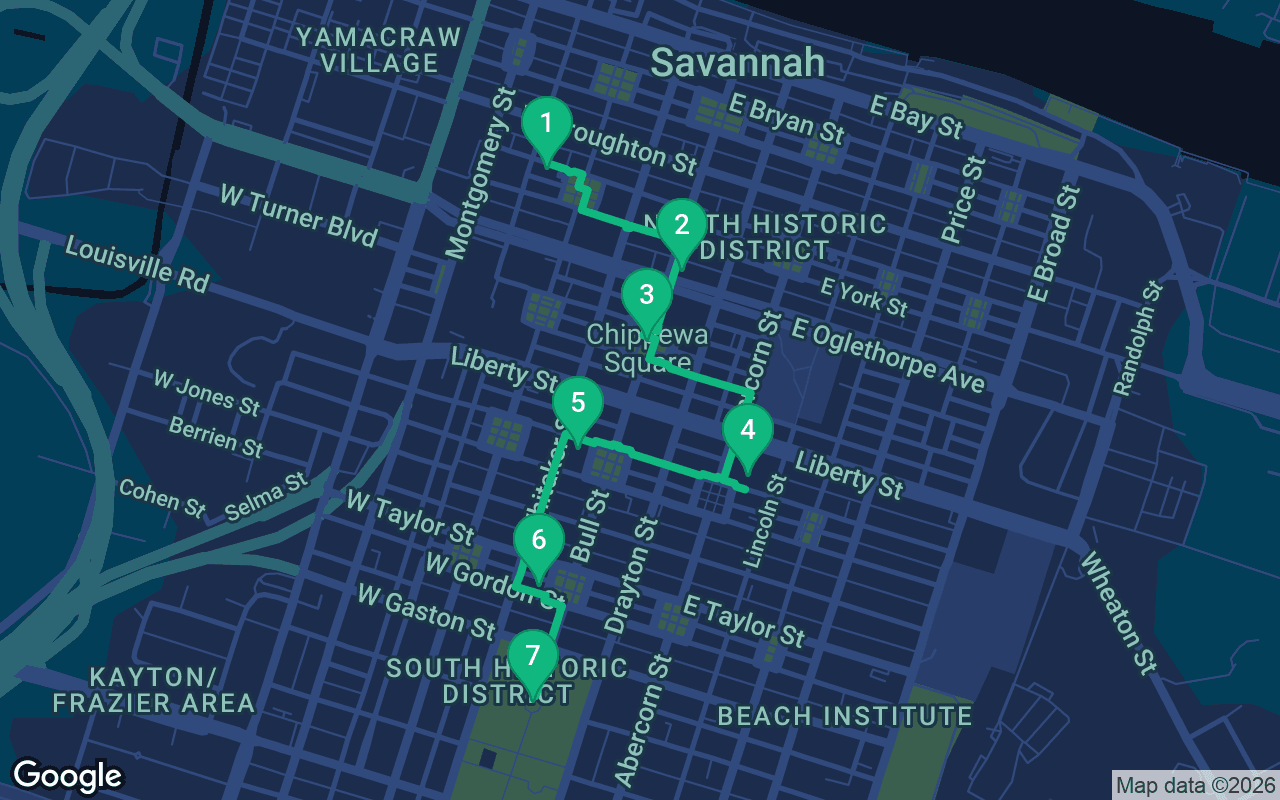
Ongeveer 2,1 km, zo'n 32 minuten op een rustig tempo.
Deze tour is ingesproken
Druk op afspelen bij de eerste 3 stops voor een demo van 30 seconden van de vertelling. In de app zijn de intro en die 3 stops volledig gratis te beluisteren, en bij elke stop klinkt een signaal zodra je aankomt. De hele tour met gids is van jou voor $7.99, een eenmalige aankoop die je voor altijd behoudt.
Werkt met Garmin, Komoot, Strava, OS Maps en elke GPX-app.
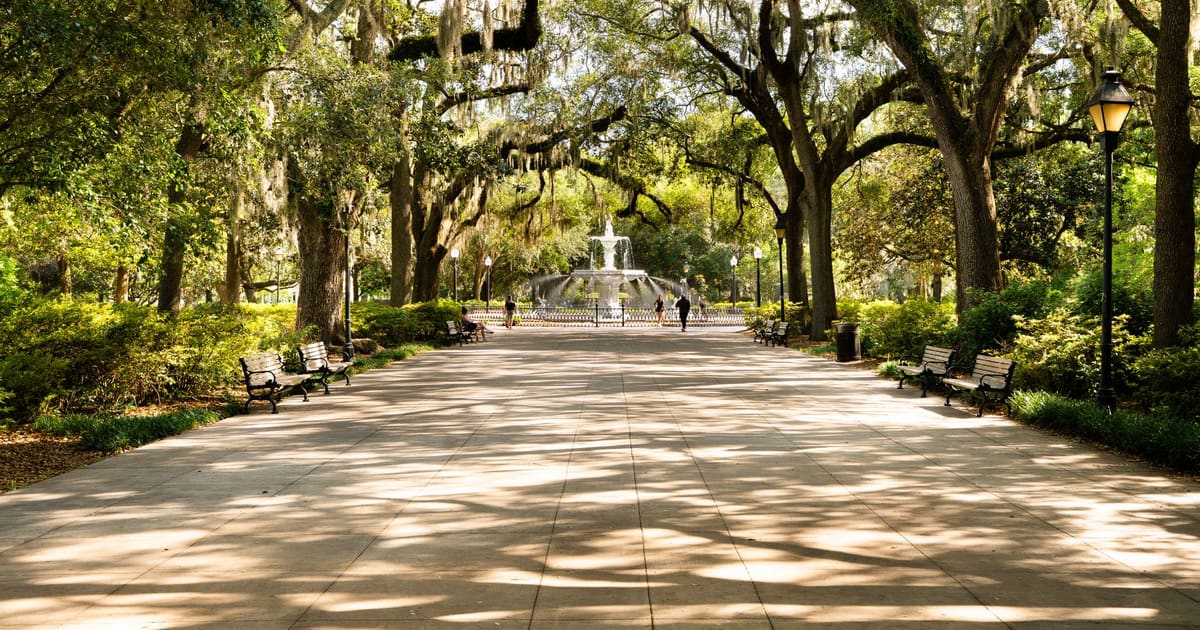
Walk south from the river in Savannah and the city turns into a garden. Every few minutes the street opens into a square, a small park of live oaks hung with gray Spanish moss, ringed by churches and mansions, and then closes again, and then opens into the next one. This walk follows that rhythm from the Telfair Academy, the oldest public art museum in the South, past the birthplace of the founder of the Girl Scouts, the square where Forrest Gump waited for his bus, a twin-spired cathedral, General Sherman's headquarters and the most famous house in Midnight in the Garden of Good and Evil, to the white fountain at the head of Forsyth Park. It is about 2.1 kilometers, roughly a mile and a third, entirely flat and almost entirely shaded, and it is among the loveliest self-guided walking tours in America.
Plan on an hour and a half at a slow, shady stroll, and more if you want to go inside some of the houses: the Telfair Academy, the Juliette Gordon Low Birthplace and the Mercer Williams House all offer visits, but on their own schedules, so check before you go. The ground is level the whole way, though the old brick and slate sidewalks are buckled in places by tree roots, so watch your feet as much as the scenery. The oaks keep the squares cool even in summer, but the humidity is serious from June through September, so take water and rest on the benches. Spring, when the azaleas bloom, is the prettiest time of year. Traffic in Savannah flows around the squares rather than through them, and drivers can appear from unexpected angles, so look both ways at every corner. The cathedral is an active church, so be quiet inside and check whether a service is on. And a word about the Spanish moss: it is beautiful, but leave it on the trees, because the clumps that fall can harbor tiny biting mites known locally as redbugs.
You start on Telfair Square, in front of a cream-colored Regency mansion with a columned porch and a row of statues standing before it. This is the Telfair Academy, the oldest public art museum in the South. It was built in 1819 for Alexander Telfair, son of a Georgia governor, to designs by William Jay, the young English architect who gave Savannah several of its finest houses. His sister Mary Telfair, who never married, left the house and its contents in 1875 to become a museum and school of art, and it opened its doors in 1886. The story goes that her will set strict conditions, including no eating or drinking in the building. The statues out front, added when it became a museum, represent great artists of the past, among them Michelangelo and Rembrandt. Across the square, the sleek white building is the Jepson Center, the museum's modern wing, designed by Moshe Safdie. Notice too how this square is built. In Oglethorpe's plan, the lots on the east and west sides of each square were set aside for churches and public buildings, and those on the north and south for houses, which is why you so often find a church and a mansion facing each other across the greenery. From the museum, walk through the square to York Street on its south side, turn left and follow York Street east for two blocks to Bull Street, then turn right, about five minutes in all.
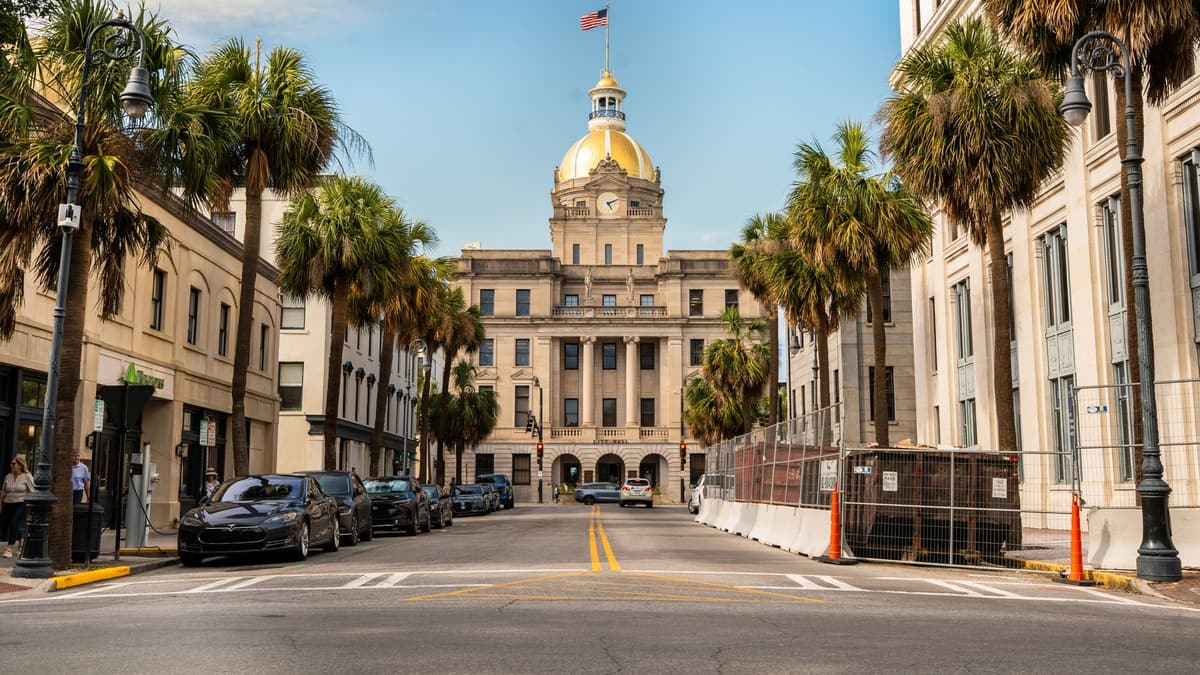 As you turned onto Bull Street you passed Wright Square. Look back at it. In the middle stands a monument to William Washington Gordon, a railroad founder, raised in the 1880s on the spot where Tomochichi, the Yamacraw leader who welcomed the first colonists, had been buried. In 1899 Gordon's own daughter-in-law led a campaign to place the great granite boulder you can see in the corner of the square in Tomochichi's honor. Her daughter was born in the tall house in front of you, on the corner of Oglethorpe Avenue, on October 31, 1860. Her name was Juliette Gordon, and everyone called her Daisy. She grew up adventurous, artistic and stubborn, and lost most of her hearing as an adult, partly, the family story goes, because a grain of rice thrown at her wedding lodged in her ear. Her marriage to William Mackay Low, an Englishman, was unhappy. In 1911, in Britain, she met Robert Baden-Powell, the founder of the Boy Scouts, and came home inspired. On March 12, 1912, she gathered eighteen girls in Savannah to form the first troop of what became the Girl Scouts of the USA, now millions strong. The Girl Scouts own this house, and girls from across the country come here on pilgrimage. Walk south on Bull Street, across Oglethorpe Avenue, for about two minutes.
You may recognize this square even if you have never been here. In the opening of the 1994 film Forrest Gump, Tom Hanks sat on a bench on the north side of this square, telling strangers about his life while he waited for a bus, with a box of chocolates on his knee. The bench was a prop, placed for the filming, and it now lives in the Savannah History Museum, so you will not find it here, but people still come to sit where it stood. The real star of the square is the bronze figure in the middle. That is James Oglethorpe, the founder of Georgia, dressed as an eighteenth-century soldier, sword at his side. The statue was made by Daniel Chester French, who later sculpted the seated Lincoln in the Lincoln Memorial, and was unveiled in 1910. Notice which way Oglethorpe faces: south, toward Spanish Florida, the enemy the young colony was founded to hold back. The square itself was laid out in 1815 and named for a battle of the War of 1812. On its edges stand the First Baptist Church, from the 1830s, and the Savannah Theatre, which has hosted performances on this corner since 1818. Leave by the south side of the square and walk east along Perry Street for two blocks, then turn right on Abercorn Street toward the twin spires, about six minutes.
Wat er inbegrepen is
Onze tours zijn bedoeld om meditatief en meeslepend te zijn: je blijft in beweging en luistert gewoon. Samen zijn ze altijd beter, en de app speelt de vertelling synchroon af, zodat jij, je partner en je vrienden elke stop op hetzelfde moment horen.
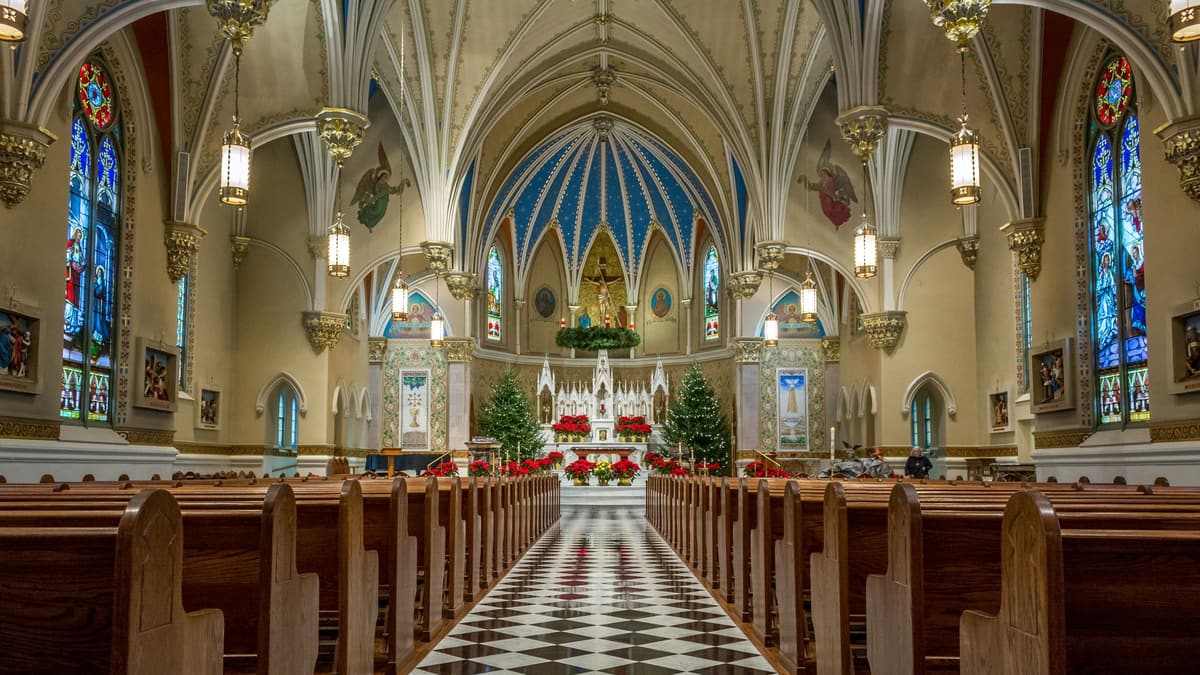
The twin spires you have been following belong to the Cathedral of St John the Baptist, the seat of the Catholic bishop of Savannah, standing on the corner of Lafayette Square.
De rest van deze stop zit in de volledige audiotour.
On the west side of Madison Square stands a house unlike any other on the walk, a Gothic Revival mansion with pointed windows, oriels and lacy cast-iron porches. It was built in the 1850s for Charles Green, an English-born cotton merchant.
De rest van deze stop zit in de volledige audiotour.
Facing Monterey Square on its west side is a red brick Italianate mansion with tall arched windows and iron balconies, and you may already know it from the cover of a book.
De rest van deze stop zit in de volledige audiotour.
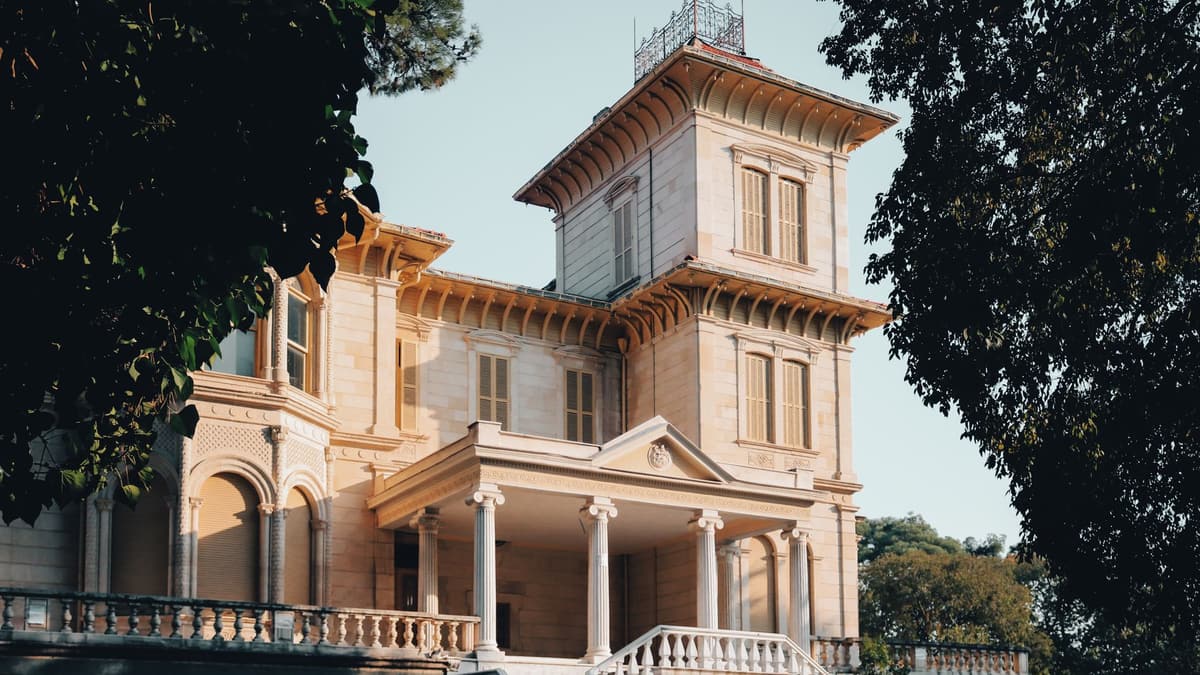
You end at the white cast iron fountain at the head of Forsyth Park, and it is one of the great finishing lines of any walk in the South.
De rest van deze stop zit in de volledige audiotour.
Doe deze wandeling samen met anderen tijdens de eerstvolgende geplande tour.
Ongeveer 2,1 km, circa 32 minuten in een rustig tempo · 7 stops
Vrienden lopen gratis meeOctober 11, 2026 · 9 min read
From the Hollandsche Schouwburg through the old Jewish Quarter, past the Dockworker and the Dam, to the Anne Frank House on the Prinsengracht.
October 11, 2026 · 11 min read
From Van Houten's street by the Vondelpark past Leidseplein, the Rijksmuseum passage and the famous canal bench to the Anne Frank House.

October 11, 2026 · 10 min read
Follow the last days of April and May 1945 from the Anhalter Bahnhof ruin past the Gestapo site and Brandenburg Gate to the Moltke Bridge and the Reichstag.
