
October 11, 2026 · 9 min read
Amsterdam Anne Frank Walking Tour
From the Hollandsche Schouwburg through the old Jewish Quarter, past the Dockworker and the Dam, to the Anne Frank House on the Prinsengracht.
589

October 9, 2026 · 12 min read

 Vrienden lopen gratis mee
Elke tour is ook beschikbaar als een geplande groepswandeling waar je in de app aan kunt deelnemen.
Meer audiotours in Tokyo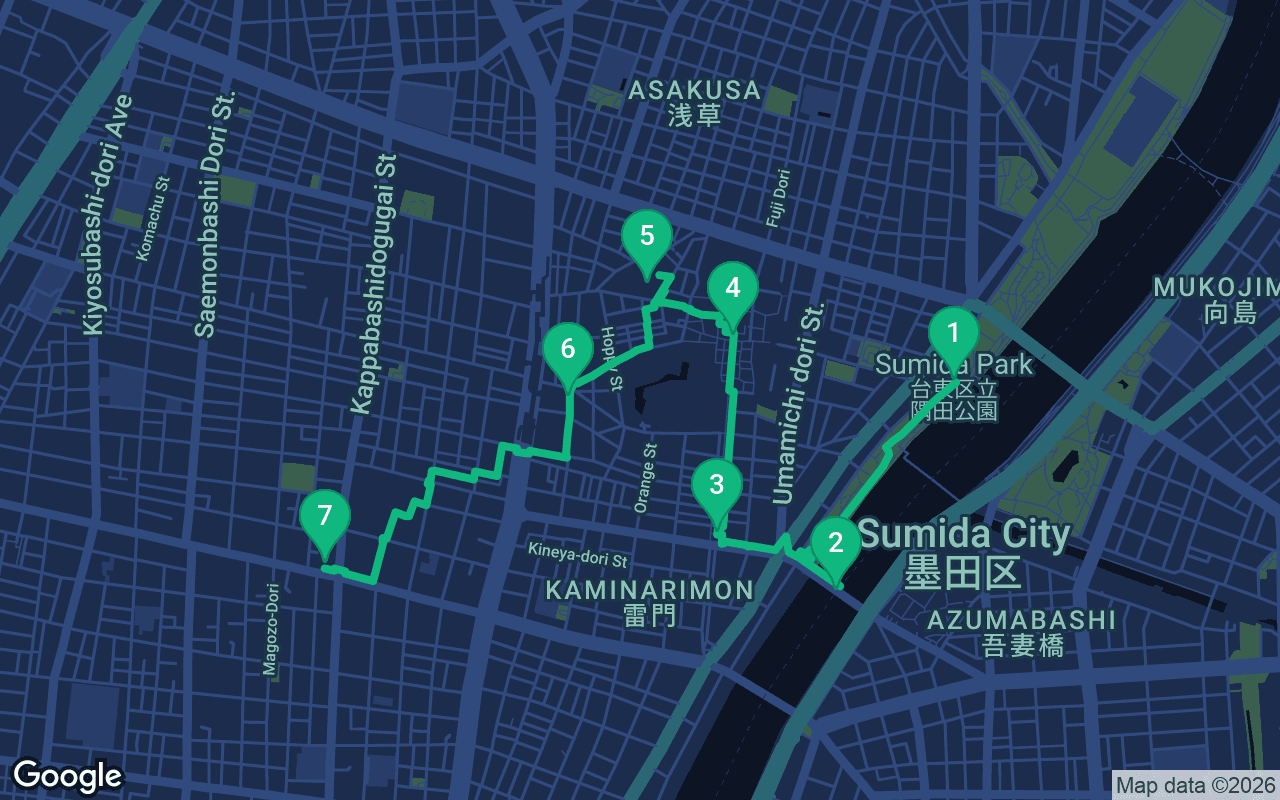
Ongeveer 2,8 km, zo'n 40 minuten op een rustig tempo.
Deze tour is ingesproken
Druk op afspelen bij de eerste 3 stops voor een demo van 30 seconden van de vertelling. In de app zijn de intro en die 3 stops volledig gratis te beluisteren, en bij elke stop klinkt een signaal zodra je aankomt. De hele tour met gids is van jou voor $8.99, een eenmalige aankoop die je voor altijd behoudt.
Werkt met Garmin, Komoot, Strava, OS Maps en elke GPX-app.
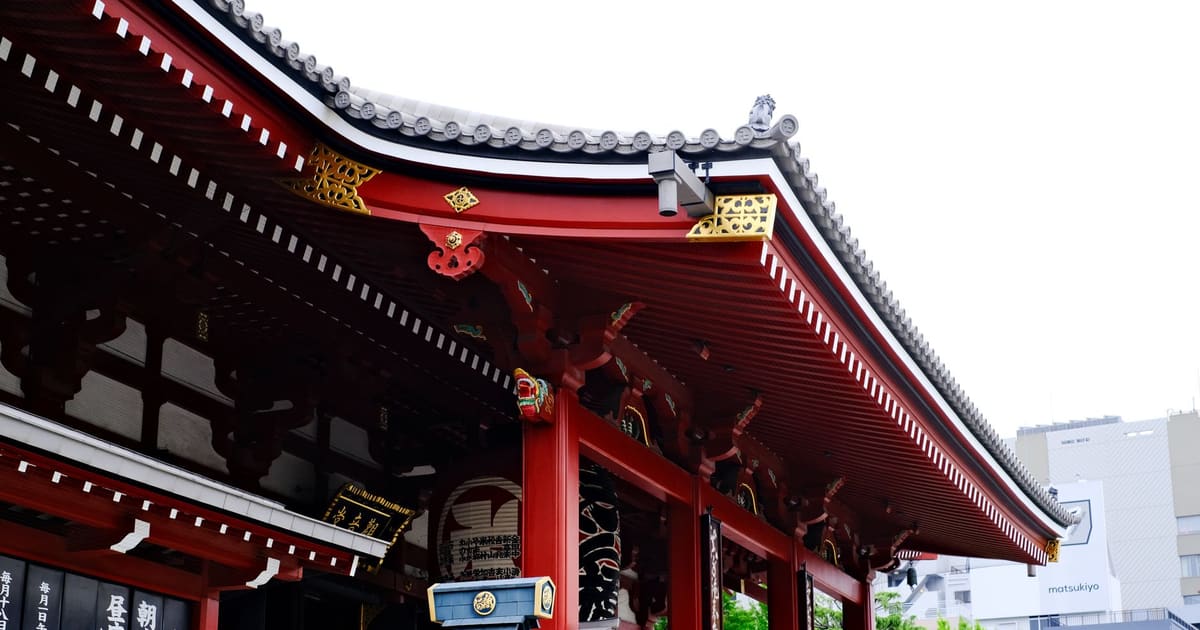
Asakusa is what is left of the old low city, the Shitamachi, where the merchants, craftsmen and pleasure seekers of Edo lived along the river while the samurai kept to the hills. Earthquake and war knocked most of it down in the twentieth century, but it was rebuilt in the same spirit, and it still feels like a neighborhood with its sleeves rolled up. This walk starts on the Sumida riverbank with the Skytree across the water, crosses to the red Azumabashi bridge, passes under the Thunder Gate to Senso-ji, the city's oldest temple, and then slips behind it into the old entertainment streets of Rokku before finishing on Kappabashi, the street where Tokyo's restaurants buy their knives and their plastic food. It is about 2.8 kilometers, under two miles, entirely flat, and one of the most atmospheric self-guided walking tours you can do in Tokyo.
The walking takes about forty minutes, but give it two and a half to three hours, because Nakamise-dori and the temple grounds slow everyone down and Kappabashi is impossible to rush. The route is flat and paved, with a little gravel around the temple. Early morning is the best time by far: the Thunder Gate and the shopping street are calm before about nine, and the temple grounds are lovely in the low light. Senso-ji is also beautiful after dark, when the main hall and the pagoda are lit up and the crowds thin out. Summer in Tokyo is hot and very humid, and there is little shade apart from the trees in Sumida Park, so carry water. Late March and early April bring the cherry blossoms along the river, along with enormous crowds. Hanayashiki, Engei Hall and the Kappabashi shops all keep their own hours, so check before you go. Carry some coins for temple offerings and fortunes, and a small bag for your own rubbish, because public bins are rare in Tokyo and people simply take their trash home.
Stand on the riverside promenade and turn to face the water. This is the Sumida River, the great working river of old Edo, and across it, a little to your right, the Tokyo Skytree climbs out of the low rooftops of the far bank. It opened in 2012 and stands 634 meters tall, a number chosen with a wink, because 6, 3 and 4 can be read in Japanese as mu, sa and shi, Musashi, the old name of the province Tokyo grew up in. The park around you was laid out after the Great Kanto Earthquake of 1923 flattened this district, one of the new public spaces the city built as it recovered, but people were coming to this riverbank long before that. In the early 1700s the shogun Tokugawa Yoshimune had cherry trees planted along the embankment on the opposite bank, and the story goes that he was happy for crowds of blossom viewers to tramp along the levee, packing the earth harder with every picnic. Spring blossom viewing, hanami, has filled these banks ever since, and the river's famous summer fireworks festival traces its roots to the same century. When you are ready, follow the riverside path south, downstream, with the water on your left, for about six minutes until you reach the red bridge.
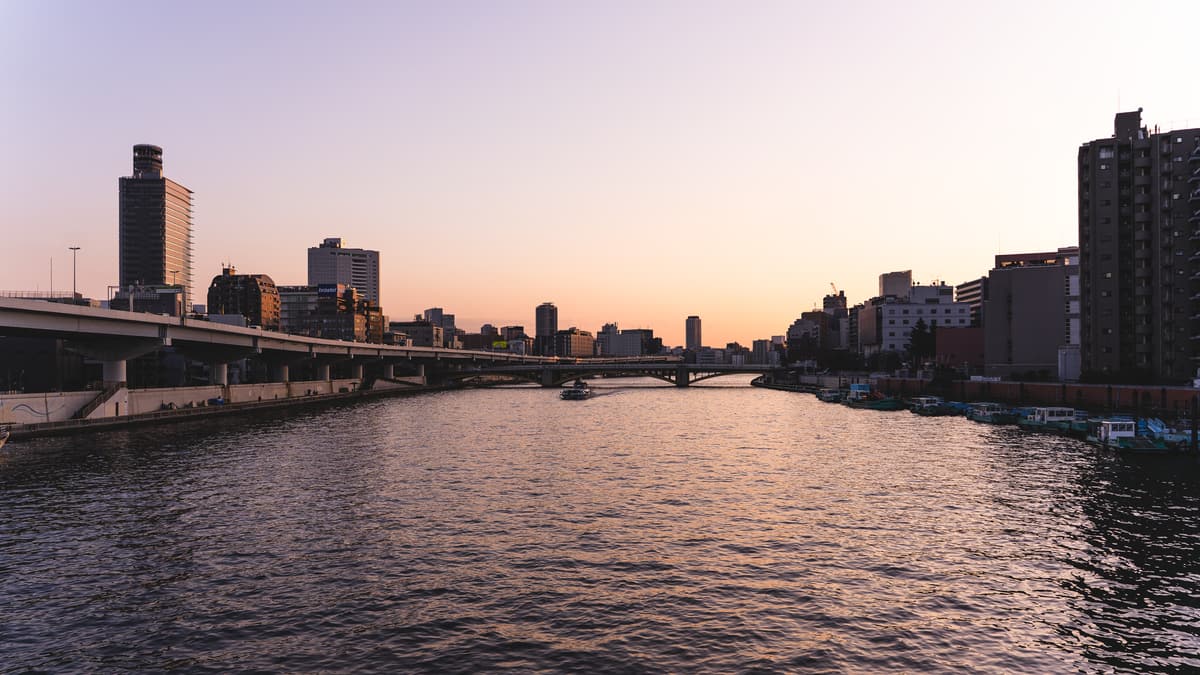
 Walk a little way out onto Azumabashi, the bright red bridge, and look across to the far bank. Azuma means east, and the bridge has carried people over to the eastern side of the river since the 1770s, though the steel arch under your feet was built in 1931 to replace a span lost in the 1923 earthquake. The view from here is one of the classic pictures of modern Tokyo. On the far side stand two buildings belonging to the Asahi brewery. The tall one is glass the color of amber with a white top, meant to look like a glass of beer with a head of foam. Beside it is a squat black building crowned with an enormous golden shape, designed by the French designer Philippe Starck and finished in 1989. It is meant to be a flame, the burning heart of the company, though Tokyo has a ruder nickname for it, which you can probably guess from its shape. The Skytree rises behind both of them, and the three together make a picture almost everyone stops to take. Look downstream too, where water buses pull in at the pier by the bridge; a couple of them, sleek and silver like spaceships, were designed by the manga artist Leiji Matsumoto. Come back off the bridge, cross the busy Edo-dori at the junction, and walk west along Kaminarimon-dori, past the entrances to Asakusa Station. In about three minutes a huge red lantern appears on your right.
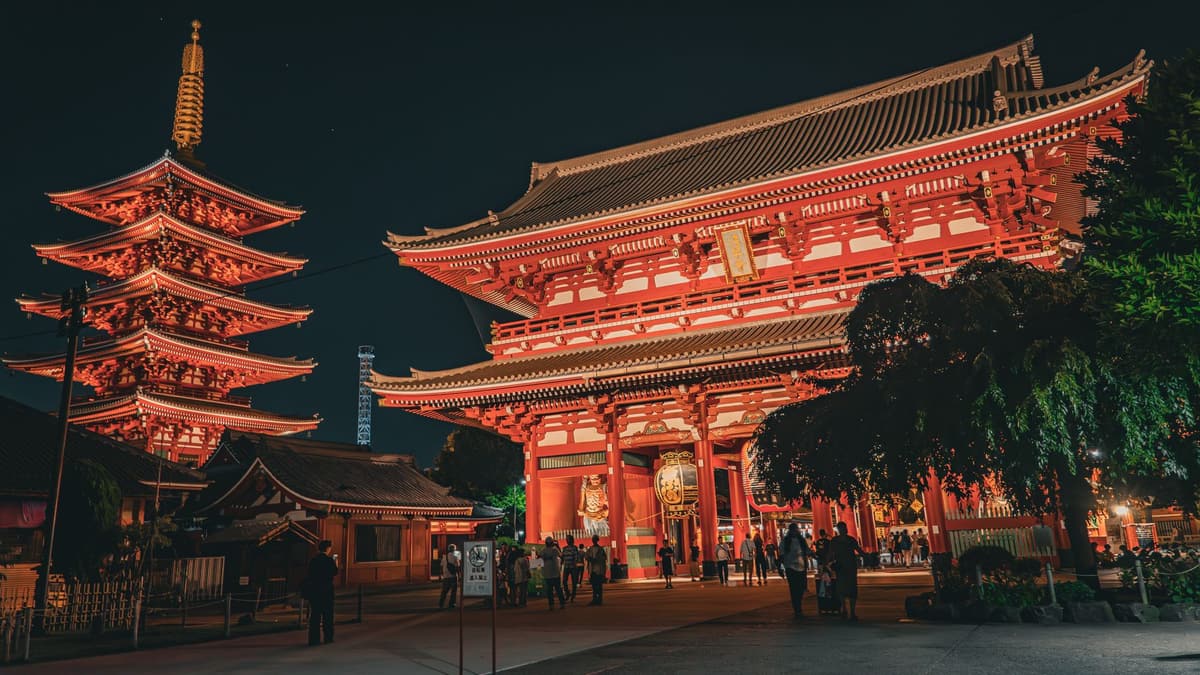
You are standing in front of Kaminarimon, the Thunder Gate, the outer entrance to Senso-ji and the most photographed spot in Asakusa. Its full name means the Gate of the Wind God and the Thunder God, and the two of them glare out at you from either side. On the right is Fujin, the god of wind, carrying a bag of air over his shoulders. On the left is Raijin, the god of thunder, surrounded by the drums he beats to make storms. Between them hangs the giant red paper lantern, nearly four meters tall and weighing roughly 700 kilograms. Step underneath and look straight up, because the base of the lantern is carved with a wooden dragon that most people never notice. The temple dates the first gate here to the tenth century, but it burned again and again, and after a fire in 1865 the spot stood empty for almost a hundred years. The gate you see was built in 1960 with money from Konosuke Matsushita, the founder of Panasonic, and the story goes that he had prayed to the temple's Kannon when he was ill and paid for the gate in thanks after he recovered. His company still looks after the lantern and has replaced it several times. Pass through the gate and walk straight ahead up Nakamise-dori, the long lane of stalls. The temple's main hall is about five minutes ahead, through a second, even bigger gate.
Wat er inbegrepen is
Onze tours zijn bedoeld om meditatief en meeslepend te zijn: je blijft in beweging en luistert gewoon. Samen zijn ze altijd beter, en de app speelt de vertelling synchroon af, zodat jij, je partner en je vrienden elke stop op hetzelfde moment horen.
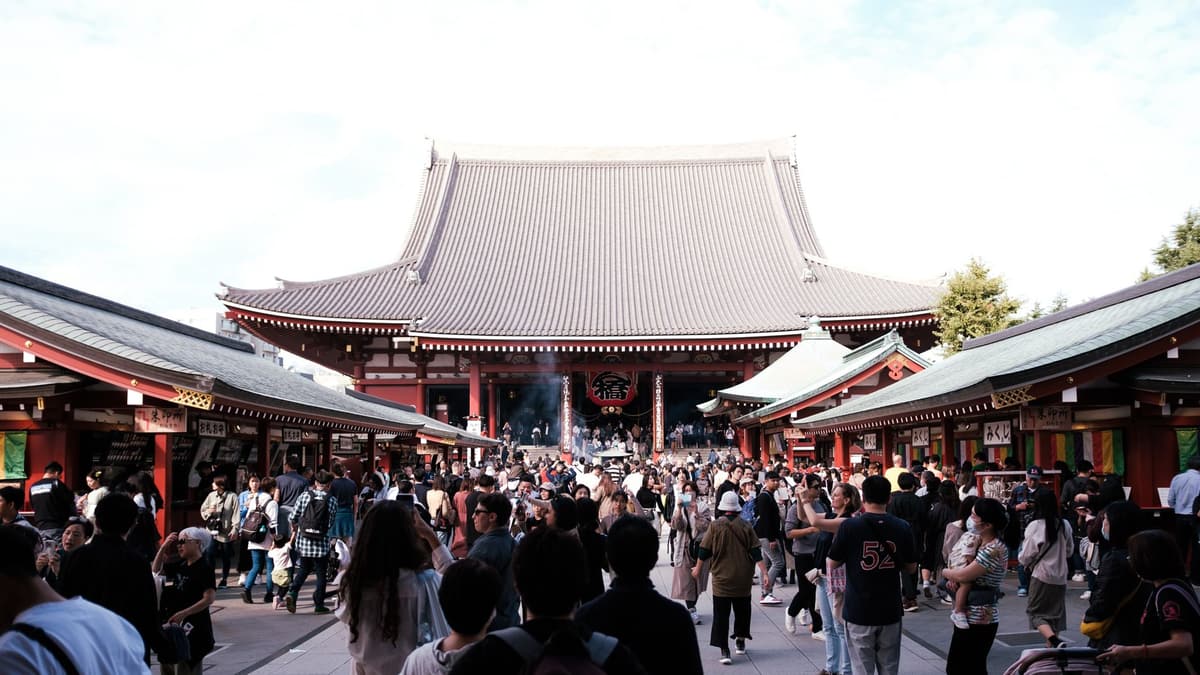
You have walked up Nakamise-dori, the Inside Shops, one of the oldest shopping streets in Japan, past stalls selling rice crackers, folding fans and little cakes shaped like the gate you just passed.
De rest van deze stop zit in de volledige audiotour.
In front of you is Hanayashiki, which means Flower Mansion, and it is a theme park squeezed into the space of a city block.
De rest van deze stop zit in de volledige audiotour.
Look at the front of Asakusa Engei Hall, hung with paper lanterns, banners and wooden boards painted with performers' names.
De rest van deze stop zit in de volledige audiotour.
Look up at the building on the corner, where a giant chef's head in a white hat gazes down the street.
De rest van deze stop zit in de volledige audiotour.
Doe deze wandeling samen met anderen tijdens de eerstvolgende geplande tour.
Ongeveer 2,8 km, circa 40 minuten in een rustig tempo · 7 stops
Vrienden lopen gratis meeOctober 11, 2026 · 9 min read
From the Hollandsche Schouwburg through the old Jewish Quarter, past the Dockworker and the Dam, to the Anne Frank House on the Prinsengracht.
October 11, 2026 · 11 min read
From Van Houten's street by the Vondelpark past Leidseplein, the Rijksmuseum passage and the famous canal bench to the Anne Frank House.

October 11, 2026 · 10 min read
Follow the last days of April and May 1945 from the Anhalter Bahnhof ruin past the Gestapo site and Brandenburg Gate to the Moltke Bridge and the Reichstag.
