
October 11, 2026 · 9 min read
Amsterdam Anne Frank Walking Tour
From the Hollandsche Schouwburg through the old Jewish Quarter, past the Dockworker and the Dam, to the Anne Frank House on the Prinsengracht.
589

October 9, 2026 · 10 min read

 Vrienden lopen gratis mee
Elke tour is ook beschikbaar als een geplande groepswandeling waar je in de app aan kunt deelnemen.
Meer audiotours in Utrecht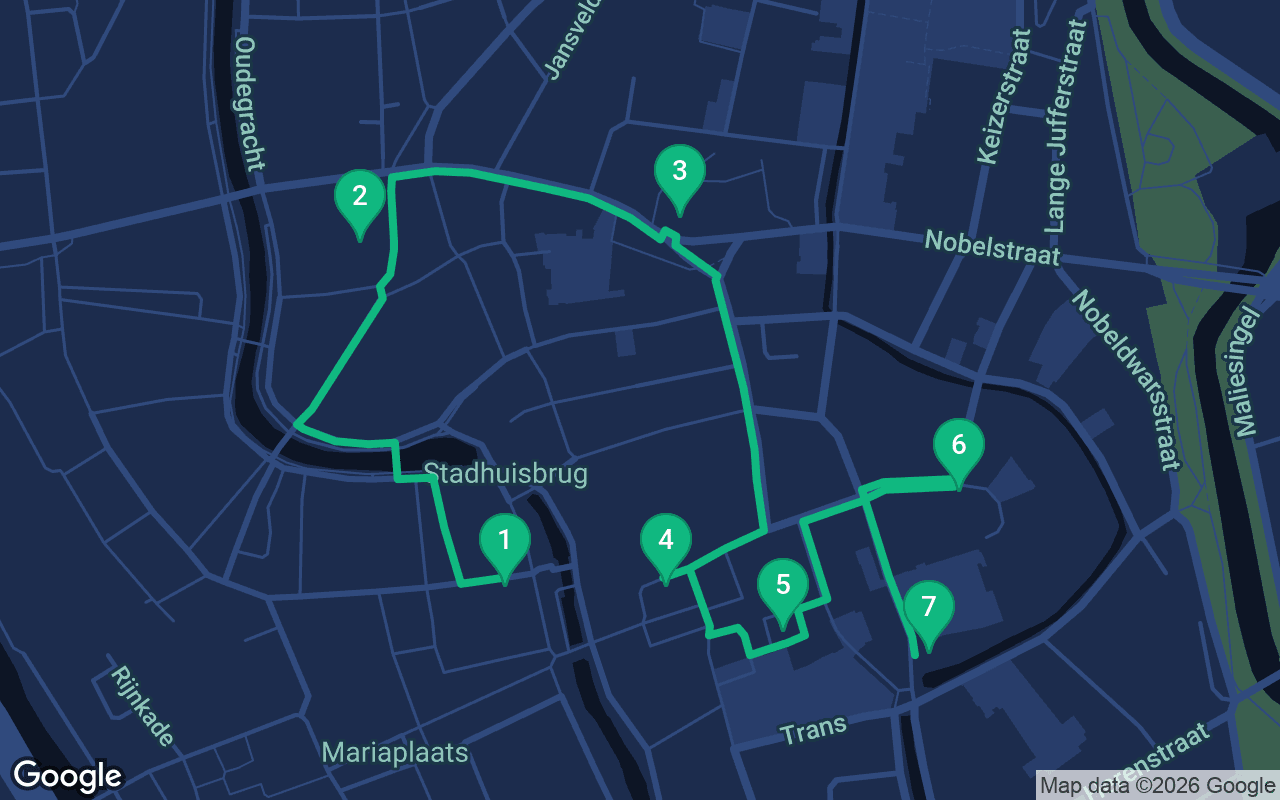
Ongeveer 1,6 km, zo'n 21 minuten op een rustig tempo.
Deze tour is ingesproken
Druk op afspelen bij de eerste 3 stops voor een demo van 30 seconden van de vertelling. In de app zijn de intro en die 3 stops volledig gratis te beluisteren, en bij elke stop klinkt een signaal zodra je aankomt. De hele tour met gids is van jou voor $6.99, een eenmalige aankoop die je voor altijd behoudt.
Werkt met Garmin, Komoot, Strava, OS Maps en elke GPX-app.
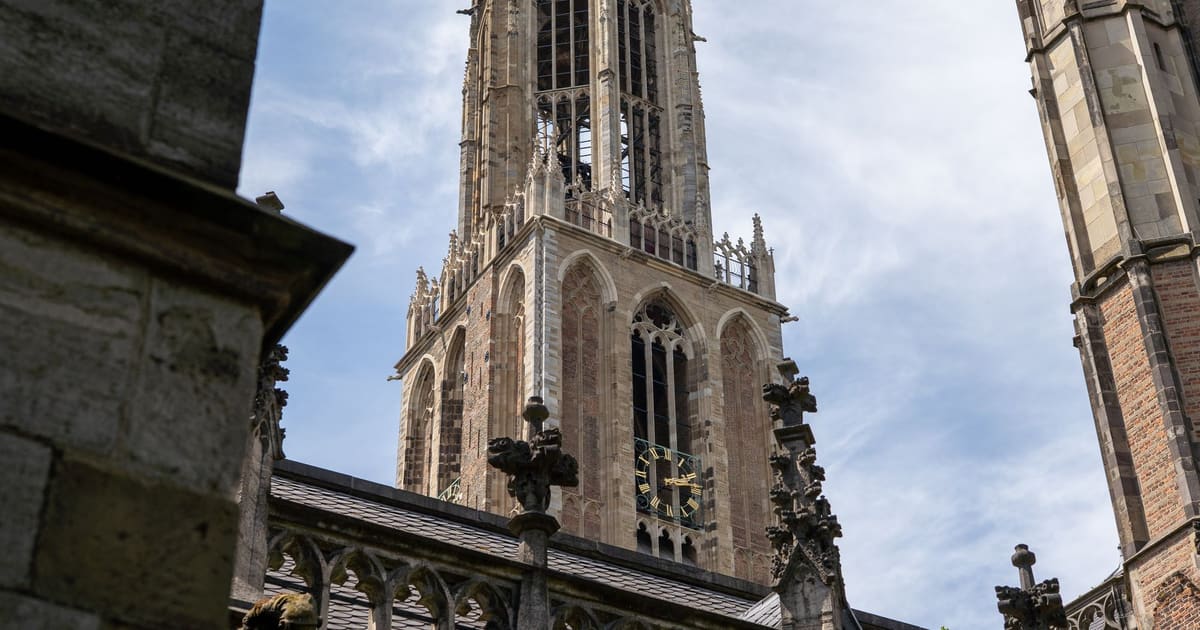
Utrecht grew up around a church, and you can still feel it. For centuries this was the seat of powerful bishops, and right in the middle of the old town rises the Dom Tower, the tallest church tower in the Netherlands, with a ring of old churches gathered around it. This walk starts at a museum of musical clocks in a medieval parish church, takes in a dazzling 1920s post office, crosses the Oudegracht canal and circles the Dom, ending at the house built for the only Dutch pope. It is short, about one and a half kilometers, and flat, so it leaves plenty of time for climbing the tower and stepping inside, and it is one of the most rewarding self-guided walking tours in the country for a first morning in Utrecht.
The walking takes barely half an hour, but plan on two to three hours, or longer if you climb the Dom Tower. The climb is by guided tour only, up a few hundred narrow, winding steps, so book ahead and check before you go. Museum Speelklok and the churches keep their own hours, and some churches open only on certain days. The streets are flat and paved, with cobbles here and there. Utrecht is one of the busiest cycling cities in the world, and bikes have priority on the bike paths, which are usually paved in red, so stay off the red lanes and look both ways at every crossing, including the ones that look empty. The canal edges have no railings, and the lower wharves of the Oudegracht sit right at the water's level, so watch children there. Mornings are calm, and on Saturdays the square around the Janskerk usually fills with a flower market. Bring an umbrella, because Dutch weather turns fast, and the Pandhof is a lovely place to sit out a shower under the arches.
Begin outside Museum Speelklok, which lives inside the Buurkerk, the oldest parish church in Utrecht. Its name means the neighborhood church, and that is what it was: while the bishops and canons had the great cathedral a stone's throw away, this was where ordinary townspeople were baptized, married and buried. One of its strangest stories belongs to Sister Bertken, a holy woman who in the fifteenth century chose to be walled into a tiny cell built against this church, and lived there for the rest of her long life, praying and writing devotional texts, with only a small window onto the world. Today the church has a much noisier job. It holds a collection of self-playing musical instruments, from delicate musical clocks and singing mechanical birds to music boxes and the huge, brightly painted street organs that still turn up in Dutch shopping streets, cranked by an organ grinder with a collecting tin. The best part is that the guides play them for you, and hearing a great organ fill the old nave with music is a joy. Check before you go for times. When you come out, head north through the shopping lanes for about four minutes to the wide square called Neude, where a grand brick building fills one side.
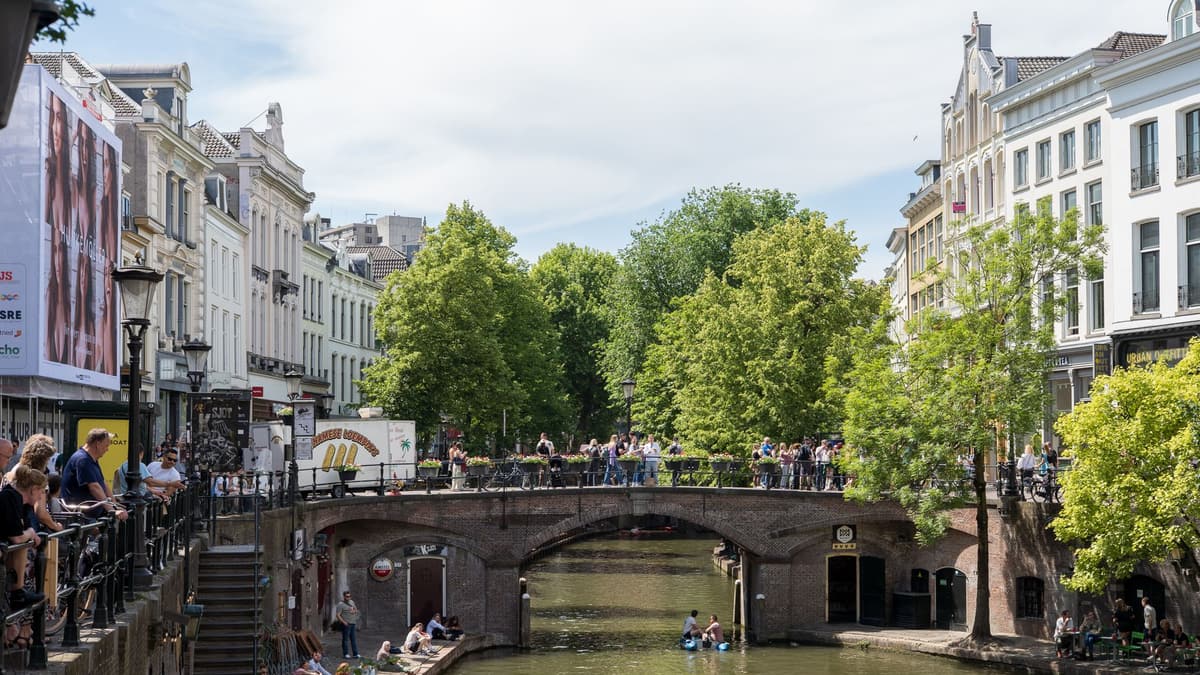
 Stand back on the square to take in the old Neude Post Office, then step through the doors, because the real show is inside. The building went up in the 1920s, designed by the architect Joseph Crouwel, in the expressive brick style of the Amsterdam School, the Dutch movement that loved rich textures, sculpture and dramatic forms. Walk into the main hall and look up. Great parabolic arches rise overhead like the ribs of a whale, lined with glazed yellow bricks that catch the light, and the whole space feels more like a cathedral than a place to buy stamps. That was the point. In the early twentieth century the post office was a symbol of a modern, connected nation, and buildings like this one were designed to impress. After the postal service moved out, the building was carefully restored and reopened in 2020 as the city's main library, with shops and a cafe, so the hall is busy again with people reading, working and meeting friends. It is free to walk in and look around, and the cafe makes a good early stop. Back outside, head east, cross the Oudegracht by one of its bridges, and continue to the tree-filled square around the Janskerk, about four minutes away. As you cross, look down at the water to see the old wharves running along both sides, a level below the street.
Before you is the Janskerk, the church of Saint John, standing on a broad square shaded by tall old trees. It was founded in the eleventh century by Bishop Bernold, one of the most ambitious men ever to rule Utrecht, and it was part of a grand design. Bernold planned a cross of churches around his cathedral: the Pieterskerk to the east, the Abbey of Saint Paul to the south, the Mariakerk to the west, and this church to the north, with the Dom at the center, so that the town itself formed a great cross laid out on the ground. Two of those churches have all but vanished, but this one and the Pieterskerk, which you will see later, still stand. Look at the building closely and you can read its long life. The plain, sturdy nave is Romanesque, from Bernold's time, and the taller choir with its pointed windows was added later in the Gothic style. The square is one of the most pleasant places in the city to pause, ringed by old houses and busy with students crossing between lectures. On Saturdays it usually fills with flower stalls, and the scent and color under the trees are worth catching if you are here at the weekend. From here, walk south for about four minutes, and the great tower will rise ahead of you as you go.
Wat er inbegrepen is
Onze tours zijn bedoeld om meditatief en meeslepend te zijn: je blijft in beweging en luistert gewoon. Samen zijn ze altijd beter, en de app speelt de vertelling synchroon af, zodat jij, je partner en je vrienden elke stop op hetzelfde moment horen.
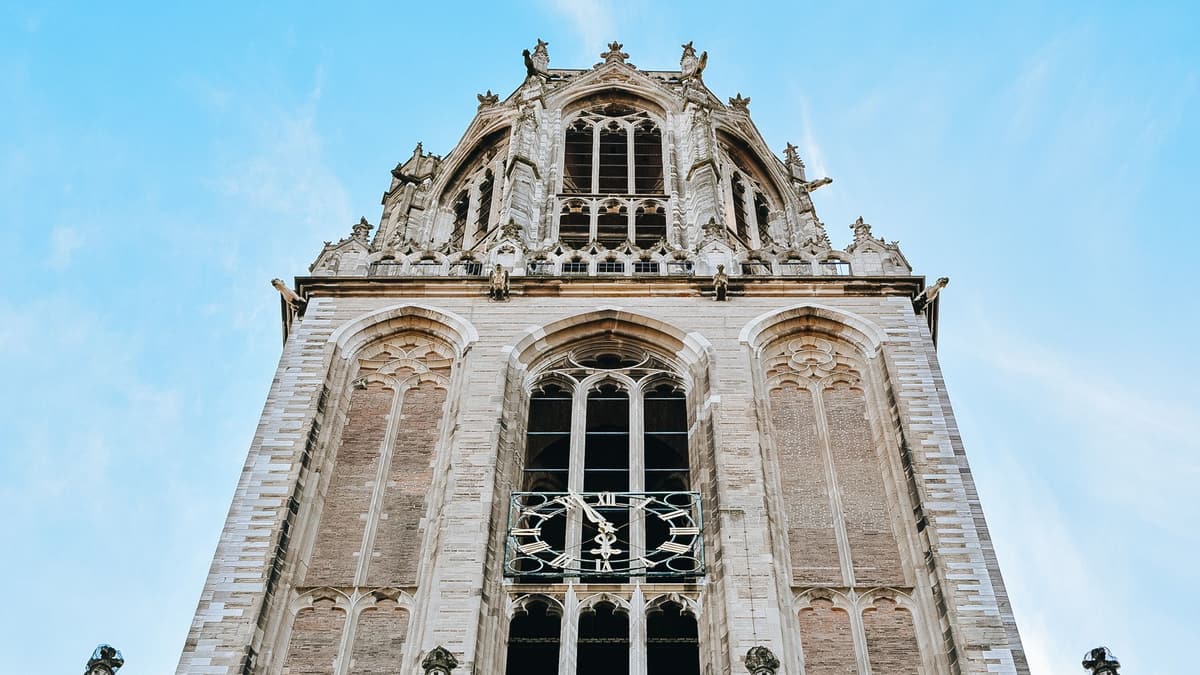
You are standing at the foot of the Dom Tower, and to see it properly you need to tip your head right back.
De rest van deze stop zit in de volledige audiotour.
Step through the gateway into the Pandhof, and the city noise fades away.
De rest van deze stop zit in de volledige audiotour.
This is the Pieterskerk, the church of Saint Peter, and if the Dom felt like a cathedral reaching for the sky, this one feels like a fortress of faith planted firmly on the ground.
De rest van deze stop zit in de volledige audiotour.
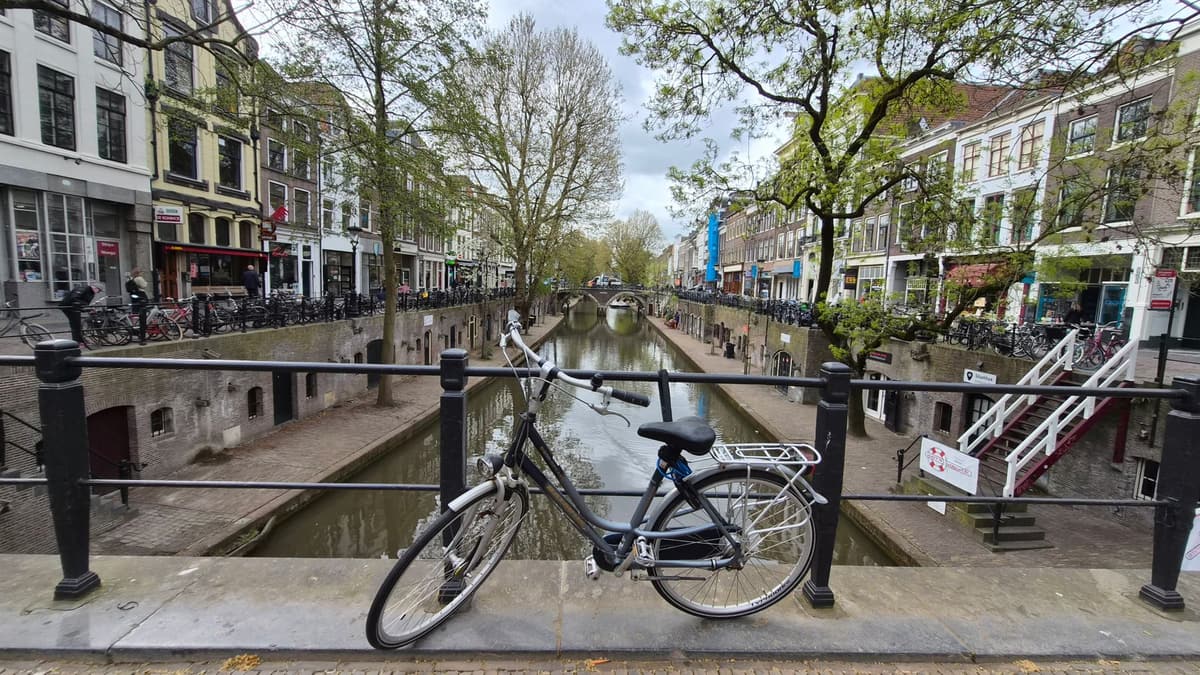
The walk ends at Paushuize, the Pope's House, a stately brick mansion beside the Kromme Nieuwegracht.
De rest van deze stop zit in de volledige audiotour.
Doe deze wandeling samen met anderen tijdens de eerstvolgende geplande tour.
Ongeveer 1,6 km, circa 21 minuten in een rustig tempo · 7 stops
Vrienden lopen gratis meeOctober 11, 2026 · 9 min read
From the Hollandsche Schouwburg through the old Jewish Quarter, past the Dockworker and the Dam, to the Anne Frank House on the Prinsengracht.
October 11, 2026 · 11 min read
From Van Houten's street by the Vondelpark past Leidseplein, the Rijksmuseum passage and the famous canal bench to the Anne Frank House.

October 11, 2026 · 10 min read
Follow the last days of April and May 1945 from the Anhalter Bahnhof ruin past the Gestapo site and Brandenburg Gate to the Moltke Bridge and the Reichstag.
