
October 11, 2026 · 9 min read
Amsterdam Anne Frank Walking Tour
From the Hollandsche Schouwburg through the old Jewish Quarter, past the Dockworker and the Dam, to the Anne Frank House on the Prinsengracht.
589

October 9, 2026 · 12 min read

 Os amigos caminham grátis
Cada tour também funciona como uma caminhada em grupo agendada que você pode acessar no app.
Mais passeios de áudio em Istanbul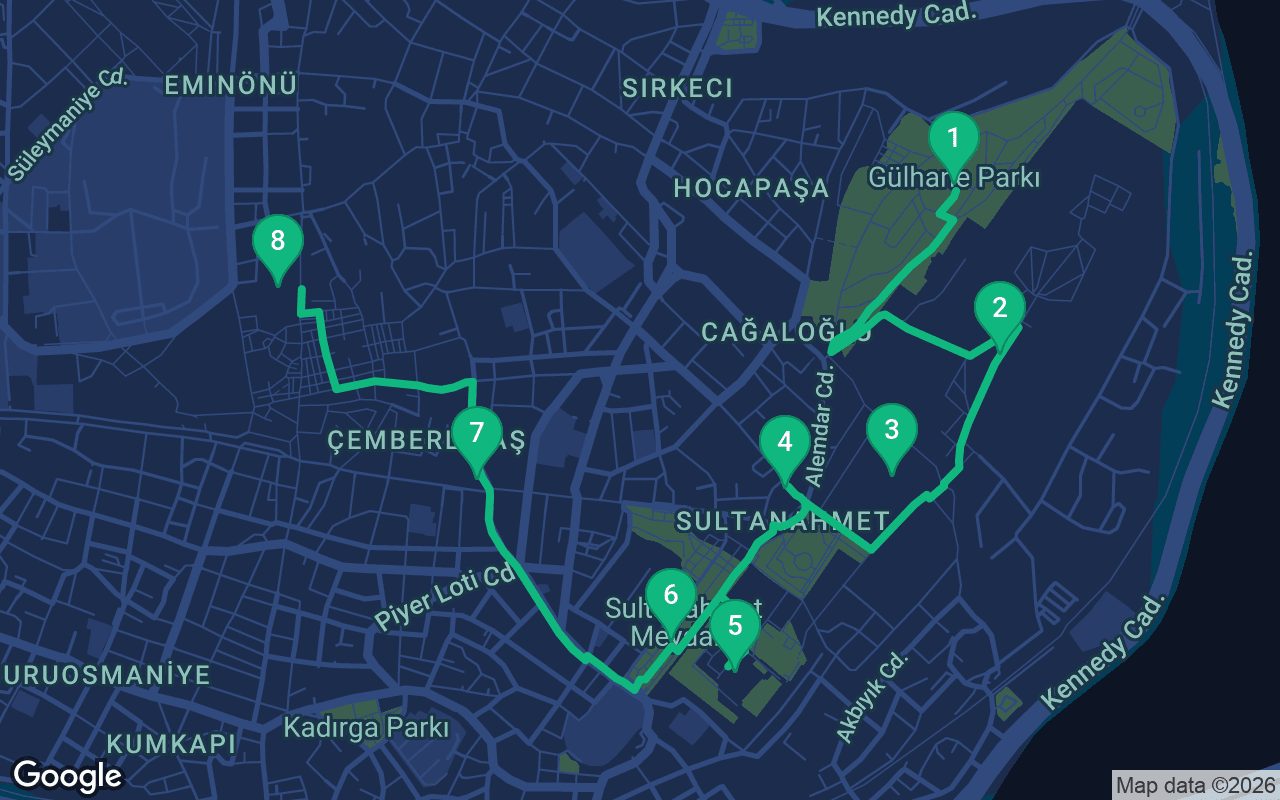
Cerca de 3,5 km, mais ou menos 49 minutos em passo tranquilo.
Este passeio é narrado
Aperte o play nas primeiras 3 paradas para ouvir uma demonstração de 30 segundos da narração. No aplicativo, a introdução e essas 3 paradas tocam completas e de graça, e cada uma avisa com um sinal sonoro quando você chega. Todo o passeio narrado é seu por $8.99, uma compra única que você guarda para sempre.
Funciona com Garmin, Komoot, Strava, OS Maps e qualquer app de GPX.
Sultanahmet is the oldest corner of Istanbul, the hilly peninsula where Byzantium became Constantinople and Constantinople became the capital of the Ottoman sultans. Almost everything that made this city famous stands within a short stroll of everything else, so this is one of the most rewarding self-guided walking tours you can take anywhere. You start in the green shade of Gülhane Park, climb into the courtyards of Topkapı Palace, stand beneath the great dome of Hagia Sophia, go underground into a Byzantine cistern, cross the old chariot track of the Hippodrome and finish in the covered lanes of the Grand Bazaar. The route is about three and a half kilometers, and it covers some fifteen centuries.
The walking alone takes under an hour, but plan on most of a day if you go inside, because Topkapı Palace, Hagia Sophia and the Basilica Cistern can each fill an hour or more. Sultanahmet sits on one of the city's seven hills, so expect gentle slopes rather than steep climbs, with a little uphill from the park to the palace and again from the Hippodrome to the Grand Bazaar. Pavements are mostly smooth stone, with some uneven cobbles. Start early: the big sights are calmest when they first open, and summer afternoons get hot, with shade mostly in the park and inside the buildings. Hagia Sophia and the Blue Mosque are working mosques, so they close to visitors during prayer times, longest around the Friday midday prayer. Dress modestly for both, with shoulders and knees covered, and women should bring a scarf to cover their hair. The Grand Bazaar is closed on Sundays as far as is generally known, and on some holidays. Opening days, hours and ticketing change, so check before you go for every stop, and book Topkapı and the cistern ahead if you can.
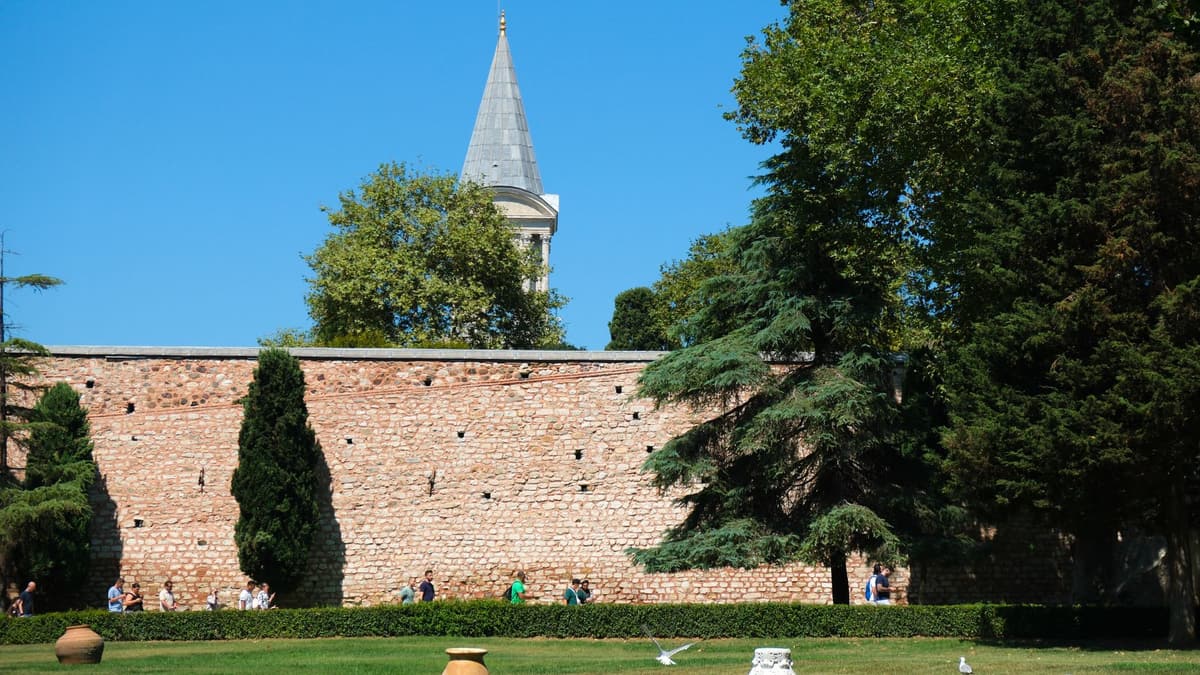
You are standing in Gülhane Park, under some of the tallest plane trees in the city, and it is hard to believe you are a few minutes from the busiest sights in Istanbul. For centuries this slope was not public at all. It was the outer garden of Topkapı Palace, part of the walled grounds that ran down from the sultans' residence toward the sea, and only the palace household walked here. The name means something like the house of roses. The garden opened to the public in the early twentieth century and has been the city's favorite shady escape ever since. Look up the slope and you can see the palace walls along the ridge above you. Walk to the far northern end of the park and you will find the Goths' Column, a Roman column raised to mark a victory over the Goths, one of the oldest Roman monuments in the city. In spring the flower beds here fill with tulips, a flower the Ottomans loved long before the Dutch made it famous. Take a minute on a bench, then head back toward the park's main gate. Just inside it, a lane climbs uphill, signed for the Istanbul Archaeology Museums. Follow it up and through into the palace's first courtyard, about seven or eight minutes of steady uphill walking.
Walk through the broad first courtyard, with the old Byzantine church of Hagia Irene off to one side, until you reach a gate flanked by two pointed towers. This is the Gate of Salutation, the formal entrance to Topkapı Palace, and it is a good place to stop and take in the scale of what lies behind it. After Sultan Mehmed II took the city in 1453, he built this palace on the headland where the Bosphorus meets the Golden Horn, and it remained the home and seat of government of the Ottoman sultans for roughly four hundred years. It is not one great building but a sequence of courtyards, each more private than the last. The first was open to anyone with business at court. Through this gate, in the second courtyard, viziers met in the domed council chamber while the sultan could listen unseen from behind a grilled window above them. Further in lie the Harem, where the sultan's family lived, and the Treasury, with its jewel-studded daggers and an enormous diamond. The palace became a museum in the 1920s, after the end of the empire. If you go in, save energy for the last courtyard and its terraces, which look straight out over the water. When you are ready, walk back through the first courtyard and out through the great Imperial Gate. Hagia Sophia rises just beyond it, about five minutes away.
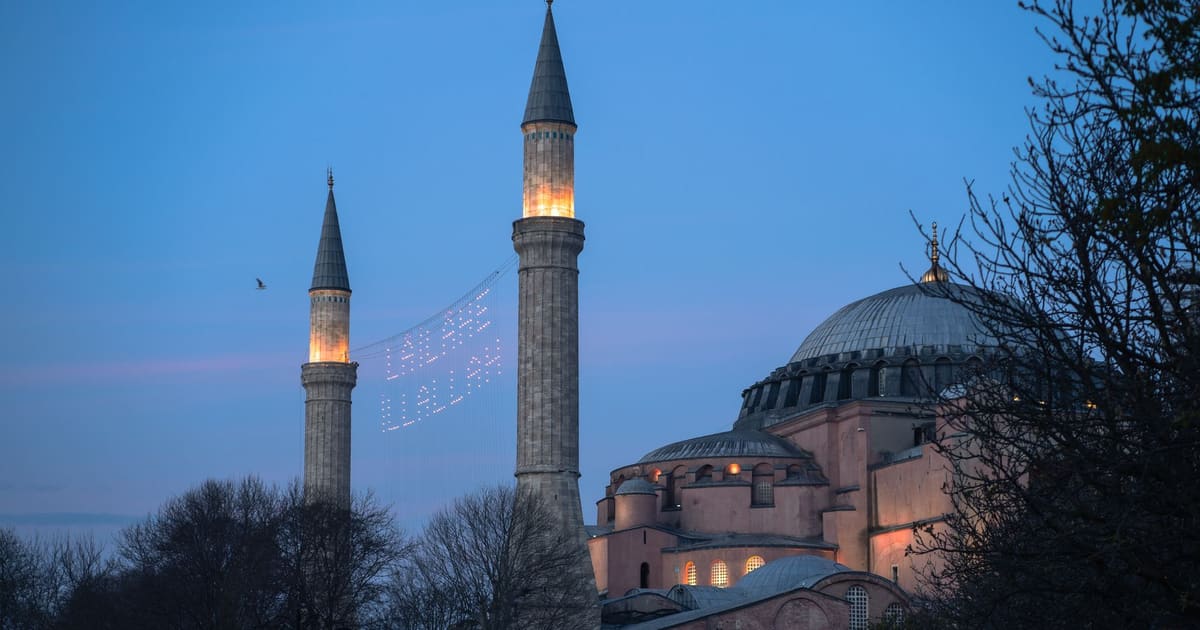
 Stand back from Hagia Sophia for a moment before you go near the entrance. The squat, buttressed walls and the four minarets hide the fact that this is one of the most daring buildings ever raised. The emperor Justinian ordered it after riots had burned the earlier church on this site, and it was finished in 537, in about five years. Its two architects, Anthemius of Tralles and Isidore of Miletus, set a vast shallow dome over a huge open space so that it seems to float on a ring of windows. An earthquake brought part of the first dome down within a generation, and it was rebuilt higher. For nearly a thousand years this was the greatest church in Christendom. Then, on 29 May 1453, after a siege of some seven weeks, the forces of Mehmed II broke through the land walls. The last Byzantine emperor, Constantine XI, died in the fighting, and Mehmed rode to Hagia Sophia and made it a mosque. The minarets were added over the following century or so. In the 1930s, under the new Turkish Republic, it became a museum, and in 2020 it was turned back into a mosque. Inside, look for the great round calligraphy panels and the Byzantine mosaics in the galleries. Visitors remove their shoes, women cover their hair, and the building closes to visitors at prayer times. From the western corner of the building, cross the road, and the low entrance of the cistern is a two or three minute walk away.
O que está incluído
Nossos passeios foram feitos para ser meditativos e imersivos: você caminha e simplesmente escuta. Eles são sempre melhores em companhia, e o aplicativo toca a narração sincronizada, para que você, seu par e seus amigos ouçam cada parada ao mesmo tempo.
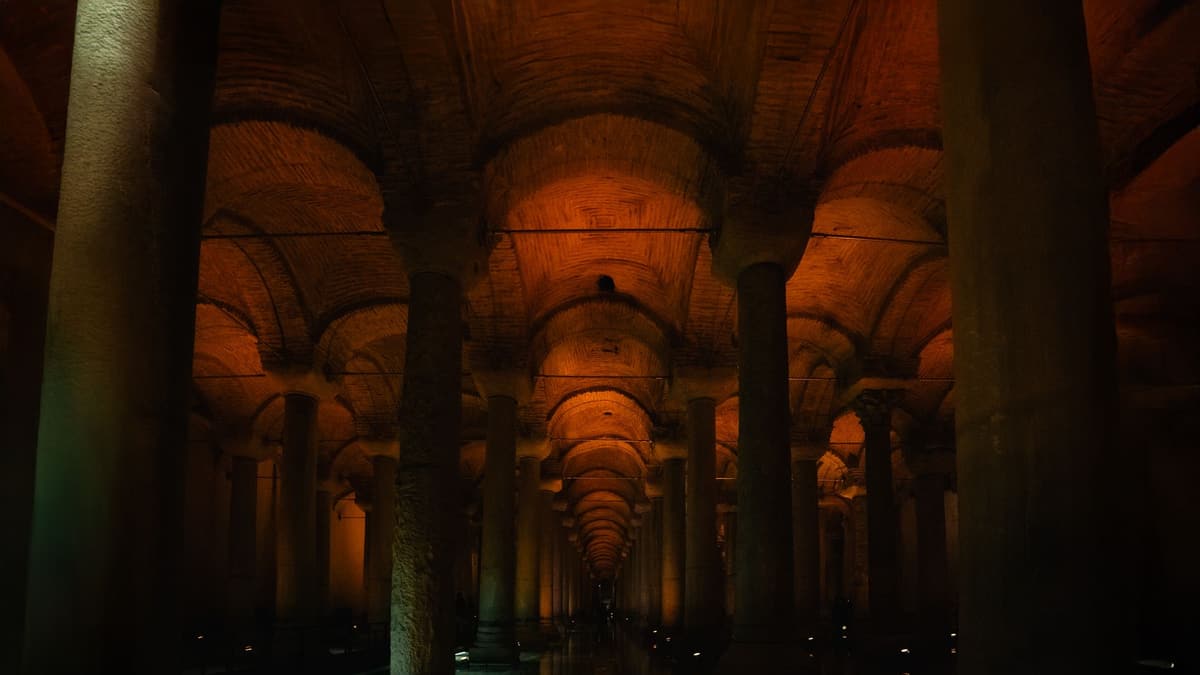
It does not look like much from the street, a small entrance building on the corner, but go down the steps and the city vanishes.
O restante desta parada está no passeio em áudio completo.
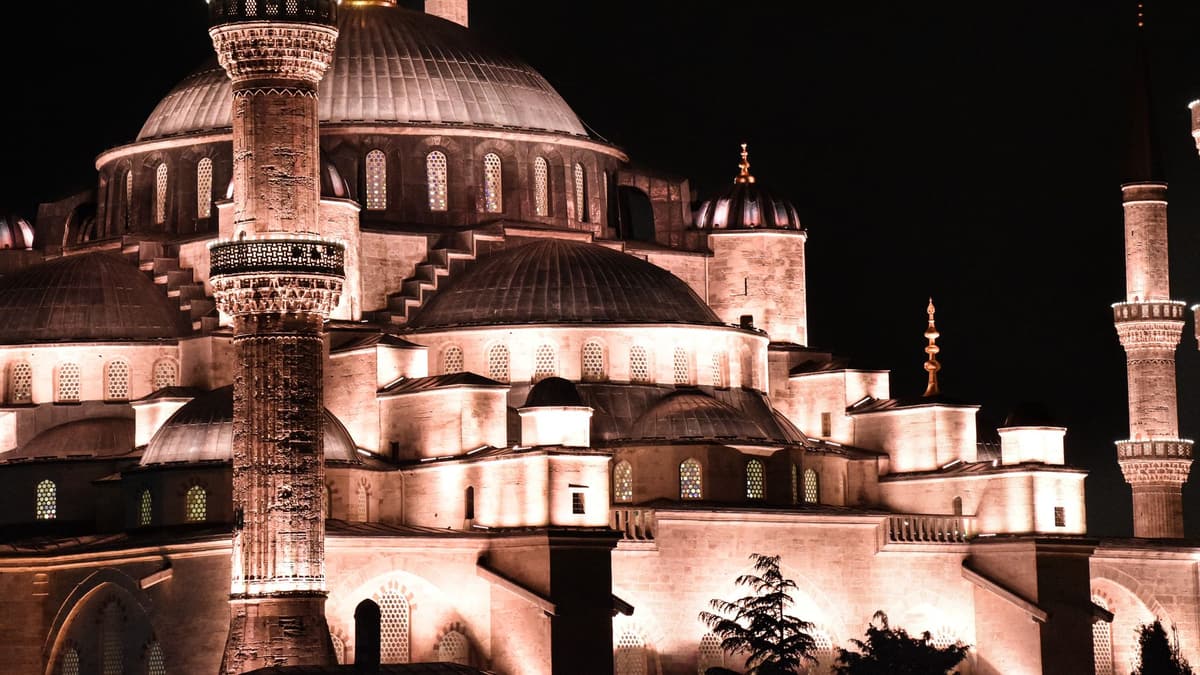
The building in front of you, with its cascade of domes and six slender minarets, is the Sultan Ahmed Mosque, which the world knows as the Blue Mosque.
O restante desta parada está no passeio em áudio completo.
This long, narrow square was once the Hippodrome of Constantinople, the chariot racing stadium at the heart of Byzantine life.
O restante desta parada está no passeio em áudio completo.
The scarred, blackened column rising beside the tram stop is the oldest story on this walk. Long before it was Istanbul or Constantinople, this headland was Byzantium, a Greek colony said to have been founded by settlers from Megara in the seventh century BC.
O restante desta parada está no passeio em áudio completo.
You have arrived at the Nuruosmaniye Gate, one of the main entrances to the Grand Bazaar, and from here the city closes over your head into vaulted, painted lanes.
O restante desta parada está no passeio em áudio completo.
Faça esta caminhada com outras pessoas no próximo passeio agendado.
Cerca de 3,5 km, aproximadamente 49 minutos em ritmo leve · 8 paradas
Os amigos caminham grátisOctober 11, 2026 · 9 min read
From the Hollandsche Schouwburg through the old Jewish Quarter, past the Dockworker and the Dam, to the Anne Frank House on the Prinsengracht.
October 11, 2026 · 11 min read
From Van Houten's street by the Vondelpark past Leidseplein, the Rijksmuseum passage and the famous canal bench to the Anne Frank House.

October 11, 2026 · 10 min read
Follow the last days of April and May 1945 from the Anhalter Bahnhof ruin past the Gestapo site and Brandenburg Gate to the Moltke Bridge and the Reichstag.
