
October 11, 2026 · 9 min read
Amsterdam Anne Frank Walking Tour
From the Hollandsche Schouwburg through the old Jewish Quarter, past the Dockworker and the Dam, to the Anne Frank House on the Prinsengracht.
589

October 8, 2026 · 12 min read

 Os amigos caminham grátis
Cada tour também funciona como uma caminhada em grupo agendada que você pode acessar no app.
Mais passeios de áudio em Washington DC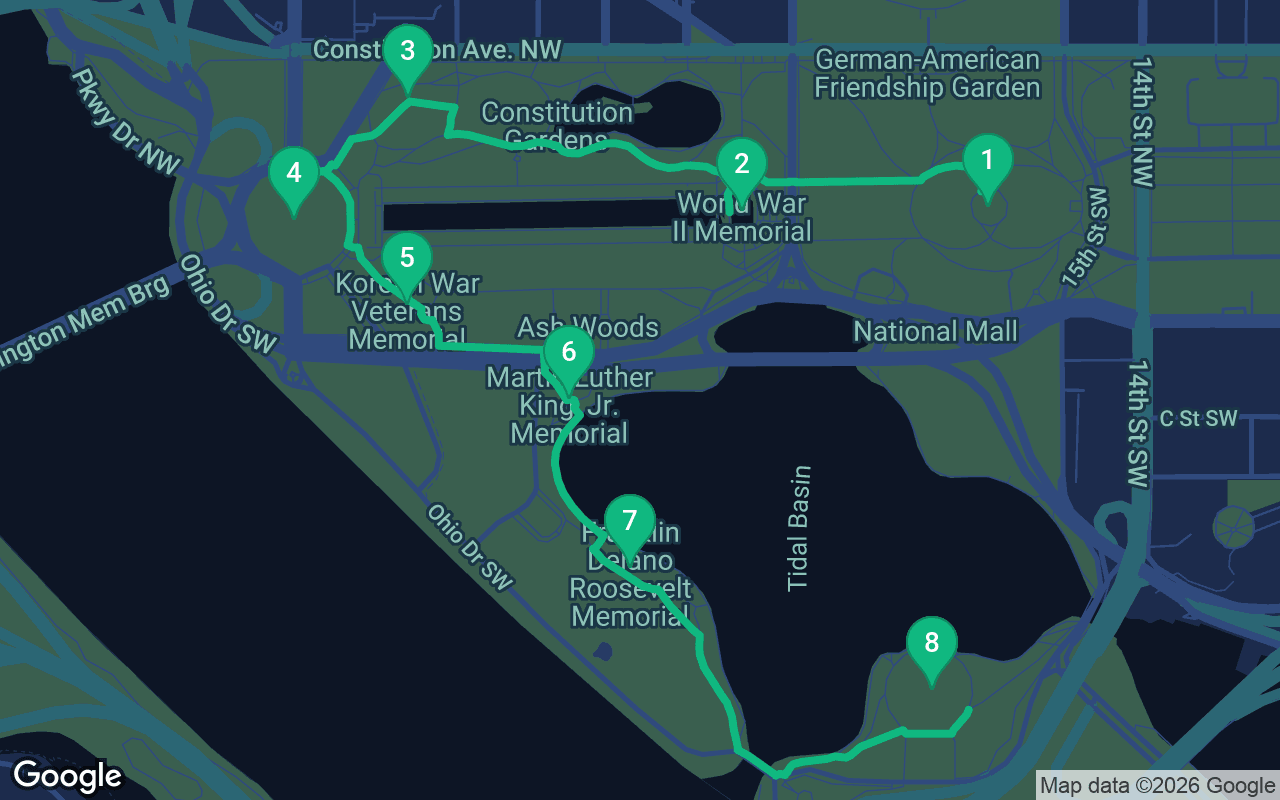
Cerca de 3,8 km, mais ou menos 51 minutos em passo tranquilo.
Este passeio é narrado
Aperte o play nas primeiras 3 paradas para ouvir uma demonstração de 30 segundos da narração. No aplicativo, a introdução e essas 3 paradas tocam completas e de graça, e cada uma avisa com um sinal sonoro quando você chega. Todo o passeio narrado é seu por $9.99, uma compra única que você guarda para sempre.
Funciona com Garmin, Komoot, Strava, OS Maps e qualquer app de GPX.
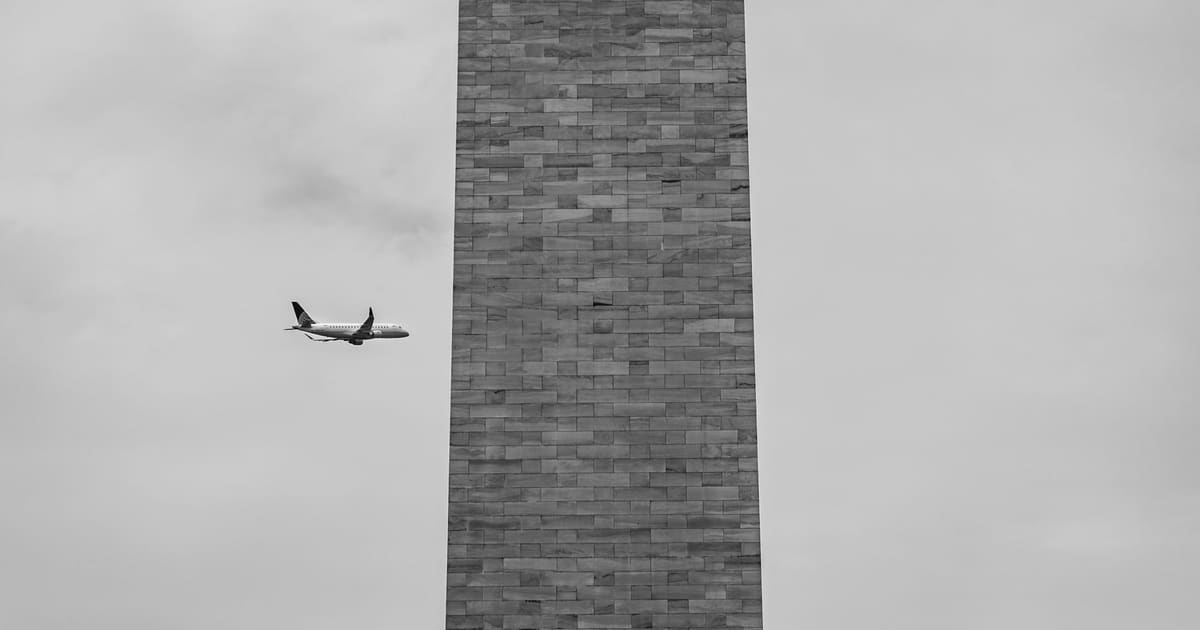
Washington built its memory in stone along one long green line, and the best way to read it is on foot. This walk starts at the foot of the Washington Monument, heads west past the memorials to the Second World War and Vietnam to the steps of the Lincoln Memorial, then swings south past Korea and Martin Luther King Jr. to the edge of the Tidal Basin, where Franklin Roosevelt's garden rooms lead around the water to Thomas Jefferson's rotunda. It covers about 3.8 kilometers, a little under two and a half miles, and if you only do one of our self-guided walking tours in the capital, make it this one. It is the city's own story told in eight places, from independence to civil rights, and every stop on it is free and outdoors.
Be honest with yourself about this one: it is longer than it looks on a map. The walking itself takes under an hour, but with time to stand and read at each memorial, plan on two and a half to three hours, and the nearest Metro station is a good fifteen to twenty minutes back from the finish. The paths are flat, a mix of pavement and packed gravel, with steps at the Lincoln Memorial and a few gentle ramps. The big problem is the sun. Washington summers are hot and very humid, and the open stretches between the Washington Monument and the Reflecting Pool have almost no shade, so start early in the morning, wear a hat, and carry more water than you think you need. The elms beside the Reflecting Pool and the trees around the Tidal Basin give relief later on. Spring and autumn are the kindest seasons, and late March into early April brings the cherry blossoms along with very large crowds. The memorials are lit after dark and are striking at night, but check before you go for ranger hours and any closures.
Stand on the slope near the ring of flags and look up. The marble obelisk in front of you rises 555 feet, and it was the tallest structure in the world when it was finished in 1884, until the Eiffel Tower took the title a few years later. Now let your eye travel up the shaft to about a third of the way. See the line where the color of the stone changes? That is the scar of a long pause. Building began in 1848, paid for by a private society, but by 1854 the money had run out and the project was mired in politics, and the stump sat unfinished through the Civil War and for years after. When the Army Corps of Engineers finally took over in 1879, the new marble came from a different quarry, and it has weathered to a slightly different shade. The very tip is capped with aluminum, which was then a rare and costly metal. Inside, the stairwell walls hold memorial stones sent by states, cities and countries, and an elevator runs to the top; check before you go for tickets. When you are ready, turn west, toward the long pool and the temple at the far end, and walk down the slope across 17th Street. In about five minutes you reach a sunken plaza ringed with pillars.
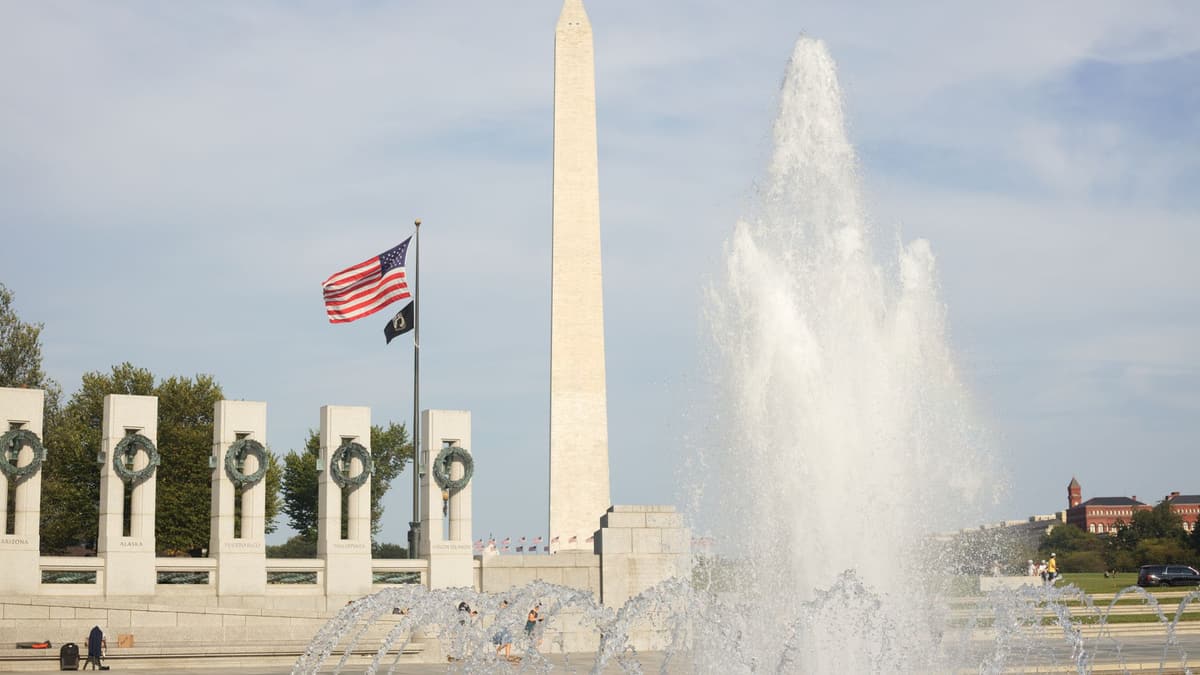
You are standing in the newest of the great memorials on this axis, dedicated in 2004, almost sixty years after the war ended. Around the oval plaza and its fountains stand fifty-six granite pillars, one for each state and territory of the time and for the District of Columbia, each hung with a bronze wreath. At either end a tall pavilion is marked Atlantic and Pacific, for the two halves of a war fought across the whole world. Walk to the western side of the plaza and find the Freedom Wall. It is covered with 4,048 gold stars, and each star stands for a hundred Americans who died in the war, so the wall you are looking at is roughly four hundred thousand lives. In front of it are the words: Here we mark the price of freedom. On many mornings you will see very old men in caps being wheeled through the plaza by volunteers, veterans flown in on honor flights to see the memorial built for them, and people often stop to thank them. Keep an eye out, too, for a small engraved cartoon of a man peeking over a wall, the wartime graffiti Kilroy, hidden in two spots on the memorial. Leave the plaza on its west side and walk along the tree-lined path on the right-hand, north side of the Reflecting Pool. After about ten minutes, look for a low black wall cut into the grass on your right.
 Walk slowly down the path beside this wall, and notice how it rises beside you, from ankle height at the end to well over your head at the center, and then falls away again. The design came from Maya Lin, a twenty-one-year-old architecture student at Yale, whose entry won an open competition against more than a thousand others in 1981. Many people hated it at first. Some veterans called it a black gash of shame, and a more traditional bronze statue of three soldiers was added nearby as a compromise. Then the wall opened in 1982, and people came, and it became the most personal memorial in the city. It bears more than 58,000 names, listed in the order they were lost rather than alphabetically. They begin at the center, in 1959, run to the end of one wing, then pick up again at the far end of the other and return to the center, in 1975, so the war begins and ends at the same point. The black granite is polished like a mirror, which means you see your own face among the names. You will see people making pencil rubbings of a name on paper, and the Park Service keeps the letters, photos and medals left here. At the western end of the wall, follow the path left past the bronze soldiers, and in about four minutes you are at the foot of the Lincoln Memorial.
O que está incluído
Nossos passeios foram feitos para ser meditativos e imersivos: você caminha e simplesmente escuta. Eles são sempre melhores em companhia, e o aplicativo toca a narração sincronizada, para que você, seu par e seus amigos ouçam cada parada ao mesmo tempo.
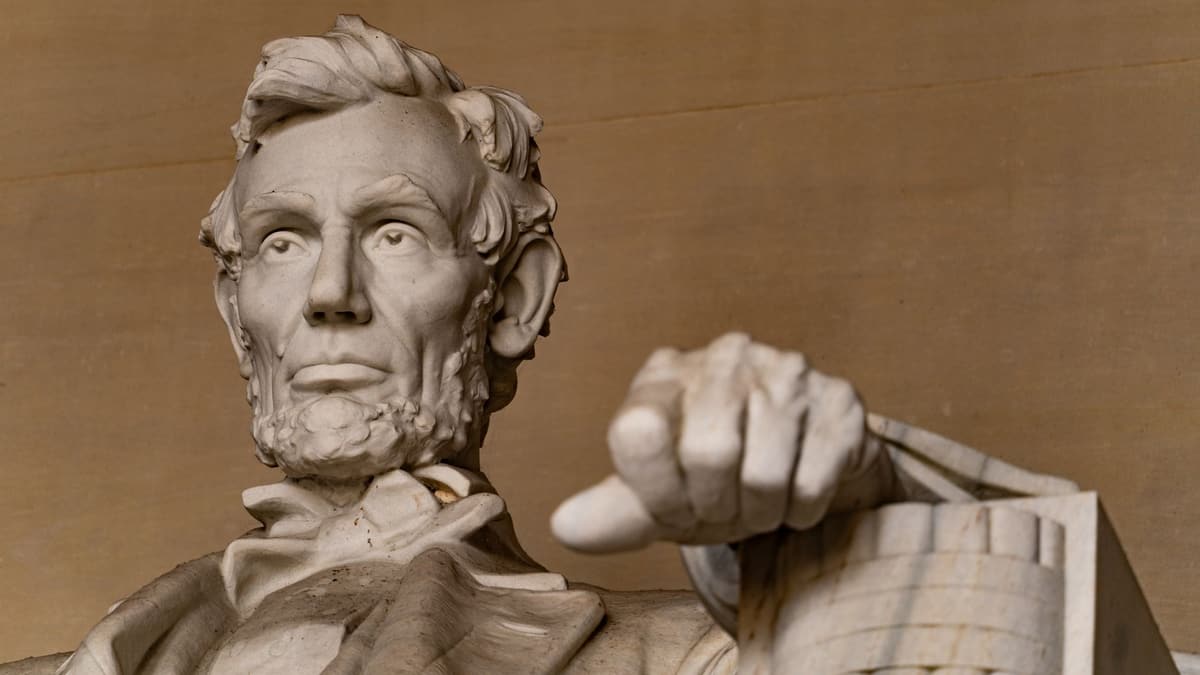
Climb the steps and stand before the seated Lincoln, nineteen feet tall and carved from white Georgia marble by the Piccirilli brothers to a design by Daniel Chester French.
O restante desta parada está no passeio em áudio completo.
Find a spot at the edge of the triangular field. In front of you, nineteen soldiers in stainless steel move toward a flag, spread out on patrol through strips of juniper and granite that stand in for the rice paddies of Korea.
O restante desta parada está no passeio em áudio completo.
Walk in through the narrow gap between two huge blocks of granite.
O restante desta parada está no passeio em áudio completo.
Unlike everything else on this walk, this memorial does not stand for you to look at.
O restante desta parada está no passeio em áudio completo.
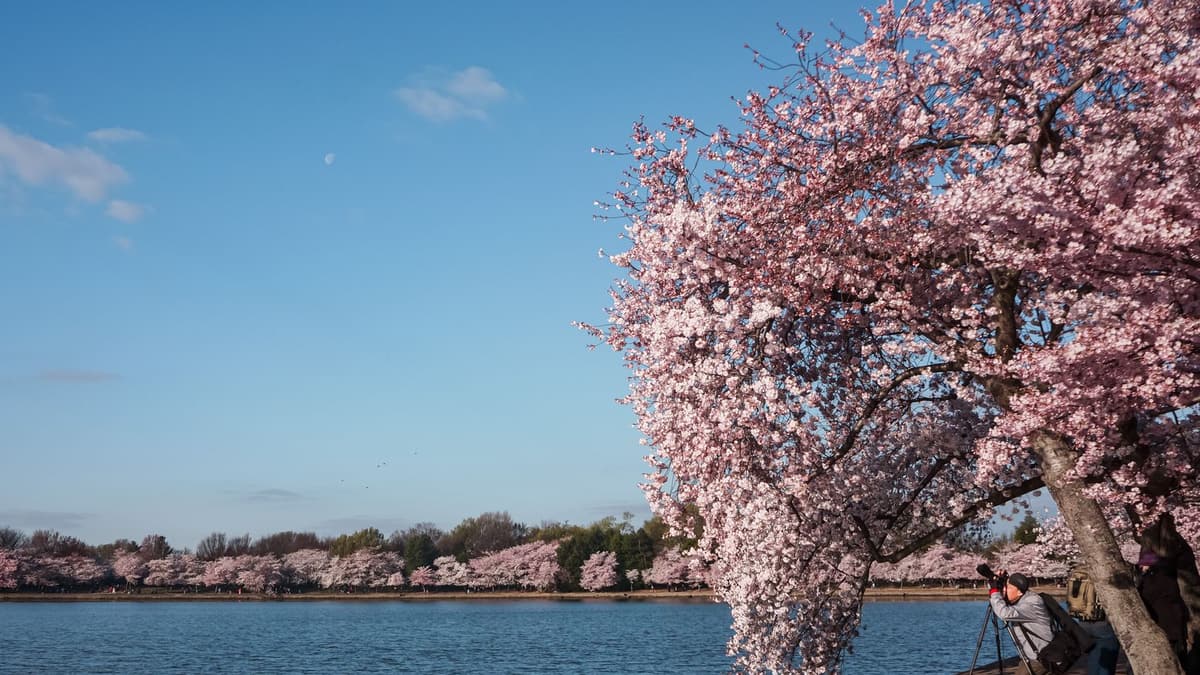
Climb into the rotunda and stand beside the bronze Jefferson, nineteen feet tall, then turn around.
O restante desta parada está no passeio em áudio completo.
Faça esta caminhada com outras pessoas no próximo passeio agendado.
Cerca de 3,8 km, aproximadamente 51 minutos em ritmo leve · 8 paradas
Os amigos caminham grátisOctober 11, 2026 · 9 min read
From the Hollandsche Schouwburg through the old Jewish Quarter, past the Dockworker and the Dam, to the Anne Frank House on the Prinsengracht.
October 11, 2026 · 11 min read
From Van Houten's street by the Vondelpark past Leidseplein, the Rijksmuseum passage and the famous canal bench to the Anne Frank House.

October 11, 2026 · 10 min read
Follow the last days of April and May 1945 from the Anhalter Bahnhof ruin past the Gestapo site and Brandenburg Gate to the Moltke Bridge and the Reichstag.
