
October 11, 2026 · 9 min read
Amsterdam Anne Frank Walking Tour
From the Hollandsche Schouwburg through the old Jewish Quarter, past the Dockworker and the Dam, to the Anne Frank House on the Prinsengracht.
589

October 9, 2026 · 9 min read

 Bạn bè đi bộ miễn phí
Mỗi tour cũng được tổ chức như một chuyến đi bộ nhóm theo lịch trình mà bạn có thể tham gia trong ứng dụng.
Thêm tour âm thanh tại Berlin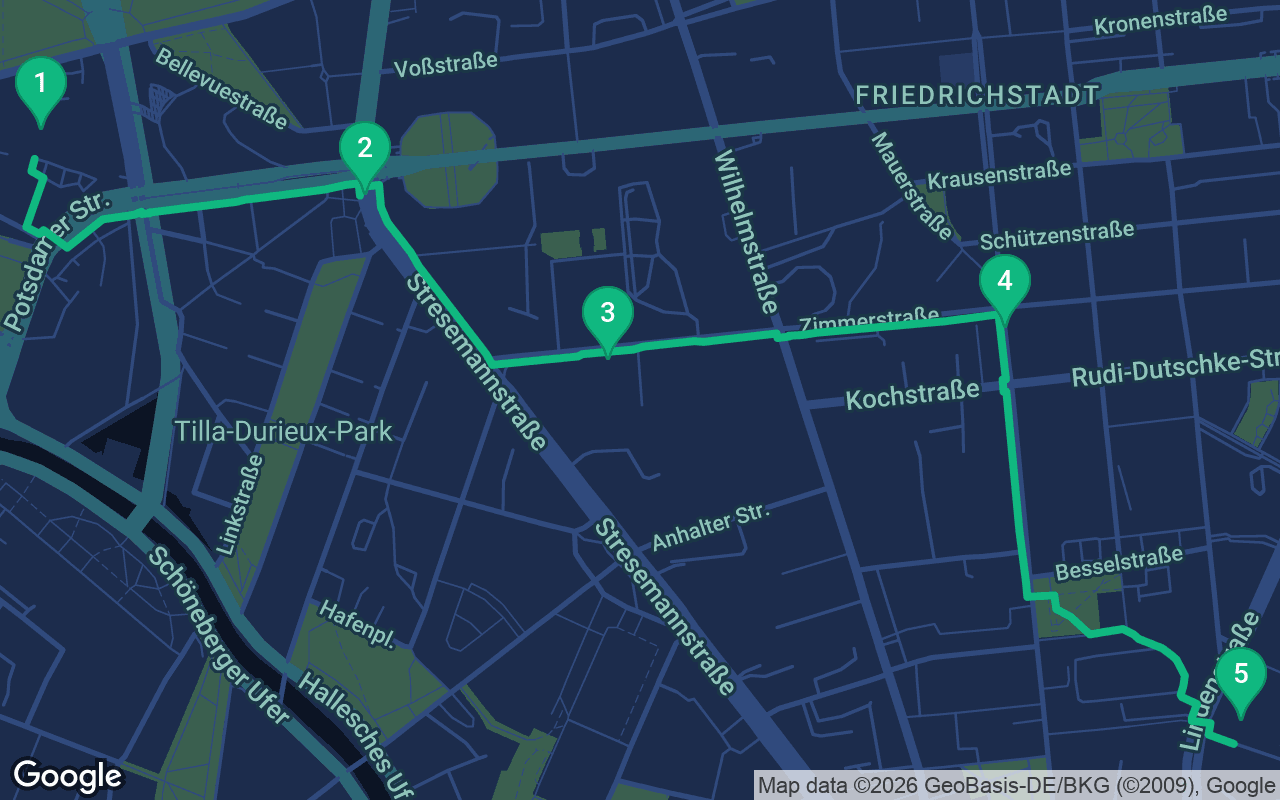
Khoảng 2,7km, mất khoảng 37 phút với nhịp độ thoải mái.
Tour này có thuyết minh âm thanh
Nhấn phát tại 3 điểm dừng đầu tiên để nghe thử 30 giây phần thuyết minh ngay tại đây. Trong ứng dụng, phần giới thiệu và các điểm dừng này được nghe trọn vẹn miễn phí, và mỗi điểm dừng sẽ phát âm báo khi bạn đến nơi. Toàn bộ chuyến tham quan có thuyết minh sẽ là của bạn chỉ với $7.99, mua một lần và sở hữu mãi mãi.
Hoạt động với Garmin, Komoot, Strava, OS Maps và mọi ứng dụng GPX.
For twenty eight years a concrete wall ran through the middle of Berlin, and this walk follows a stretch of the line where it stood. You start at a golden concert hall built on the western edge of the divided city, cross Potsdamer Platz, which went from Europe's busiest square to an empty death strip and back again, and pass one of the last standing pieces of the Wall on the way to Checkpoint Charlie. The walk ends in Kreuzberg at the Jewish Museum, whose building asks you to feel German Jewish history rather than simply read about it. It is about two and a half kilometers on flat pavement, and it pairs well with the other self-guided walking tours of the city center. Some of what you will hear is heavy. Take it at your own pace.
The walking itself takes around forty minutes, but give yourself half a day. The Topography of Terror, the museum at Checkpoint Charlie and above all the Jewish Museum can each hold you for an hour or more, and the Jewish Museum deserves a proper visit rather than a quick look. The route is flat and paved the whole way, with some busy road crossings around Potsdamer Platz, so keep your eyes up there. There is little shade between the big buildings, and in winter the wind cuts across the open squares, so dress for the weather. Mornings are calmer at Checkpoint Charlie, which gets crowded by midday. The Jewish Museum has airport-style security at the entrance and sometimes asks you to book a time slot, so check before you go. As you walk, look down now and then for small brass plaques set into the pavement in front of doorways. They are Stolpersteine, stumbling stones, each one carrying the name of a person who lived in that building and was deported or murdered under the Nazis. There are thousands of them across Berlin.
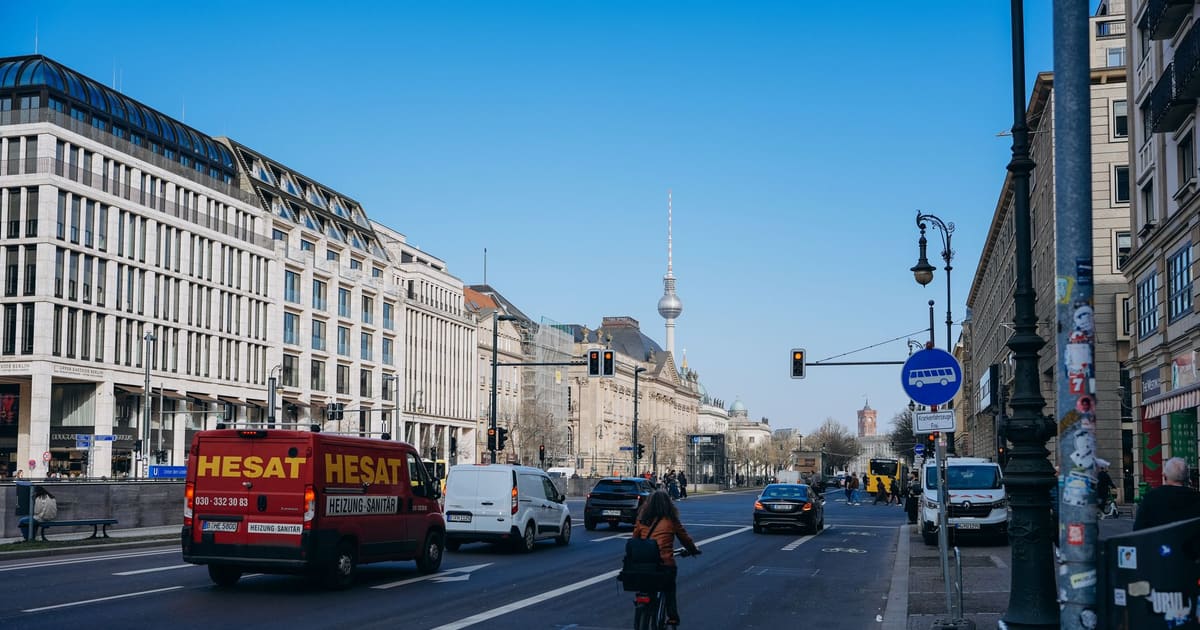
Stand back far enough to take in the whole building in front of you: a great golden tent with a roof that rises and folds like a circus marquee. This is the Philharmonie, home of the Berlin Philharmonic, designed by the architect Hans Scharoun and opened in 1963. Berliners soon nicknamed it Zirkus Karajani, after the orchestra's famous conductor Herbert von Karajan and the circus-tent shape. The odd outside follows from a radical idea inside. Scharoun put the orchestra in the middle of the hall and raised the seats around it in tilted terraces, like a vineyard on a hillside, so that nobody sits far from the music. Concert halls around the world have copied the idea since. The gold skin you see came later; for years the building was a plainer ochre. When construction began, this was meant to be close to the center of the city. Then in August 1961 the Wall went up a few hundred meters to the east, and the hall opened on the very edge of West Berlin, facing a wasteland. Before you leave, walk to the side of the building that faces the Tiergarten park, along Tiergartenstrasse. A long wall of blue glass there marks the site of the villa at number 4, where officials organized the Nazi murder of disabled and psychiatric patients, known as Aktion T4. Historians estimate that around three hundred thousand people were killed in the murders that began here. It is a quiet place, and worth a moment. Then head east toward the cluster of high towers, following Potsdamer Strasse, the main road on the hall's eastern side, for about six or seven minutes.
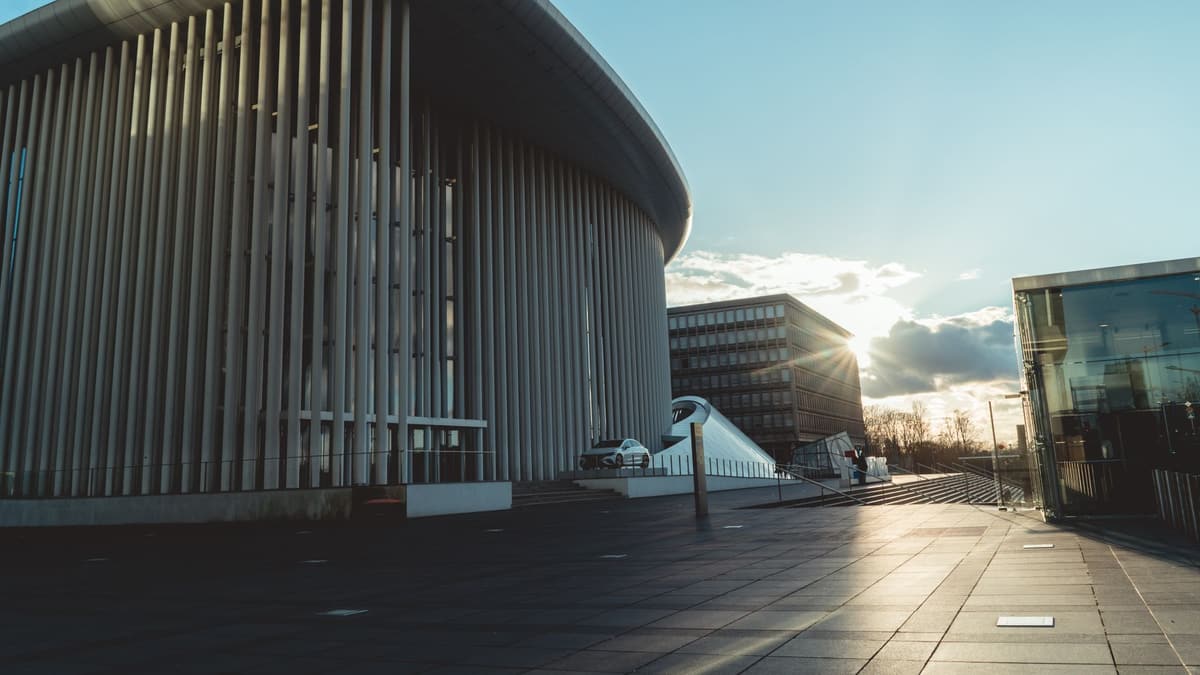 You are standing at the busy junction of Potsdamer Platz, ringed by glass towers, and almost nothing you can see is older than the 1990s. Before the Second World War this was one of the busiest traffic junctions in Europe, a crush of trams, cars and people, with grand hotels, cafes and a giant entertainment palace. Look for the tall, slender green tower with clocks and traffic lights on top. It is a copy of one of the first traffic signals in Europe, put up here in the 1920s to tame the chaos. Bombing in the war wrecked the square, and afterward it sat exactly where the Soviet, American and British sectors met. When workers across East Germany rose up on June 17, 1953, Soviet tanks rolled through here to crush the protests. In 1961 the Wall cut straight across the square, and the ruins on both sides were cleared away. For nearly three decades it was an empty strip of sand, watchtowers and guards, so desolate that in Wim Wenders' film Wings of Desire an old man wanders across the waste ground searching for the square he remembers. After the Wall fell, Potsdamer Platz became one of the biggest building sites in Europe, and the towers around you rose in barely a decade. Near the station entrances stand several original slabs of the Wall, covered in graffiti, with panels explaining what happened here. From the square, walk southeast along Stresemannstrasse for about five minutes, and you will find a grand, richly decorated brick building on your left, on the corner of Niederkirchnerstrasse.
In front of you is the Martin-Gropius-Bau, one of the most handsome nineteenth century buildings left in Berlin. It opened in 1881 as a museum of decorative arts, designed by Martin Gropius, the great-uncle of Walter Gropius, who later founded the Bauhaus. Look up at the richly decorated facade, with its terracotta reliefs and painted panels running beneath the roof. Bombs gutted it in the Second World War, and then history parked it in an even stranger spot. The Wall ran along Niederkirchnerstrasse, right outside its main entrance, so for years this palace of the arts stood as a ruin with its front door facing a border that nobody could cross. It was restored and reopened in 1981 as an exhibition hall, and today it hosts major art shows. Now look along Niederkirchnerstrasse to the east. A long, battered stretch of the original Wall still stands there, one of the longest surviving pieces in the center of the city. Behind it lies the Topography of Terror, on the site where the Gestapo and the SS had their headquarters. In their cells and offices, the Nazi regime planned persecution and mass murder across Europe. Today an open-air exhibition runs along the excavated cellar walls, and a documentation center explains, plainly and without drama, how that terror worked and who carried it out. Walk east along Niederkirchnerstrasse, with the Wall on your right. The huge stone building on your left was built as Hermann Göring's Air Ministry, later housed East German government ministries, and is now Germany's Finance Ministry. Cross Wilhelmstrasse, carry on along Zimmerstrasse, and in about eight minutes you reach the crowds at Friedrichstrasse.
Bao gồm những gì
Các tour của chúng tôi được thiết kế để mang tính thiền định và đắm chìm: bạn vừa đi vừa lắng nghe. Đi cùng nhau luôn tuyệt hơn, và ứng dụng phát thuyết minh đồng bộ để bạn, người thương và bạn bè nghe mỗi điểm dừng cùng một lúc.
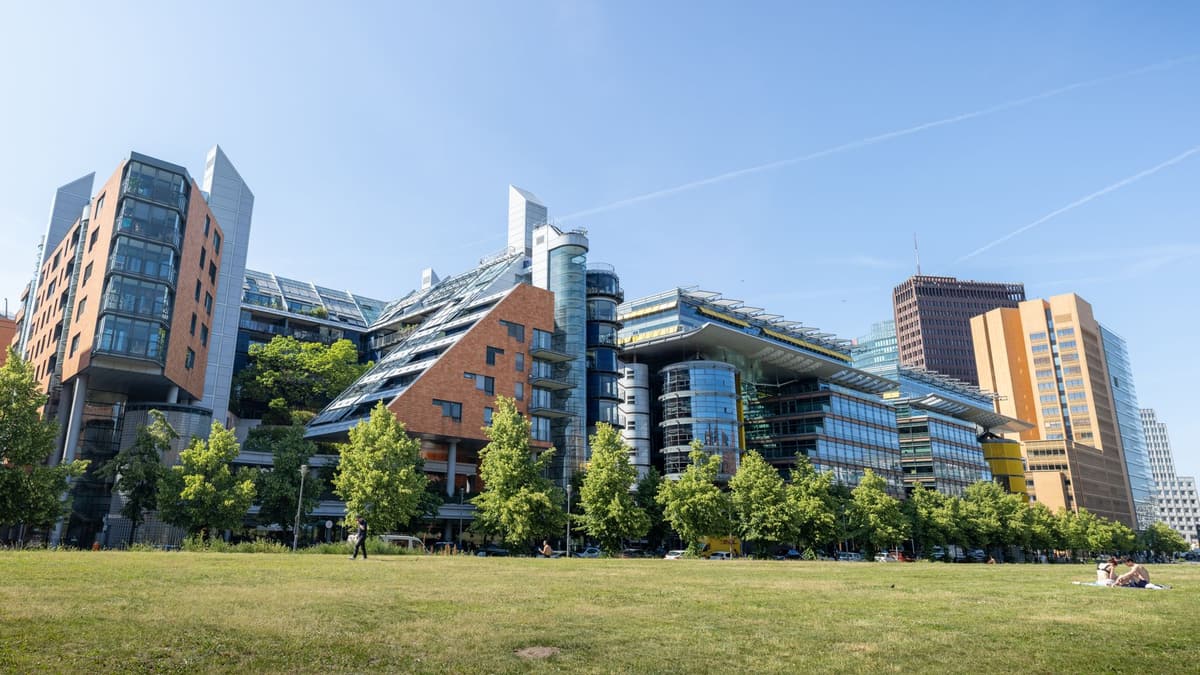
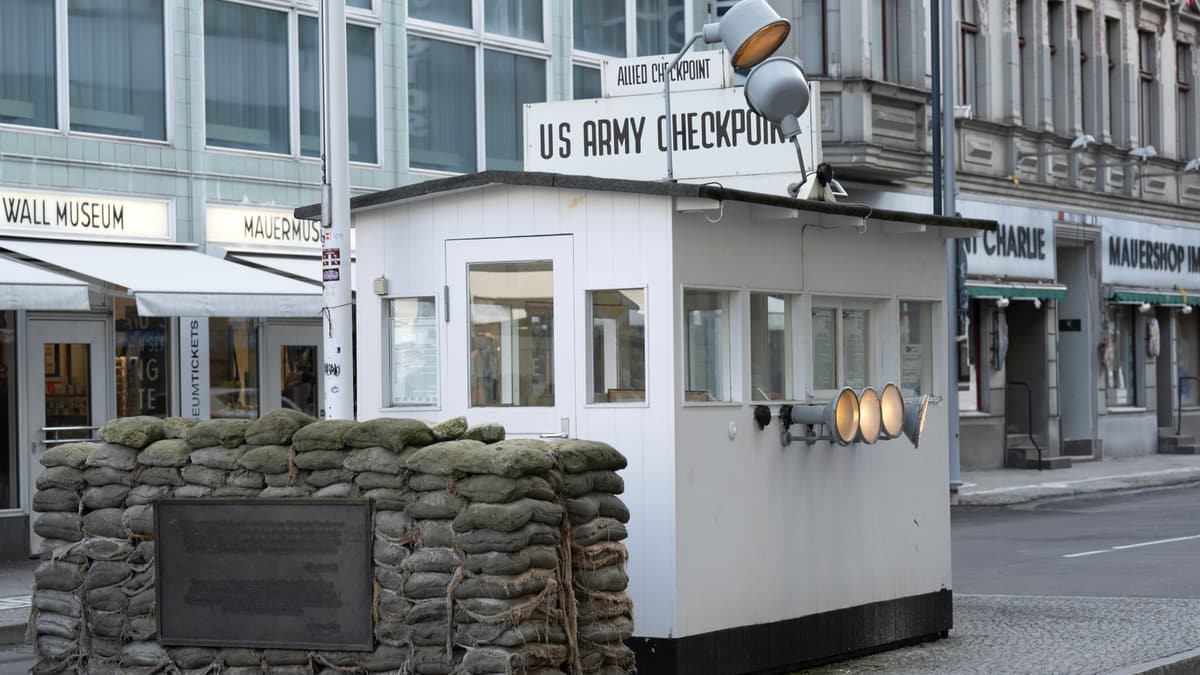
You are at Checkpoint Charlie, the most famous crossing point between East and West Berlin. The name has nothing to do with a person.
Phần còn lại của điểm dừng này có trong tour âm thanh đầy đủ.
The walk ends at the Jewish Museum Berlin, and the building in front of you is like nothing else in the city. There are two parts.
Phần còn lại của điểm dừng này có trong tour âm thanh đầy đủ.
Thực hiện buổi đi bộ này cùng người khác vào tour đã lên lịch tiếp theo.
Khoảng 2,7km, mất khoảng 37 phút với nhịp độ thoải mái · 5 điểm dừng
Bạn bè đi bộ miễn phíOctober 11, 2026 · 9 min read
From the Hollandsche Schouwburg through the old Jewish Quarter, past the Dockworker and the Dam, to the Anne Frank House on the Prinsengracht.
October 11, 2026 · 11 min read
From Van Houten's street by the Vondelpark past Leidseplein, the Rijksmuseum passage and the famous canal bench to the Anne Frank House.

October 11, 2026 · 10 min read
Follow the last days of April and May 1945 from the Anhalter Bahnhof ruin past the Gestapo site and Brandenburg Gate to the Moltke Bridge and the Reichstag.
