
October 11, 2026 · 9 min read
Amsterdam Anne Frank Walking Tour
From the Hollandsche Schouwburg through the old Jewish Quarter, past the Dockworker and the Dam, to the Anne Frank House on the Prinsengracht.
589

October 9, 2026 · 10 min read

 Bạn bè đi bộ miễn phí
Mỗi tour cũng được tổ chức như một chuyến đi bộ nhóm theo lịch trình mà bạn có thể tham gia trong ứng dụng.
Thêm tour âm thanh tại Manila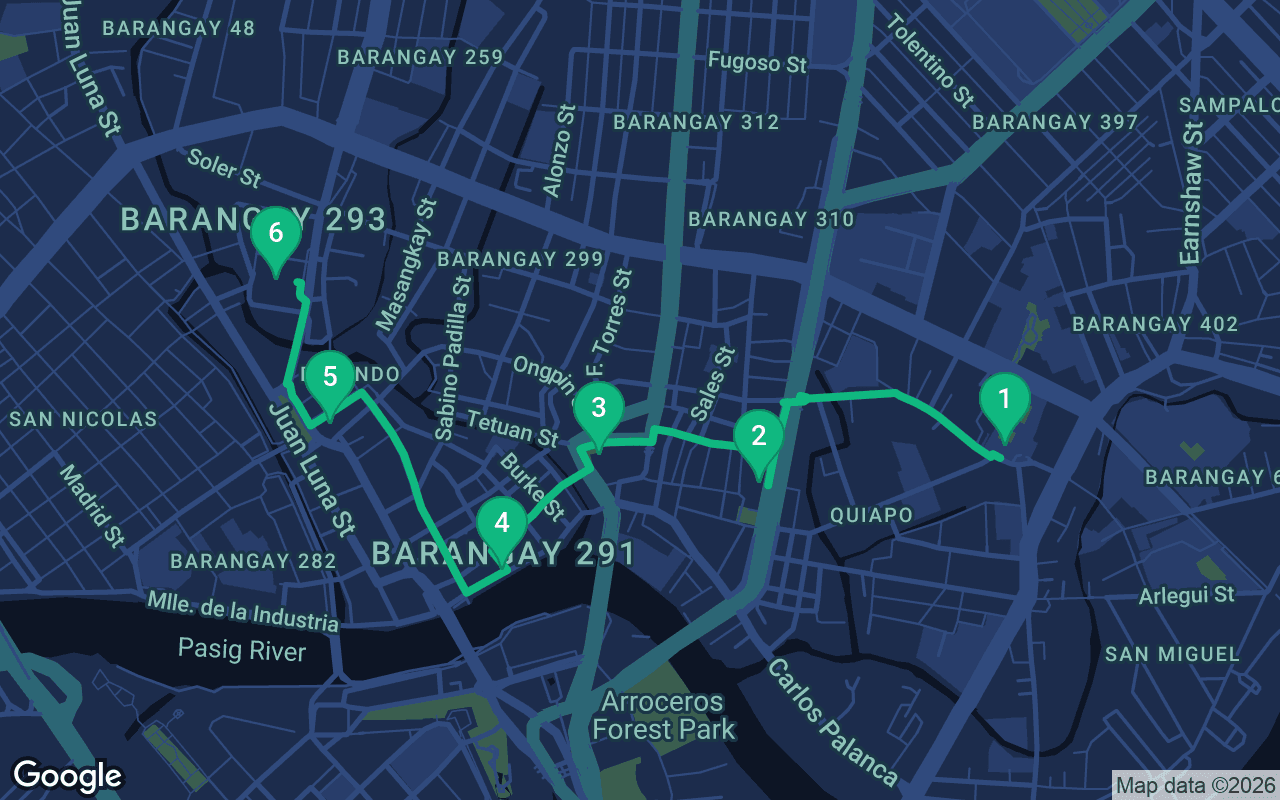
Khoảng 3km, mất khoảng 42 phút với nhịp độ thoải mái.
Tour này có thuyết minh âm thanh
Nhấn phát tại 3 điểm dừng đầu tiên để nghe thử 30 giây phần thuyết minh ngay tại đây. Trong ứng dụng, phần giới thiệu và các điểm dừng này được nghe trọn vẹn miễn phí, và mỗi điểm dừng sẽ phát âm báo khi bạn đến nơi. Toàn bộ chuyến tham quan có thuyết minh sẽ là của bạn chỉ với $8.99, mua một lần và sở hữu mãi mãi.
Hoạt động với Garmin, Komoot, Strava, OS Maps và mọi ứng dụng GPX.
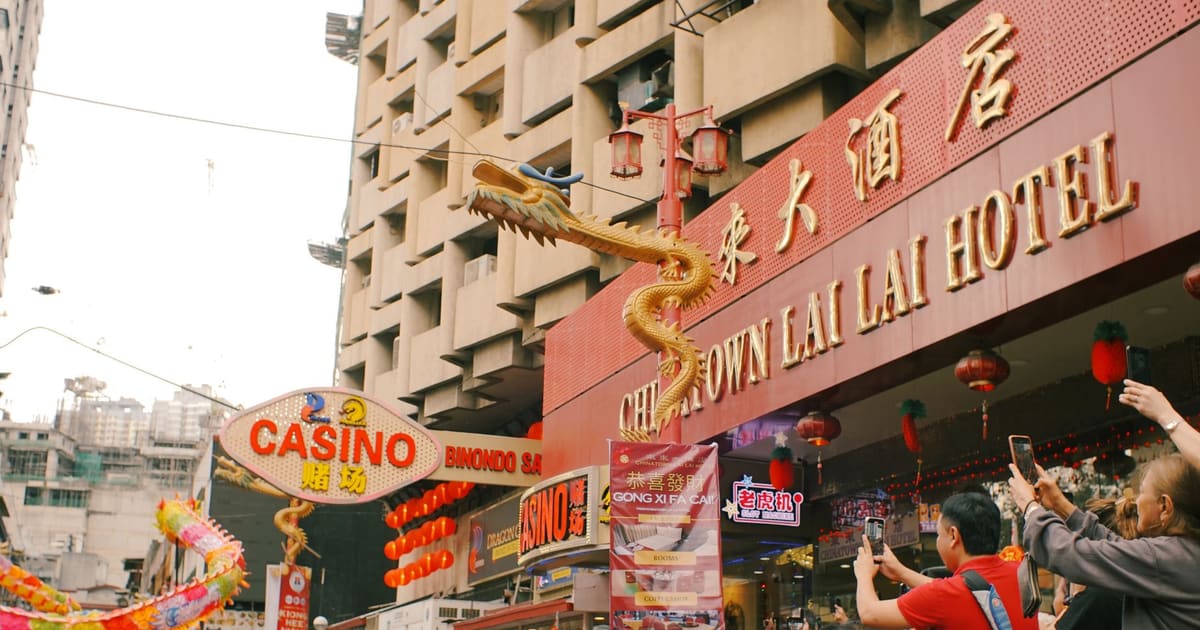
Across the Pasig River from the old walled city, Manila has always been louder, busier and more crowded, and this walk heads straight into that energy. It starts at San Sebastian, a Gothic church made entirely of steel, plunges into the crowds around Quiapo Church and the Black Nazarene, cuts through old Santa Cruz to Escolta, Manila's first great shopping street, and ends in Binondo, often called the oldest Chinatown in the world. It is about three kilometers and flat, and one of the liveliest self-guided walking tours in Manila, so come hungry.
The walking takes about forty-five minutes, but give it three hours or more with church visits and food stops. The ground is flat, but the streets take some care: pavements are narrow and full of vendors, traffic is heavy, and you will share the road with jeepneys, tricycles and pedicabs, so cross carefully and use the lights and footbridges where you can. Quiapo is at its most intense on Fridays, the Black Nazarene's devotion day, when crowds fill the church and the plaza from early morning, and on January 9, the feast of the Traslación, when a vast procession moves through these streets and the route can become impassable; check the dates before you go. In the crowds, keep your phone and bag close and in front of you. Manila is hot and humid all year and wet from roughly June to October, so walk in the morning, carry water and an umbrella, and duck into the churches and shops to cool off. Dress for the churches, with shoulders and knees covered, and be quiet and discreet inside, where most people have come to pray. Binondo is the place to eat, so leave room for dumplings and pastries at the end.
Stand in the little plaza in front of San Sebastian Church and look up at its twin spires. It looks like a Gothic church from northern Europe, all pointed arches and pinnacles, but rest your hand on a column and you will feel the truth: the whole building is made of steel. The Augustinian Recollect friars who ran this parish had seen church after church on this site lost to fire and earthquakes, and in the 1880s they chose a material that could neither burn nor easily fall. The design, by the Spanish architect Genaro Palacios, was turned into prefabricated steel parts in Belgium, shipped halfway around the world in the late 1880s and bolted together here, and the church was finished in 1891. It is often described as the only all-steel church in Asia, and a popular story credits Gustave Eiffel with the design, though there is no evidence he had a hand in it. Step inside and the illusion continues. The walls and columns are painted to look like marble and carved wood, the stained glass came from Germany, and on the main altar stands Our Lady of Mount Carmel, the church's most treasured image. The steel that protects it from fire has its own enemy in Manila's humid, salty air, and conservators have spent years fighting rust. From the plaza, head west through the streets toward Quiapo Church, about eight minutes, until the crowds and the stalls tell you that you have reached Plaza Miranda.
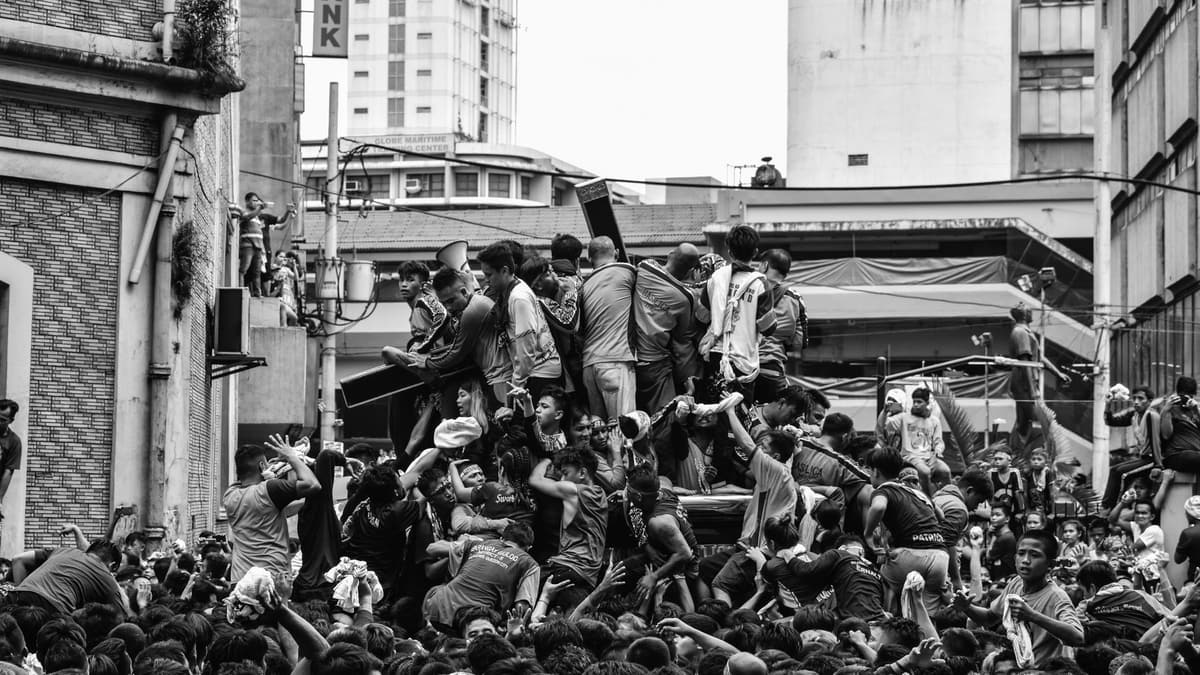 Quiapo Church, formally the Minor Basilica of the Black Nazarene, faces Plaza Miranda, and on most days the square in front of it is one of the most crowded places in Manila. The present church was rebuilt in the 1930s after a fire and enlarged later to hold the crowds, but the crowds come for what is inside: the Black Nazarene, a life-size statue of Christ bowed under the weight of the cross, carved in Mexico and brought across the Pacific on a galleon by Augustinian Recollect missionaries in 1606. Its dark color is explained in different ways, by a fire on the voyage in the best-known story, by the dark wood it was carved from in others. Devotees, many of them men, credit it with healings and answered prayers, and they show it in ways you will not forget, walking down the aisle on their knees or handing towels to attendants to touch against the image. Fridays are its day, with Masses one after another. On January 9 comes the Traslación, remembering the statue's transfer to Quiapo, when huge crowds of barefoot devotees follow it from the grandstand in Rizal Park back to this church, a procession that can last most of a day and night. Outside, the plaza has its own life: stalls sell candles, rosaries, herbal remedies and amulets, and fortune tellers set up near the church walls. Plaza Miranda has also long been Manila's stage for political rallies, and in 1971 grenades thrown into an opposition rally here killed and injured many people. From the plaza, head west along Carriedo Street, a crowded shopping street, and under the elevated railway on Rizal Avenue to the square at its end, about six minutes. Santa Cruz Church faces you across it.
Santa Cruz Church rises over Plaza Santa Cruz, its facade and tall bell tower looking out across the square. The parish was founded in the early 1600s by Jesuit missionaries for the Chinese converts who lived in this district, then a separate town outside Manila, and Santa Cruz grew into a busy quarter of artisans and traders, Chinese, mestizo and Filipino. Its churches fell to earthquakes and were rebuilt, and in 1945, when the fighting for the city swept through these districts, it was destroyed again. What you see is a postwar rebuilding in the old baroque manner, finished in the 1950s. The parish's beloved image is Our Lady of the Pillar, Nuestra Señora del Pilar, whose feast in October brings out processions. In the plaza stands the Carriedo Fountain, a monument to Francisco Carriedo, a Spanish official whose bequest in the 1700s eventually paid for Manila's first piped water supply, which began running in the 1880s. The square is a meeting point of neighborhoods. North and east lie the markets of Santa Cruz and Quiapo, and to the west, Ongpin Street, Chinatown's main street, begins near here and runs toward Binondo Church, where you will meet its other end later. Take a moment to look at the faces around you, office workers, shoppers, students and churchgoers, because this square has mixed Manila's peoples for four centuries. From the church, cross the plaza and head south-west toward the river, and in about five minutes you are on Escolta Street.
Bao gồm những gì
Các tour của chúng tôi được thiết kế để mang tính thiền định và đắm chìm: bạn vừa đi vừa lắng nghe. Đi cùng nhau luôn tuyệt hơn, và ứng dụng phát thuyết minh đồng bộ để bạn, người thương và bạn bè nghe mỗi điểm dừng cùng một lúc.
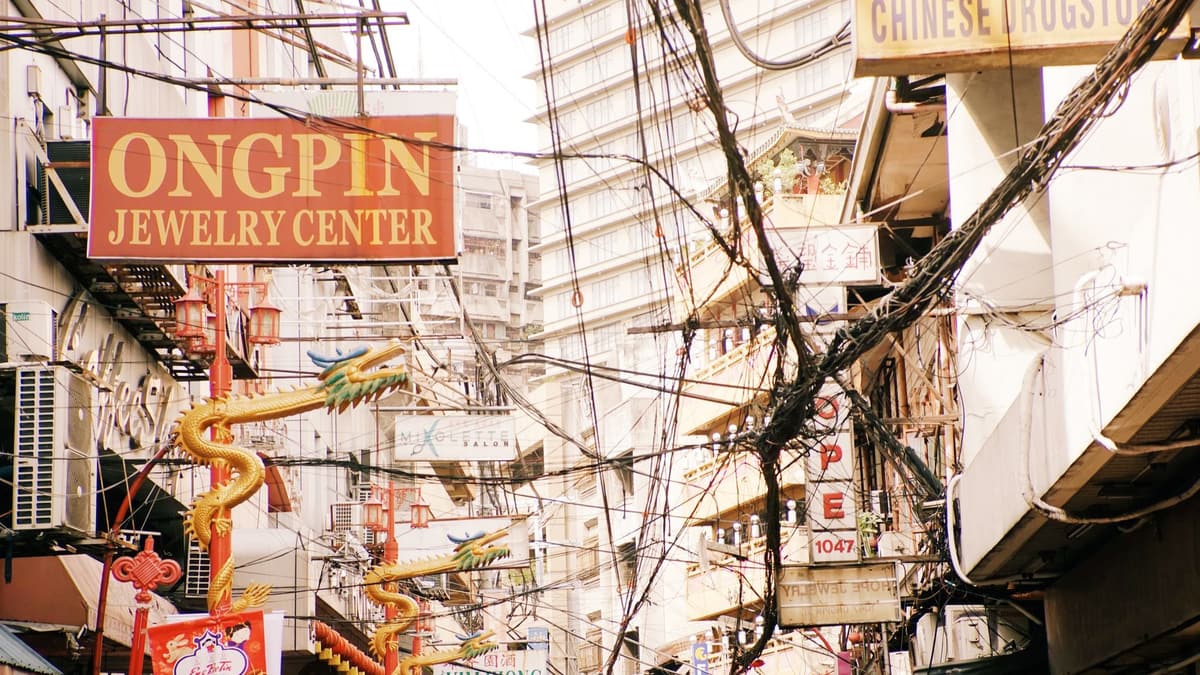
Escolta Street was once the most fashionable address in Manila. From the late Spanish years through the American period, this short street near the river was where the city came to shop, bank and be seen, lined with department stores, jewelers, pharmacies, cafés and cinemas.
Phần còn lại của điểm dừng này có trong tour âm thanh đầy đủ.
Binondo Church stands on Plaza San Lorenzo Ruiz, and the first thing to catch your eye is its bell tower: eight-sided and rising in tiers, it looks more like a Chinese pagoda than a Spanish belfry, a fair summary of the district it serves.
Phần còn lại của điểm dừng này có trong tour âm thanh đầy đủ.
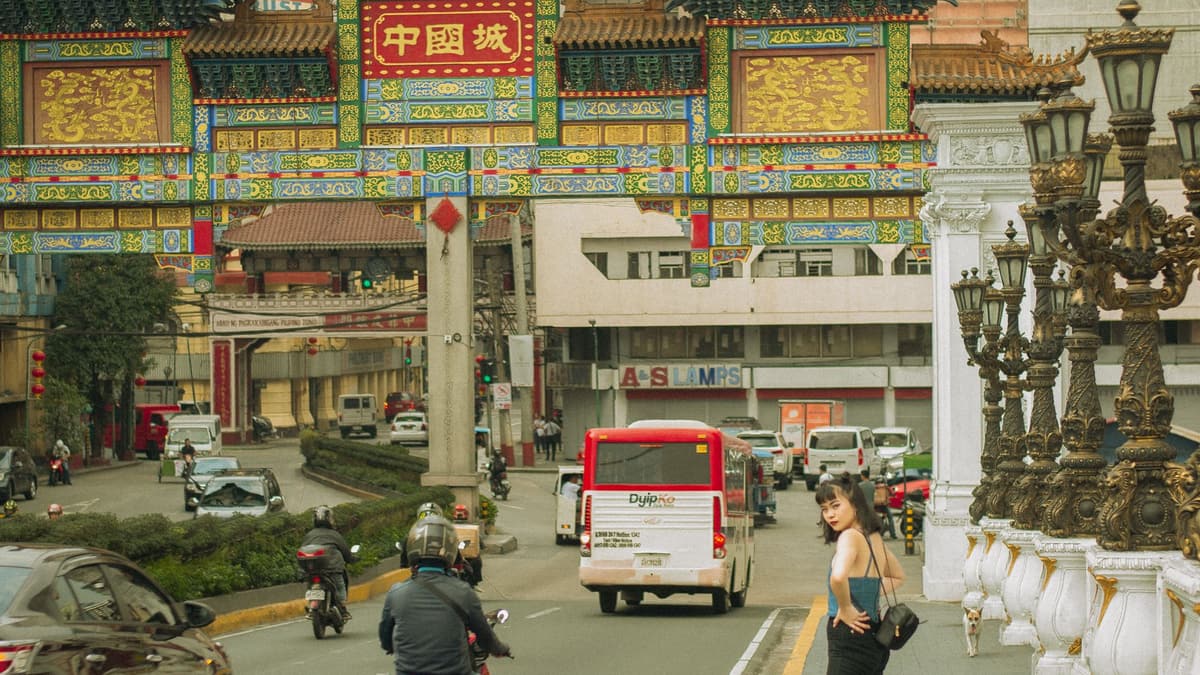
The walk ends at Lucky Chinatown, a modern mall dressed up with Chinese roofs, red lanterns and dragons, which is about as far from San Sebastian's steel Gothic as you can get in three kilometers.
Phần còn lại của điểm dừng này có trong tour âm thanh đầy đủ.
Thực hiện buổi đi bộ này cùng người khác vào tour đã lên lịch tiếp theo.
Khoảng 3km, mất khoảng 42 phút với nhịp độ thoải mái · 6 điểm dừng
Bạn bè đi bộ miễn phíOctober 11, 2026 · 9 min read
From the Hollandsche Schouwburg through the old Jewish Quarter, past the Dockworker and the Dam, to the Anne Frank House on the Prinsengracht.
October 11, 2026 · 11 min read
From Van Houten's street by the Vondelpark past Leidseplein, the Rijksmuseum passage and the famous canal bench to the Anne Frank House.

October 11, 2026 · 10 min read
Follow the last days of April and May 1945 from the Anhalter Bahnhof ruin past the Gestapo site and Brandenburg Gate to the Moltke Bridge and the Reichstag.
