
October 11, 2026 · 9 min read
Amsterdam Anne Frank Walking Tour
From the Hollandsche Schouwburg through the old Jewish Quarter, past the Dockworker and the Dam, to the Anne Frank House on the Prinsengracht.
589

October 8, 2026 · 12 min read

 Bạn bè đi bộ miễn phí
Mỗi tour cũng được tổ chức như một chuyến đi bộ nhóm theo lịch trình mà bạn có thể tham gia trong ứng dụng.
Thêm tour âm thanh tại New Orleans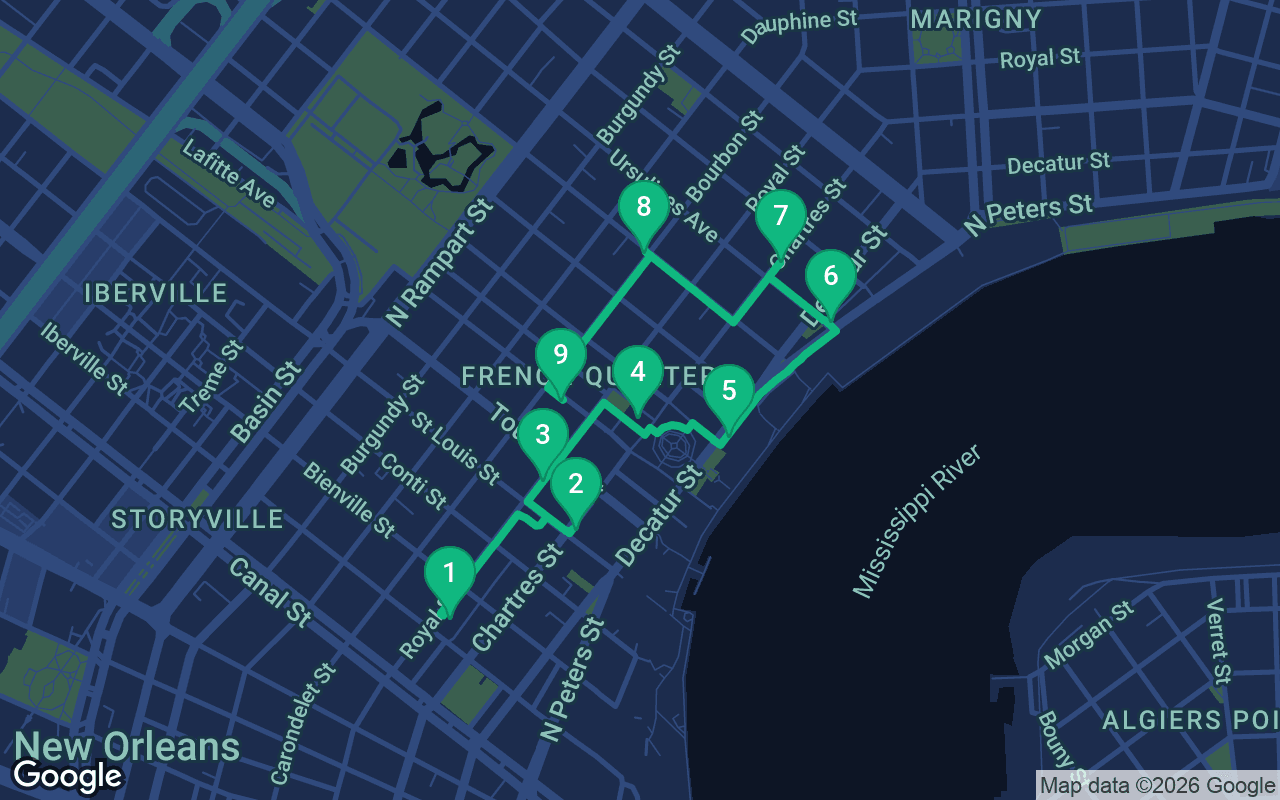
Khoảng 2,4km, mất khoảng 34 phút với nhịp độ thoải mái.
Tour này có thuyết minh âm thanh
Nhấn phát tại 3 điểm dừng đầu tiên để nghe thử 30 giây phần thuyết minh ngay tại đây. Trong ứng dụng, phần giới thiệu và các điểm dừng này được nghe trọn vẹn miễn phí, và mỗi điểm dừng sẽ phát âm báo khi bạn đến nơi. Toàn bộ chuyến tham quan có thuyết minh sẽ là của bạn chỉ với $7.99, mua một lần và sở hữu mãi mãi.
Hoạt động với Garmin, Komoot, Strava, OS Maps và mọi ứng dụng GPX.
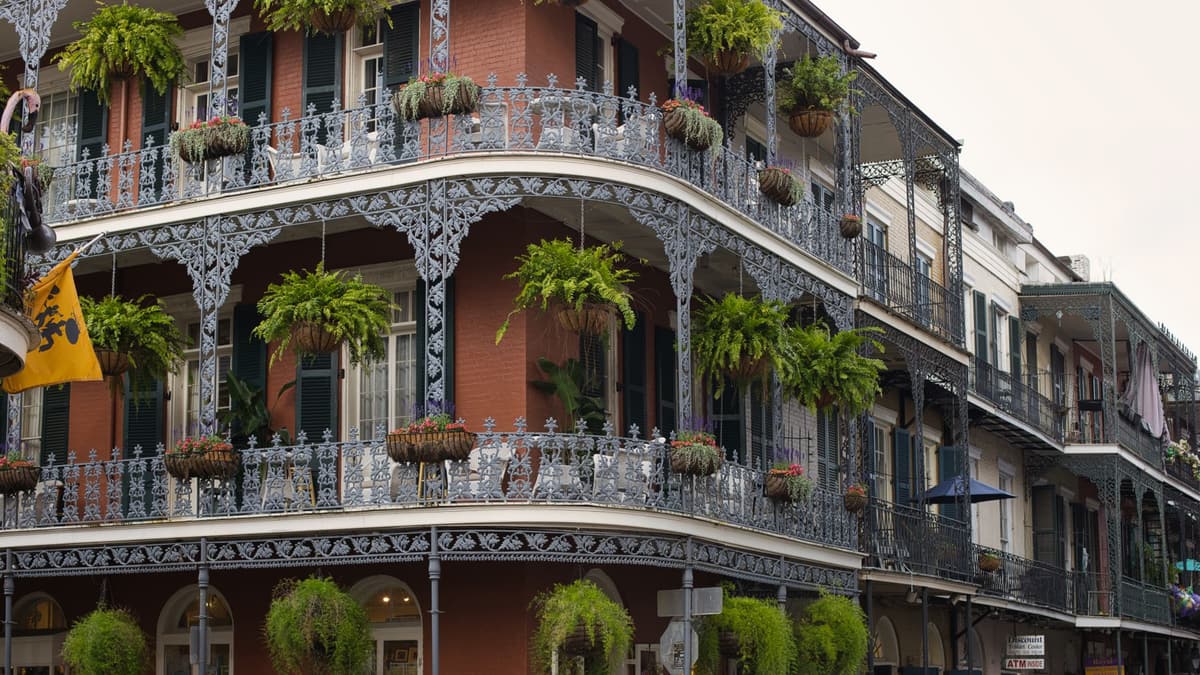
The French Quarter is the original New Orleans, the grid of streets that French engineers laid out beside the Mississippi in the early 1720s, a few years after the city was founded in 1718. Nearly three centuries later it is still a living neighborhood, with laundry on the balconies and brass bands on the corners, and every stop on this walk sits inside that first small city. You start at a grand old hotel just off Canal Street, wander down Royal Street past antiques shops and galleries, stand before the cathedral on Jackson Square, eat beignets by the river, browse the French Market, find the oldest building in the Mississippi Valley, and end the evening between a candlelit pirate's bar and the little hall that keeps traditional jazz alive. It is about 2.4 kilometers, a mile and a half, and one of the most atmospheric self-guided walking tours in America.
Allow about two hours at a stroll, much longer if you linger over coffee, browse the galleries or go into the cathedral and the museums. The Quarter is flat, but the sidewalks, called banquettes here, are narrow, cracked and uneven, and some streets are paved with old stones, so wear comfortable shoes. New Orleans is hot and humid for much of the year. The galleries and balconies overhead give welcome shade, but carry water, and in summer walk in the morning or the evening. This walk is designed to end around nightfall, when Preservation Hall opens its doors and the bars light their candles, but it works just as well by day. If you want to hear music at Preservation Hall, book ahead and check show times before you go. One more tip: locals give directions by the river, so upriver, downriver, toward the river and toward the lake are more useful here than north and south.
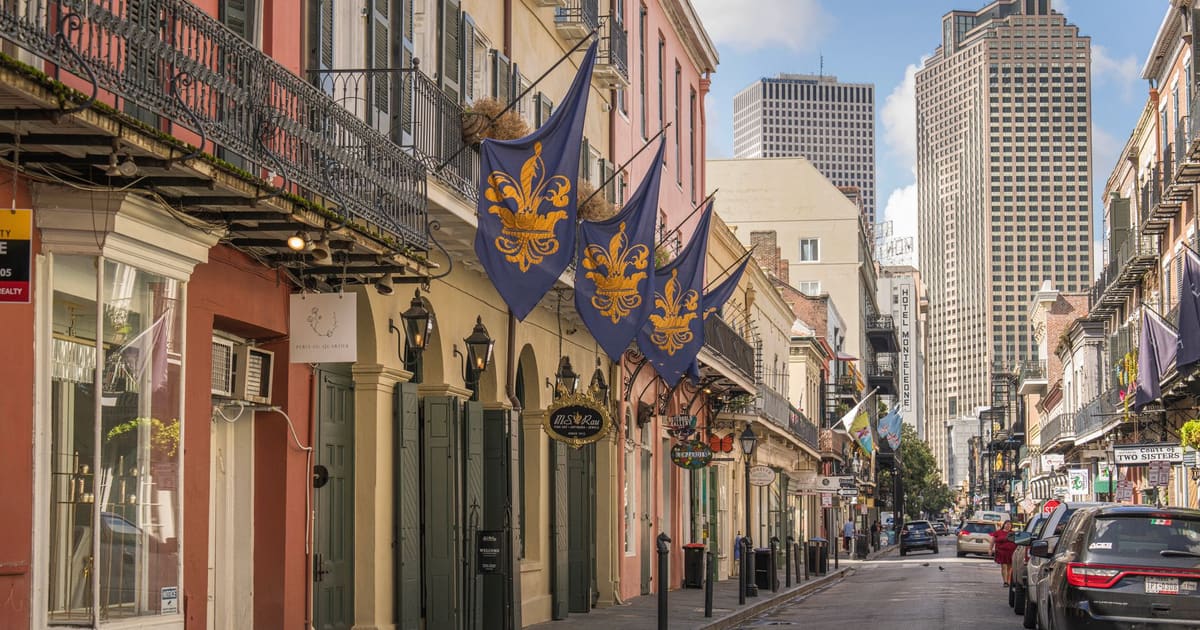
You start on Royal Street, a block from Canal Street, outside the Hotel Monteleone, a tall, ornate hotel that has been run by the same family for generations. Antonio Monteleone, a shoemaker from Sicily, bought a hotel on this corner in 1886, and his descendants have kept building and rebuilding it ever since. Step into the lobby and find the Carousel Bar, opened in 1949. It looks like a merry-go-round, with a painted canopy and twinkling lights, and it turns, slowly and constantly, so that over a drink you take a full lap of the room. The hotel has long been a favorite of writers. Ernest Hemingway mentioned it in one of his stories, Tennessee Williams knew it well, and Truman Capote liked to say he had been born here. He was not, though his mother was staying at the hotel while she was expecting him. Turn left down Royal Street, away from Canal Street, and walk three blocks, past the vast white courthouse of the Louisiana Supreme Court, then turn right on St Louis Street and go one block toward the river, about five minutes.
On the corner of Chartres and St Louis Streets stands a three-story building with peeling plaster walls and a little cupola on the roof. This is the Napoleon House, a bar and restaurant that looks as if nothing inside has changed in a century, which is close to the truth. The building was the home of Nicholas Girod, mayor of New Orleans during the War of 1812. The story goes that Girod and his friends offered it as a refuge for Napoleon Bonaparte, then a prisoner on the island of St Helena, and that a plot was afoot to rescue the fallen emperor and bring him here. Whether or not any plan existed, Napoleon died in 1821 without ever seeing it, and the name stuck. In the early twentieth century an Italian family, the Impastatos, took over the ground floor and ran it as a bar for about a hundred years, and they set its tone: classical music on the stereo, dim light, walls the color of old parchment and a cool drink called a Pimm's Cup. Then walk back one block along St Louis Street, away from the river, and turn right on Royal Street; the Historic New Orleans Collection is a few doors along, about two minutes.
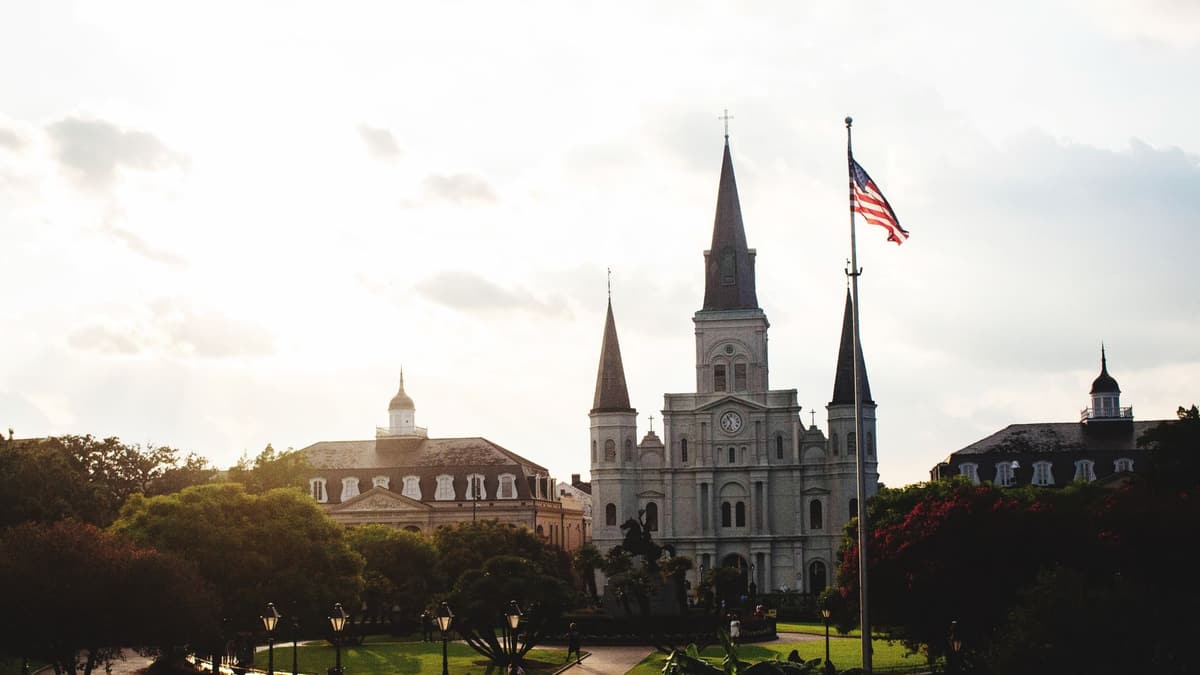 You are back on Royal Street, the most elegant street in the Quarter, lined with antiques dealers, jewelers and galleries selling everything from old maps to fine furniture. Among them are the galleries of the Historic New Orleans Collection, a museum and research center founded in 1966 by a collector couple, General L. Kemper Williams and his wife Leila, to keep the history of the city and the region in one place. One of its buildings, the Merieult House, dates from 1792 and survived the great fire of 1794, which destroyed much of the city. That fire, and an even worse one in 1788, explain one of the Quarter's surprises. When they struck, Louisiana was ruled by Spain, and the city was rebuilt under Spanish rules, in brick and stucco, with tiled roofs, courtyards and arcades. So the French Quarter, for all its name, is largely Spanish colonial in its bones. The galleries tell this story and many more, of Native nations, French and Spanish colonists, Africans enslaved and free, Americans, Caribbean refugees and immigrants from all over, and admission has generally been free, though it is worth checking before you go. Continue downriver along Royal Street for two blocks, then turn right into Pirate's Alley, the narrow flagstone lane beside the cathedral garden, about four minutes.
Bao gồm những gì
Các tour của chúng tôi được thiết kế để mang tính thiền định và đắm chìm: bạn vừa đi vừa lắng nghe. Đi cùng nhau luôn tuyệt hơn, và ứng dụng phát thuyết minh đồng bộ để bạn, người thương và bạn bè nghe mỗi điểm dừng cùng một lúc.
In the alley you passed Faulkner House Books, where William Faulkner lived in 1925 while writing his first novel.
Phần còn lại của điểm dừng này có trong tour âm thanh đầy đủ.
On the corner of Decatur Street, under a green and white striped awning, is Cafe du Monde, which has been serving coffee to the market crowds since 1862. The menu is short and has barely changed.
Phần còn lại của điểm dừng này có trong tour âm thanh đầy đủ.
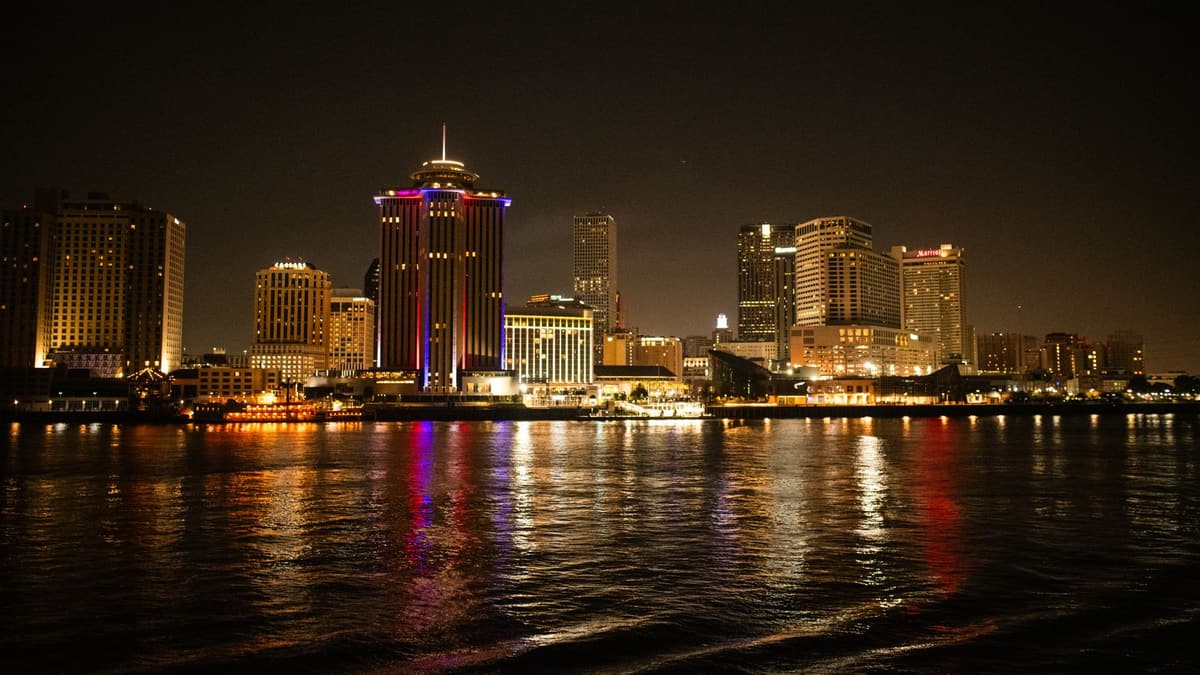
You are in the French Market, a string of open-sided sheds and arcades that stretches along the riverfront for several blocks, and it claims to be the oldest public market in the country.
Phần còn lại của điểm dừng này có trong tour âm thanh đầy đủ.
Behind the wall on the corner of Chartres Street stands a plain, handsome building of white plaster with a steep roof and rows of shuttered windows.
Phần còn lại của điểm dừng này có trong tour âm thanh đầy đủ.
On the corner of Bourbon and St Philip Streets stands a small, crooked cottage, its plaster flaking away to show the soft red brick and timber frame beneath.
Phần còn lại của điểm dừng này có trong tour âm thanh đầy đủ.
You finish at a weathered old building on St Peter Street with a battered wooden door, a wrought-iron gate and a simple sign.
Phần còn lại của điểm dừng này có trong tour âm thanh đầy đủ.
Thực hiện buổi đi bộ này cùng người khác vào tour đã lên lịch tiếp theo.
Khoảng 2,4km, mất khoảng 34 phút với nhịp độ thoải mái · 9 điểm dừng
Bạn bè đi bộ miễn phíOctober 11, 2026 · 9 min read
From the Hollandsche Schouwburg through the old Jewish Quarter, past the Dockworker and the Dam, to the Anne Frank House on the Prinsengracht.
October 11, 2026 · 11 min read
From Van Houten's street by the Vondelpark past Leidseplein, the Rijksmuseum passage and the famous canal bench to the Anne Frank House.

October 11, 2026 · 10 min read
Follow the last days of April and May 1945 from the Anhalter Bahnhof ruin past the Gestapo site and Brandenburg Gate to the Moltke Bridge and the Reichstag.
