
October 11, 2026 · 9 min read
Amsterdam Anne Frank Walking Tour
From the Hollandsche Schouwburg through the old Jewish Quarter, past the Dockworker and the Dam, to the Anne Frank House on the Prinsengracht.
589

October 11, 2026 · 12 min read

 الأصدقاء يسيرون مجاناً
تتوفر كل جولة أيضاً كمشية جماعية مجدولة يمكنك الانضمام إليها في التطبيق.
المزيد من الجولات الصوتية في Rome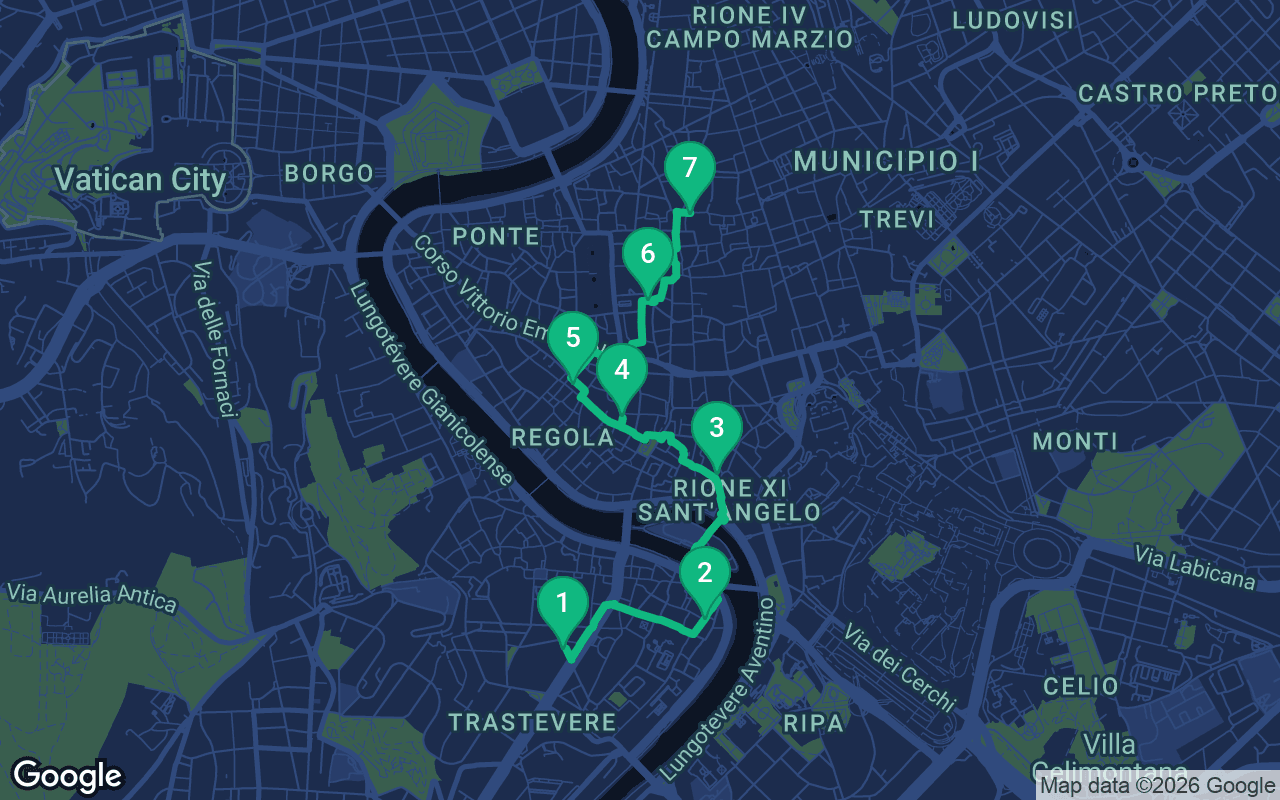
حوالي 3.1 كم، وحوالي 43 دقيقة بسرعة سهلة.
هذه الجولة مصحوبة بتعليق صوتي
اضغط على زر التشغيل في أول 3 من المحطات للاستماع إلى عرض تجريبي مدته 30 ثانية من التعليق الصوتي. في التطبيق، تستمع إلى المقدمة وهذه المحطات كاملةً مجانًا، وتنبّهك كل محطة بإشارة صوتية فور وصولك. والجولة الصوتية بالكامل لك مقابل $14.99، وهي عملية شراء لمرة واحدة تحتفظ بها للأبد.
يعمل مع Garmin وKomoot وStrava وOS Maps وأي تطبيق GPX.
Roman food was born poor. The great dishes of this city come from cheap cuts, sheep's cheese, bread and leftovers, cooked by people who could not afford to waste anything, and somehow turned into the meals that visitors now cross the world to eat. Romans call it cucina povera, the cooking of the poor. This walk eats its way through that story in seven stops. You start at a takeaway counter in Trastevere with a fried rice ball whose name may be French. You sit down with the four great Roman pastas and the honest, still unsettled story of carbonara. You cross the Tiber Island into the old Jewish quarter for a whole fried artichoke and a tart from a bakery with no sign. Then come bread, a market square with a dark past, Rome's most ritual cup of coffee, and a finale of gelato a few steps from the Pantheon. It's one of our self-guided walking tours, about 3.1 kilometers from Supplì Roma in Trastevere to Giolitti near the Pantheon, and every stop is something you can eat.
The walking alone takes about 45 minutes, but with tastings and a sit-down pasta, give it three hours or more. The streets are flat cobbles, and the only climb is the gentle rise over the river bridges. Go Monday to Saturday, late morning, when the Campo de' Fiori market is running. Sunday doesn't work: the market, Da Enzo and, by its listings, the supplì counter are shut. Giggetto closes on Mondays, and the Boccione bakery closes on Saturdays and Jewish holidays and shuts early on Friday afternoons, so Tuesday to Friday, before mid-afternoon on Friday, is the window that catches everything. You pay for your own food at each stop. Seven tastings is a lot, so share plates, take the smallest size, and feel free to skip one. Da Enzo takes no reservations and can have a queue, and Giggetto takes bookings by phone; if you'd rather keep moving, the walk works from the street and you can skip either one. Wheat, dairy, eggs, pork and nuts turn up almost everywhere, so if you have an allergy, ask at every counter. Hours change, and the listings for some of these places disagree, so check before you go.
You're on Via di San Francesco a Ripa, in Trastevere, at a tiny takeaway counter at number 137. There are no tables to wait for. This is food you eat standing on the street.
The thing to order is the supplì, Rome's fried rice ball. It's rice cooked with tomato ragù, wrapped around a piece of mozzarella and fried. This business traces itself to 1979, when two brothers, Venanzo and Alvaro Sisini, opened a supplì counter in Trastevere. It now has other branches across the city, but Trastevere is where the story starts.
Now the name. Supplì doesn't sound Italian, and it may not be. The great Italian dictionary, Treccani, says the word is probably an alteration of the French surprise. You'll hear a tidier story, about a French soldier in Rome biting into one and shouting the word. That part is a legend. The careful version is only that the word probably came from French, and that the surprise is what's hidden inside.
And what's hidden inside has changed. Older supplì were filled with chicken giblets. Mozzarella became the standard filling around the 1950s, and it gave the snack its nickname: supplì al telefono, the telephone supplì. Break one in half and pull, and the melted cheese stretches between the two pieces like the cord of an old telephone.
That's the whole Roman food story in one bite: rice, a little sauce, a scrap of cheese, made into something people queue for.
What to order here: a classic supplì, with rice, tomato ragù and mozzarella. Pull it apart and look for the telephone cord.
Next comes pasta, and a family argument that Rome has never settled. Head east, cross the wide Viale di Trastevere with its tram tracks, and keep going through the quieter lanes toward the river until you reach Via dei Vascellari. About seven minutes.
You're on Via dei Vascellari, outside number 29: a small family trattoria with a handful of tables. There's often a line outside. Da Enzo takes no reservations. It's first come, first served.
The family who run it today took over in the late 1980s, after the original Enzo died, and they bring ingredients from their own family farm in Belmonte in Sabina. This is the place to meet the four great Roman pastas, and the best way to understand them is as one family.
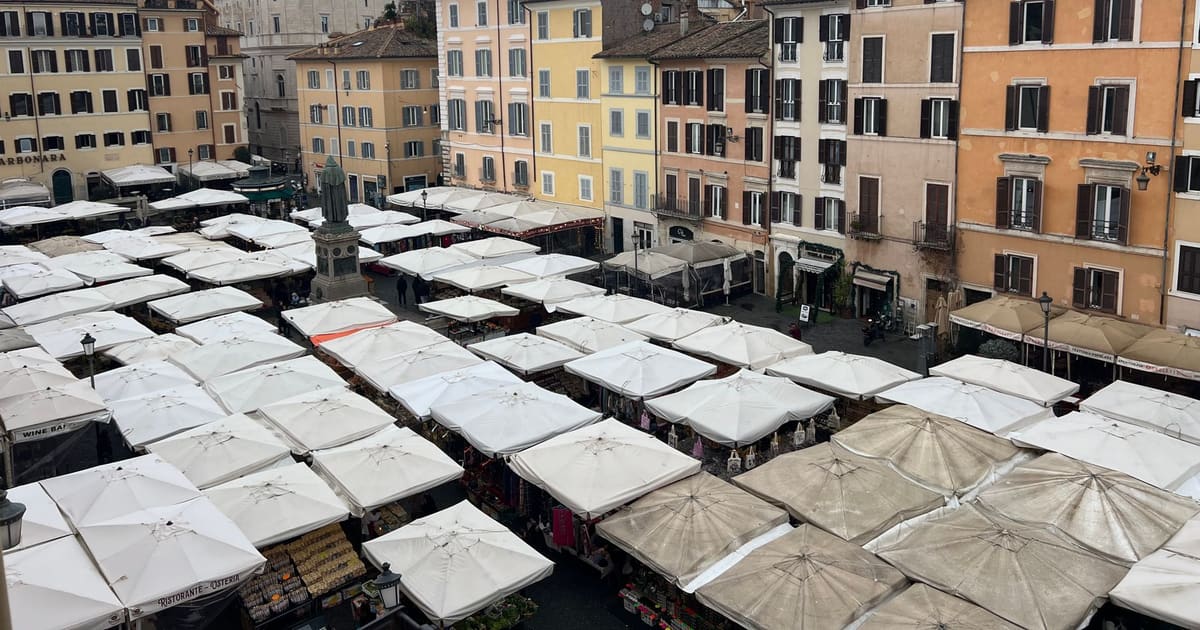
Start with cacio e pepe: pasta, cheese, black pepper and a splash of the starchy pasta water, whisked into a sauce. Add guanciale, the cured pork cheek, and it becomes gricia. Add egg to gricia, and it's carbonara. Take gricia again and add tomato instead of egg, and it's amatriciana. Four dishes, built from almost nothing.
Carbonara is the famous one, and here's the honest truth: nobody knows where it came from. There's no written record of it before the Second World War. It isn't in Ada Boni's Roman cookbook of 1930. The name first shows up around 1950. One account points to the newspaper La Stampa that year, another to a 1951 Italian film. The first printed recipe, in 1952, appeared in Chicago, in a book by Patricia Bronté. The first Italian recipe came in 1954 in La Cucina Italiana, made with pancetta, garlic and Gruyère. A recipe with guanciale appeared in 1960.
So who invented it? There are three main theories. One says it came from the bacon and egg rations of American soldiers in 1944, which a chef called Renato Gualandi claimed. One credits the charcoal burners, the carbonari. One traces it to a Neapolitan dish of cheese and eggs. None is proven. What Romans do agree on is the recipe: egg, pecorino sheep's cheese, guanciale and pepper. No cream.
What to order here: the carbonara or the cacio e pepe. It's a sit-down plate, so if you're pacing yourself, share one.
Now cross the river by its island. Walk north to the river, cross Ponte Cestio onto the Tiber Island, then Ponte Fabricio to the far bank, and walk straight ahead into Via del Portico d'Ottavia. About seven minutes.
You're on Via del Portico d'Ottavia, beside a row of ancient columns. That's the ruined Roman Portico of Octavia. Right next to it, at number 21a, is the trattoria Giggetto.
This street was the heart of the Roman ghetto. In 1555, Pope Paul the Fourth issued a papal bull, known by its opening words, Cum nimis absurdum, and confined Rome's Jews to this district, described as one of the most dilapidated and unhealthy neighborhoods in the city. The ghetto lasted until 1870, when Rome became part of the Kingdom of Italy. For more than three hundred years, Rome's Jews lived confined to these few streets.
Out of that history came one of Rome's great dishes, the carciofo alla giudia: a whole artichoke, deep-fried in olive oil. Frying in oil suited the kosher rules, which keep butter away from meat. The name means Jewish style. And it's still argued over. In 2018, Israel's Chief Rabbinate ruled that the dish wasn't kosher, because insects can hide between the leaves. Rome's Jewish community disagreed.
Giggetto opened in 1923. It was founded by Luigi Ceccarelli, known as Giggetto, and his wife Ines, and today the third generation, Claudio and Marco, runs it. Rome's own artichoke, the Romanesco, is harvested from January to May, and it's at its best in March and April, so spring is the time for this dish.
What to order here: a carciofo alla giudia, best in spring.
Then save a little room. Walk west along this same street, and about 130 meters on, at number 1, you'll find Pasticceria Boccione, a kosher bakery with no sign over the door. Order the ricotta and sour cherry tart, made with the sour cherries Romans call visciole, or a piece of pizza ebraica, a dense bake of fruit and nuts. It closes on Saturdays and Jewish holidays, shuts early on Fridays, and often sells out, so take what's there.
From Boccione, carry on to the end of the street, cross the busy Via Arenula, and weave a few blocks northwest to Via dei Chiavari. About six minutes.
ما الذي يشمله
جولاتنا مصممة لتكون تأملية وغامرة: تتحرك وتستمع فحسب. وهي أجمل دائمًا برفقة الآخرين، إذ يشغّل التطبيق السرد بشكل متزامن، فتسمع أنت وشريكك وأصدقاؤك كل محطة في اللحظة نفسها.
You're on Via dei Chiavari, at number 34, outside the counter of Antico Forno Roscioli. Forno means oven, and antico means old, and the name is earned.
بقية هذه المحطة في الجولة الصوتية الكاملة.
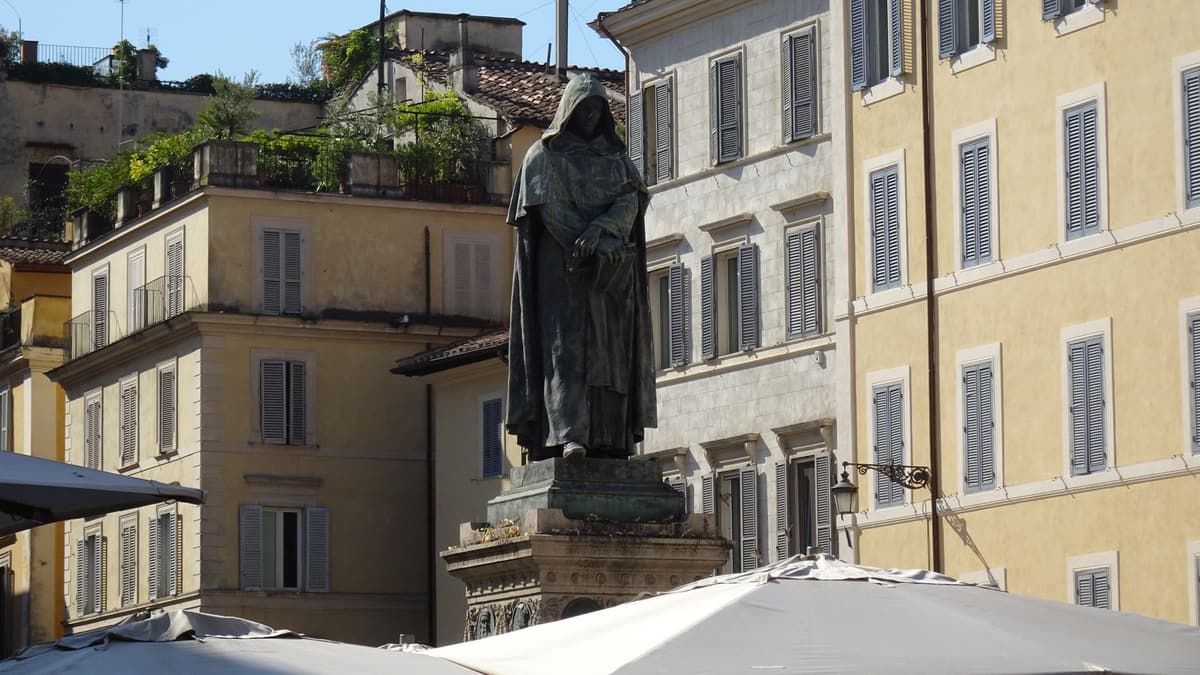
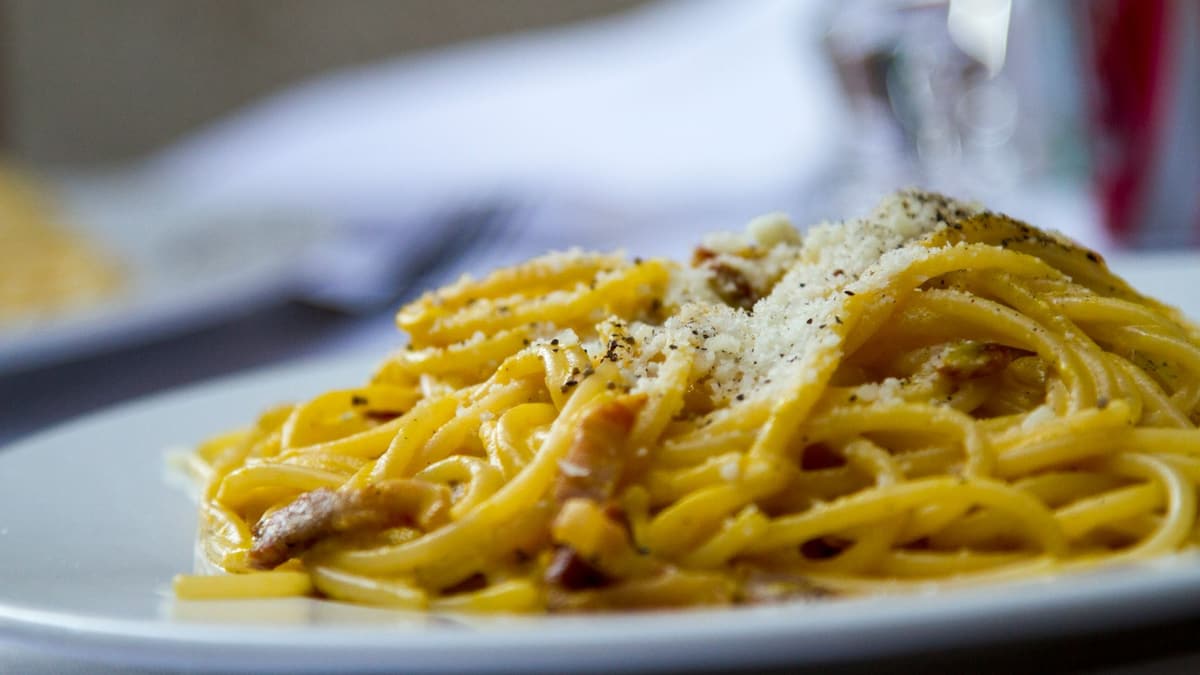
You're in Campo de' Fiori, standing by the statue in the middle of the square. Around you, if it's a weekday morning, are the market stalls.
بقية هذه المحطة في الجولة الصوتية الكاملة.
You're in the small Piazza di Sant'Eustachio. Find the coffee bar at number 82, and look for its logo: a stag with a cross between its antlers.
بقية هذه المحطة في الجولة الصوتية الكاملة.
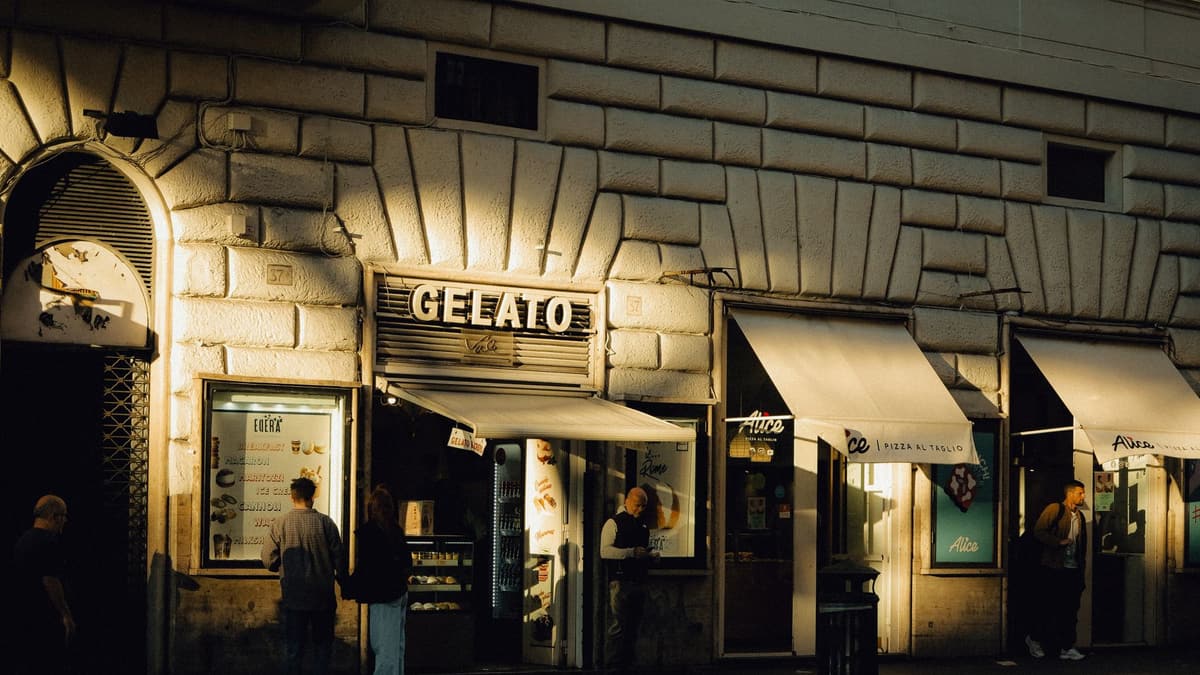
You're on Via degli Uffici del Vicario, outside number 40. This is Giolitti, a gelateria and pastry bar, the last stop and the sweet one.
بقية هذه المحطة في الجولة الصوتية الكاملة.
قم بهذا النشاط مع أشخاص آخرين في الجولة المُجدوَلة القادمة.
حوالي 3.1 كم، وحوالي 43 دقيقة بسرعة سهلة · 7 محطات
الأصدقاء يسيرون مجاناًOctober 11, 2026 · 9 min read
From the Hollandsche Schouwburg through the old Jewish Quarter, past the Dockworker and the Dam, to the Anne Frank House on the Prinsengracht.
October 11, 2026 · 11 min read
From Van Houten's street by the Vondelpark past Leidseplein, the Rijksmuseum passage and the famous canal bench to the Anne Frank House.

October 11, 2026 · 10 min read
Follow the last days of April and May 1945 from the Anhalter Bahnhof ruin past the Gestapo site and Brandenburg Gate to the Moltke Bridge and the Reichstag.
