
October 11, 2026 · 9 min read
Amsterdam Anne Frank Walking Tour
From the Hollandsche Schouwburg through the old Jewish Quarter, past the Dockworker and the Dam, to the Anne Frank House on the Prinsengracht.
589

October 11, 2026 · 14 min read

 الأصدقاء يسيرون مجاناً
تتوفر كل جولة أيضاً كمشية جماعية مجدولة يمكنك الانضمام إليها في التطبيق.
المزيد من الجولات الصوتية في San Francisco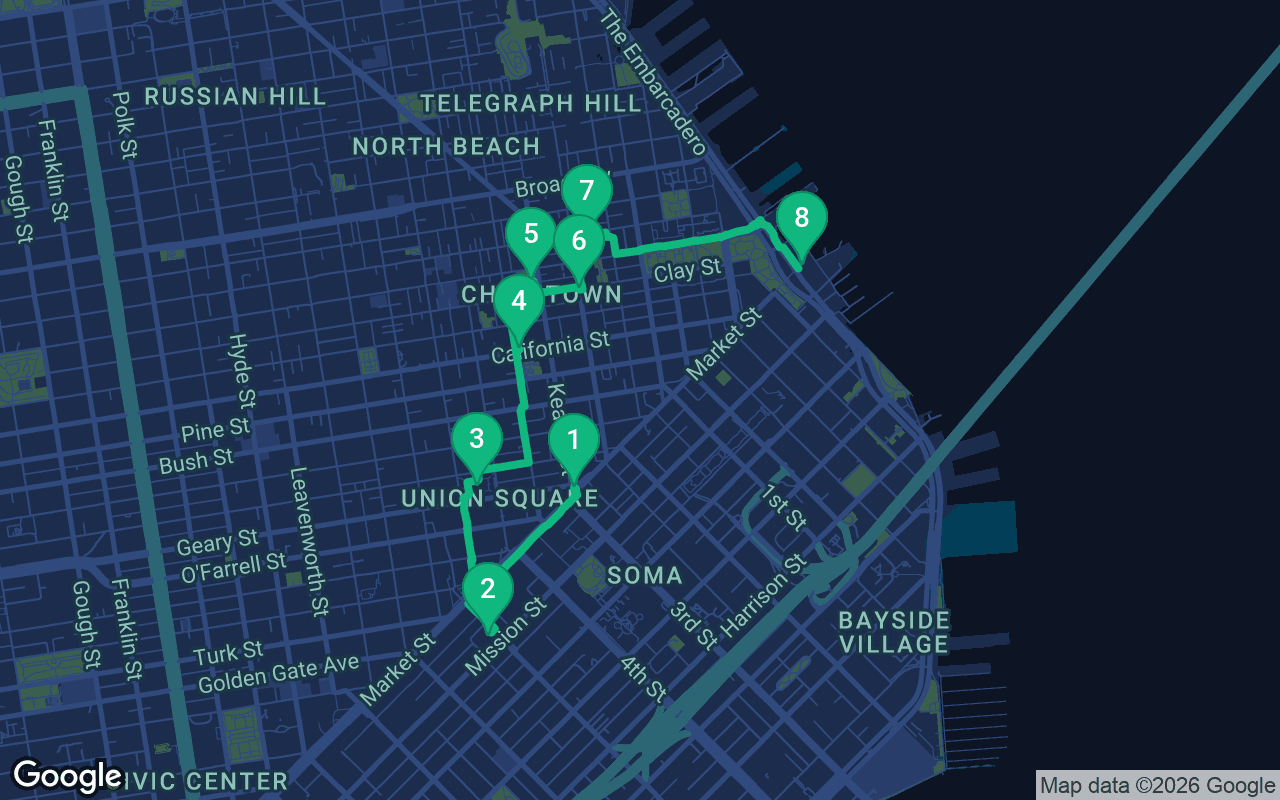
حوالي 4 كم، وحوالي 57 دقيقة بسرعة سهلة.
هذه الجولة مصحوبة بتعليق صوتي
اضغط على زر التشغيل في أول 3 من المحطات للاستماع إلى عرض تجريبي مدته 30 ثانية من التعليق الصوتي. في التطبيق، تستمع إلى المقدمة وهذه المحطات كاملةً مجانًا، وتنبّهك كل محطة بإشارة صوتية فور وصولك. والجولة الصوتية بالكامل لك مقابل $15.99، وهي عملية شراء لمرة واحدة تحتفظ بها للأبد.
يعمل مع Garmin وKomoot وStrava وOS Maps وأي تطبيق GPX.
At 5:12 in the morning on Wednesday, 18 April 1906, the San Andreas fault tore open along nearly three hundred miles of California. In San Francisco the violent shaking lasted about a minute. What it started burned for three days. Water mains broke, the fire chief was fatally hurt, and fires spread across the city with almost nothing to stop them. By the end, about 28,000 buildings were gone, and about 225,000 of the city's roughly 400,000 people had lost their homes. This walk follows the disaster in order, from the fountain where survivors gathered, past the buildings that burned and the few that were saved, to the Ferry Building, where hundreds of thousands fled the city. It runs about four kilometers, roughly two and a half miles. Of all our self-guided walking tours, this one is about a single story, and it ends with a hard question: how many people died, and why that number was wrong for a century.
The walking alone takes just under an hour. With the stories, allow about two hours. Most of the route is flat, with a gentle climb from Union Square up to Old St. Mary's and an easy walk downhill to the bay at the end. Start at Montgomery Street station on BART and Muni, which comes up right beside the fountain. The walk ends at the Ferry Building, a short stroll from Embarcadero station and on the F-line streetcar. Morning is a good time, when downtown is quiet and the light comes in off the bay. San Francisco weather turns fast, so bring a layer even on a sunny day. The Old Mint is seen from outside, since it opens only for events. Old St. Mary's welcomes visitors, but check opening times before you plan to go inside, and remember it is a working church. This is a walk about a tragedy, so it moves at a thoughtful pace.
You're standing at Lotta's Fountain, the tall cast-iron column on the traffic island where Market, Kearny and Geary meet. It stands about eighteen feet high. It was a gift to the city from the actress Lotta Crabtree, dedicated in 1875, and it is San Francisco's oldest surviving monument, freshly restored in 2024.
Now look across Market Street. That is the Palace Hotel. The first Palace opened in 1875. The building you see now opened in December 1909, and why it had to be rebuilt is where this story begins.
On the night of 17 April 1906, the great tenor Enrico Caruso sang Carmen in San Francisco, then went to bed on the fifth floor of the Palace. At 5:12 the next morning, the shaking woke him. In his own account, he watched buildings fall from his window "for something like forty seconds." His valet dragged his trunks down six flights of stairs. The Palace itself came through the shaking with modest damage. But by that evening its basement water tank had run dry, and the fire gutted it.
On Bush Street, a fire station was crushed when the dome of the California Hotel fell through it. Inside was the fire chief, Dennis Sullivan. He was mortally injured, and he died four days later. The man who should have led the fight against the fire was out of it before it had begun.
This fountain survived intact. In the days that followed, survivors came here to meet and to look for one another. It became the meeting point of a broken city. Every 18 April, at about 5:12 in the morning, San Francisco still gathers at this spot and stands in silence.
Walk southwest along Market Street to Fifth Street, then turn left. The Old Mint is on the corner of Fifth and Mission, about ten minutes away.
In front of you is the Old Mint, a heavy granite and sandstone building with a row of columns across its front. San Franciscans call it the Granite Lady. It was designed by the architect Alfred Mullett, finished in the 1870s, and it struck coins from 1874 until 1937.
On the morning of the earthquake, it came through almost undamaged. The danger came that afternoon. South of Market, the neighborhood around you, was a poor district of crowded lodging houses, and it was burning. At 2:30 in the afternoon, crews began dynamiting buildings around the Mint, trying to open gaps the fire could not cross.
Inside, the superintendent, Frank Leach, led the defense. In the vaults sat hundreds of millions of dollars in gold. And the Mint had something much of the city had lost that day: its own water. Wells had been built just weeks before the earthquake. The Treasury employees ran hoses from them and fought the fire as it closed in around the building. They held it. When the smoke cleared, the Mint was standing, and so was the gold.
What came next mattered just as much. With the banks burned out, the Mint was the only financial institution in the city that could open its doors, and it became the treasury for the relief funds. Leach also piped water from the Mint's well to the homeless families camped around the building.
You may read that the Mint held a third of the nation's gold that day. That figure belongs to 1934, not 1906.
Walk back up Fifth Street to Market, cross, and follow Powell Street north, past the cable car turnaround, to Union Square. It takes about eight minutes.
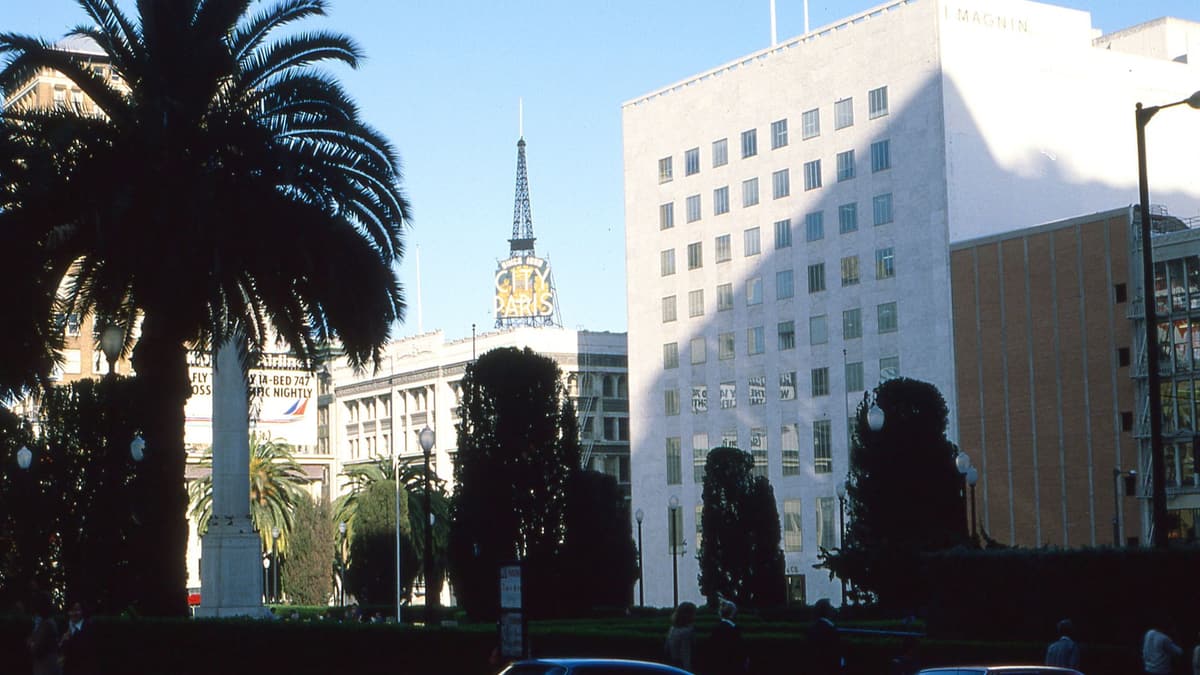
Stand by the tall granite column in the middle of the square. On top is a bronze figure of Victory. This is the Dewey Monument, and President Theodore Roosevelt dedicated it in May 1903, three years before the earthquake.
Go back to that first morning. Earlier on the 18th, Caruso walked here from the Palace. He did not trust any building to stay standing. In his words, "nothing is safe but the open square." So the great tenor lay down here in the square to rest. That night he slept on the hard ground in the open, before a cart finally took him to the ferry for Oakland.
Newspapers reported that Caruso dragged his bag into the square, sat on it and wept. He denied it himself. "All this is untrue," he wrote. "I was frightened... but I did not lose my head."
Now look at the big hotel on the west side of the square. The St. Francis Hotel had opened there in March 1904. At 2:30 in the morning on 19 April, the fire reached it. Its interior was destroyed. The column in front of you stood through it all.
Then the square became a camp. Refugees pitched tents across it, and a postcard from 1907 still shows them here. Within forty days, a temporary hotel with 110 rooms had gone up right around the monument. The rebuilt St. Francis reopened in late 1907.
Leave the square at its northeast corner and walk east on Post Street to Grant Avenue. Turn left and walk north on Grant, through the Chinatown gate and uphill to California Street. Old St. Mary's is on the corner, about seven minutes away.
ما الذي يشمله
جولاتنا مصممة لتكون تأملية وغامرة: تتحرك وتستمع فحسب. وهي أجمل دائمًا برفقة الآخرين، إذ يشغّل التطبيق السرد بشكل متزامن، فتسمع أنت وشريكك وأصدقاؤك كل محطة في اللحظة نفسها.
You're at the corner of California Street and Grant Avenue. The red-brick church with the square tower is Old St. Mary's, dedicated in 1854.
بقية هذه المحطة في الجولة الصوتية الكاملة.
You're in Portsmouth Square, the open plaza at the heart of Chinatown. Look across Kearny Street, on the east side.
بقية هذه المحطة في الجولة الصوتية الكاملة.
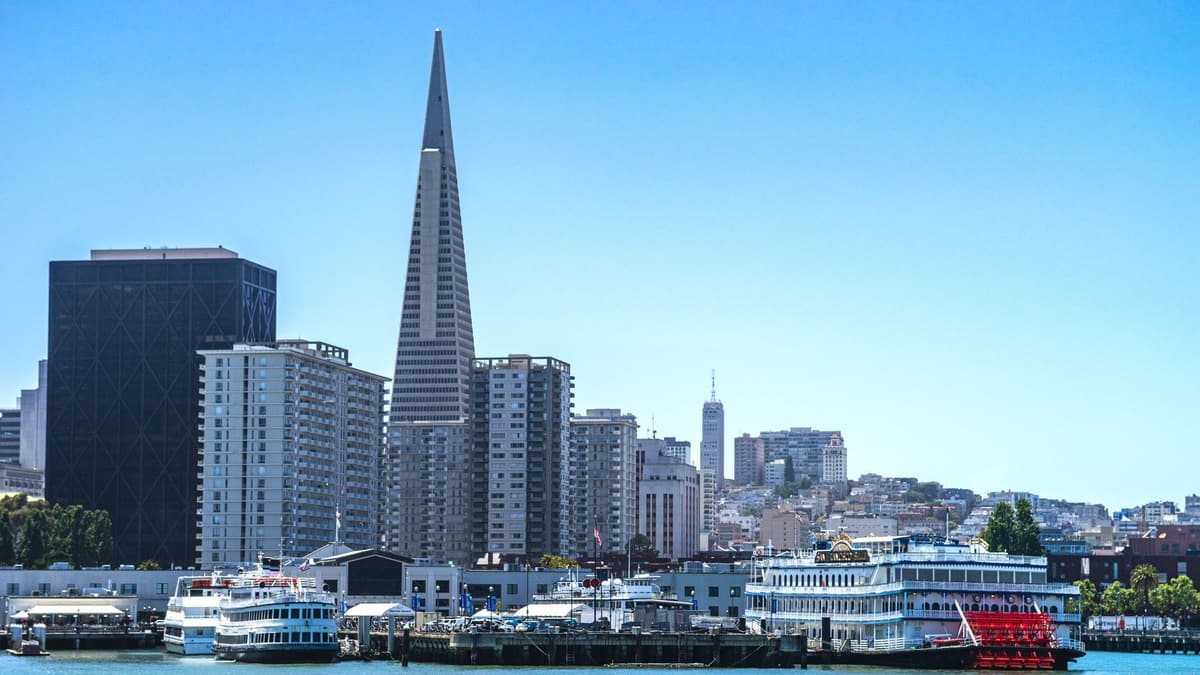
Look up. The white tower narrowing to a point above you is the Transamerica Pyramid.
بقية هذه المحطة في الجولة الصوتية الكاملة.
You're on Jackson Street in front of the Hotaling Building, built in 1866. Look up and down the block: brick and cast-iron fronts from the 1850s and 1860s, low and solid.
بقية هذه المحطة في الجولة الصوتية الكاملة.
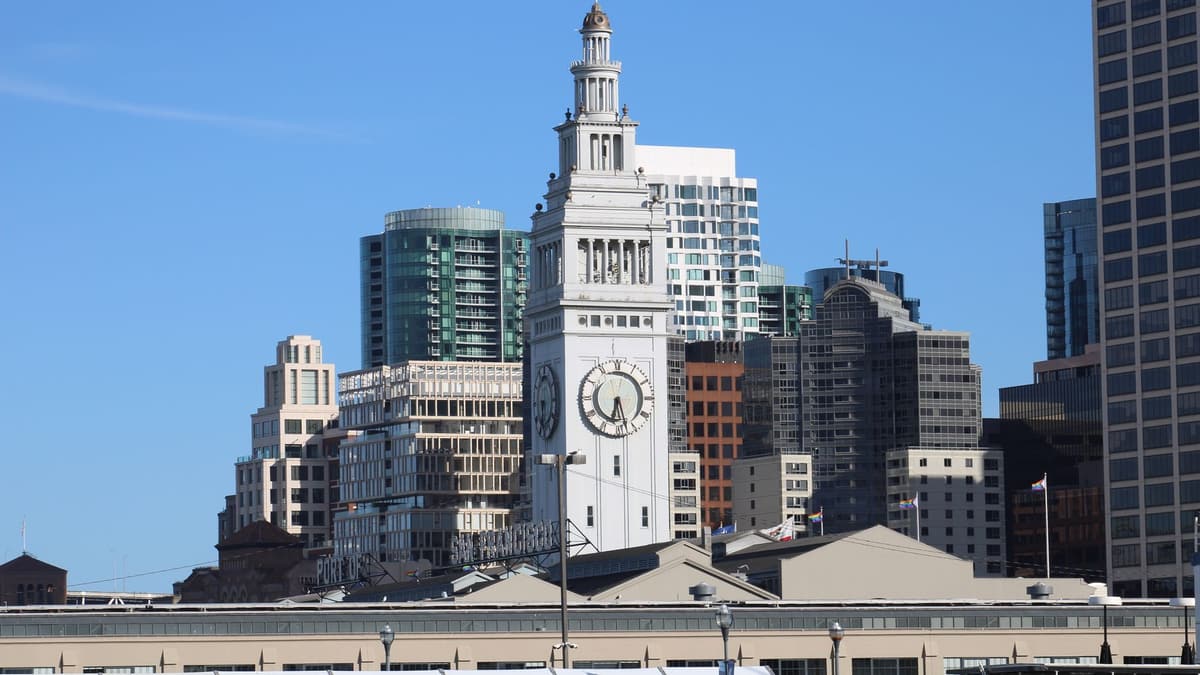
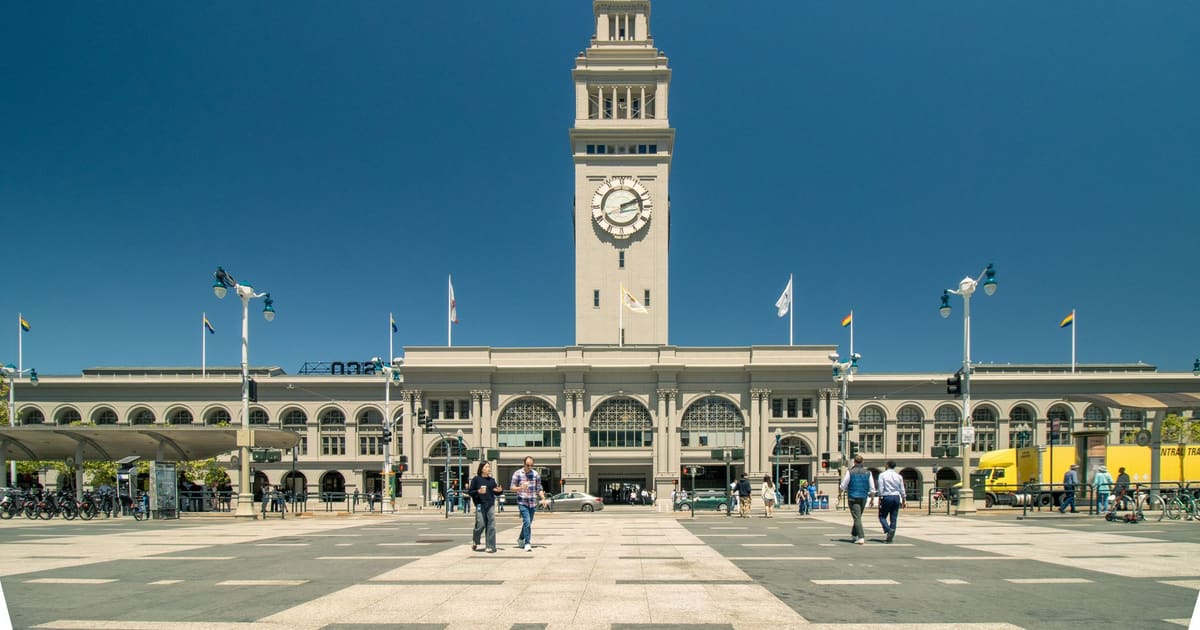
You're at the foot of Market Street, in front of the Ferry Building, with its clock tower rising 245 feet above you. It opened in 1898.
بقية هذه المحطة في الجولة الصوتية الكاملة.
قم بهذا النشاط مع أشخاص آخرين في الجولة المُجدوَلة القادمة.
حوالي 4 كم، وحوالي 57 دقيقة بسرعة سهلة · 8 محطات
الأصدقاء يسيرون مجاناًOctober 11, 2026 · 9 min read
From the Hollandsche Schouwburg through the old Jewish Quarter, past the Dockworker and the Dam, to the Anne Frank House on the Prinsengracht.
October 11, 2026 · 11 min read
From Van Houten's street by the Vondelpark past Leidseplein, the Rijksmuseum passage and the famous canal bench to the Anne Frank House.

October 11, 2026 · 10 min read
Follow the last days of April and May 1945 from the Anhalter Bahnhof ruin past the Gestapo site and Brandenburg Gate to the Moltke Bridge and the Reichstag.
