
October 11, 2026 · 9 min read
Amsterdam Anne Frank Walking Tour
From the Hollandsche Schouwburg through the old Jewish Quarter, past the Dockworker and the Dam, to the Anne Frank House on the Prinsengracht.
589

October 9, 2026 · 10 min read

 Vrienden lopen gratis mee
Elke tour is ook beschikbaar als een geplande groepswandeling waar je in de app aan kunt deelnemen.
Meer audiotours in Kaohsiung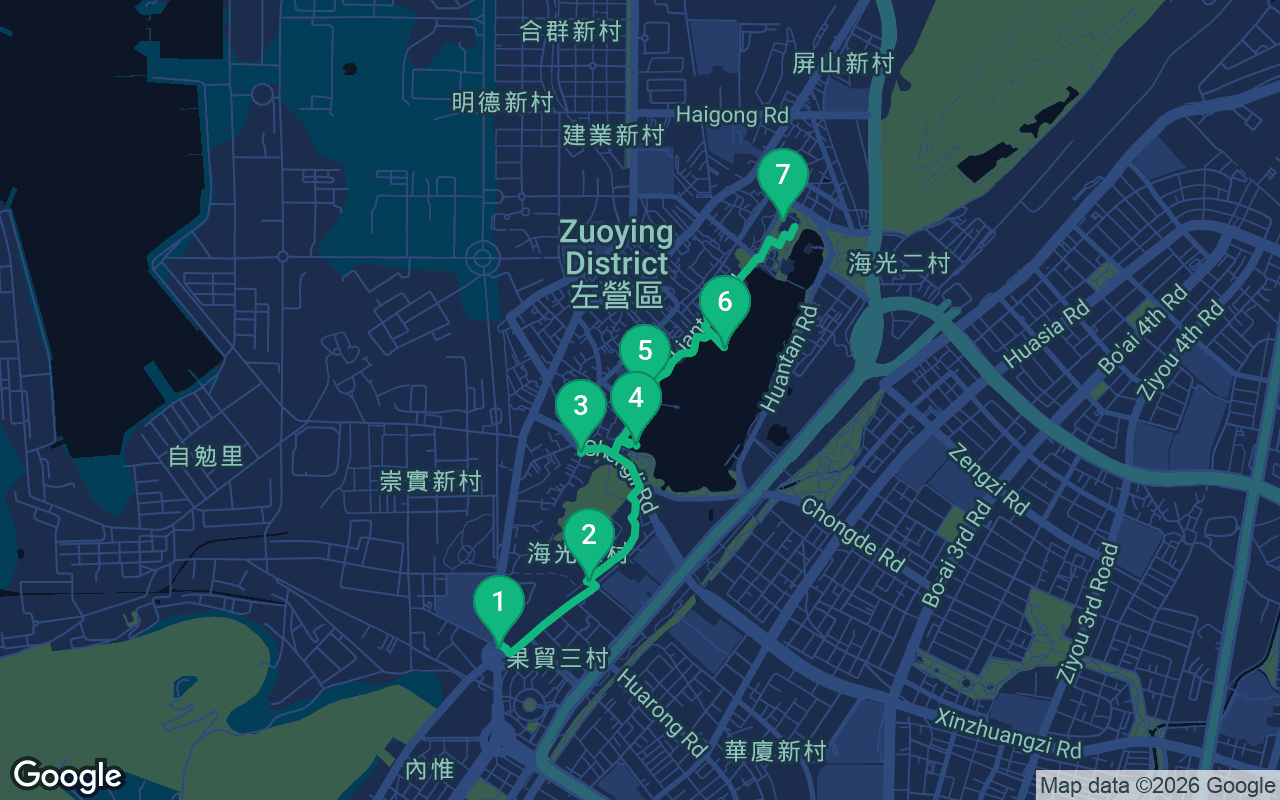
Ongeveer 3,6 km, zo'n 49 minuten op een rustig tempo.
Deze tour is ingesproken
Druk op afspelen bij de eerste 3 stops voor een demo van 30 seconden van de vertelling. In de app zijn de intro en die 3 stops volledig gratis te beluisteren, en bij elke stop klinkt een signaal zodra je aankomt. De hele tour met gids is van jou voor $8.99, een eenmalige aankoop die je voor altijd behoudt.
Werkt met Garmin, Komoot, Strava, OS Maps en elke GPX-app.
In the north of Kaohsiung, in the district of Zuoying, two very different kinds of history sit side by side. First come the stone gates of a walled town the Qing dynasty built in 1826, standing among apartment blocks and busy roads. Then comes Lotus Pond, a long lake ringed with temples, where pagodas, pavilions and a giant god rise straight out of the water. This walk starts at the old South Gate, visits the East and North Gates, and then follows the lakeshore past the Dragon and Tiger Pagodas, the Spring and Autumn Pavilions and the towering statue at Beiji Pavilion to the Confucius Temple at the north end. It is about 3.6 kilometers, a little over two miles, and among the most colorful self-guided walking tours in Taiwan.
Plan on two to two and a half hours at a gentle pace, longer if you climb the pagodas or spend time inside the temples. The route is flat all the way, on pavements and lakeside paths, with a short stretch of busy road between the gates where you should use the crossings. The pagodas and pavilions have narrow stairs if you want to climb them, but you can enjoy them perfectly well from the ground. Kaohsiung is hot and humid for much of the year, and the lakeshore has open stretches with little shade, so come in the morning or the late afternoon, wear a hat and carry water. Convenience stores along the way sell cold drinks. Summer afternoons often bring heavy showers. The temples here are working places of worship, so dress with some modesty, keep your voice down, step over the raised wooden thresholds rather than on them, leave the central doorway to the gods, and do not photograph people at prayer without asking. Some halls, and the Confucius Temple, may close on certain days or at night, so check before you go.
You start at the South Gate of Fengshan's old city, a solid stone gatehouse that now stands alone on a traffic circle. Look at it from the edge of the roundabout rather than crossing to it through the traffic. Above the arch you can make out the carved plaque with its name, Qiwen Gate, which means roughly the gate that opens the way to learning. The stretch of wall that once ran from it on either side was knocked down for a new road in 1920, which is why it looks so marooned today. The story of this town begins in 1684, when the Qing dynasty took Taiwan and created Fengshan County, named for Phoenix Mountain, with its seat here at a village called Xinglong. The district's own name is older still. Zuoying means the Left Camp, after a garrison of the Zheng regime, the Ming loyalists who ruled southwestern Taiwan for two decades before the Qing arrived. The first wall was only packed earth, put up in 1722 after a rebellion had overrun the undefended town, and it did not stop the next one. After the great uprising of 1786 and 1787 the officials moved the county seat east to Pitou, today's Fengshan District. From here, walk northeast for about eight minutes, following the signs to the East Gate.
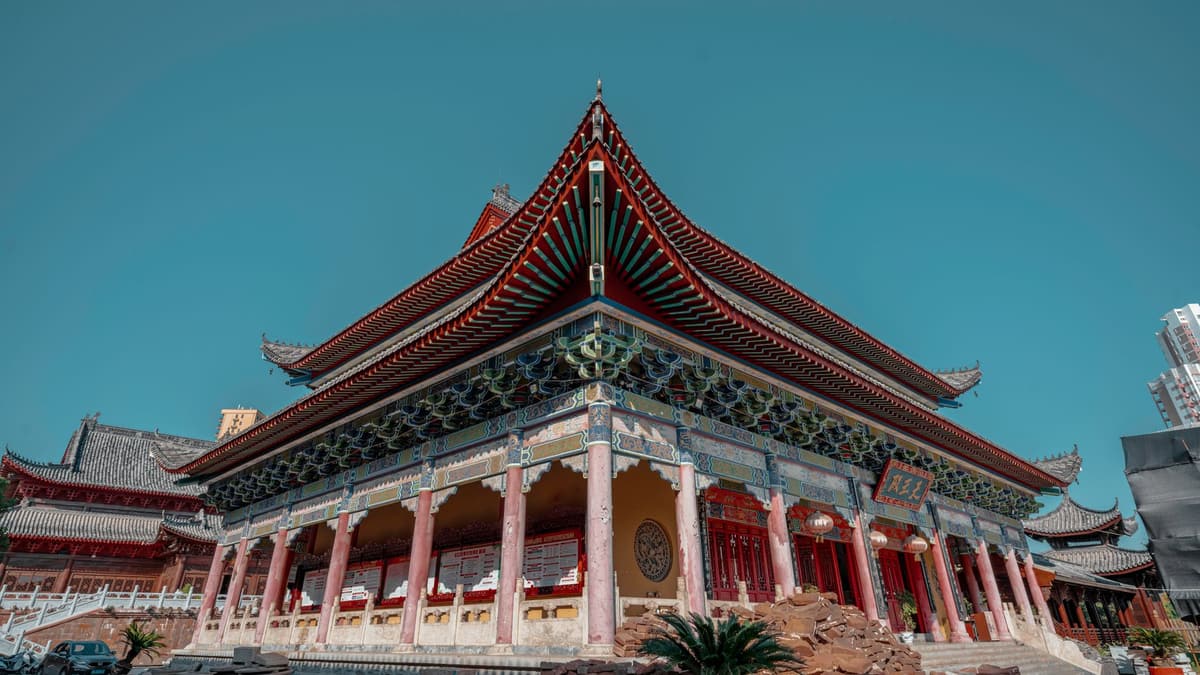 This is the East Gate, Fengyi Gate, a name that recalls the phoenix of Fengshan. It is the gate that still has the most company, because a long stretch of the old wall runs beside it, more than five hundred meters by some counts, with some of its battlements still in place. Stand in front of the arch and look at the stone. The walls were built largely of rough coral stone, while the arch itself is granite. This is the town of 1826. After more unrest and a pirate raid on the new county seat in the early 1820s, officials and local gentry raised a large sum to rebuild the old town in stone, and in 1826 it was finished, with four gates, a moat and some of the most up-to-date defenses in Taiwan. Then came the twist. The magistrates never moved back. They stayed in the more prosperous town at Pitou, and this fine stone city was left to the people of Zuoying, a capital that never got its capital. Look for the line of the old moat, and stroll a little way along the foot of the wall. From here, head north for about twelve minutes, roughly following the line of the old east wall, until you reach the road near the southern end of Lotus Pond, where the North Gate stands.
You are at the North Gate, Gongchen Gate, whose name means roughly the gate that faces the North Star, a polite bow toward the emperor far away in Beijing. Look closely at the wall on either side of the arch, and you will find two fierce figures molded in clay, the door gods Shentu and Yulu. In Chinese legend they were brothers who stood guard under a giant peach tree and seized any evil spirit that tried to pass, and their images have guarded doors for centuries. Plenty of temple doors in Taiwan carry door gods, but on a city gate they are extremely rare, and these are often said to be the only ones on any city gate in Taiwan. The gods did not save the town's fortunes. The 1826 wall enclosed a low hill called Turtle Mountain, and local people later blamed the town's decline on bad feng shui, saying the walls had caged the turtle. In the twentieth century more of the wall came down. The West Gate was demolished in 1939, and in the late Japanese era Zuoying became a naval base, as it remains today. After 1949, the area filled with neighborhoods for navy families who had come from mainland China. From the gate, walk east for about four minutes along the lakeshore road, and the Dragon and Tiger Pagodas appear out on the water ahead.
Wat er inbegrepen is
Onze tours zijn bedoeld om meditatief en meeslepend te zijn: je blijft in beweging en luistert gewoon. Samen zijn ze altijd beter, en de app speelt de vertelling synchroon af, zodat jij, je partner en je vrienden elke stop op hetzelfde moment horen.
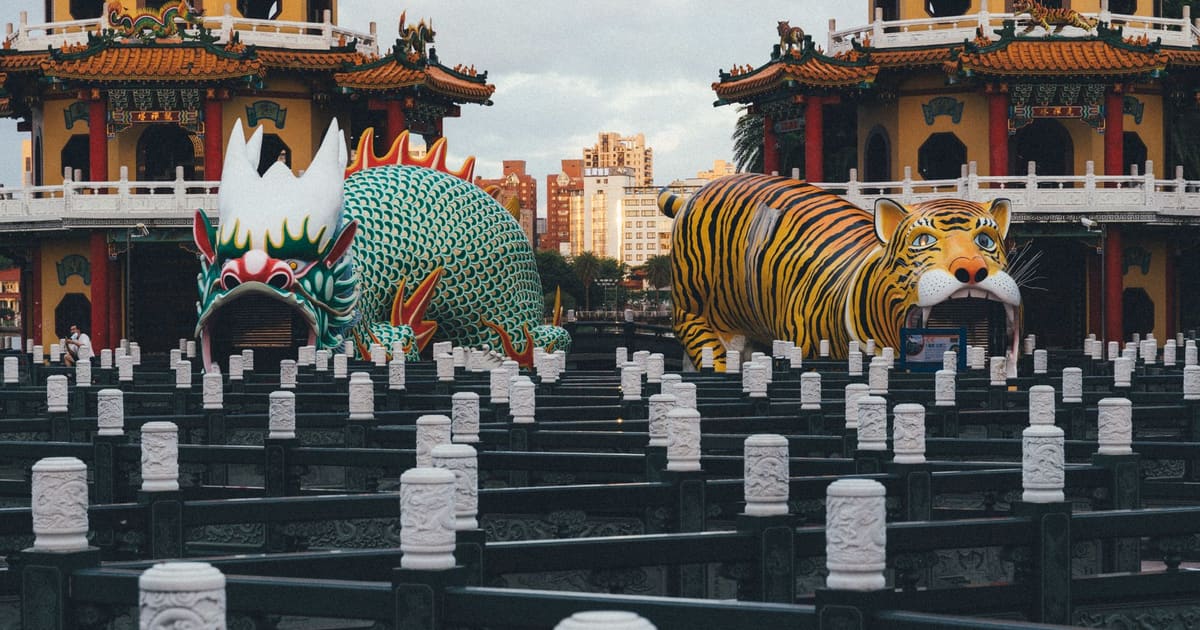
In front of you, two seven-story pagodas stand out in Lotus Pond, joined to the shore by a zigzag bridge, with a giant dragon at the foot of one and a giant tiger at the foot of the other.
De rest van deze stop zit in de volledige audiotour.
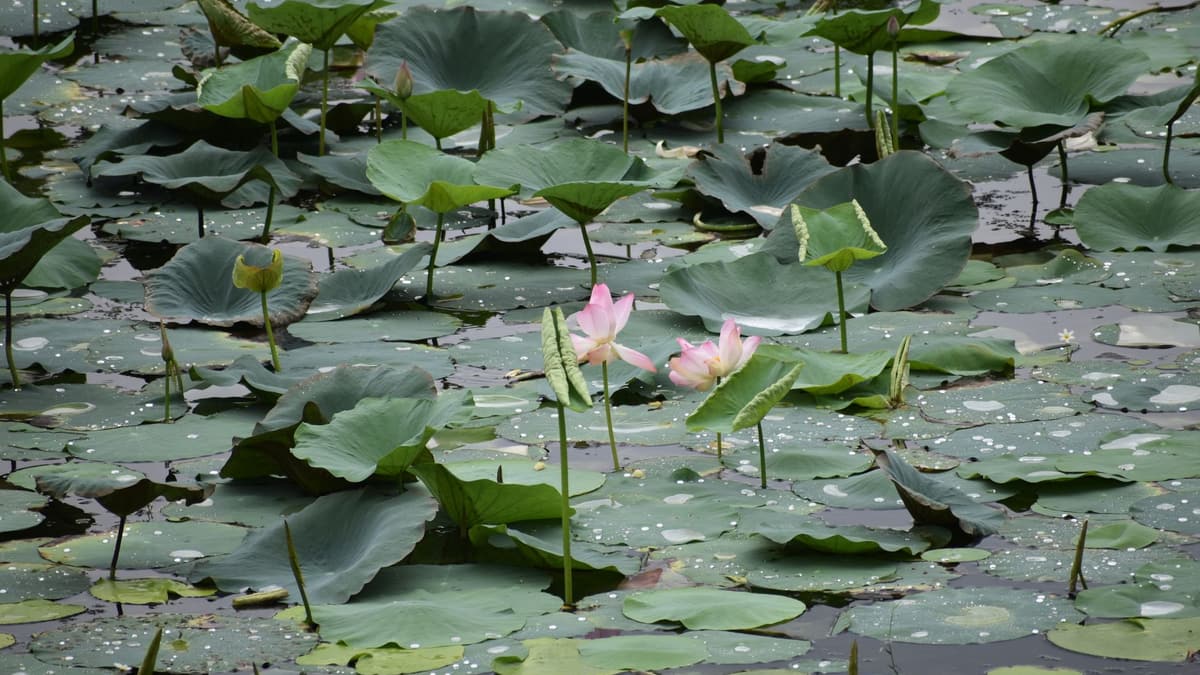
Here, two more towers rise from the water, the Spring Pavilion and the Autumn Pavilion, octagonal and four stories high, with green tiled roofs and yellow walls.
De rest van deze stop zit in de volledige audiotour.
Rising above you is the giant statue of Xuantian Shangdi, the Supreme Emperor of the Dark Heaven, seated and barefoot, with a long sword in his hand.
De rest van deze stop zit in de volledige audiotour.
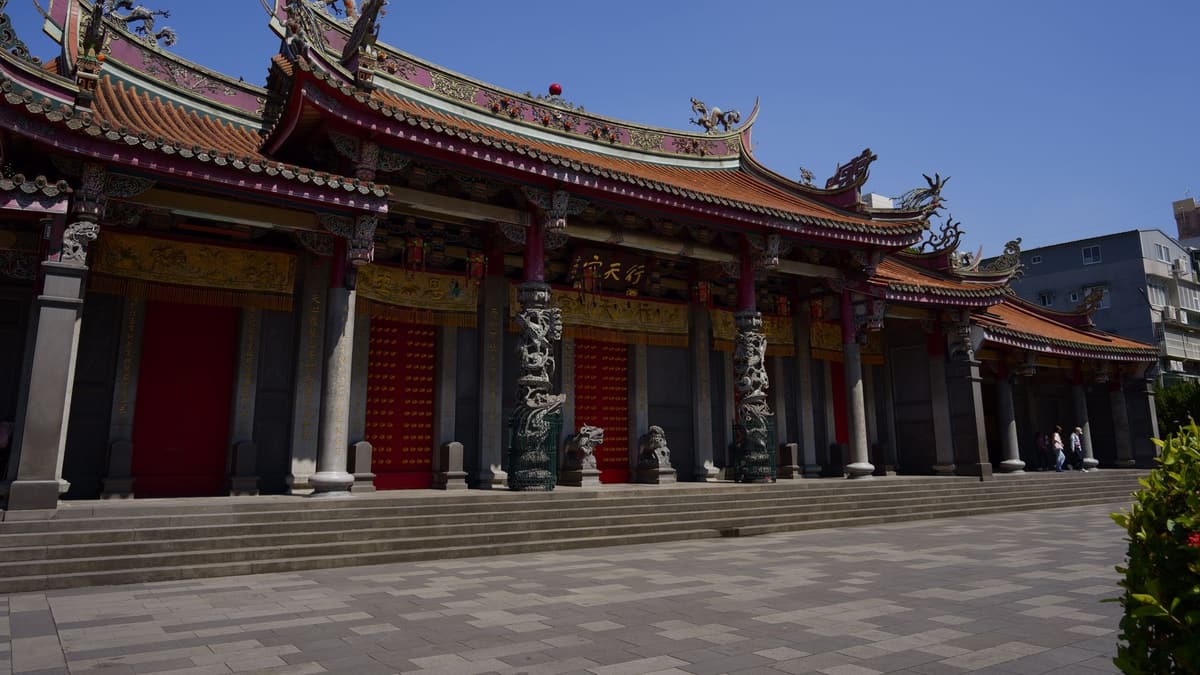
You finish at the Kaohsiung Confucius Temple, a great walled compound of sweeping roofs above the north shore of Lotus Pond, often described as the largest Confucius temple in Taiwan. Walk through the outer gate into the courtyards, and notice the calm.
De rest van deze stop zit in de volledige audiotour.
Doe deze wandeling samen met anderen tijdens de eerstvolgende geplande tour.
Ongeveer 3,6 km, circa 49 minuten in een rustig tempo · 7 stops
Vrienden lopen gratis meeOctober 11, 2026 · 9 min read
From the Hollandsche Schouwburg through the old Jewish Quarter, past the Dockworker and the Dam, to the Anne Frank House on the Prinsengracht.
October 11, 2026 · 11 min read
From Van Houten's street by the Vondelpark past Leidseplein, the Rijksmuseum passage and the famous canal bench to the Anne Frank House.

October 11, 2026 · 10 min read
Follow the last days of April and May 1945 from the Anhalter Bahnhof ruin past the Gestapo site and Brandenburg Gate to the Moltke Bridge and the Reichstag.
