20 de setembro de 2026 · 7 minutos
What Is Netwalking?
Netwalking is networking on a walk instead of over coffee or drinks. What it's good for, what the research says, and how to plan one that works.


The places where you'll meet people in a new city are the ones you go back to. A weekly walking group, a free Saturday-morning 5k like parkrun where walkers are welcome, the dog park at the same hour every day, a regular volunteering shift, a hiking or photo-walk club, and even the same route and the same café at the same time each morning. One-off events are fine for a first hello, but friendships come from seeing the same faces again and again, and that takes more hours than most people expect. Here's why repetition matters so much, which places give you the most of it, and how to turn a familiar face into someone you can text.
I learned this when I moved from Tunis to Budapest. As a student, it was student events that helped me meet other students in the city: they were full of people in the same position as me, and they came round often enough that I kept seeing the same faces. Later, once I was working full time, social events did the same job, and through them I eventually started going on walks with a lot of people. At each stage, what worked was turning up again and again where the same people did.
Friendship runs on hours. For a 2019 paper, the communication researcher Jeffrey Hall surveyed 355 adults who had moved in the previous six months and were looking for friends in their new home, then followed 112 first-year university students through their first nine weeks. His estimate was that it takes roughly 50 hours together to go from acquaintance to casual friend, about 90 hours to become a friend, and more than 200 hours to become close friends. The kind of time mattered too: hanging out, joking around and talking predicted closeness, while hours spent working side by side counted for much less. These are estimates from self-reported time, so read them as a rough scale rather than a stopwatch, but the scale is the useful part. Fifty hours is a lot to collect from a string of different events where you never see anyone twice, and very manageable at one hour-long walk a week with the same people.
Simply being around helps as well, even before you talk. In a well-known 1992 study, four women of similar appearance sat in on a large university lecture course, attending 0, 5, 10 or 15 sessions and never speaking to anyone. At the end of term, 130 students rated photos of them, and the women they had seen more often were rated as more attractive and more similar to themselves. It was one class and a single study, but it points the same way as Hall's work: a regular face starts with an advantage over a new one. If the first few weeks feel lonely, you're far from alone in that. The World Health Organization's 2025 report on social connection estimates that 1 in 6 people worldwide is affected by loneliness. It doesn't mean something is wrong with you; it means you haven't had the hours yet.
If you only pick one thing, pick something that happens every week at the same time and involves walking. A local walking group is the easiest place to start alone: you're not expected to bring anyone, you talk while you move, the route gives you something to comment on, and after a few weeks people notice when you're missing. Groups vary a lot. Some are brisk fitness walks, some are slow social strolls, some are run by councils, libraries or community centres, and some are just a few people who met online. Try two or three and keep the one where you'd happily see the same people every week.
parkrun is worth knowing about wherever it exists. It's a free, timed 5 km every Saturday morning in parks across many countries, it's run by volunteers, and walkers are explicitly welcome, so you don't have to be a runner to go. The point for a newcomer isn't the 5 km. It's that the same people turn up at the same spot every week, and there's a built-in role if you'd rather help than walk. If people go for a coffee afterwards, go with them. That half hour is the leisure time that Hall found moves friendships along.
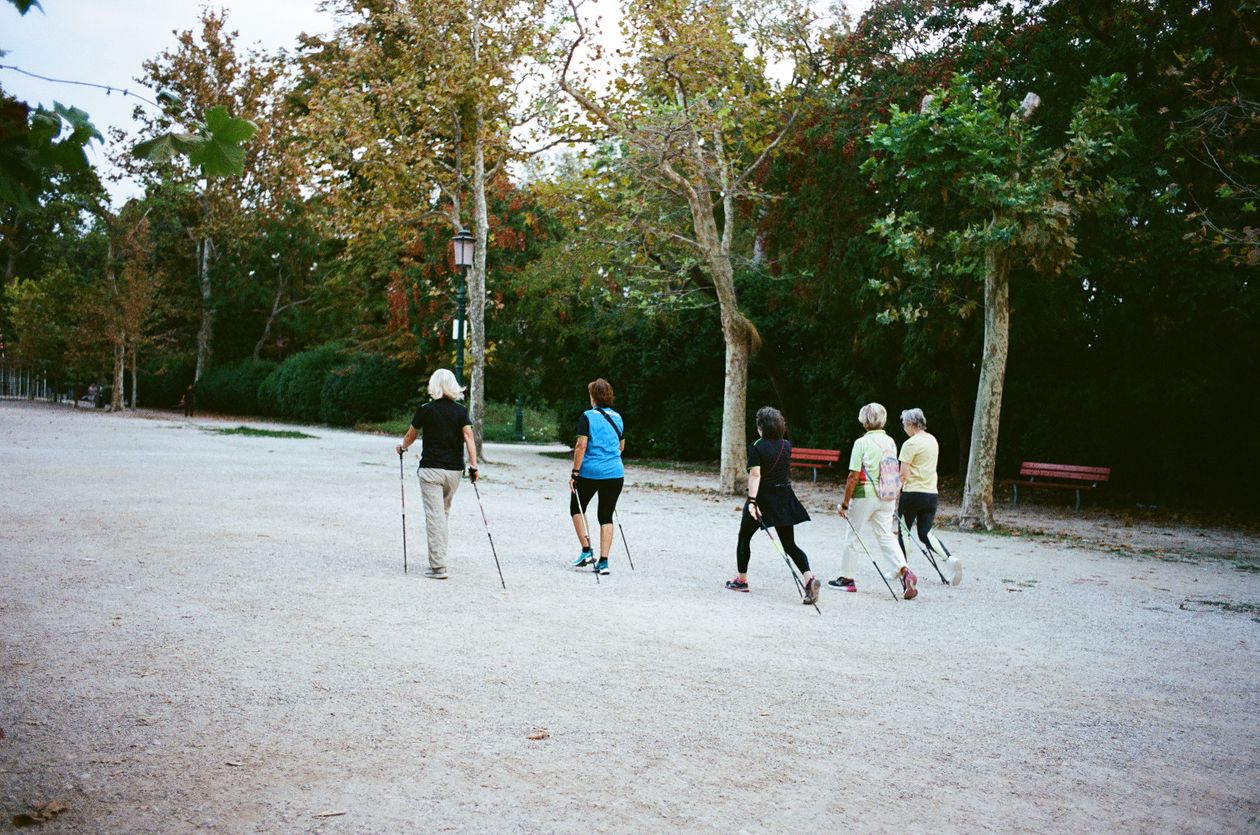 Photo: trip1 Travel, Pexels
Dog owners know this already: people talk to you when you have a dog. A 2015 survey of 2,692 adults in Perth, San Diego, Nashville and Portland found that pet owners were more likely than non-owners to get to know people in their neighbourhood, and in the three US cities dog owners were more likely than other pet owners to count someone they'd met through their pet as a friend. Around 40% of pet owners said they'd had some kind of support, practical or emotional, from people they met that way. It's a survey, so it can't prove the dog caused the friendships, and nobody should get a dog just to meet people. But if you already have one, the dog park at the same hour every day is one of the best places in any city to become a regular.
Without a dog, you can borrow the same mechanism. Walk the same route at the same time each day, past the same bench, the same coffee cart, the same bakery. The first week, nobody notices you. By the third, there's a nod. By the sixth, it's a hello and a comment about the weather, and that's the moment to ask a question back. It's slow, but it costs nothing, it gets you out of the flat every day, and it teaches you the neighbourhood at the same time.
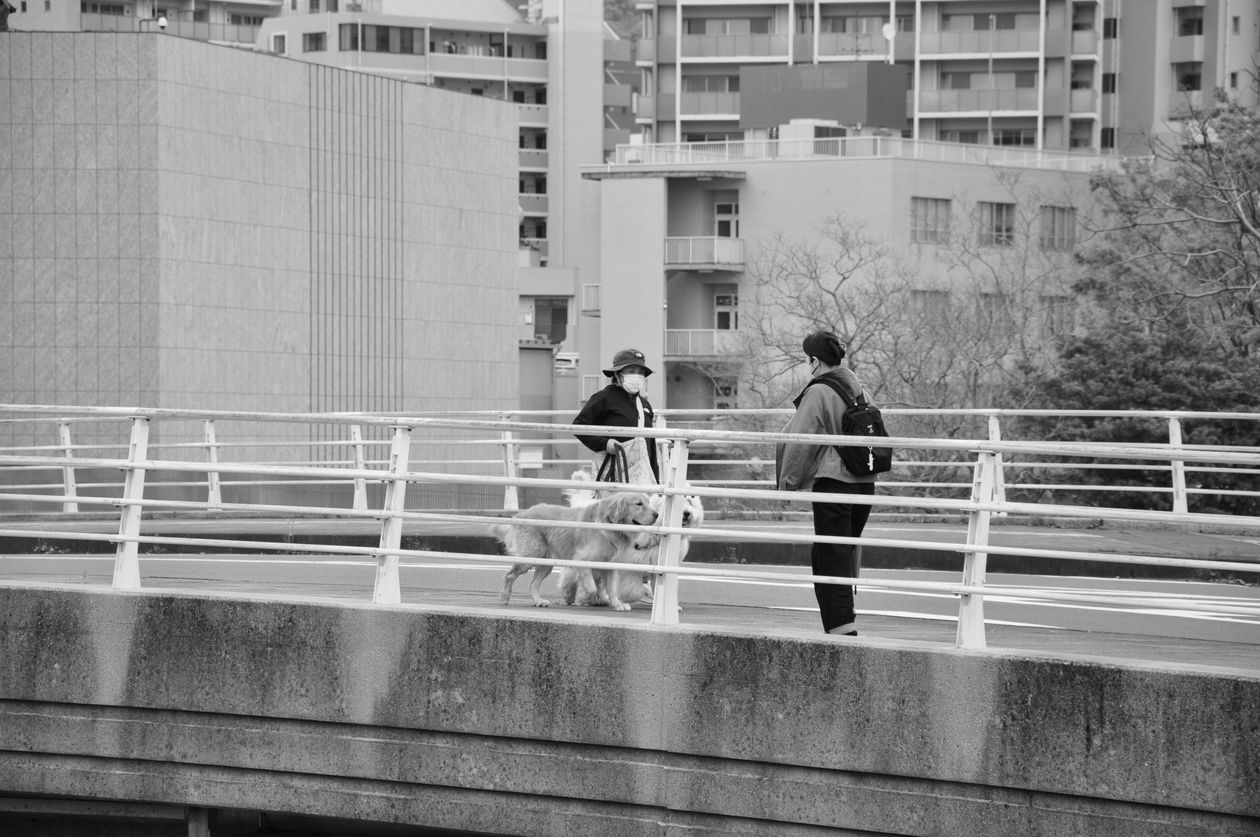 Photo: HOWARD HERDI, Pexels
The hardest part of meeting people as an adult is the opening line, and a shared job removes it. A park clean-up, a community garden, a food bank shift or marshalling at a weekend event hands you something to talk about from the first minute, and it puts you next to the same people every week. Clubs built around something you do on foot work the same way: hiking and rambling clubs, photography walks, history society walks or a running club with a walking group. Keep Hall's finding in mind, though. Time spent working side by side counted for less than time spent hanging out, so the volunteering shift is the door, and the walk or coffee afterwards is where the friendship grows. Stay for that part even when you're tired.
At some point someone has to suggest doing something outside the usual slot, and in a new city it'll usually need to be you. Make it specific and small. "I'm walking along the river on Sunday morning, do you want to come?" is easy to say yes to, while "We should hang out sometime" almost never happens. A walk works well here because it has a natural end, so it doesn't feel like a big commitment for either of you. If they can't make it, try once more with a different time, and if that doesn't land either, let it go without taking it personally. I'd start with other newcomers, because people who've lived somewhere for years tend to have their weeks filled already.
If nothing suitable exists near you, start it. Pick a time, a meeting point and a route of about an hour, and post it wherever people in your area look, from a neighbourhood group to a notice board at the library. A walk you host every week is a walking group with you in the middle of it.
If you want somewhere to begin, this is enough for the first four weeks:
If you'd like to find people to walk with straight away, that's what Walk With Me is for. It shows walks near you on a live map, both ones happening right now and ones planned for later, so you can ask to join a group or a single walker, or set up your own walk and let people in your area find you. Travel Mode lets you look at walks in any city, which helps if you want to see what's going on before you move. There's more on meeting people through walking on our site. It's free on the App Store and Google Play.
20 de setembro de 2026 · 7 minutos
Netwalking is networking on a walk instead of over coffee or drinks. What it's good for, what the research says, and how to plan one that works.
17 de agosto de 2026 · 7 minutos
Meeting someone new, for friendship, a date or work? When a walk works better, when a coffee does, and why a coffee to go often beats both.
11 de agosto de 2026 · 8 minutos
Going to a group walk on your own for the first time? What happens on the day, the manners that matter, and why the third walk counts most.