
October 11, 2026 · 9 min read
Amsterdam Anne Frank Walking Tour
From the Hollandsche Schouwburg through the old Jewish Quarter, past the Dockworker and the Dam, to the Anne Frank House on the Prinsengracht.
589

October 9, 2026 · 11 min read

 เพื่อนเดินฟรี
ทุกทัวร์ยังเปิดเป็นการเดินกลุ่มตามเวลาที่กำหนด ซึ่งคุณเข้าร่วมได้ในแอป
ทัวร์เสียงเพิ่มเติมในOsaka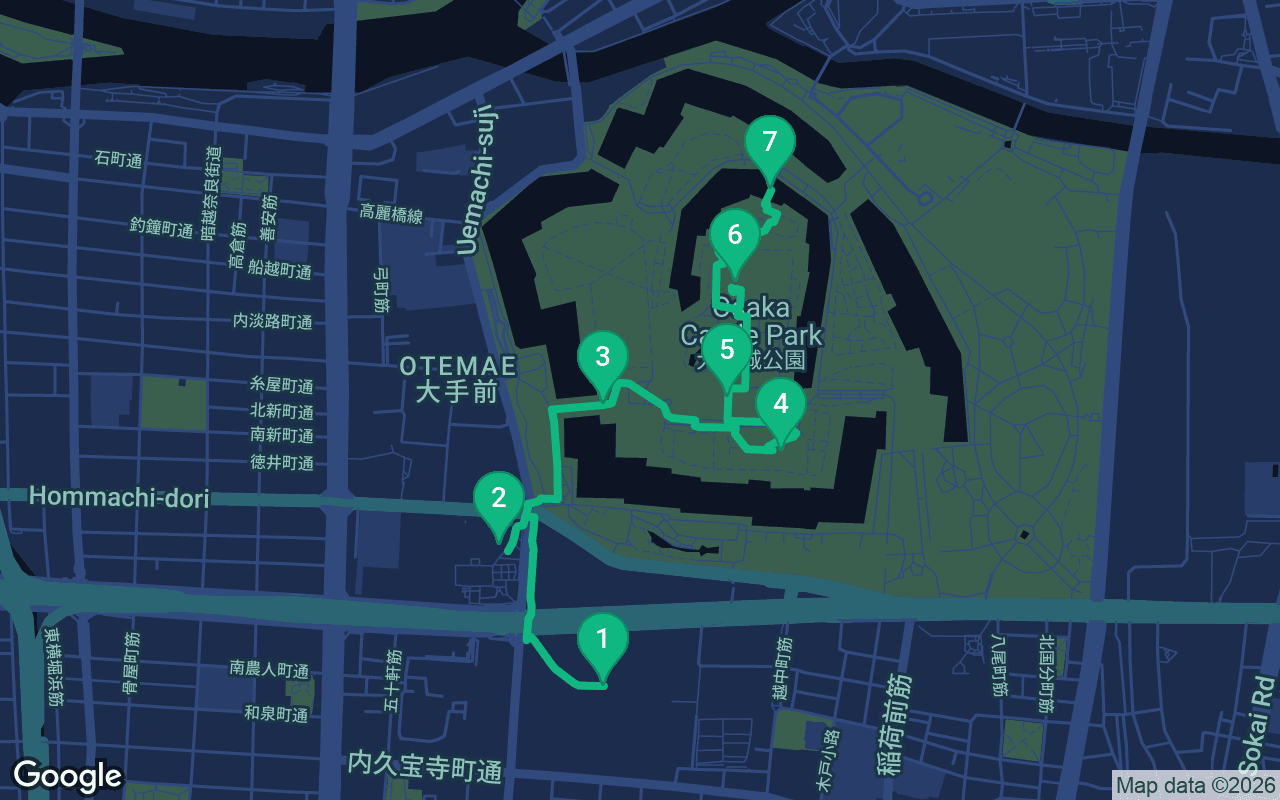
ประมาณ 2.5 กม. ใช้เวลาประมาณ 35 นาทีด้วยจังหวะสบายๆ
ทัวร์นี้มีเสียงบรรยาย
กดเล่นที่ 3 จุดหยุดแรกเพื่อฟังตัวอย่างคำบรรยายความยาว 30 วินาทีได้ที่นี่ ในแอป คุณฟังบทนำและจุดหยุดเหล่านี้แบบเต็มได้ฟรี และทุกจุดหยุดจะมีเสียงแจ้งเตือนเมื่อคุณไปถึง คุณสามารถเป็นเจ้าของทัวร์บรรยายทั้งหมดนี้ได้ในราคาเพียง $7.99 ซึ่งเป็นการซื้อครั้งเดียวและเก็บไว้ใช้ได้ตลอดไป
ใช้งานได้กับ Garmin, Komoot, Strava, OS Maps และแอป GPX ใดก็ตาม
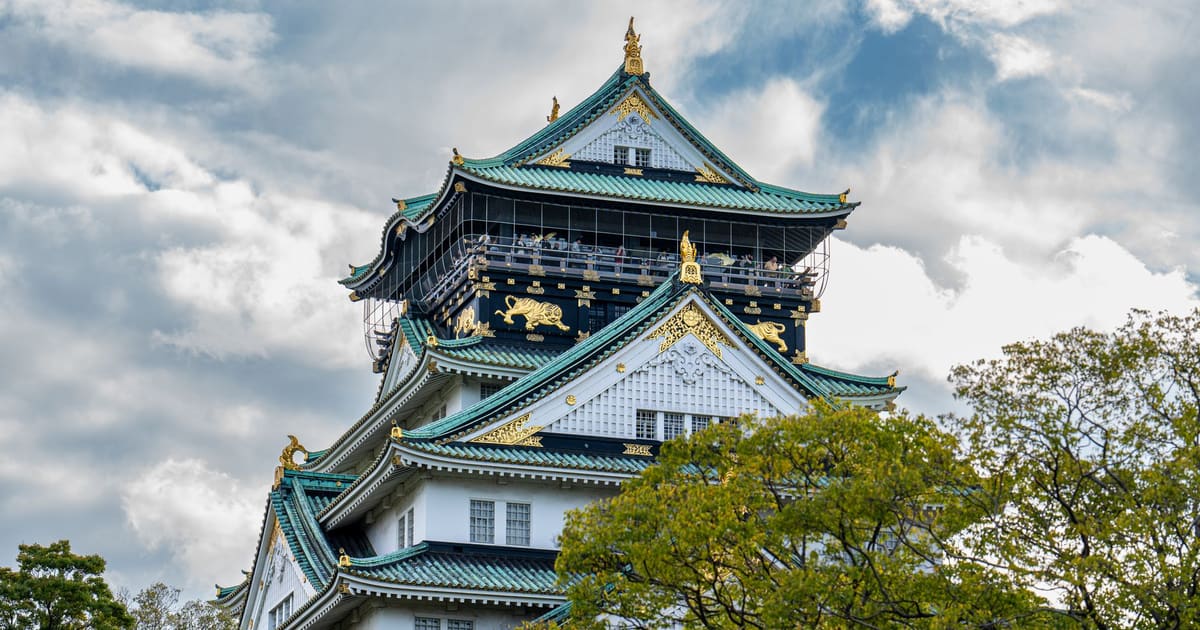
Osaka is usually sold as a city of food and neon, but on the green plateau east of the center it shows a much older and more serious face. For fourteen centuries, whoever wanted to rule this part of Japan built here: an imperial palace in the seventh century, a fortified temple in the sixteenth, then the castle of Toyotomi Hideyoshi, and finally the great stone walls of the Tokugawa shoguns that still stand today. This walk starts among the foundations of the ancient Naniwa Palace, climbs to a museum with a view over them, then enters Osaka Castle through its main gate and works inward past a shrine, a colossal stone and the main tower to finish on a bridge over the inner moat. It covers about two and a half kilometers, and it is one of the best self-guided walking tours in the city for anyone who likes their history built in stone.
Allow two to three hours, more if you go inside both the museum and the main tower, which each deserve an hour of their own. The walking is easy, but there are gentle slopes and ramps up through the castle gates, and the paths inside the park are partly gravel, so wear comfortable shoes. The castle grounds have little shade around the main tower, so in summer bring water and a hat, and start in the morning, when it is cooler and the tour groups have not yet arrived. Spring is the most beautiful season, with plum blossom in the park's grove from around late winter and thousands of cherry trees blooming after it, though those weeks are also the busiest. The Osaka Museum of History and the main tower both charge for entry and keep their own hours, and the tower can have long lines for its elevator, so check before you go. The start is a few minutes' walk from Tanimachi Yonchome subway station, and the end is about ten minutes from the JR station on the east side of the park.
You are standing on what was once the center of the Japanese state. Look around at the wide open lawn and the low stone platforms rising from it: they mark the outlines of the halls of Naniwa Palace, the seat of Japan's emperors at two points in its early history. The first palace here was built in the middle of the seventh century, after a palace coup in 645 brought a new emperor and a wave of reforms that reshaped Japan along Chinese lines. It was a vast complex of wooden halls for its time, and it burned down at the end of that century. A second palace rose on the same site in the eighth century and served, briefly, as the capital again. Then the court moved on to Nara and later Kyoto, and the palace was forgotten so completely that for over a thousand years nobody knew exactly where it had stood. It was found in the twentieth century, largely thanks to an archaeologist named Yamane Tokutaro, who spent years searching and excavating here after old roof tiles turned up on this plateau. The raised platform in front of you shows where the great audience hall of the later palace stood. Stand on it and imagine courtiers in silk filing across the courtyard. To go on, walk to the northwest corner of the park, cross the big avenue to the north at the lights, and head for the tall glass-fronted museum, about five minutes.
 You are outside the Osaka Museum of History, the tall glass-fronted building standing beside the regional headquarters of NHK, Japan's public broadcaster. The museum tells the story of the city from the ancient palace to the twentieth century, and its clever trick is that you begin at the top and walk down through time. Take the elevator to the upper floors and you step into a reconstruction of part of the palace you just left, with life-size figures of court officials in their robes. Then go to the windows. From up here you look straight down on the palace site, and you can see how the platforms you walked among line up across the lawn. Turn the other way and the view runs over the treetops to Osaka Castle's main tower, rising above its walls. It is the best single view of how this walk fits together, fourteen centuries in one glance. The lower floors move through the merchant city of the Edo period, when Osaka was the commercial heart of Japan, and the busy modern city of the early twentieth century, with detailed models of streets and shops. Even if you skip the museum, the plaza outside is worth a look before you move on. Leave heading north, cross the road, and bear right toward the castle's outer moat, where a broad stone bridge leads to the great gate, about five minutes.
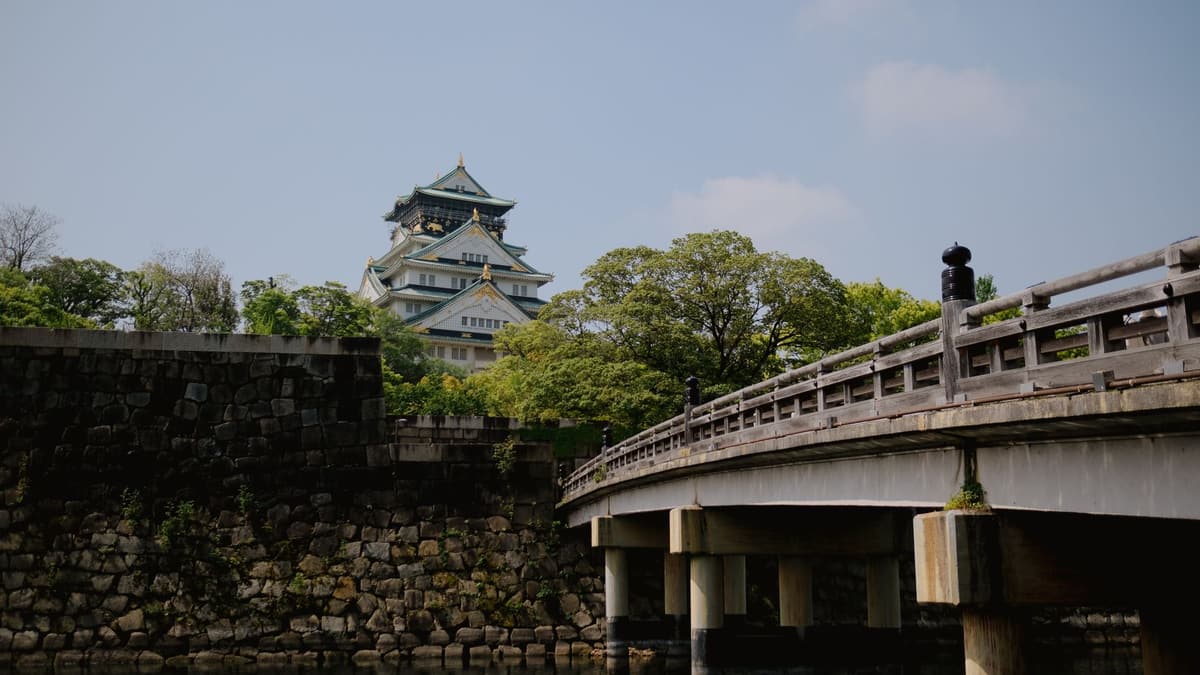
You are at Otemon, the main gate of Osaka Castle. Cross the earthen bridge over the outer moat and stop in front of the gate to look up at it: a heavy wooden structure with a tiled roof and iron fittings, set into walls of enormous fitted stones. The gate dates from 1628, during the rebuilding of the castle by the Tokugawa shoguns, which makes it one of the oldest surviving structures in the whole park. Here is the story behind it. Toyotomi Hideyoshi, the warlord who unified Japan, began building a castle on this site in 1583. After his death, the rising Tokugawa clan besieged it twice, and in 1615 it fell and burned, ending the Toyotomi line. The Tokugawa then built a new castle on top of the ruins, burying Hideyoshi's walls under their own and raising them higher, as a statement of who ruled now. Almost everything you will see of the stone walls today is Tokugawa work. Step through the gate and you find yourself in a square stone courtyard, a classic defensive trap where attackers who broke through the first gate would be caught under fire before reaching the second. Look at the stones around you, some of them enormous, and look along the walls near the gate for a long white turret, Sengan Yagura, one of the oldest buildings in the castle. Go through the courtyard's second gate into the grounds, then head east along the broad paths south of the inner moat, following signs for the shrine, about five minutes.
สิ่งที่รวมอยู่
ทัวร์ของเราออกแบบมาให้เป็นประสบการณ์ที่ผ่อนคลายและดื่มด่ำ คุณเดินไปพร้อมกับฟังไปเรื่อย ๆ และจะดียิ่งขึ้นเมื่อไปด้วยกัน แอปจะเล่นคำบรรยายแบบซิงค์กัน ให้คุณ คนรัก และเพื่อน ๆ ได้ฟังทุกจุดในเวลาเดียวกัน
You are at Hokoku Shrine, dedicated to the man who began all of this, Toyotomi Hideyoshi.
เนื้อหาที่เหลือของจุดนี้อยู่ในทัวร์เสียงฉบับเต็ม
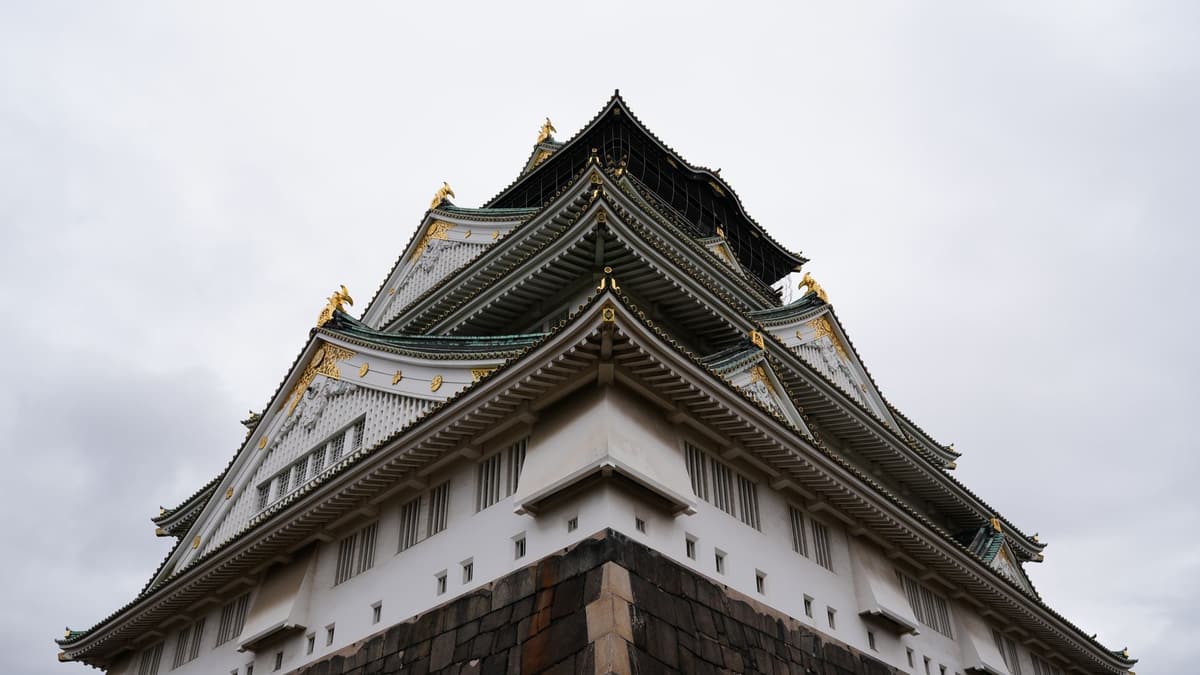
You are at Sakuramon, the Cherry Gate, the southern entrance to the innermost part of the castle. The moat you just crossed is dry, a deep trench rather than water, but no less of an obstacle to an attacking army.
เนื้อหาที่เหลือของจุดนี้อยู่ในทัวร์เสียงฉบับเต็ม
You are standing in front of the main tower of Osaka Castle, its white walls trimmed with gold, its roofs topped with golden fish-tailed tigers called shachihoko, and its upper floors decorated with golden tigers.
เนื้อหาที่เหลือของจุดนี้อยู่ในทัวร์เสียงฉบับเต็ม
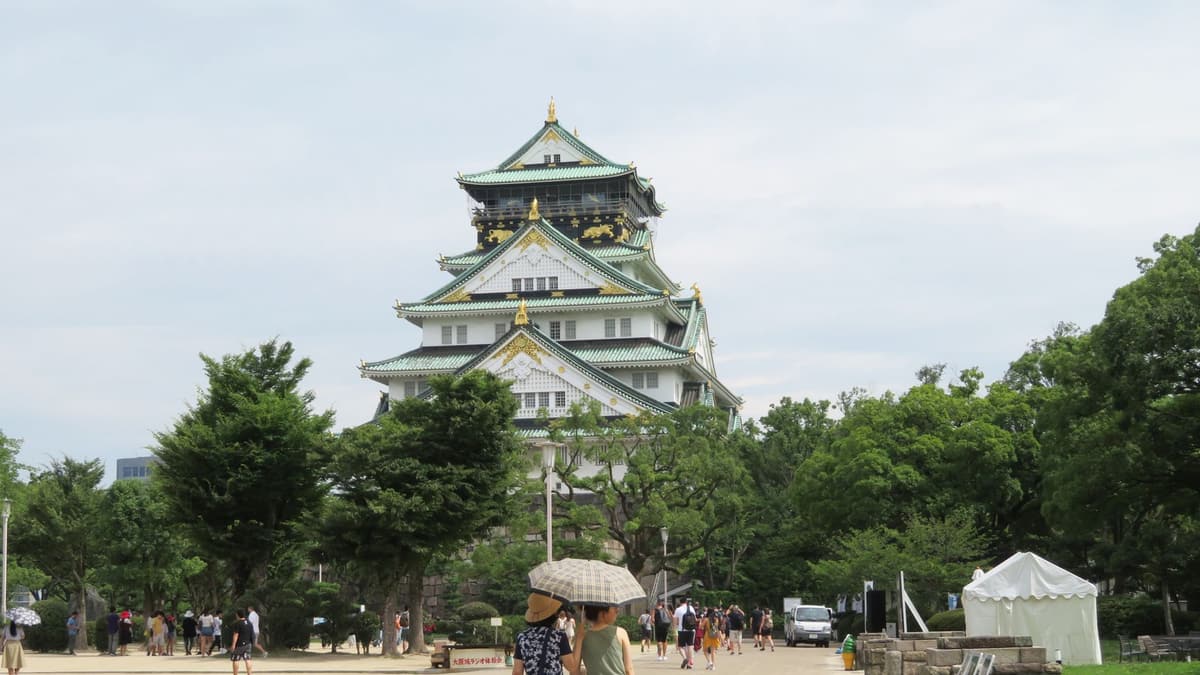
The walk ends on Gokurakubashi, the Bridge to Paradise, which crosses the inner moat at the northern edge of the castle. Before you step onto it, pause on the lower terrace behind the tower, the Yamazato Maru.
เนื้อหาที่เหลือของจุดนี้อยู่ในทัวร์เสียงฉบับเต็ม
เดินไปกับคนอื่นในทัวร์ที่กำหนดเวลาไว้ครั้งต่อไป
ประมาณ 2.5 กม. ใช้เวลาประมาณ 35 นาทีด้วยจังหวะสบายๆ · 7 จุดแวะ
เพื่อนเดินฟรีOctober 11, 2026 · 9 min read
From the Hollandsche Schouwburg through the old Jewish Quarter, past the Dockworker and the Dam, to the Anne Frank House on the Prinsengracht.
October 11, 2026 · 11 min read
From Van Houten's street by the Vondelpark past Leidseplein, the Rijksmuseum passage and the famous canal bench to the Anne Frank House.

October 11, 2026 · 10 min read
Follow the last days of April and May 1945 from the Anhalter Bahnhof ruin past the Gestapo site and Brandenburg Gate to the Moltke Bridge and the Reichstag.
