
October 11, 2026 · 9 min read
Amsterdam Anne Frank Walking Tour
From the Hollandsche Schouwburg through the old Jewish Quarter, past the Dockworker and the Dam, to the Anne Frank House on the Prinsengracht.
589

October 9, 2026 · 10 min read

 เพื่อนเดินฟรี
ทุกทัวร์ยังเปิดเป็นการเดินกลุ่มตามเวลาที่กำหนด ซึ่งคุณเข้าร่วมได้ในแอป
ทัวร์เสียงเพิ่มเติมในSeminyak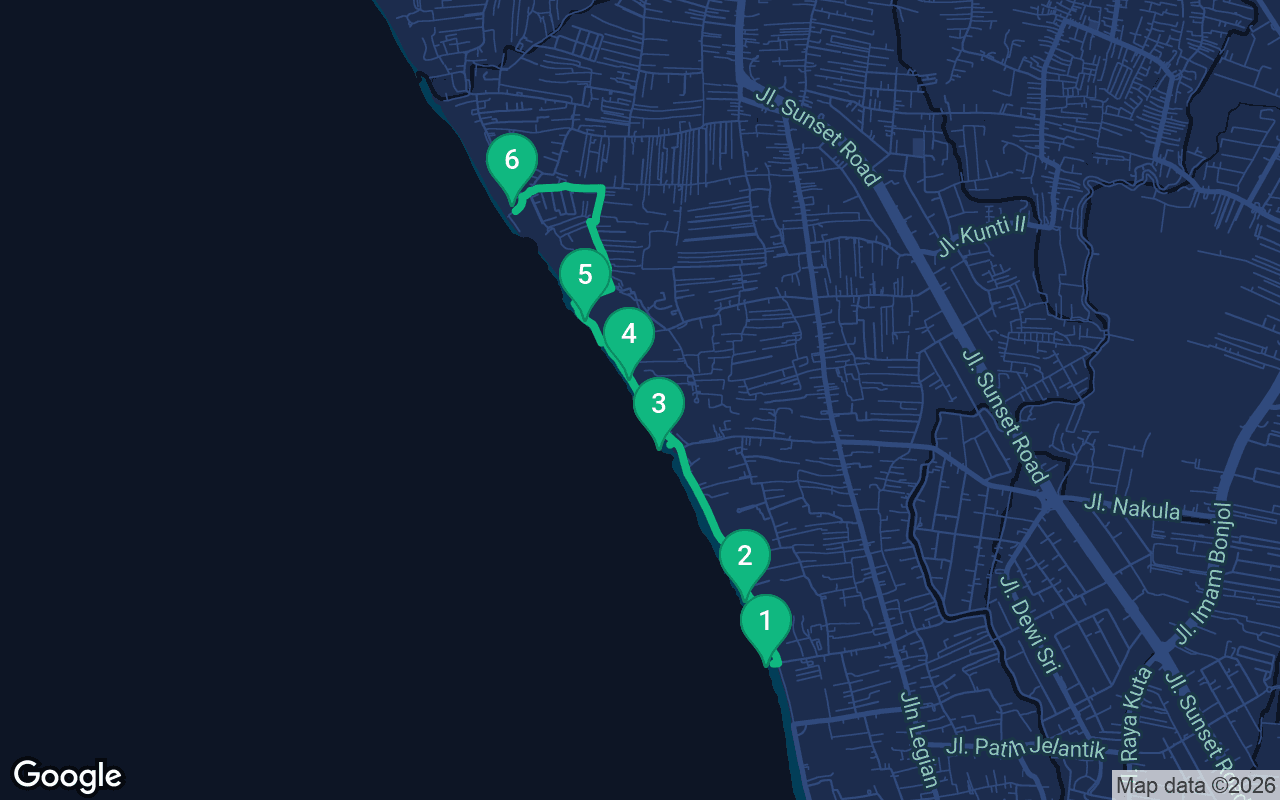
ประมาณ 3.2 กม. ใช้เวลาประมาณ 44 นาทีด้วยจังหวะสบายๆ
ทัวร์นี้มีเสียงบรรยาย
กดเล่นที่ 3 จุดหยุดแรกเพื่อฟังตัวอย่างคำบรรยายความยาว 30 วินาทีได้ที่นี่ ในแอป คุณฟังบทนำและจุดหยุดเหล่านี้แบบเต็มได้ฟรี และทุกจุดหยุดจะมีเสียงแจ้งเตือนเมื่อคุณไปถึง คุณสามารถเป็นเจ้าของทัวร์บรรยายทั้งหมดนี้ได้ในราคาเพียง $8.99 ซึ่งเป็นการซื้อครั้งเดียวและเก็บไว้ใช้ได้ตลอดไป
ใช้งานได้กับ Garmin, Komoot, Strava, OS Maps และแอป GPX ใดก็ตาม
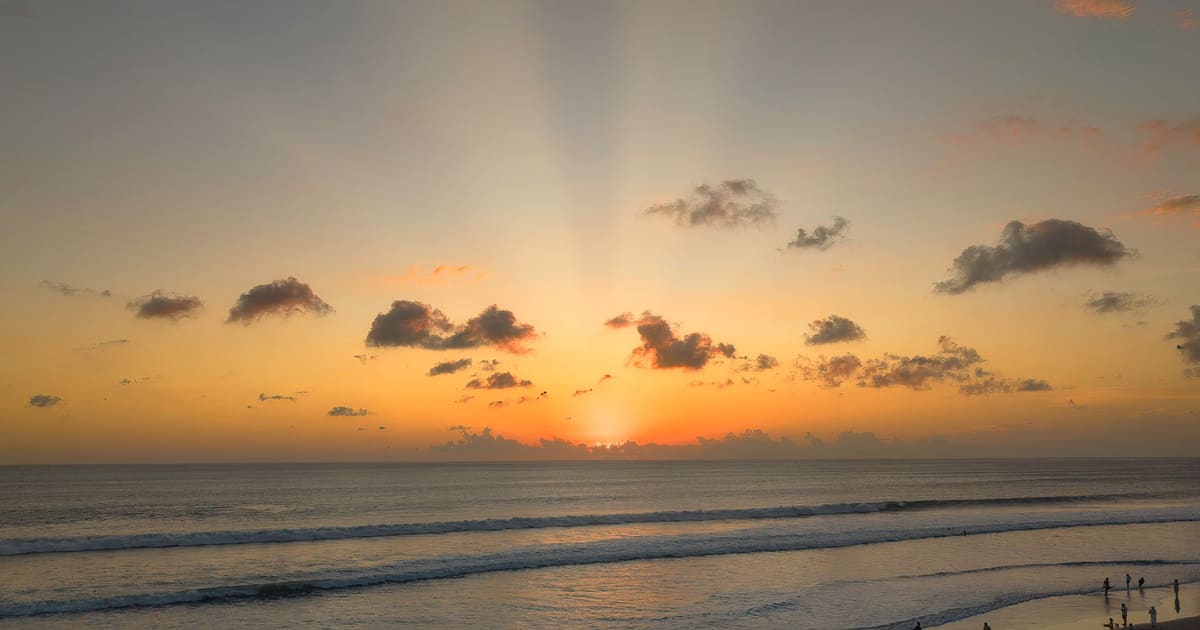
Bali's southwest coast is one long sweep of sand, running from the airport at Kuta up past Legian and Seminyak and on toward the temples of Tanah Lot. This walk takes the liveliest stretch of it, and it never leaves the beach. You start at Padma Beach in Legian, walk north with the Indian Ocean on your left, and finish at Ku De Ta in Seminyak, about three kilometers later, as the sun goes down into the sea. Inland, the streets of Legian and Seminyak are a slow river of scooters and taxis. Down here there is only sand, surf and a sky that gets bigger the longer you look at it. Of all the self-guided walking tours you could do in Bali, this is the easiest and maybe the most beautiful: no hills, no traffic, and no shoes required.
The walking takes about 45 minutes, but plan on an hour and a half or more, because you will stop to watch the surfers, paddle in the shallows and wait for the light. Time it so you set off an hour or so before sunset. Bali sits close to the equator, so the sun goes down at roughly the same time all year, somewhere between six and half past six in the evening. Check the tide too. At low tide the sand near the water is firm and flat and the walking is easy; at high tide you are pushed up onto soft sand, which is hard work. Go barefoot or in sandals. There is no shade on the beach and the sun stays strong into the late afternoon, so bring a hat, sunscreen and water. The rainy season, roughly November to March, brings short heavy downpours and, some days, rubbish washed in by the sea. If you swim, swim only between the red and yellow flags, where lifeguards are watching. Rip currents run all along this coast and catch strong swimmers every year. Vendors will offer you drinks, bracelets and massages; a smile and "no, thank you" is all it takes. You will also see small offerings on the sand, so watch your feet.
You are standing at the beach end of Jalan Padma, on the southern part of Legian's beach. Face the sea and you are looking west across the open Indian Ocean, which is why the sunsets here are so famous. Turn left and the sand curves away toward Kuta, and on a clear evening you can watch planes sliding down over the water toward the runway, which sticks out into the bay beyond it. Turn right and the beach runs straight ahead toward Seminyak, which is where you are going. Fifty years ago almost none of the hotels behind you existed. Kuta and Legian were farming and fishing villages, and Kuta had been a small trading port for the Balinese kingdoms. Then, from the late 1960s and through the 1970s, the travelers arrived: surfers chasing waves, and young people on the overland trail through Asia. Local families rented them rooms in simple homestays, and the beach became famous for its sunsets and its surf. The resorts, bars and shopping streets grew out of that, block by block, pushing north from Kuta into Legian and then into Seminyak. This walk follows that same line up the coast. When you are ready, turn right and walk north along the firm sand near the water. The next stop, the busy middle of Legian Beach, is only about four minutes away.
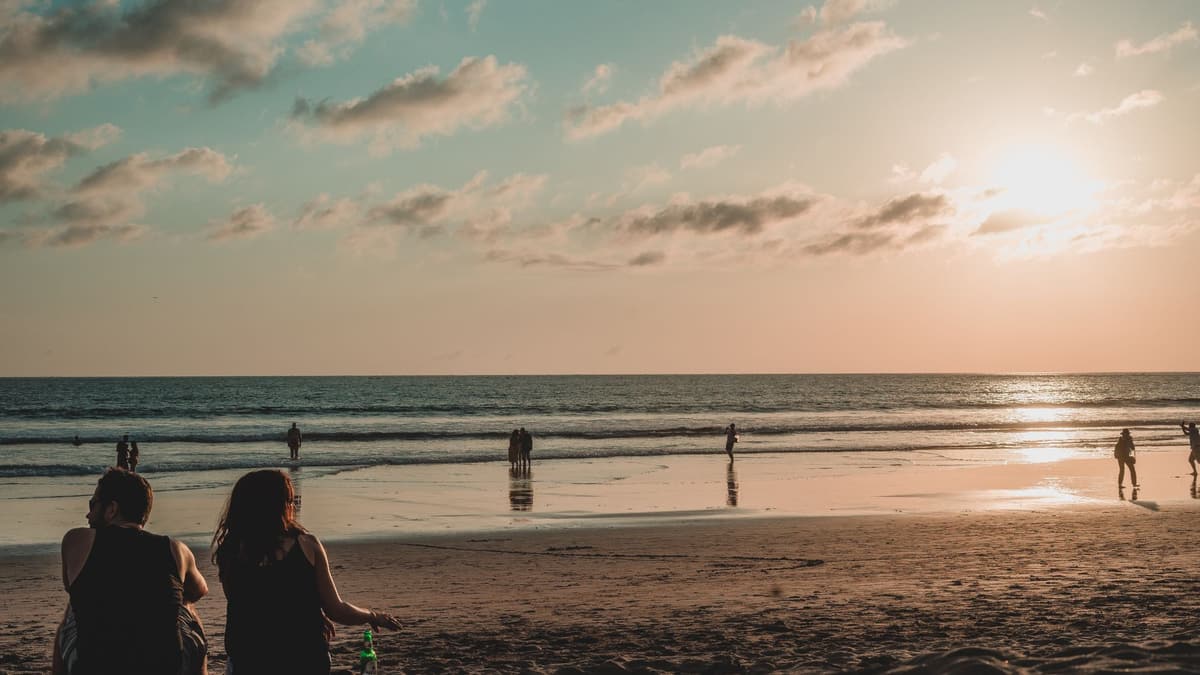 This is the heart of Legian's beach, and the first thing you will notice is the surf boards. Rows of them stand in racks along the sand, and the surf schools gather their students here, practicing on the sand before wading out into the white water. The waves on this coast break over sandbanks rather than reef, which makes them softer and much more forgiving for beginners than the famous reef breaks further south on the Bukit peninsula. Look out at the line where the waves stand up, and you will usually see a crowd of learners trying to stand up with them. Now look down at your feet. Every day, Balinese Hindus make small offerings called canang sari: little trays folded from palm leaf and filled with flowers, a pinch of rice, sometimes a sweet or a cracker, and often a stick of incense. They are placed at shrines, doorways, shop counters and on the ground, including here on the sand, as thanks and as a way of keeping the world in balance. Each one takes time to make, and is offered fresh. Step around any you see, never on them. A few streets inland, on Jalan Legian, a memorial lists the 202 people killed in the bombings of October 2002, and many visitors stop there too. To go on, keep walking north along the water. Double Six Beach is about ten minutes ahead.
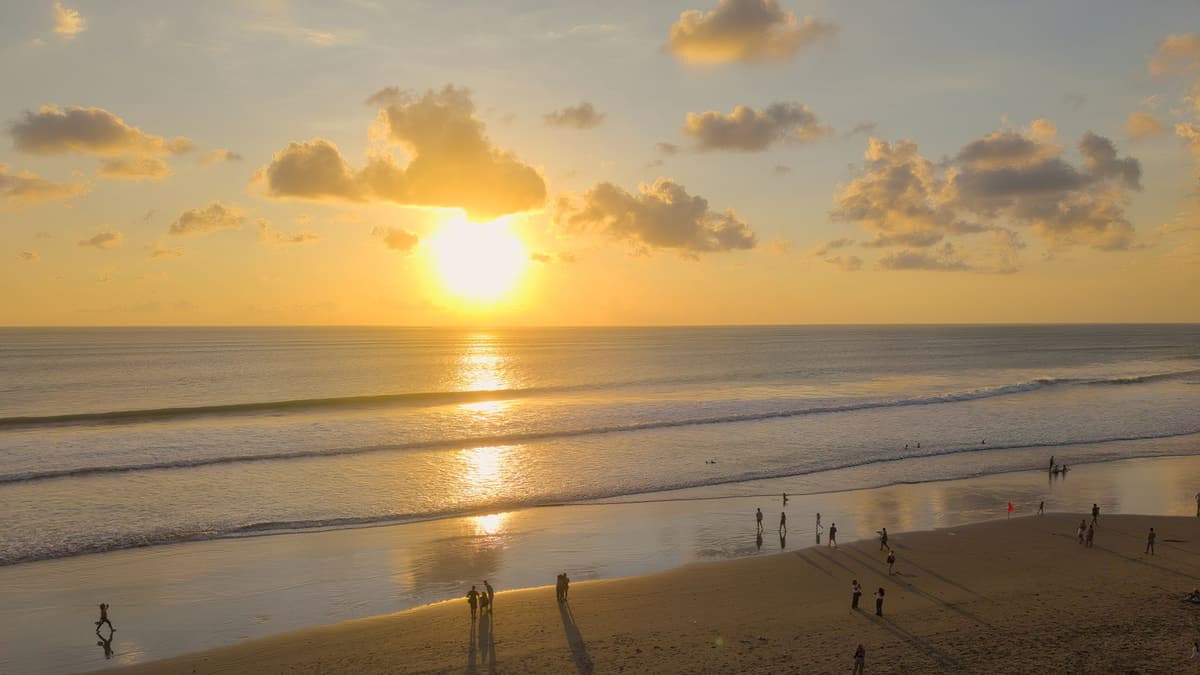
You have reached Double Six Beach, and the name has nothing to do with dice. It comes from a nightclub called Double Six, which for years was one of the big landmarks of Legian's nightlife, and the beach and the road behind it took the club's name. Late in the afternoon this is one of the liveliest stretches of the coast. Local young people mark out goals in the sand with sandals or sticks and play football in the low light, while families arrive to sit and watch the sunset. That sense of community comes from the banjar, the neighborhood council that every Balinese family belongs to. Each banjar has its own open-sided meeting hall, the bale banjar, usually with a wooden slit drum in a tower that is beaten to call people together. The banjar organizes weddings, cremations and temple festivals, and it shares out the work. Before Nyepi, the Balinese day of silence that marks the new year in the Balinese calendar, the young people of each banjar spend weeks building ogoh-ogoh, giant papier-mache demons that are paraded through the streets on the eve of Nyepi and then destroyed. The next day the island goes quiet: no traffic, no lights, no flights, and visitors are asked to stay inside their hotels. From here, keep north along the beach. The bright umbrellas of La Plancha are about five minutes away.
สิ่งที่รวมอยู่
ทัวร์ของเราออกแบบมาให้เป็นประสบการณ์ที่ผ่อนคลายและดื่มด่ำ คุณเดินไปพร้อมกับฟังไปเรื่อย ๆ และจะดียิ่งขึ้นเมื่อไปด้วยกัน แอปจะเล่นคำบรรยายแบบซิงค์กัน ให้คุณ คนรัก และเพื่อน ๆ ได้ฟังทุกจุดในเวลาเดียวกัน
Ahead of you, the sand fills with color. La Plancha is a beach bar known for its rows of rainbow-striped umbrellas and the beanbags laid out beneath them, and it turns up in a great many photos of the Bali sunset.
เนื้อหาที่เหลือของจุดนี้อยู่ในทัวร์เสียงฉบับเต็ม
Somewhere along this stretch, Legian becomes Seminyak, and you can feel the change. The hotels sit further back, the sand opens out, and the beach gets a little quieter.
เนื้อหาที่เหลือของจุดนี้อยู่ในทัวร์เสียงฉบับเต็ม
The walk ends at Ku De Ta, the beach club that opened here at the turn of the millennium and helped change how people saw Seminyak. Before it, this was a quiet beach behind a handful of villas and resorts.
เนื้อหาที่เหลือของจุดนี้อยู่ในทัวร์เสียงฉบับเต็ม
เดินไปกับคนอื่นในทัวร์ที่กำหนดเวลาไว้ครั้งต่อไป
ประมาณ 3.2 กม. ใช้เวลาประมาณ 44 นาทีด้วยจังหวะสบายๆ · 6 จุดแวะ
เพื่อนเดินฟรีOctober 11, 2026 · 9 min read
From the Hollandsche Schouwburg through the old Jewish Quarter, past the Dockworker and the Dam, to the Anne Frank House on the Prinsengracht.
October 11, 2026 · 11 min read
From Van Houten's street by the Vondelpark past Leidseplein, the Rijksmuseum passage and the famous canal bench to the Anne Frank House.

October 11, 2026 · 10 min read
Follow the last days of April and May 1945 from the Anhalter Bahnhof ruin past the Gestapo site and Brandenburg Gate to the Moltke Bridge and the Reichstag.
