
October 11, 2026 · 9 min read
Amsterdam Anne Frank Walking Tour
From the Hollandsche Schouwburg through the old Jewish Quarter, past the Dockworker and the Dam, to the Anne Frank House on the Prinsengracht.
589

October 9, 2026 · 10 min read

 Bạn bè đi bộ miễn phí
Mỗi tour cũng được tổ chức như một chuyến đi bộ nhóm theo lịch trình mà bạn có thể tham gia trong ứng dụng.
Thêm tour âm thanh tại Sydney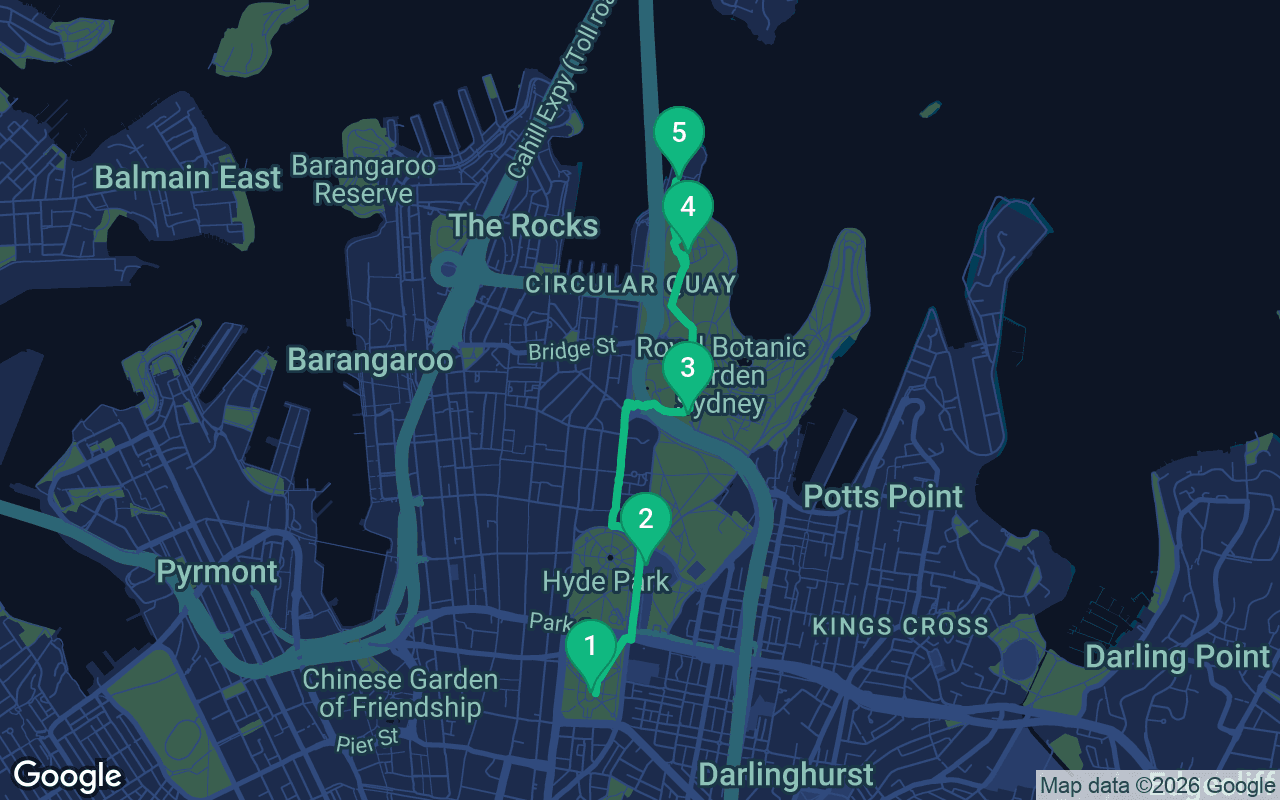
Khoảng 2,8km, mất khoảng 39 phút với nhịp độ thoải mái.
Tour này có thuyết minh âm thanh
Nhấn phát tại 3 điểm dừng đầu tiên để nghe thử 30 giây phần thuyết minh ngay tại đây. Trong ứng dụng, phần giới thiệu và các điểm dừng này được nghe trọn vẹn miễn phí, và mỗi điểm dừng sẽ phát âm báo khi bạn đến nơi. Toàn bộ chuyến tham quan có thuyết minh sẽ là của bạn chỉ với $7.99, mua một lần và sở hữu mãi mãi.
Hoạt động với Garmin, Komoot, Strava, OS Maps và mọi ứng dụng GPX.
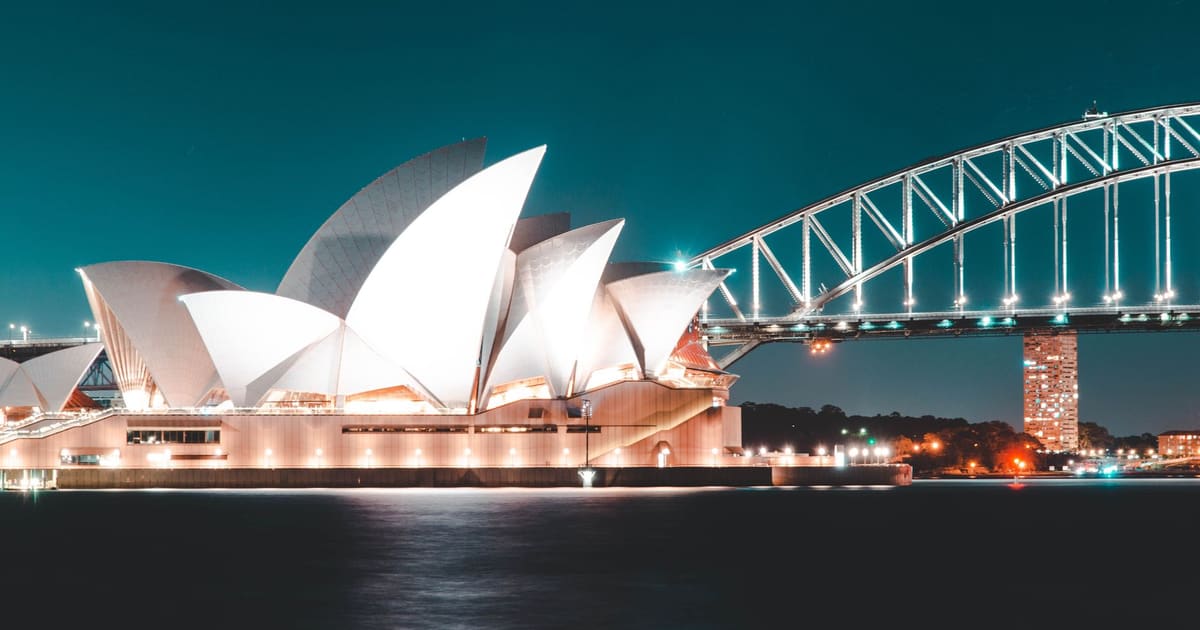
Sydney has a grand ceremonial spine, and most visitors only ever see its two ends. This walk follows it the whole way, from the Art Deco war memorial at the southern end of Hyde Park, past the sandstone cathedral and up Macquarie Street, the street Governor Lachlan Macquarie lined with public buildings two centuries ago, then down through the Royal Botanic Garden to the shores of Farm Cove and the Sydney Opera House. All of it stands on Gadigal Country, the harbor lands of one of the clans of the Eora. It is about three kilometers, mostly level or gently downhill, and among the most rewarding self-guided walking tours in the city because it moves from war and faith to government, science and art in a single easy line.
Allow two hours at a stroll, and half a day if you want to go inside the memorial, the cathedral and the Opera House. The ground is easy: paved paths through Hyde Park, broad footpaths along Macquarie Street, and smooth garden paths, with a gentle slope down to the harbor at the end. Hyde Park's avenues of fig trees give good shade, and so do parts of the Botanic Garden, but Macquarie Street and the Opera House forecourt are open to the sun. Even on a mild day the Australian sun burns quickly, so bring a hat, sunscreen and water. The Anzac Memorial, the cathedral and Government House keep their own hours, Government House opens for guided visits only on certain days, and the Botanic Garden closes its gates in the evening, so check before you go. Mornings are lovely here, with joggers in the park and soft light on the sandstone. Late afternoon is good too, because you reach the Opera House as the sails start to glow.
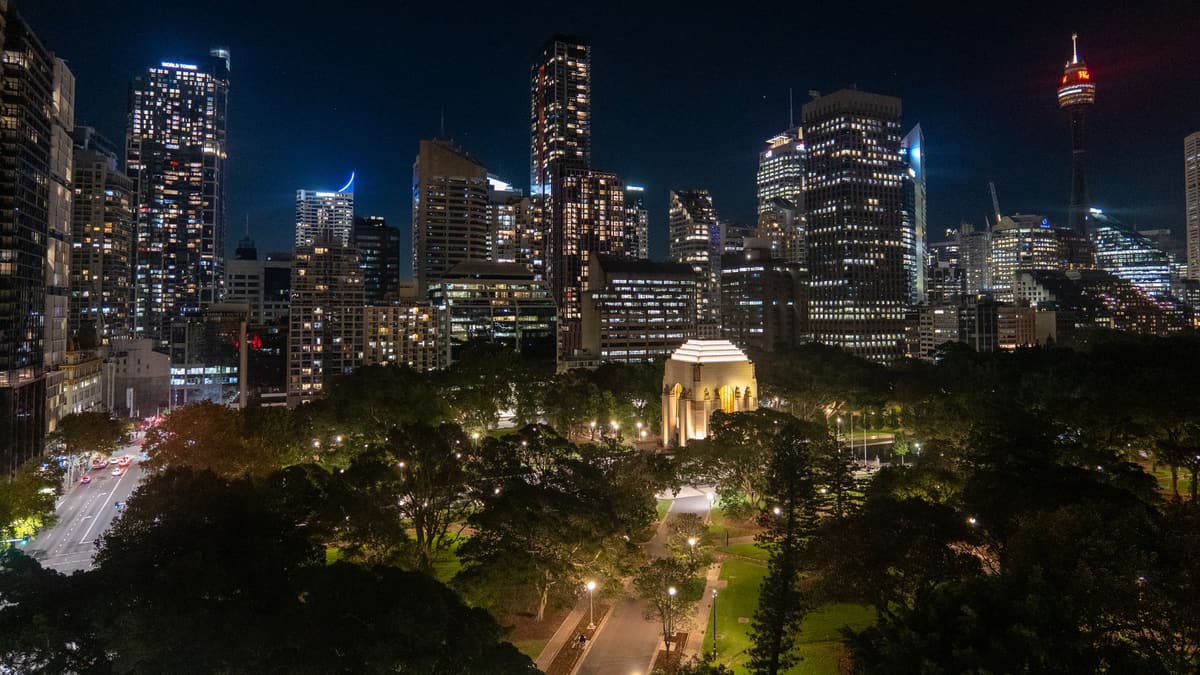
Stand at the northern edge of the memorial, beside the long Pool of Reflection, and look up at the building. It is a tall, square block of granite with great buttresses at each corner, crowned by seated figures, the whole thing designed by the architect Bruce Dellit and opened in 1934 to honor the people of New South Wales who served in the First World War. Anzac stands for the Australian and New Zealand Army Corps, the force that landed at Gallipoli in April 1915. Most of the sculpture is the work of Rayner Hoff, and the story of one piece he never got to make is worth knowing. He proposed a sculpture showing a naked woman on a cross, which he called the Crucifixion of Civilisation, and church leaders objected so strongly that it was dropped. Go inside if it is open. In the Hall of Memory, look down through the circular opening in the floor to Hoff's bronze Sacrifice in the Hall of Silence below: a dead young soldier carried on a shield by his mother, his sister and his wife holding a baby. Then look up into the dome, scattered with gold stars, about one for every man and woman from the state who enlisted. A newer Hall of Service, added for the centenary of the war, holds soil gathered from the many towns and suburbs where people signed up. Not far away in this southern half of the park, look out too for Yininmadyemi, a group of giant bullets and fallen shells by the artist Tony Albert that honors Aboriginal and Torres Strait Islander servicemen and women, whose service went unrecognized for far too long. When you are ready, walk north through Hyde Park along the central avenue of fig trees, cross Park Street, and continue toward the bronze fountain. The cathedral rises to your right across College Street, about eight minutes from here.
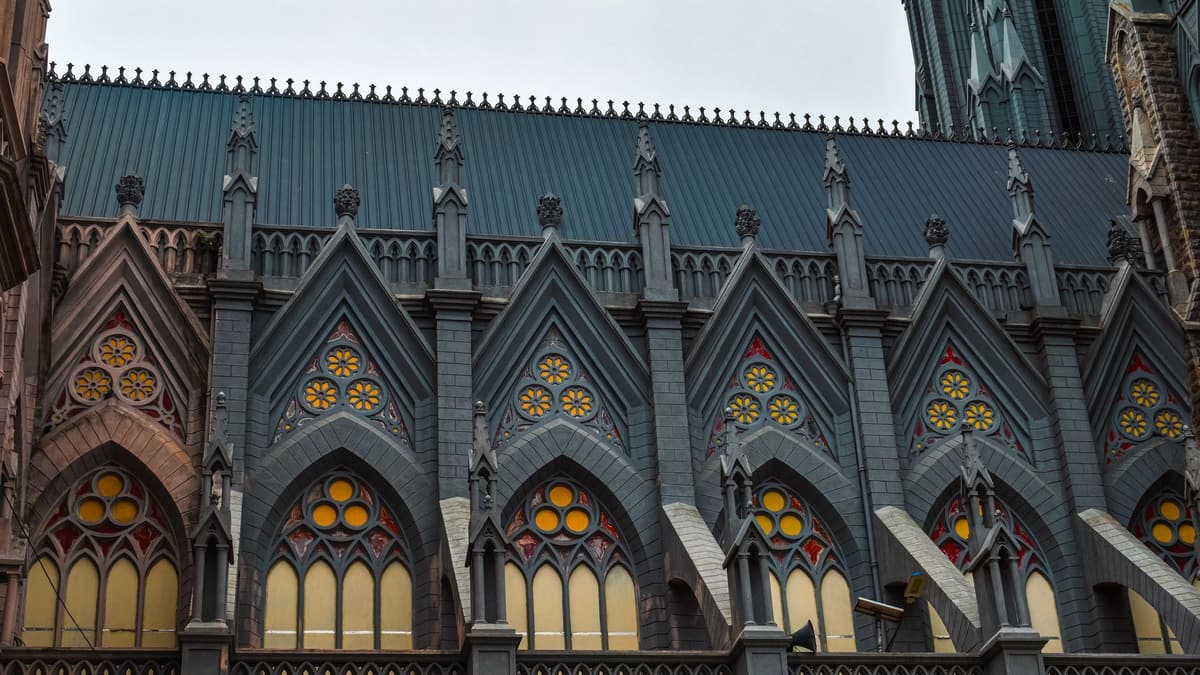
 Stand on the open ground in front of St Mary's and let your eyes climb its golden sandstone to the twin spires. This is the cathedral of Sydney's Catholics, and its story begins with the convicts. A large share of the people sent to the colony were Irish Catholics, but for decades they had no church of their own and, for long stretches, no official priest. In 1821 Governor Macquarie laid the foundation stone of a first chapel on this site. That building burned down in 1865, and the cathedral you see was designed to replace it by William Wardell, the architect also behind St Patrick's in Melbourne. Building began in the late 1860s and went on in stages for more than a century, and its twin spires, part of Wardell's original plan, were finally completed only in 2000, just as Sydney was getting ready for the Olympic Games. Notice something unusual: most cathedrals run east to west, but this one runs roughly north to south, a choice made to suit the site. If you can, step inside to see the long, dim nave and the warm color of the stone, and ask whether the crypt is open, because its floor is a remarkable terrazzo mosaic that took years to lay. Now head north along College Street to Queens Square, where Queen Victoria stands on her pedestal. On your right is Hyde Park Barracks, built by convicts in 1819 to house convicts, and now part of a World Heritage listing of Australian convict sites. Opposite stands St James' Church. Both were designed by Francis Greenway, a convict architect. Keep going north along Macquarie Street, past Sydney Hospital with its bronze boar out front, then Parliament House, then the State Library. At the library, turn right and follow the signs into the Royal Botanic Garden and on to The Calyx. Allow about fifteen minutes.
You have stepped into the Royal Botanic Garden, founded by Macquarie in 1816 and the oldest scientific institution in Australia. In front of you is The Calyx, a curving glass building that opened in 2016 to mark the garden's two hundredth birthday, on the site of an older glasshouse. Inside, if it is open, the striking feature is a long wall of living plants that sweeps around the curve of the building, thousands of them packed into a vertical garden, while the exhibitions in the middle change from season to season. Before you go in, think about what was on this ground before any of it. The shores you will walk along next belonged to the Gadigal, who gathered food and fished here, and when the First Fleet arrived in 1788 the British tried to grow their first crops beside the cove just north of here, which is why it is still called Farm Cove. The soil was poor, the seed was wrong for the climate, and the harvests failed, and the colony came close to starving in its early years. The garden's founding year deserves a second look as well. In 1816, the same year he set aside this ground, Macquarie sent soldiers against Aboriginal people southwest of Sydney, and the campaign ended in the Appin massacre, in which Dharawal men, women and children were killed. It sits beside his buildings in any honest account of him. Elsewhere in the garden, a planting called Cadi Jam Ora tells the story of this Country and its plants from Aboriginal perspectives. From The Calyx, head north through the garden with the water of Farm Cove opening up on your right. Off to your left, through the trees, you may glimpse a turreted building that looks like a castle; that is the Conservatorium of Music. Government House is ahead on the rise, about ten minutes on foot.
Bao gồm những gì
Các tour của chúng tôi được thiết kế để mang tính thiền định và đắm chìm: bạn vừa đi vừa lắng nghe. Đi cùng nhau luôn tuyệt hơn, và ứng dụng phát thuyết minh đồng bộ để bạn, người thương và bạn bè nghe mỗi điểm dừng cùng một lúc.
The sandstone house in front of you, all turrets, battlements and tall chimneys, looks like a small castle lifted out of the English countryside, and that is more or less the idea.
Phần còn lại của điểm dừng này có trong tour âm thanh đầy đủ.
You have reached Bennelong Point, and the white sails of the Sydney Opera House rise straight in front of you. Walk up the broad steps and around the building toward its northern tip, so you can see the shells from several sides.
Phần còn lại của điểm dừng này có trong tour âm thanh đầy đủ.
Thực hiện buổi đi bộ này cùng người khác vào tour đã lên lịch tiếp theo.
Khoảng 2,8km, mất khoảng 39 phút với nhịp độ thoải mái · 5 điểm dừng
Bạn bè đi bộ miễn phíOctober 11, 2026 · 9 min read
From the Hollandsche Schouwburg through the old Jewish Quarter, past the Dockworker and the Dam, to the Anne Frank House on the Prinsengracht.
October 11, 2026 · 11 min read
From Van Houten's street by the Vondelpark past Leidseplein, the Rijksmuseum passage and the famous canal bench to the Anne Frank House.

October 11, 2026 · 10 min read
Follow the last days of April and May 1945 from the Anhalter Bahnhof ruin past the Gestapo site and Brandenburg Gate to the Moltke Bridge and the Reichstag.
