
October 1, 2026 · 8 min read
야외가 실내보다 나은 이유
실내 트레드밀의 지루함과 싸우지 않고 정신적 안개를 걷어내는 것부터 자연스러운 일상의 추진력을 쌓는 것까지, 야외 산책의 진정한 이점을 발견하세요.
665
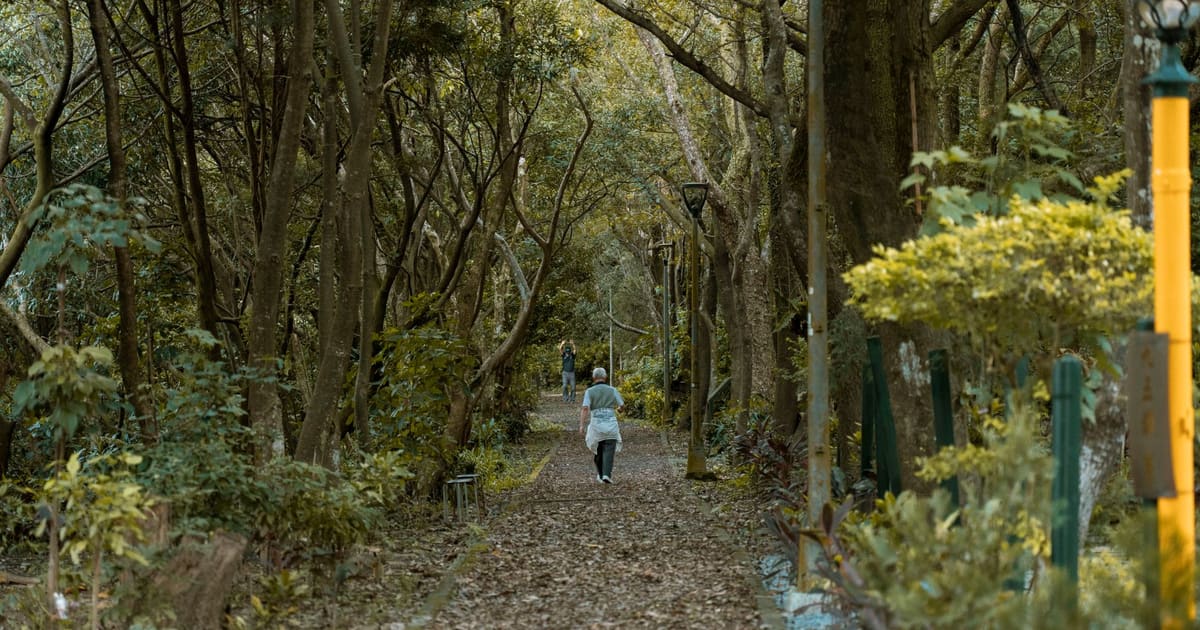

Most people fail at daily walks because they plan for their best days instead of their messiest ones.
When motivation runs high on a Sunday evening, scheduling an hour-long loop around the neighbourhood feels totally reasonable. Then Tuesday rolls in with late meetings, bad weather, and cold dinner, and that hour evaporates before you even find your socks. If you want to know how to build a walking habit that survives real life, you have to design it for the days when everything goes wrong, not the quiet weekends when the sun shines.
Here is the step-by-step method I use and share with anyone trying to turn wandering outside into second nature.
The standard advice says you need 10,000 steps right out of the gate. That is roughly an hour and a half on foot for an average person. If your current baseline is sitting at a desk from dawn until dusk, jumping straight to ninety minutes of deliberate footwork is a fast track to giving up by day four.
Your initial goal should be so small that saying no feels silly. Seven minutes. One lap around the block. To the red postbox at the corner and back.
Why does this matter? Because in the beginning, step volume does not matter at all. The only thing you are building is the identity of someone who steps out of the front door every single day. If you complete seven minutes, you won't get exhausted, you won't need to block out your calendar, and your brain won't mount a massive argument against doing it.
What to avoid: Do not double your target just because you had one great Saturday. Keep the minimum floor absurdly low for at least two weeks before you touch the ceiling.
Setting a vague intention like "I will walk in the afternoon" almost never works. Afternoons are fluid. Emergencies pop up. Phone notifications pull you sideways.
Instead, attach the walk to something you already do without thinking. Behaviour experts call this habit stacking, but I think of it as building an iron hinge on an existing door. You take a solid, unmovable part of your daily routine and bolt the walk onto the back of it.
Good hinges look like this:
The trick is that the hinge must be a sensory event, not a clock time. "When my laptop lid snaps shut" triggers action far better than "at 12:30 PM" because you might still be finishing an email at 12:32 PM.
Every habit carries an invisible tax called startup friction. Startup friction is the pile of tiny annoyances standing between deciding to walk and taking your first stride onto the tarmac.
Where are your shoes? Are your headphones charged? Do you need to hunt down clean socks? If answering those questions takes three minutes of rifling through laundry, your tired brain will use that friction as an excuse to sit back on the couch. You get trapped in what I call the front-door swamp, where minor hesitations drown your good intentions.
Cut the friction down to nothing the night before:
When the trigger fires, you shouldn't have to think, search, or negotiate. You just slide your feet in and step outside.
A lot of beginners treat walking like a workout they have to survive. They push the pace, monitor their heart rate, pump their arms, and come home feeling drained. Then their brain registers the activity as physical strain, and next time, resistance doubles.
Walking does not need to feel like an exercise class to do its job. In fact, keeping the effort low is precisely what allows you to repeat it seven days a week without accumulating fatigue. You should be able to chat comfortably without gasping for breath. If you feel like you are pushing against a clock, you are walking too fast for a foundation habit.
Save the power walks, interval bursts, and steep hill climbs for down the road. During your first month, your single metric of success is whether your shoes touched the pavement. Treat the walk as a reset button for your nervous system, not a calorie-burning punishment.
Here is a practical rule that changes how you show up: your baseline commitment is strictly five to ten minutes. Once you hit that mark, you are legally permitted to turn around, go home, and count the day as a total win.
What usually happens? Once you are outside, the cold air hits your face, your muscles warm up, and the mental drag clears away. More often than not, you decide you might as well take the longer loop through the park. You end up walking for twenty or twenty-five minutes purely because you feel like it.
And on the rough days when you genuinely feel exhausted or swamped? You walk your five minutes to the corner, turn around, and walk home. You preserved your streak, kept the habit alive, and respected your energy limits. That keeps guilt completely out of the equation.
What to avoid: Do not redefine the baseline after a long day. If you walked for thirty minutes yesterday, your floor today is still seven minutes. The floor never moves.
Rain, biting wind, and grey skies kill more walking routines than busy schedules ever will. If your habit only functions when the sky is clear and seventy degrees, you don't have a habit; you have a fair-weather hobby.
You need a foul-weather protocol decided in advance so bad weather does not require a fresh debate.
First, get one decent windproof jacket with a hood and keep it near your shoes. You don't need high-end alpine gear, just something that keeps the wet off your neck. Second, have an alternate bad-weather loop that hugs closer to home or circles under tree cover or shop awnings. Third, remember the contract: on stormy days, five minutes is all you owe. Walk to the end of the street and back. You proved to yourself that a few raindrops do not get to dictate your day.
Doing things completely alone in secret makes quitting very easy. Nobody notices if you skip Monday, which makes skipping Tuesday painless, and by Friday the habit has vanished into thin air.
You do not need to broadcast your steps on social media, but you do need some external anchor. That could be a walking partner who expects you at the corner at 7:15 AM, a simple wall calendar where you draw an X after each outing, or a shared group where your friends see your numbers.
When someone else knows whether you stepped out today, the small friction of explaining why you skipped is often just enough to push you out the door. Shared momentum carries you through the slump days when your personal drive runs on empty.
If you want an easy way to keep that momentum going, Walk With Me lets you join friendly local walkers, start simple walking packs with friends, or just track your streaks on a live map so getting outside never feels like a solo chore.
October 1, 2026 · 8 min read
실내 트레드밀의 지루함과 싸우지 않고 정신적 안개를 걷어내는 것부터 자연스러운 일상의 추진력을 쌓는 것까지, 야외 산책의 진정한 이점을 발견하세요.
September 17, 2026 · 8 min read
오후의 급격한 피로와 무기력함에 지치셨나요? 커피를 마시는 대신 가볍게 걷는 것이 오후 3시의 슬럼프를 완벽하게 극복하고 하루의 에너지를 자연스럽게 되찾는 최고의 방법인 이유를 자세히 알아보세요.
September 7, 2026 · 7 min read
머릿속에서 같은 생각만 맴돌고 있나요? 걷기가 머리를 식히는 데 효과적인 과학적 이유와, 매일 마주하는 화면 속 안개에서 벗어나기 위해 지금 바로 실천할 수 있는 간단한 발걸음 규칙을 소개합니다.
