
October 11, 2026 · 9 min read
Amsterdam Anne Frank Walking Tour
From the Hollandsche Schouwburg through the old Jewish Quarter, past the Dockworker and the Dam, to the Anne Frank House on the Prinsengracht.
589

October 9, 2026 · 10 min read

 Os amigos caminham grátis
Cada tour também funciona como uma caminhada em grupo agendada que você pode acessar no app.
Mais passeios de áudio em Honolulu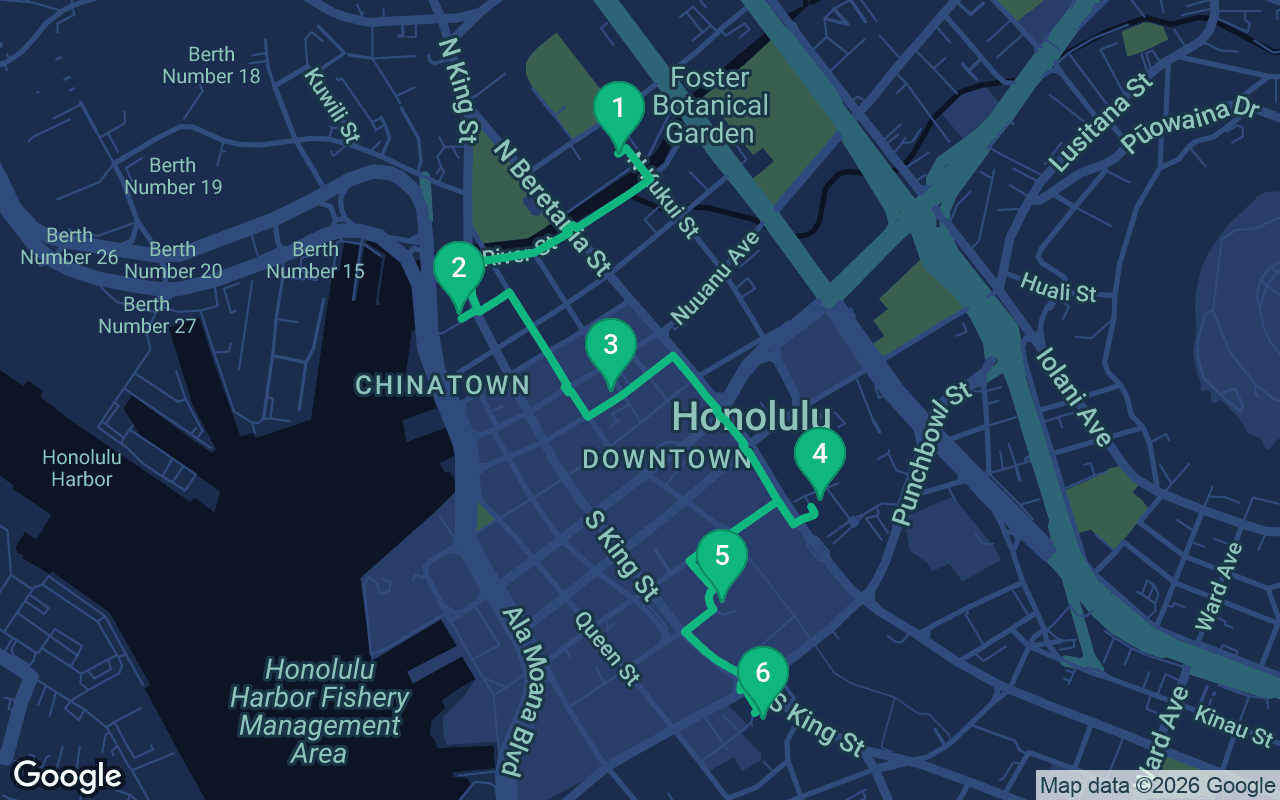
Cerca de 2,8 km, mais ou menos 40 minutos em passo tranquilo.
Este passeio é narrado
Aperte o play nas primeiras 3 paradas para ouvir uma demonstração de 30 segundos da narração. No aplicativo, a introdução e essas 3 paradas tocam completas e de graça, e cada uma avisa com um sinal sonoro quando você chega. Todo o passeio narrado é seu por $8.99, uma compra única que você guarda para sempre.
Funciona com Garmin, Komoot, Strava, OS Maps e qualquer app de GPX.
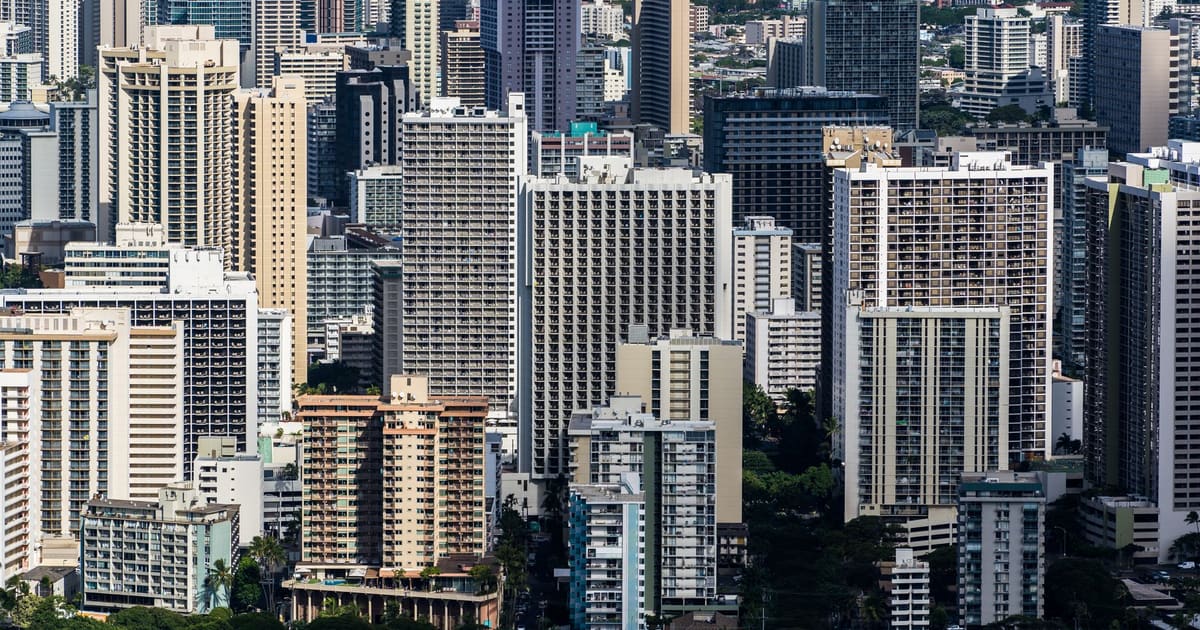
Most visitors to Honolulu never leave Waikīkī, and they miss the half of the city where its history happened. This walk crosses downtown from a wooden Shinto shrine on the banks of Nuʻuanu Stream, through the markets and old theater of Chinatown, to the house where Hawaiʻi's last queen lived, the palace where the Hawaiian Kingdom was overthrown, and the coral church where its royalty worshipped. It ties together two stories that made modern Hawaiʻi: the immigrants who came to work the islands and built new lives in town, and the rise and fall of a Pacific kingdom recognized by the great powers of its day. It is about 2.8 kilometers, a little under two miles, flat all the way, and one of the most rewarding self-guided walking tours in the islands for the history packed into every block.
The walking takes about forty minutes, but give it a morning, and a good part of the day if you go inside ʻIolani Palace, which deserves an hour or more on its own. Go on a weekday morning if you can. The Chinatown markets are at their busiest early, many shops close by late afternoon, and the palace runs tours only on certain days and times, so check before you go and book ahead if you can. The route is level and paved, but sidewalks in Chinatown are crowded and uneven in places, so wear comfortable shoes. Downtown is hot by midday with little shade until you reach the big trees on the palace grounds, so bring water and a hat. The shrine and the church are active places of worship, so dress and behave as you would in any temple or church, and keep your voice low if a service is on. Locals give directions as mauka, toward the mountains, and makai, toward the sea, and here they come in handy, because the streets do not run neatly north and south.
Stand in front of the torii gate and look past it to the shrine, a dark wooden building with a sweeping roof, set on a quiet corner beside Nuʻuanu Stream. It looks as if it was lifted from a hillside in Japan, and that is close to the truth. Japanese workers began arriving in Hawaiʻi in large numbers in 1885, recruited to labor on the sugar plantations, and by the early twentieth century people of Japanese ancestry were the largest single group in the islands. Many left the plantations for Honolulu, and they brought their faiths with them. This mission was founded in 1906 as a branch of Izumo Taisha, one of the oldest and most important Shinto shrines in Japan, and the building you see was finished in 1923. The kami honored here is associated with good relationships and marriage, which is why couples come to be blessed. If you approach the shrine, follow the Izumo custom: bow twice, clap four times, and bow once more. The shrine's story has a dark chapter. After the attack on Pearl Harbor in 1941, the property was seized and handed to the city, and the congregation did not win it back until 1962. Cross the stream at the nearest bridge and follow the River Street walkway downstream, past the statue of Sun Yat-sen, who went to school in Honolulu, then turn left on King Street. The market is one block along, at Kekaulike Street, about seven minutes.
You are standing at the corner of King and Kekaulike Streets, in front of an open-sided market hall with its name across the top. Step under the roof and let your senses adjust. Whole fish lie on ice, from glossy ʻahi to bright red snapper, with butchers trimming pork, roast duck hanging in windows nearby, and stalls piled with long beans, bitter melon, ginger, taro and tropical fruit. Oʻahu Market has been doing this on this corner since 1904, and on a weekday morning it feels like the whole neighborhood shops here. Chinatown grew up in the late 1800s, as Chinese workers who had come to the plantations from 1852 finished their contracts and moved to town to open shops, restaurants and herbalists. Later it filled with Japanese, Filipino, Vietnamese and Korean families too. Look at the buildings around you and you will notice that few are older than about 1900, and there is a reason. In January 1900, plague broke out, and the Board of Health ordered infected buildings burned. One of those controlled fires went wrong, the wind carried it across the district, and most of Chinatown burned to the ground, leaving thousands homeless. The neighborhood was rebuilt in brick and stone, and that is the Chinatown you are walking through. Follow King Street toward Diamond Head for about four blocks to Bethel Street, then turn left and walk two short blocks mauka, across Hotel Street, to the theater at the corner of Pauahi Street, about seven minutes.
Stand across the street and take in the theater's front, a stately neoclassical facade with tall columns and a bright vertical sign that glows at night. The Hawaiʻi Theatre opened in 1922, when silent films and live shows packed the house, and it was soon billed as the Pride of the Pacific. Inside, which you can see if you catch a show or a tour, there is a domed ceiling, gilded detail and a broad mural above the stage, the kind of grand movie palace that was going up in American cities at the time. Hotel Street, which you just crossed, has its own colorful past. During the Second World War, when hundreds of thousands of servicemen passed through Honolulu, it was the strip they headed for on leave, lined with bars, tattoo parlors and dance halls, with lines out the doors. After the war, downtown emptied as people moved to the suburbs and Waikīkī, and the theater went into a long decline before it closed in the 1980s. It could easily have been torn down. Instead a nonprofit bought it and restored it, and it reopened in the 1990s, now one of the anchors of a Chinatown arts district full of galleries and restaurants. Walk one block mauka on Bethel Street to Beretania Street, turn right, and follow Beretania toward Diamond Head past St. Andrew's Cathedral. Washington Place is the white house with columns on your left, about seven minutes.
O que está incluído
Nossos passeios foram feitos para ser meditativos e imersivos: você caminha e simplesmente escuta. Eles são sempre melhores em companhia, e o aplicativo toca a narração sincronizada, para que você, seu par e seus amigos ouçam cada parada ao mesmo tempo.
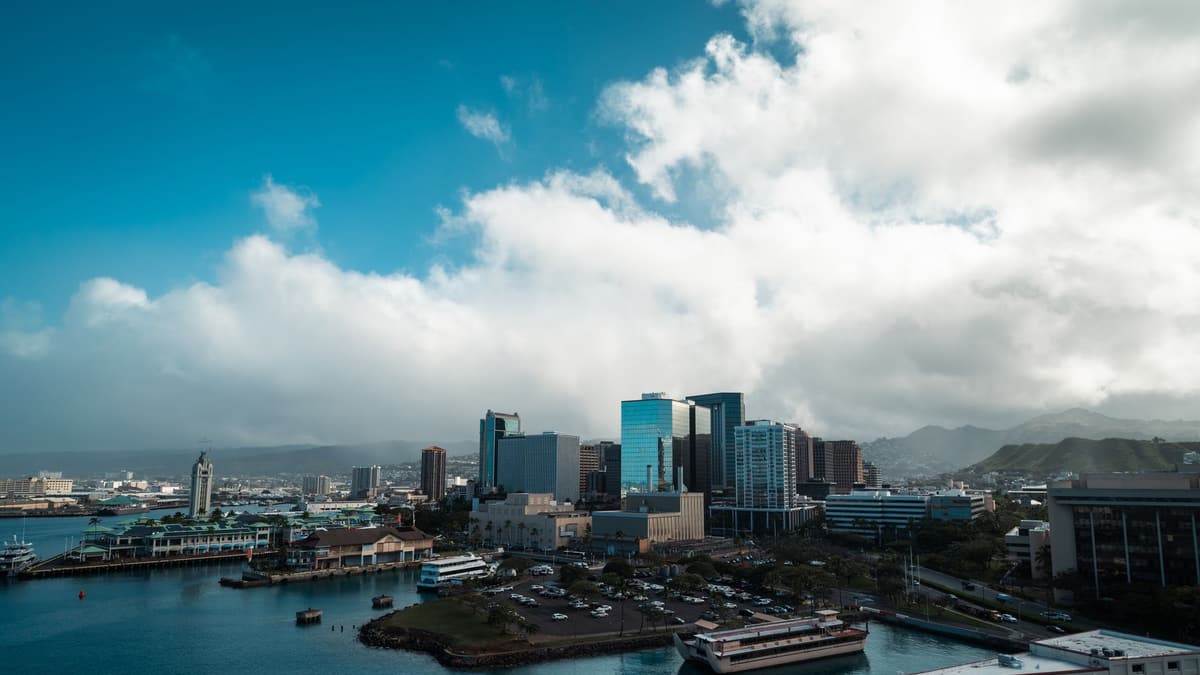
Stop at the fence and look through to the house, a white two-story mansion wrapped in columns and broad verandas, set in green lawns under old trees.
O restante desta parada está no passeio em áudio completo.
As you leave the Capitol, look for the bronze statue of Queen Liliʻuokalani, standing between the two buildings and facing the palace.
O restante desta parada está no passeio em áudio completo.
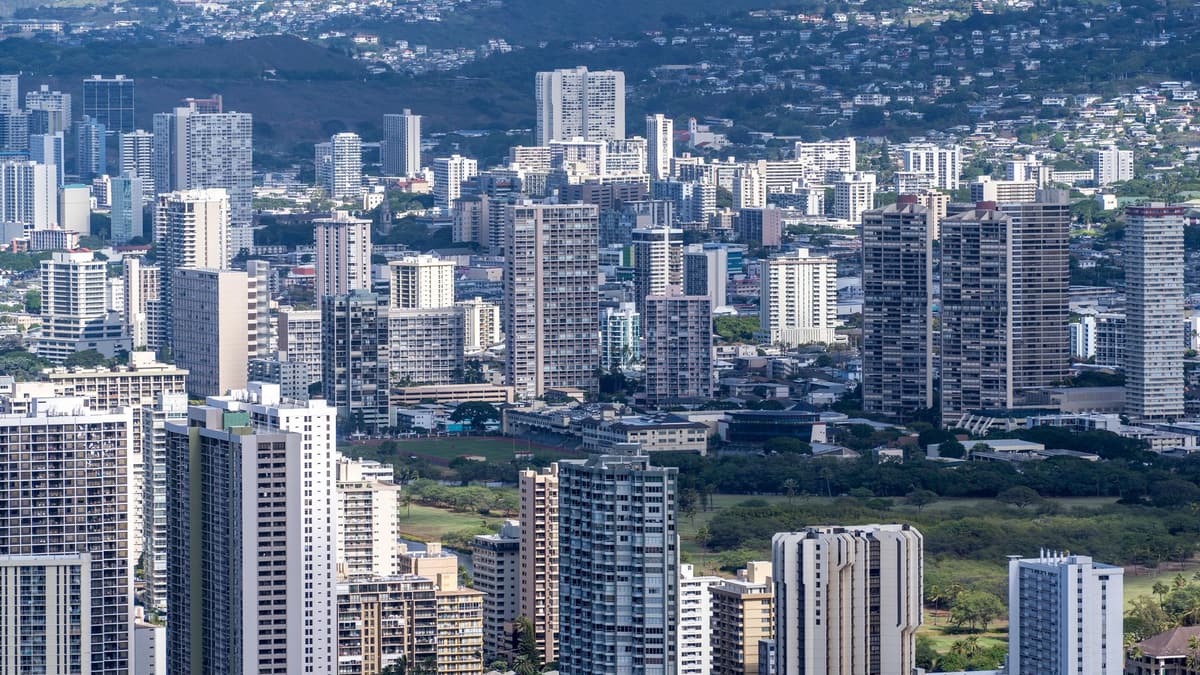
On the way you passed the statue of Kamehameha I, the chief who united the islands under one rule early in the 1800s, gilded and cloaked in front of the government building where Hawaiʻi's Supreme Court sits today.
O restante desta parada está no passeio em áudio completo.
Faça esta caminhada com outras pessoas no próximo passeio agendado.
Cerca de 2,8 km, aproximadamente 40 minutos em ritmo leve · 6 paradas
Os amigos caminham grátisOctober 11, 2026 · 9 min read
From the Hollandsche Schouwburg through the old Jewish Quarter, past the Dockworker and the Dam, to the Anne Frank House on the Prinsengracht.
October 11, 2026 · 11 min read
From Van Houten's street by the Vondelpark past Leidseplein, the Rijksmuseum passage and the famous canal bench to the Anne Frank House.

October 11, 2026 · 10 min read
Follow the last days of April and May 1945 from the Anhalter Bahnhof ruin past the Gestapo site and Brandenburg Gate to the Moltke Bridge and the Reichstag.
