
October 11, 2026 · 9 min read
Amsterdam Anne Frank Walking Tour
From the Hollandsche Schouwburg through the old Jewish Quarter, past the Dockworker and the Dam, to the Anne Frank House on the Prinsengracht.
589

October 9, 2026 · 10 min read

 Bạn bè đi bộ miễn phí
Mỗi tour cũng được tổ chức như một chuyến đi bộ nhóm theo lịch trình mà bạn có thể tham gia trong ứng dụng.
Thêm tour âm thanh tại Quebec City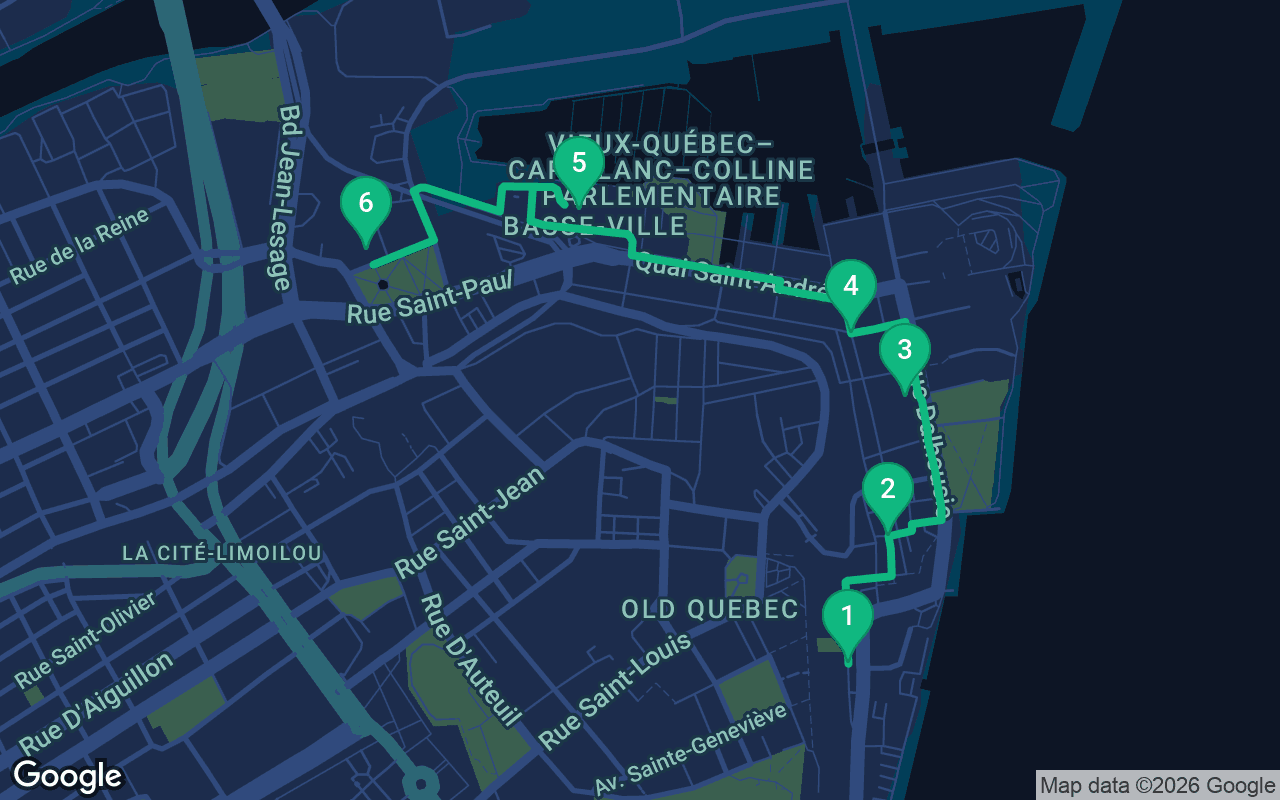
Khoảng 2,1km, mất khoảng 28 phút với nhịp độ thoải mái.
Tour này có thuyết minh âm thanh
Nhấn phát tại 3 điểm dừng đầu tiên để nghe thử 30 giây phần thuyết minh ngay tại đây. Trong ứng dụng, phần giới thiệu và các điểm dừng này được nghe trọn vẹn miễn phí, và mỗi điểm dừng sẽ phát âm báo khi bạn đến nơi. Toàn bộ chuyến tham quan có thuyết minh sẽ là của bạn chỉ với $6.99, mua một lần và sở hữu mãi mãi.
Hoạt động với Garmin, Komoot, Strava, OS Maps và mọi ứng dụng GPX.
Quebec City began at the bottom of the cliff, not the top. Long before the walls and the Citadelle, a handful of Frenchmen built a wooden trading post on the narrow strip of shore between the rock and the St. Lawrence, and the Lower Town grew up around it: merchants, sailors, warehouses and wharves. This walk starts at the foot of the Breakneck Stairs on Rue du Petit-Champlain, passes through the square where the city was founded, then follows the old merchant streets north along the port to finish at the chateau-style railway station, Gare du Palais. It is under two kilometers and almost entirely flat once you are down, and it is one of the easiest and most charming self-guided walking tours in Canada. It shares no stops with the Upper Town walk, so the two together make a full day.
Allow about an hour and a half at a stroll, more if you visit the museum, which can easily take an afternoon on its own. To reach the start from the Upper Town, either take the funicular down from Dufferin Terrace, beside the Chateau Frontenac, or walk down the Breakneck Stairs from Cote de la Montagne, which is steep but short. After that the route is level, on cobbles and old paving, so wear comfortable shoes with some grip. In winter the streets are cleared but can still be icy, and the cliff blocks the sun from the narrow lanes for much of the day, so dress warmly. Summer is busy and festive, with flowers on every balcony; fall is quieter and lovely; and in December Rue du Petit-Champlain is dressed with lights and fir trees and looks like a Christmas card. Mornings are the calmest time. The museum, the churches and the market all keep their own hours, and some change with the season, so check before you go. Bring an appetite, because the walk passes plenty of places to eat and ends near a market.
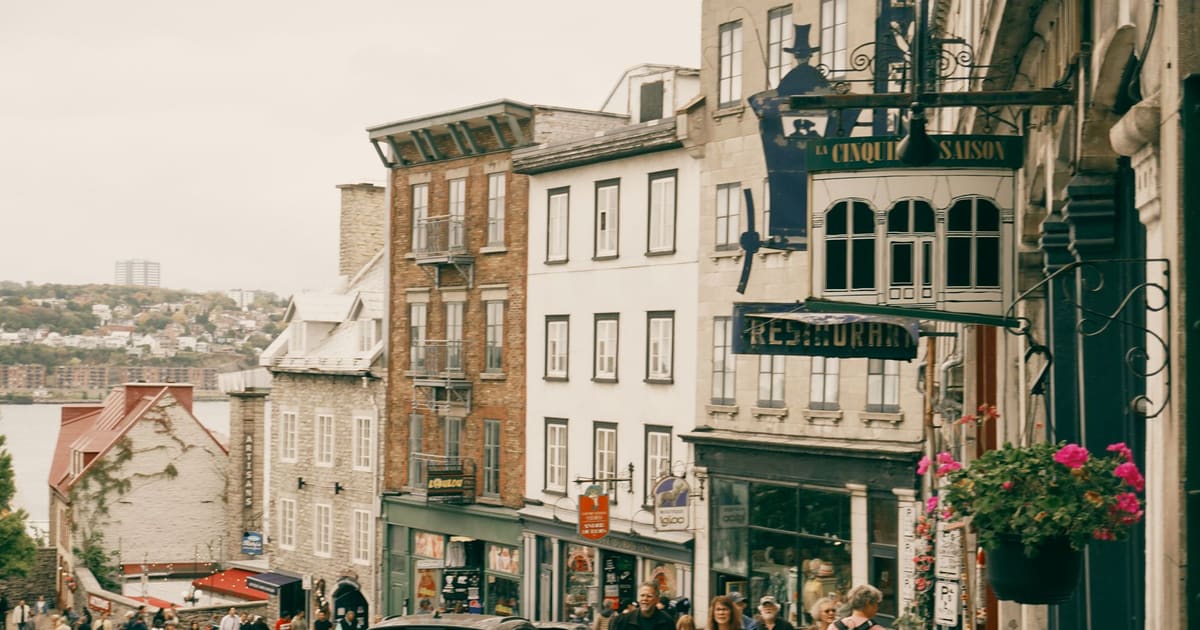
Stand in the middle of Rue du Petit-Champlain and look along it: a narrow, car-free lane of stone houses with painted shutters, iron signs and flower boxes, squeezed between the cliff and the river. It is often called one of the oldest shopping streets in North America, and people have lived and traded on this strip of shore since the 1600s. Look back toward the foot of the Breakneck Stairs, the steep staircase that drops from the Upper Town. It is the oldest stairway in the city, and its name tells you everything about how it felt to climb it in the dark or on ice. Beside it stands the Maison Louis-Jolliet, built in 1683 for the explorer Louis Jolliet, who with the Jesuit Jacques Marquette had traveled down the Mississippi ten years earlier. Today the house holds the bottom station of the funicular, which has carried people up and down the cliff since 1879. For centuries this was a working neighborhood of sailors, craftsmen and dockworkers, and by the middle of the twentieth century it was run down. Its revival turned it into what you see now, a lane of independent boutiques, galleries and cafes, many run by the people who own them. At the far end of the street, a large painted mural on the side of a house tells the neighborhood's own story. When you are ready, walk back to the foot of the Breakneck Stairs and carry straight on along Rue Sous-le-Fort. Place Royale opens up ahead in about three minutes.
 This small square is where Quebec began. In 1608 Samuel de Champlain chose this spot, at the point where the St. Lawrence narrows, to build his Habitation, a wooden trading post of a few buildings ringed by a moat and palisade. The name Quebec is usually traced to an Algonquian word for the place where the river narrows. Champlain was here to trade furs with the Indigenous nations of the region, and to plant France in North America. That first winter nearly ended the plan: of the 28 men who stayed, only eight were alive in spring, most of the rest killed by scurvy. Yet the post held, and Champlain spent much of the rest of his life building the colony; he is remembered as the father of New France. Later the square became the town's market, and it took its royal name from a bust of Louis XIV set up here in the 1680s; the bronze king you see is a later copy. The stone church on the square is Notre-Dame-des-Victoires, begun in the 1680s and one of the oldest stone churches in North America. Its name celebrates two English attacks on the city that failed, and inside, a model sailing ship hangs from the ceiling. During the siege of 1759, British guns firing from across the river left the square in ruins, and the houses around you were carefully restored in the 1960s and 1970s. Before you go, step a minute along Rue Notre-Dame to see the Fresque des Quebecois, a huge painted wall where figures from four centuries of Quebec history peer out of windows and doorways so real you may try to walk into it. Then make your way north along Rue Saint-Pierre for about three minutes; the museum's entrance is one block over toward the river, on Rue Dalhousie.
On Rue Saint-Pierre you walked along the city's old financial street, lined with the stone banks of the 1800s. Now you are standing before the Musee de la civilisation, which opened in 1988. It was designed by Moshe Safdie, the architect who made his name with the stacked-box housing of Habitat 67 in Montreal, and his challenge here was to put a large modern building in the middle of a historic quarter without overwhelming it. Look at how he did it. The roofs are steep and angular, echoing the old pitched roofs around them, and a light, open tower stands where a belfry might be. Older buildings were folded right into the design. The best known is the Maison Estebe, the house of a wealthy merchant built in 1752, whose vaulted stone cellars once held the wine, cloth and goods that came in from the port. You can still walk down into them. The museum is about people rather than objects in glass cases: Quebec's own story, the First Nations and Inuit of the province, and changing exhibitions on the wider world. In the entrance hall, a large sculpture shows the river ice breaking up in spring, a sight every Quebecer knows. Back outside, walk north for a couple of minutes to Rue Saint-Paul and turn left. The antique shops begin almost at once.
Bao gồm những gì
Các tour của chúng tôi được thiết kế để mang tính thiền định và đắm chìm: bạn vừa đi vừa lắng nghe. Đi cùng nhau luôn tuyệt hơn, và ứng dụng phát thuyết minh đồng bộ để bạn, người thương và bạn bè nghe mỗi điểm dừng cùng một lúc.
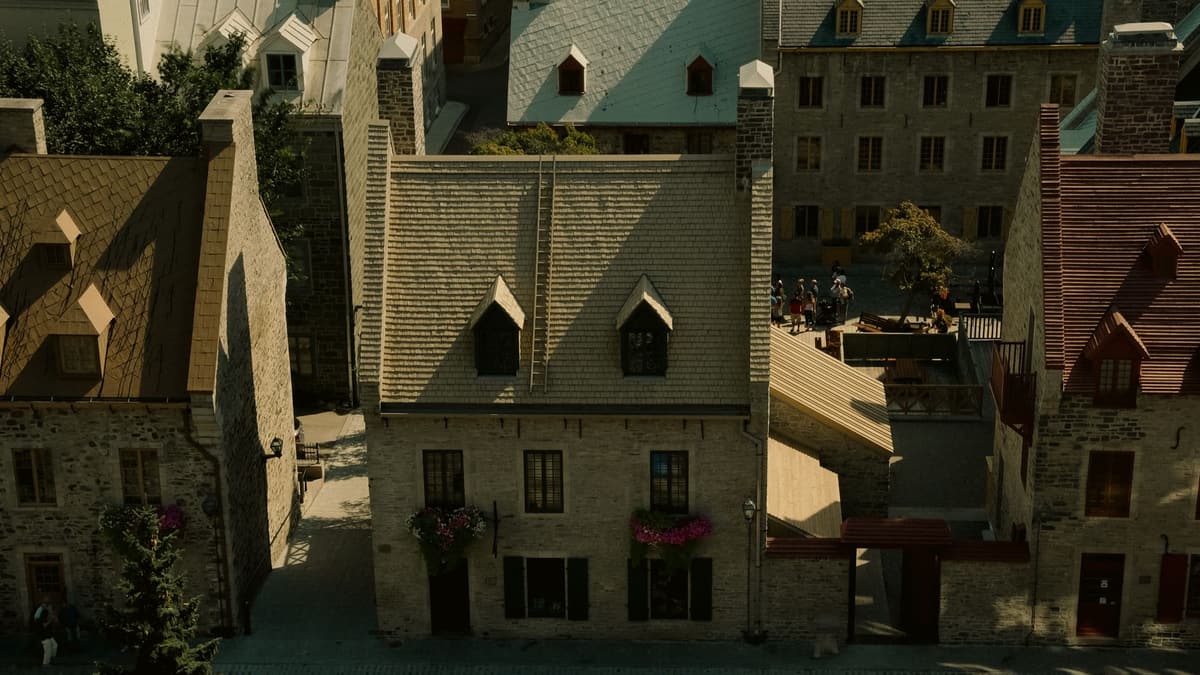
Rue Saint-Paul runs along the old edge of the port, and it is where Quebec City comes to shop for the past.
Phần còn lại của điểm dừng này có trong tour âm thanh đầy đủ.
You have reached the waterfront and the Old Port Market, a long hall beside the Louise Basin, where sailboats and yachts tie up in summer.
Phần còn lại của điểm dừng này có trong tour âm thanh đầy đủ.
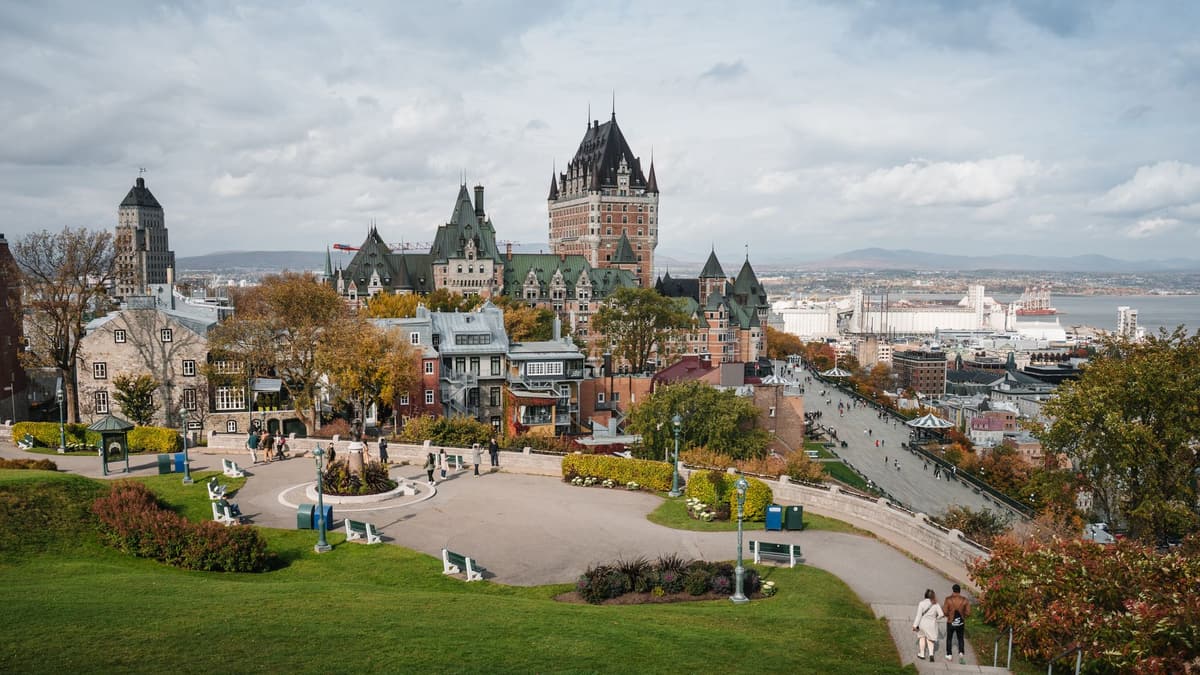
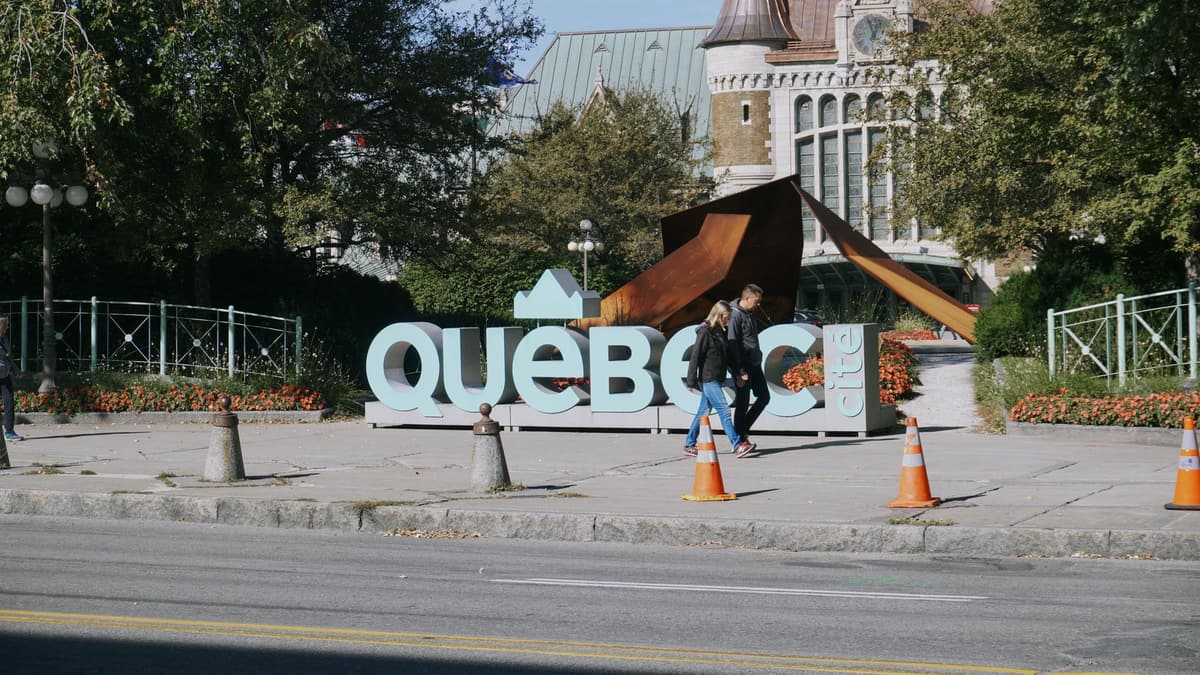
The walk ends at Gare du Palais, Quebec City's railway station, and it is grand enough to be mistaken for a castle.
Phần còn lại của điểm dừng này có trong tour âm thanh đầy đủ.
Thực hiện buổi đi bộ này cùng người khác vào tour đã lên lịch tiếp theo.
Khoảng 2,1km, mất khoảng 28 phút với nhịp độ thoải mái · 6 điểm dừng
Bạn bè đi bộ miễn phíOctober 11, 2026 · 9 min read
From the Hollandsche Schouwburg through the old Jewish Quarter, past the Dockworker and the Dam, to the Anne Frank House on the Prinsengracht.
October 11, 2026 · 11 min read
From Van Houten's street by the Vondelpark past Leidseplein, the Rijksmuseum passage and the famous canal bench to the Anne Frank House.

October 11, 2026 · 10 min read
Follow the last days of April and May 1945 from the Anhalter Bahnhof ruin past the Gestapo site and Brandenburg Gate to the Moltke Bridge and the Reichstag.
