
October 11, 2026 · 9 min read
Amsterdam Anne Frank Walking Tour
From the Hollandsche Schouwburg through the old Jewish Quarter, past the Dockworker and the Dam, to the Anne Frank House on the Prinsengracht.
589

October 9, 2026 · 11 min read

 เพื่อนเดินฟรี
ทุกทัวร์ยังเปิดเป็นการเดินกลุ่มตามเวลาที่กำหนด ซึ่งคุณเข้าร่วมได้ในแอป
ทัวร์เสียงเพิ่มเติมในHonolulu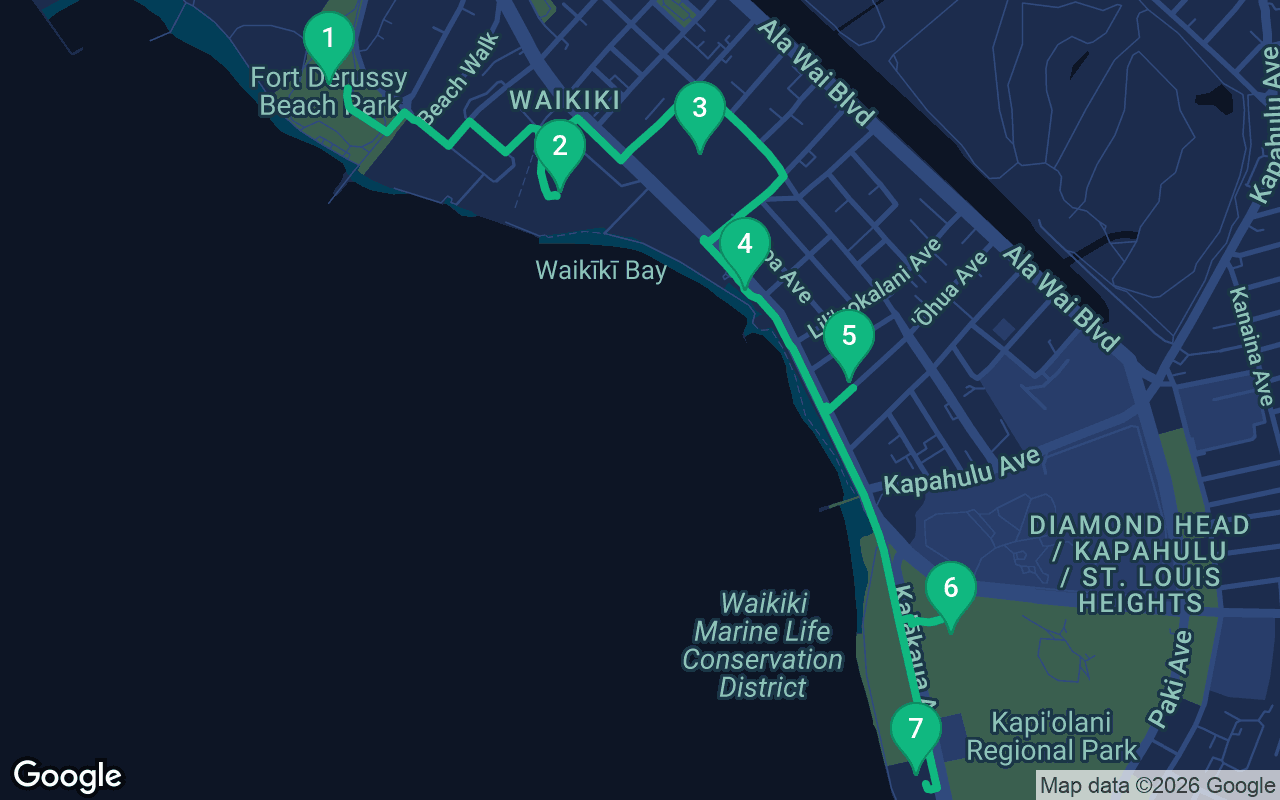
ประมาณ 3.8 กม. ใช้เวลาประมาณ 52 นาทีด้วยจังหวะสบายๆ
ทัวร์นี้มีเสียงบรรยาย
กดเล่นที่ 3 จุดหยุดแรกเพื่อฟังตัวอย่างคำบรรยายความยาว 30 วินาทีได้ที่นี่ ในแอป คุณฟังบทนำและจุดหยุดเหล่านี้แบบเต็มได้ฟรี และทุกจุดหยุดจะมีเสียงแจ้งเตือนเมื่อคุณไปถึง คุณสามารถเป็นเจ้าของทัวร์บรรยายทั้งหมดนี้ได้ในราคาเพียง $9.99 ซึ่งเป็นการซื้อครั้งเดียวและเก็บไว้ใช้ได้ตลอดไป
ใช้งานได้กับ Garmin, Komoot, Strava, OS Maps และแอป GPX ใดก็ตาม
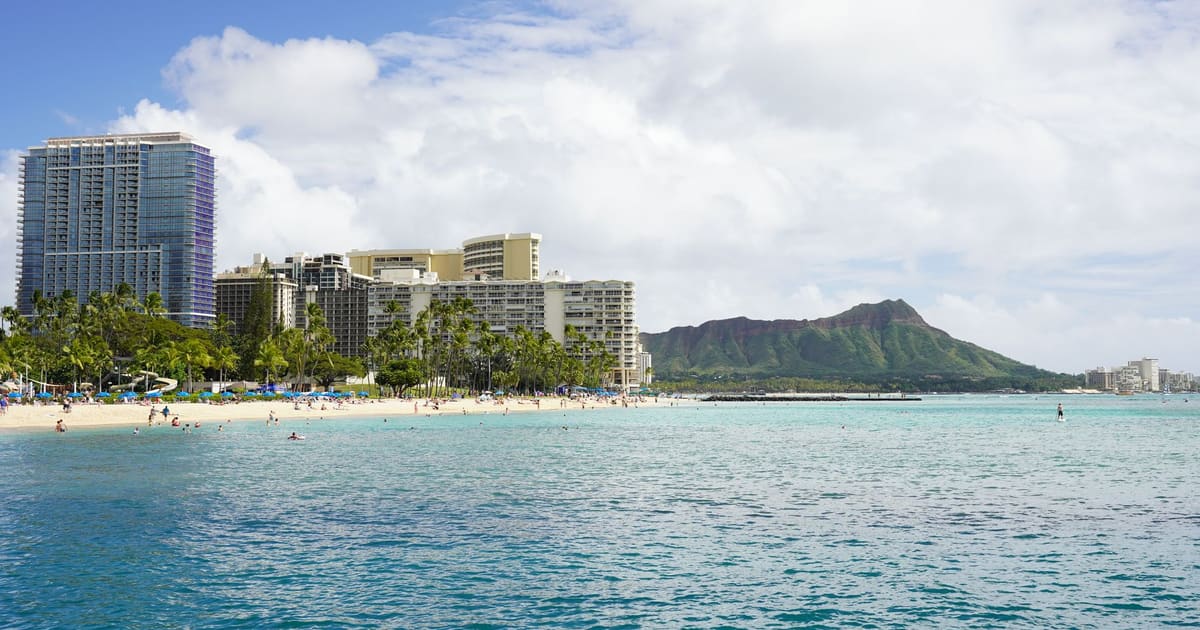
Waikīkī is the most famous stretch of sand in Hawaiʻi, and most people only ever see it from a beach towel. This walk follows the curve of the shore on foot, from the old Army battery at Fort DeRussy past the pink Royal Hawaiian Hotel, the great banyan of the International Market Place and the bronze statue of Duke Kahanamoku, to the lawns of Kapiʻolani Park and the aquarium at the foot of Diamond Head. Along the way you will hear how a district of fishponds, taro patches and royal surf breaks became the beach resort the whole world pictures, and how the Hawaiian watermen who worked this sand sent surfing around the globe. It is about 3.8 kilometers, a little under two and a half miles, flat from start to finish and never far from the water, which makes it one of the easiest self-guided walking tours you will find anywhere.
The walking takes under an hour at a stroll, but plan on two or three, because you will want to stop for a swim, a shave ice or a look inside the museum, the little heritage center at the church and the aquarium. The route runs along the beach path, the sidewalks of Kalākaua Avenue and the lawns of the park, all level and paved or grassy, so sandals are fine. The sun here is strong all year, even when the trade winds make it feel mild, and shade comes only in patches under the palms and banyans, so bring a hat, water and sunscreen. Hawaiʻi restricts some sunscreen chemicals to protect the reef, so a reef-safe kind is the way to go. Early morning is the best time: the air is cooler, the surfers are already out, and the beach is quiet before the crowds arrive. Late afternoon is lovely too, as the light softens and the sun drops toward the ocean. The Army museum, the heritage center and the aquarium each keep their own hours and the aquarium charges admission, so check before you go. One local habit worth learning: people here give directions as mauka, toward the mountains, and makai, toward the sea.
Start on the grass behind the beach, under the palms, and look inland for a squat, gray concrete building with very thick walls. That is Battery Randolph, and it is the reason this wide lawn exists. Long before the Army arrived, this corner of Waikīkī was Kālia, a district of fishponds and taro fields fed by the streams that once ran down from the valleys behind you. The name Waikīkī itself means spouting fresh water. Early in the twentieth century the Army took over the land, filled the ponds, and built a fort to guard Honolulu and Pearl Harbor from the sea. Battery Randolph, finished in 1911, held two huge coastal guns on disappearing carriages, which swung up over the wall to fire and dropped back down behind the concrete to reload. The fort was named for René De Russy, an Army engineer of the 1800s. When the battery was no longer needed and the Army tried to knock it down, the concrete proved so stubborn that it was turned into the U.S. Army Museum of Hawaiʻi instead, and it is worth a look if you have time. In front of you the beach is broad and calm, one of the least crowded in Waikīkī. Head east along the paved path that follows the shore, past the Halekulani and the Sheraton, toward the pink building ahead, about ten minutes.
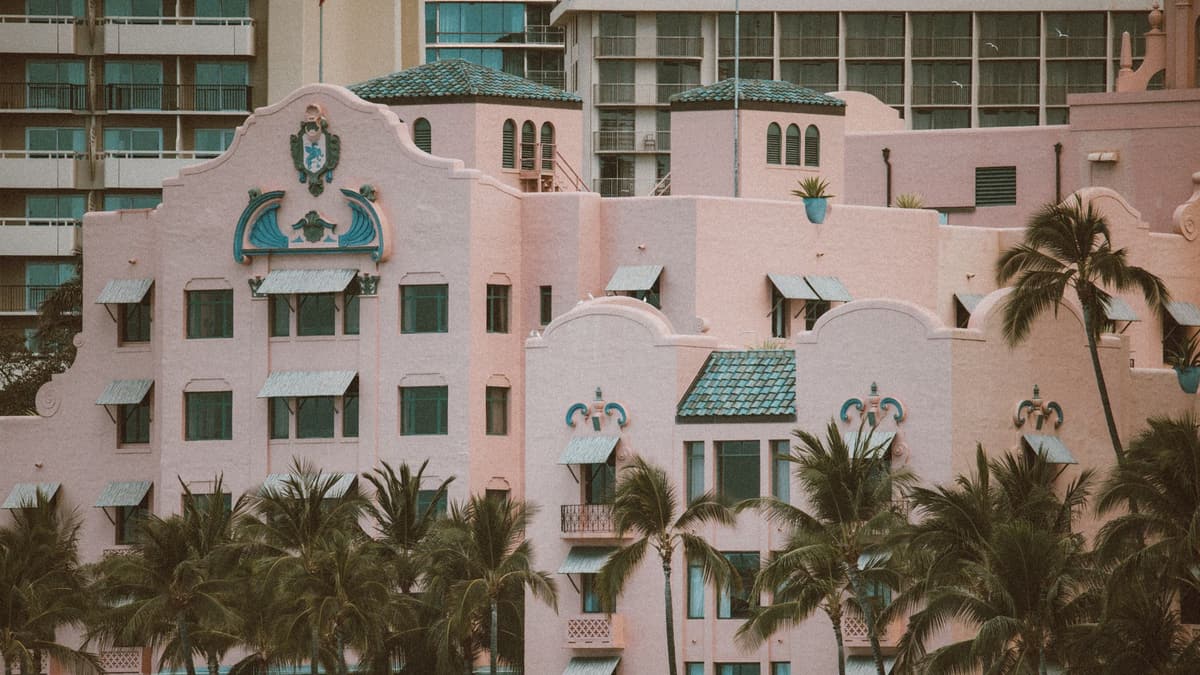 Walk up from the sand and look at the hotel you cannot mistake, a pink Spanish and Moorish confection of arches, towers and stucco, set back in its gardens like a mirage. The Royal Hawaiian opened in 1927, and it soon earned the nickname the Pink Palace of the Pacific. It was built by the Matson Navigation Company, whose ocean liners carried wealthy passengers from California for a stay of weeks or months, and the hotel was meant to give them somewhere grand to land. The ground it stands on carries a much older story. This was Helumoa, a grove of coconut palms where the ruling chiefs of Oʻahu kept their homes, and where Kamehameha I is said to have stayed after he conquered the island in 1795. A few of the palms still grow beside the shopping center just inland, a small echo of the grove. During the Second World War the Navy leased the whole hotel as a rest camp for sailors, many of them submarine crews on leave between patrols, and the beach was strung with barbed wire. After the war, and especially after jet travel arrived, the towers rose all around it, and the pink hotel became the old guard of Waikīkī. Walk up through the gardens and the hotel's driveway to Kalākaua Avenue, turn right toward Diamond Head, and in about five minutes the International Market Place opens on your left.
Step in off the avenue and find the center of the place, a giant banyan tree that spreads its branches over the walkways and drops thick roots down from its limbs to the ground. The tree is older than everything built around it, and the developers have always known it is the real attraction. This land was part of the estate of Queen Emma, wife of Kamehameha IV, and tradition places one of her retreats here. With her husband she founded The Queen's Hospital in 1859, and the land still belongs to the company that helps support it. In 1957 a tiki-themed bazaar opened beneath the banyan, with thatched stalls, torches and a restaurateur's treehouse office perched up in the branches, and for decades it was where visitors came for souvenirs. The bazaar was replaced by the modern shopping center in 2016, but the banyan stayed. This is also a good moment to picture what Waikīkī looked like a century ago, because it was mostly wet. Behind the beach lay marsh, fishponds, rice paddies and duck ponds. In the 1920s the Ala Wai Canal was dug along the inland edge of the district, draining the water into the sea, and the dredged earth filled the ponds. That made dry land to build on, and the resort you see today grew on top of it. Cross Kalākaua Avenue at the crosswalk to the ocean side, pass the white colonial facade of the Moana, Waikīkī's first big hotel, opened in 1901, and walk east along the beachfront for about four minutes to the bronze figure draped in flowers.
สิ่งที่รวมอยู่
ทัวร์ของเราออกแบบมาให้เป็นประสบการณ์ที่ผ่อนคลายและดื่มด่ำ คุณเดินไปพร้อมกับฟังไปเรื่อย ๆ และจะดียิ่งขึ้นเมื่อไปด้วยกัน แอปจะเล่นคำบรรยายแบบซิงค์กัน ให้คุณ คนรัก และเพื่อน ๆ ได้ฟังทุกจุดในเวลาเดียวกัน
Stand in front of the statue, a bronze man with his arms spread wide and a long surfboard standing behind him, almost always hung with fresh lei.
เนื้อหาที่เหลือของจุดนี้อยู่ในทัวร์เสียงฉบับเต็ม
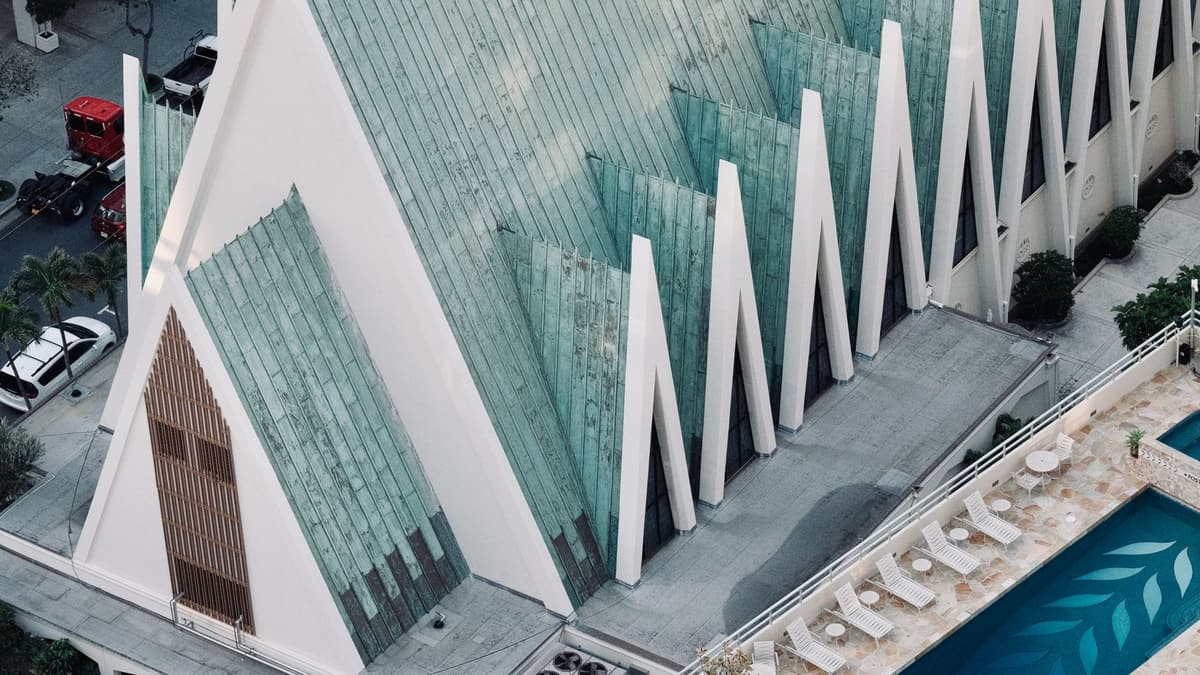
Across the avenue from the beach stands a Catholic church with a modern, steeply pitched front, a surprising sight among the surf shops and hotels.
เนื้อหาที่เหลือของจุดนี้อยู่ในทัวร์เสียงฉบับเต็ม
You are on the edge of Kapiʻolani Park, the great open green at the Diamond Head end of Waikīkī, and the bandstand in front of you is its gathering place.
เนื้อหาที่เหลือของจุดนี้อยู่ในทัวร์เสียงฉบับเต็ม
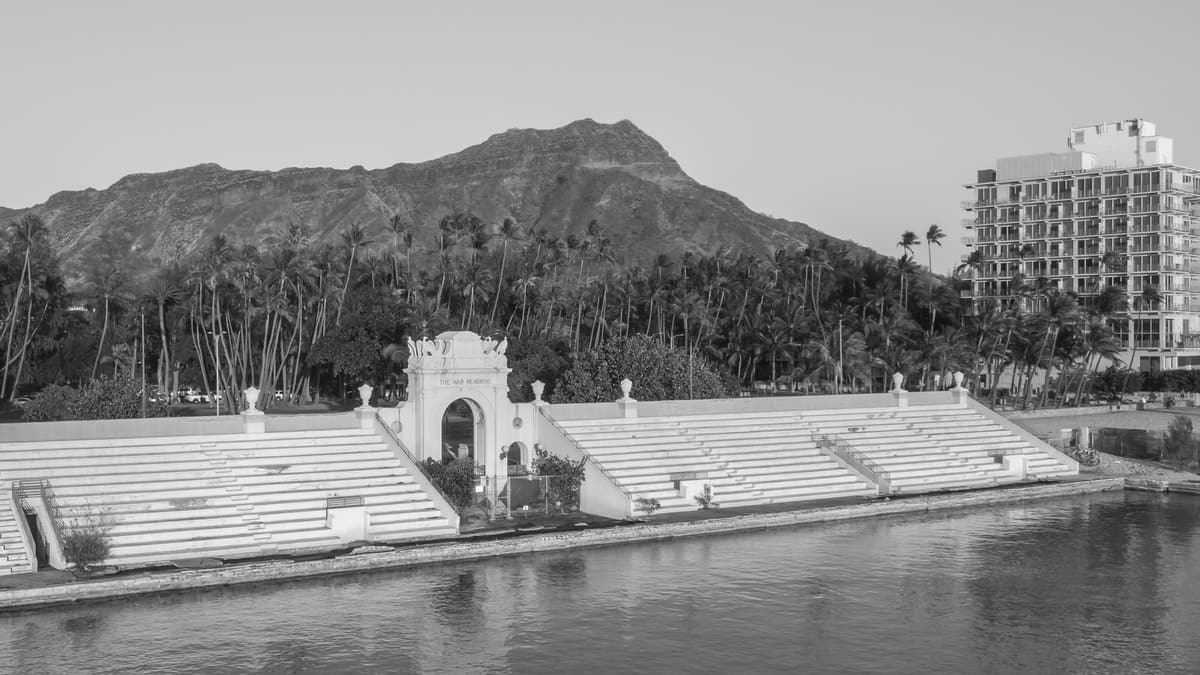
The walk ends at the Waikiki Aquarium, a low building on the shore with the reef right beside it. It opened in 1904, which makes it one of the oldest public aquariums in the United States.
เนื้อหาที่เหลือของจุดนี้อยู่ในทัวร์เสียงฉบับเต็ม
เดินไปกับคนอื่นในทัวร์ที่กำหนดเวลาไว้ครั้งต่อไป
ประมาณ 3.8 กม. ใช้เวลาประมาณ 52 นาทีด้วยจังหวะสบายๆ · 7 จุดแวะ
เพื่อนเดินฟรีOctober 11, 2026 · 9 min read
From the Hollandsche Schouwburg through the old Jewish Quarter, past the Dockworker and the Dam, to the Anne Frank House on the Prinsengracht.
October 11, 2026 · 11 min read
From Van Houten's street by the Vondelpark past Leidseplein, the Rijksmuseum passage and the famous canal bench to the Anne Frank House.

October 11, 2026 · 10 min read
Follow the last days of April and May 1945 from the Anhalter Bahnhof ruin past the Gestapo site and Brandenburg Gate to the Moltke Bridge and the Reichstag.
