
11 de outubro de 2026 · 7 minutos
How to Build a Walking Habit
Why a daily walk is worth it, how long a new habit takes to form, and a simple plan that still works on a bad week.

9 de agosto de 2026 · 5 minutos

For most people, neither one wins, and the better walk is simply the one you'll still be taking in a month. The clock starts to matter once you have a specific goal. If you want lower blood sugar, walk soon after a meal. If you're worried about sleep, an evening walk is fine. If it gets dark early where you live, daylight is safer, and if your days keep running away from you, the morning is easier to protect. Here's what's behind each of those, and a simple way to choose.
This is the clearest finding on timing. A 2023 review in Sports Medicine pooled the trials that compared exercise before and after a meal, and exercise after eating did more to blunt the rise in blood sugar than exercise before it. The sooner it started, the better, and the review's own example is 20 minutes of walking. The evidence is small (eight trials, 116 people in total, with a high risk of bias), so treat it as a good bet rather than a law. What it means in practice is that the meal sets the time, not the clock. For many people the biggest meal is dinner, which makes an after-dinner walk the natural choice, but if breakfast is your big meal, a walk straight after it does the same job. If you have diabetes or take medication that lowers blood sugar, check the timing with your doctor.
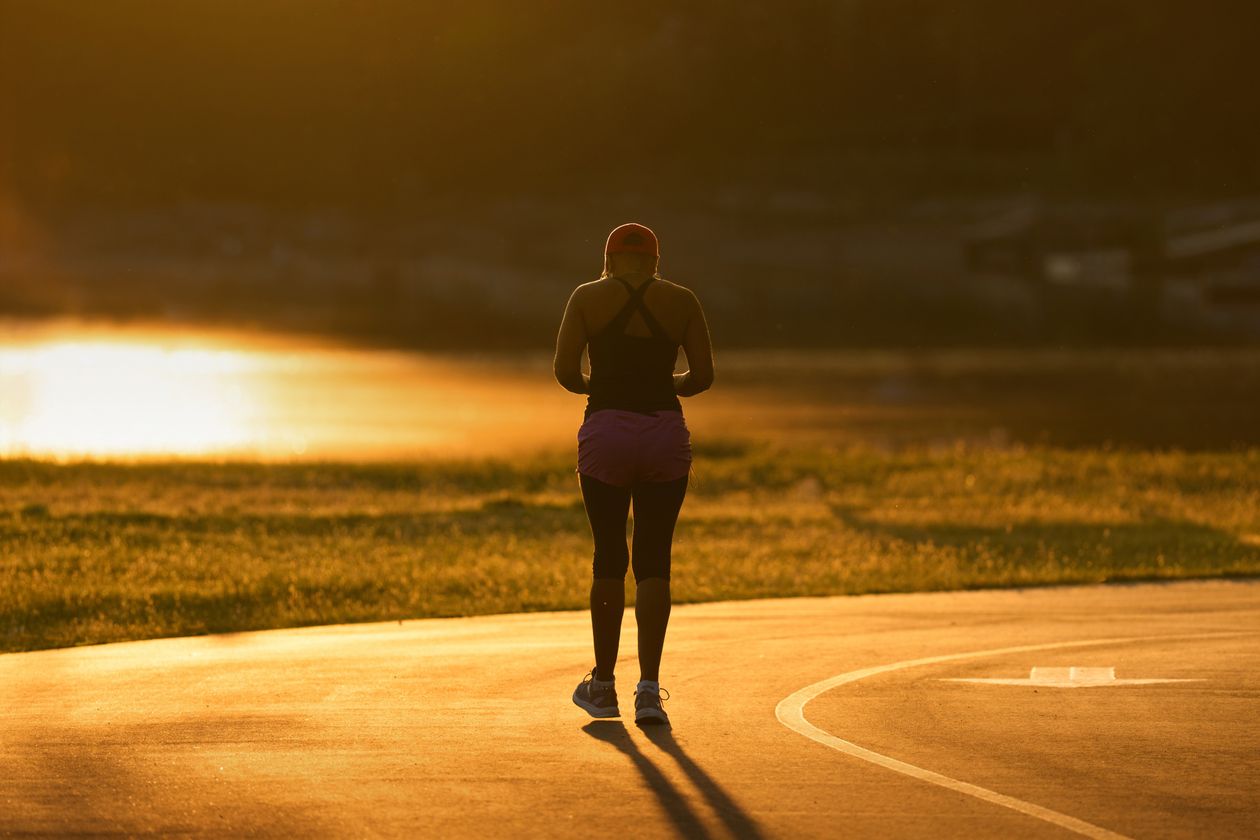 Photo: David Kanigan, Pexels
People often worry that moving in the evening will keep them awake, and the research says it mostly doesn't. A 2019 review of 23 studies found that evening exercise did not harm sleep; if anything, the effect leaned the other way. The one exception was vigorous exercise that ended within an hour of bedtime, which might make it harder to fall asleep and shorten sleep a little. An ordinary walk isn't vigorous, and even a brisk one is moderate, so a walk after dinner is fine. Save hard hill repeats or fast intervals for earlier in the day.
Nobody books a meeting for 6:45. In the morning, the only thing standing between you and your walk is the alarm, while by evening there's a long list: work running late, a call, dinner, the sofa. That's why a morning slot suits people whose days get taken over, and why it suits building a habit, because a walk that happens before anything else can't be cancelled by anything else. The cost is sleep. A morning walk usually means an earlier bedtime, and if you're already short on sleep, don't cut more of it to fit a walk in. Two things make mornings easier:
An evening walk marks the end of the workday. If you work at a screen all day, it's a clean break between work and home, and it gives you time to think the day through before you walk back in your own front door. It's also usually easier to find company, since more people are free after work than before it, which matters if you walk with friends or a group. The risk is the gap between work and the walk: once you're home and sitting down, the walk is in trouble. So if you can, walk straight from work or from the bus stop, before you go inside.
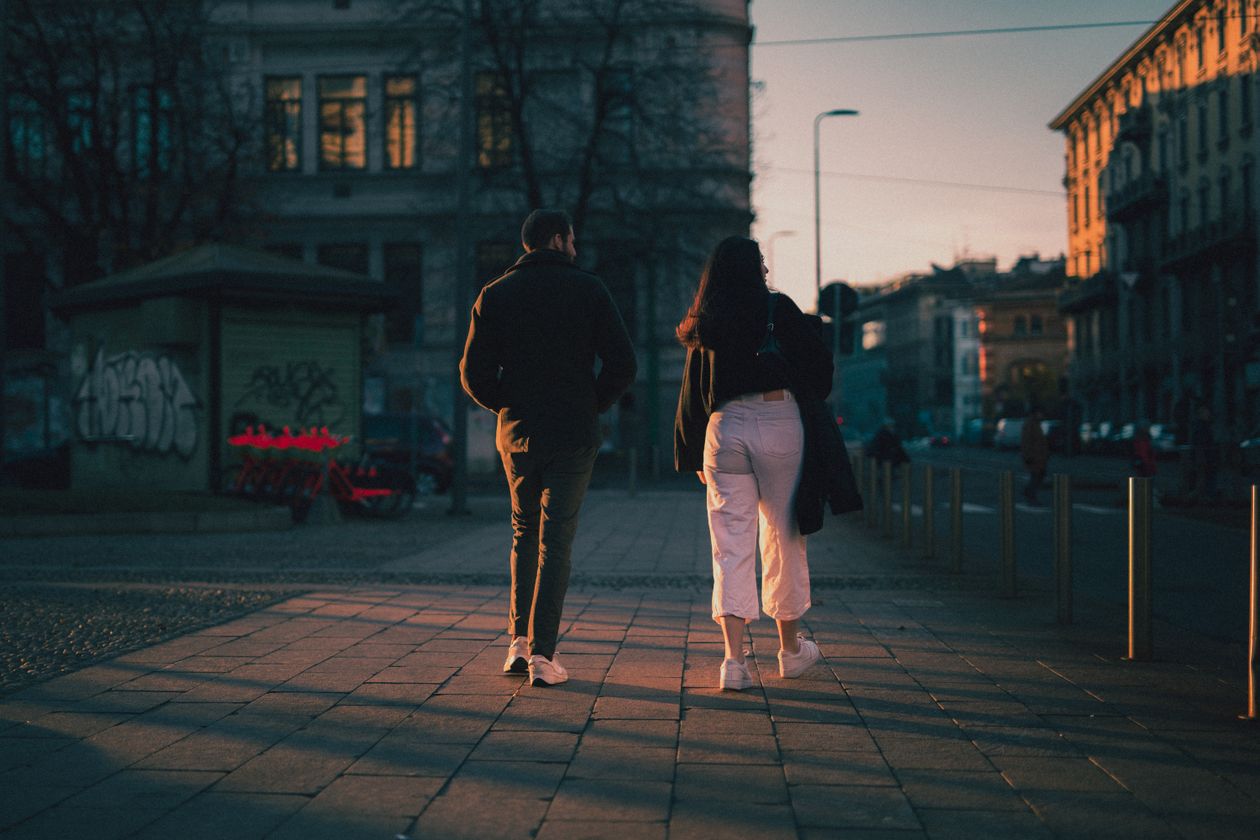 Photo: Valentin Angel Fernandez, Pexels
This part decides more than people expect. In the US in 2024, 76% of pedestrians killed in traffic crashes died in the dark, according to the national road safety agency's figures, against 20% in daylight. In winter, an evening walk in many places means a walk in the dark, and if you can't make yourself easy to see, a lunchtime walk is the safer swap for those months. If the evening is still your time:
In summer, early morning is the coolest part of the day, which makes it the comfortable choice in hot places. In winter, the middle of the day has the most light. Your best time can change twice a year, and that's fine.
| What you want | When to walk |
|---|---|
| Lower blood sugar | Soon after your biggest meal, often dinner |
| A habit that sticks | The slot your day is least likely to take away, often early morning |
| Good sleep | Any time. Keep hard efforts at least an hour before bed |
| Company | When your friends are free, often after work |
| Safety in winter | Daylight, or well-lit streets |
If none of these settles it, try each time for a week and keep the one you did more often. That's the one that fits your life.
Whichever time you pick, it's easier to keep when someone's expecting you. Walk With Me is a free walking app that shows walks near you on a map, so you can join one at the hour that suits you or set up your own. It's free on the App Store and Google Play.
11 de outubro de 2026 · 7 minutos
Why a daily walk is worth it, how long a new habit takes to form, and a simple plan that still works on a bad week.
17 de setembro de 2026 · 8 minutos
Why the afternoon dip happens, how long a 3pm coffee stays with you, and what a ten-minute walk can and can't do instead.
7 de setembro de 2026 · 5 minutos
Why a walk loosens stuck thinking, what the research says about walking, stress and anxiety, and when a walk isn't enough on its own.
