
October 11, 2026 · 9 min read
Amsterdam Anne Frank Walking Tour
From the Hollandsche Schouwburg through the old Jewish Quarter, past the Dockworker and the Dam, to the Anne Frank House on the Prinsengracht.
589

October 9, 2026 · 11 min read

 เพื่อนเดินฟรี
ทุกทัวร์ยังเปิดเป็นการเดินกลุ่มตามเวลาที่กำหนด ซึ่งคุณเข้าร่วมได้ในแอป
ทัวร์เสียงเพิ่มเติมในAthens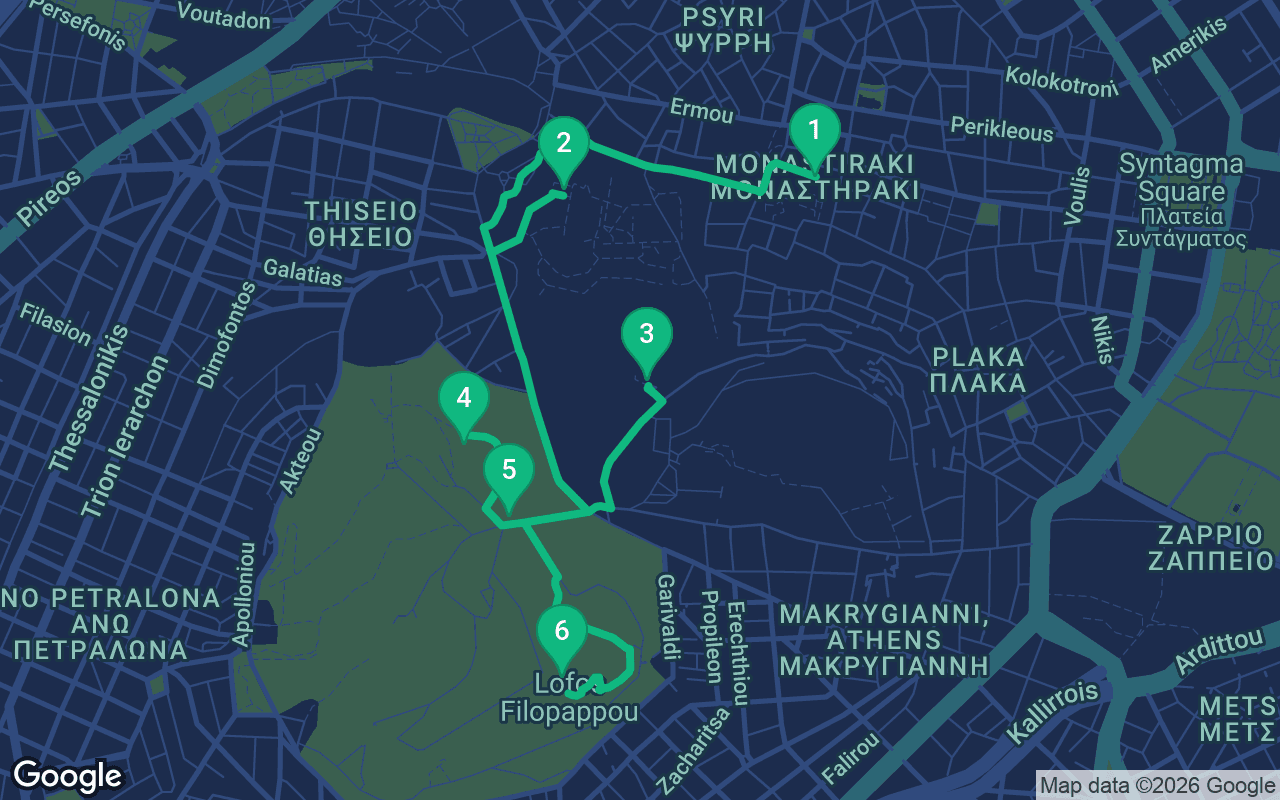
ประมาณ 3.7 กม. ใช้เวลาประมาณ 55 นาทีด้วยจังหวะสบายๆ
ทัวร์นี้มีเสียงบรรยาย
กดเล่นที่ 3 จุดหยุดแรกเพื่อฟังตัวอย่างคำบรรยายความยาว 30 วินาทีได้ที่นี่ ในแอป คุณฟังบทนำและจุดหยุดเหล่านี้แบบเต็มได้ฟรี และทุกจุดหยุดจะมีเสียงแจ้งเตือนเมื่อคุณไปถึง คุณสามารถเป็นเจ้าของทัวร์บรรยายทั้งหมดนี้ได้ในราคาเพียง $9.99 ซึ่งเป็นการซื้อครั้งเดียวและเก็บไว้ใช้ได้ตลอดไป
ใช้งานได้กับ Garmin, Komoot, Strava, OS Maps และแอป GPX ใดก็ตาม
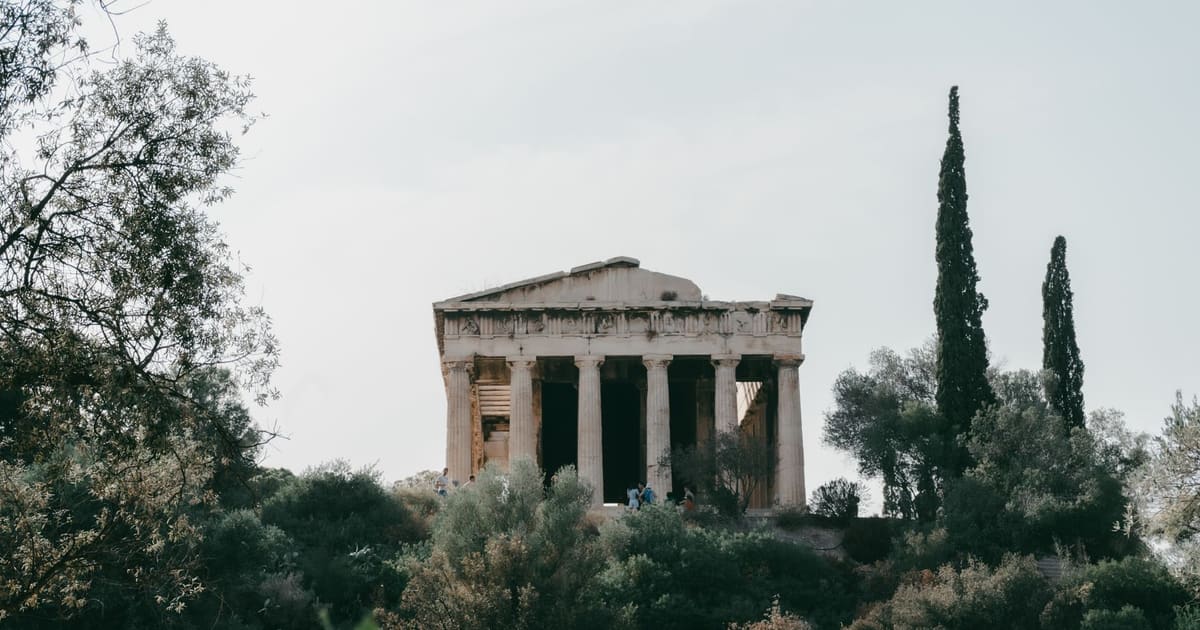
Every visitor climbs the Acropolis, but the Athens that argued, voted and judged lived just below it, in a marketplace and on three rocky hills to the west. This walk follows that city of ideas. It starts in the bustle of Monastiraki Square, crosses the ancient Agora where Socrates buttonholed anyone who would listen, climbs the rock where Saint Paul preached, and stands on the hillside where ordinary citizens voted on war and peace. It finishes among the pines at the Philopappos Monument, with the Parthenon straight ahead of you at eye level. The route is about two and a half kilometers, short in distance and long in history, and one of the most rewarding self-guided walking tours in the city for anyone who has already done the big rock and wants the story behind it.
Allow two and a half to three hours, most of it spent inside the Agora and on the hilltops rather than walking between them. The second half is hilly. Paths on the Pnyx and Philopappos Hill are stone, gravel and old marble, and the bare rock of the Areopagus is polished smooth by centuries of feet, so wear shoes with real grip and take it slowly when it is wet. Athens is hot and bright for much of the year. The Agora has little shade, the Areopagus has none, and only the pine slopes of the last two stops offer real cover, so start early in the morning or plan to finish around sunset, when the light on the Acropolis is at its best. Carry water. The ancient Agora is a ticketed archaeological site with its own opening hours, which change with the season, so check before you go; a combined ticket covering several of the city's ancient sites is often available. The hills themselves are open parkland crossed by footpaths. Bring a hat, and keep a little patience for the steps.
Stand in the middle of Monastiraki Square and turn slowly. The Acropolis rises above the rooftops to the south, but the square has its own layers to show you first. The small church sitting below street level is the Pantanassa, the remains of a little convent that gave the neighborhood its name, Monastiraki, the little monastery. The domed building with the arched porch is a mosque built in 1759 by the Ottoman governor of Athens, Mustafa Agha Tzistarakis. The story goes that he burned a column from the Temple of Olympian Zeus to make lime for it, and when sickness struck the city soon after, Athenians blamed the sacrilege and he lost his post. Its minaret is long gone. Behind the mosque, a row of tall marble columns marks the front of Hadrian's Library, built around AD 132 by the Roman emperor who loved Athens more than any other. It was not a library in the modern sense but a great walled courtyard with a garden and a long pool, ringed by halls where scrolls were kept and read. Leading off the square is Ifestou Street, home of the flea market, named for Hephaestus, god of the forge, because this was the metalworkers' quarter for centuries. Remember that name. Leave the square heading west along Adrianou Street, the lane of cafes running beside the open railway cutting on your left, and follow it to the entrance of the ancient Agora. Cross the site to the temple on the low hill at its far western edge, about ten minutes of walking.
 You are standing on a low rise above the Agora, beside the best preserved temple of ancient Greece. It went up in the middle of the fifth century BC, a Doric temple of marble dedicated to Hephaestus and Athena, the patrons of craftsmen, and the ground around it was full of foundries and potters' workshops. For centuries people called it the Theseion, because its carvings show the deeds of the hero Theseus, and that mistake still names the neighborhood and the metro station below. It survived almost whole because it became a church of Saint George, and the vaulted roof it wears today was added in its Christian years. Now turn and look down over the Agora. This open ground was the heart of the democratic city: shops, law courts, offices and long covered colonnades called stoas, cut through by the Panathenaic Way, the processional road that runs diagonally up toward the Acropolis. The long two-story colonnade on the far side is the Stoa of Attalos, rebuilt in the 1950s and now the site museum. Socrates spent his days down there, questioning whoever he met. Near the southwestern corner, excavators found the remains of a cobbler's workshop full of hobnails and the base of a cup scratched with the name Simon, the shoemaker in whose shop, ancient writers said, Socrates liked to talk. When you are ready, walk back out to Adrianou Street, turn left, and follow the wide pedestrian street of Apostolou Pavlou as it curves south around the Agora and climbs. Where it meets the path toward the Acropolis, turn left; the bare rock rising on your left is the Areopagus. Allow about fifteen minutes.
Climb the metal staircase beside the old cut steps, carefully, and stand on top of the Areopagus, a hump of bare grey rock between the Agora and the Acropolis. Its name means the Hill of Ares. In myth the gods put the war god on trial here, and in Aeschylus's play The Eumenides, Athena herself founds a court on this rock to judge Orestes for killing his mother, then breaks a tied jury with her own vote. The real court that met here was a council of former magistrates, and for centuries it tried cases of murder in the open air. The rock's most famous speech came much later, around AD 50, when the apostle Paul was brought before the Areopagus to explain the new god he was preaching. According to the Book of Acts, he told the Athenians he had noticed one of their altars dedicated to an unknown god, and that this was the god he came to proclaim. Most of his listeners laughed. A few believed, among them a council member named Dionysius and a woman named Damaris. Tradition makes Dionysius the Areopagite the first bishop of Athens, and he is now the city's patron saint, and the street you just walked is named for Paul. Look for the bronze plaque at the foot of the rock, where his speech is set out in Greek. From the top you have one of the best views of the Agora and the Temple of Hephaestus. Come back down the staircase, walk west to the junction of the pedestrian streets, and cross into the pines on the hill opposite. Take the stone-paved path in, pass a small white chapel you will return to, and bear right uphill to the Pnyx. About ten minutes.
สิ่งที่รวมอยู่
ทัวร์ของเราออกแบบมาให้เป็นประสบการณ์ที่ผ่อนคลายและดื่มด่ำ คุณเดินไปพร้อมกับฟังไปเรื่อย ๆ และจะดียิ่งขึ้นเมื่อไปด้วยกัน แอปจะเล่นคำบรรยายแบบซิงค์กัน ให้คุณ คนรัก และเพื่อน ๆ ได้ฟังทุกจุดในเวลาเดียวกัน
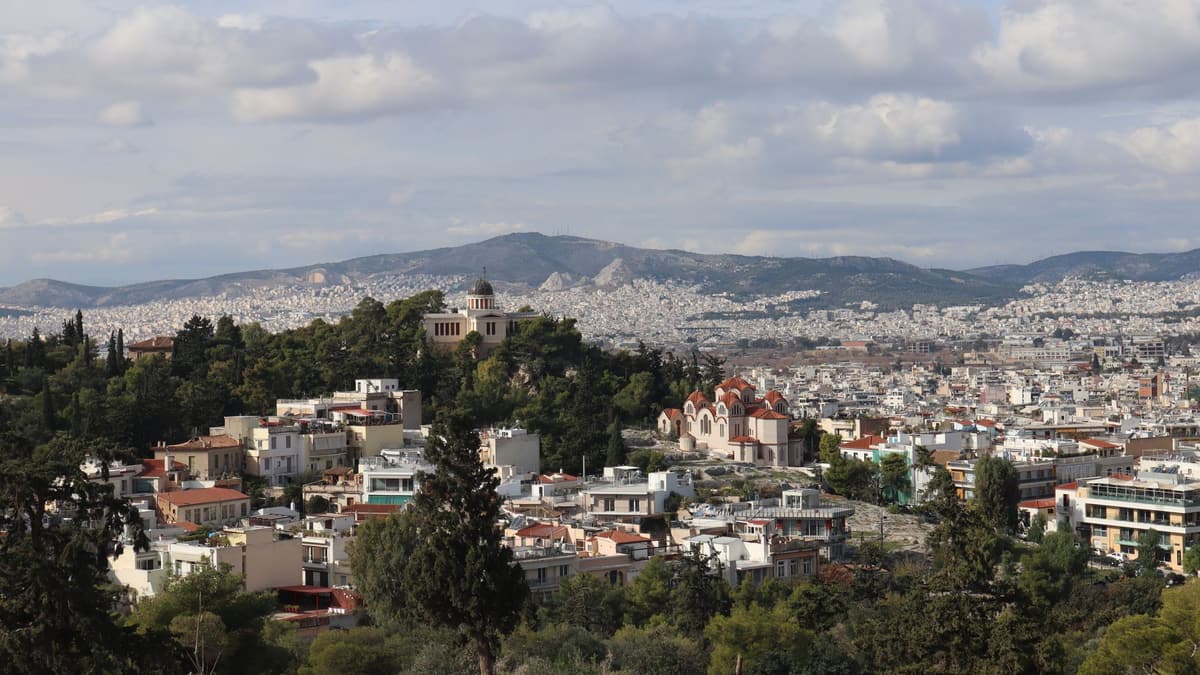
You are on a broad, quiet terrace on the hillside, with a massive curved retaining wall of huge stone blocks below and, cut into the rock face, a stepped stone platform.
เนื้อหาที่เหลือของจุดนี้อยู่ในทัวร์เสียงฉบับเต็ม
This small stone chapel, with its tiled roof, little bell and courtyard under the pines, is dedicated to Saint Demetrios, and its nickname comes from a story the neighborhood still tells.
เนื้อหาที่เหลือของจุดนี้อยู่ในทัวร์เสียงฉบับเต็ม
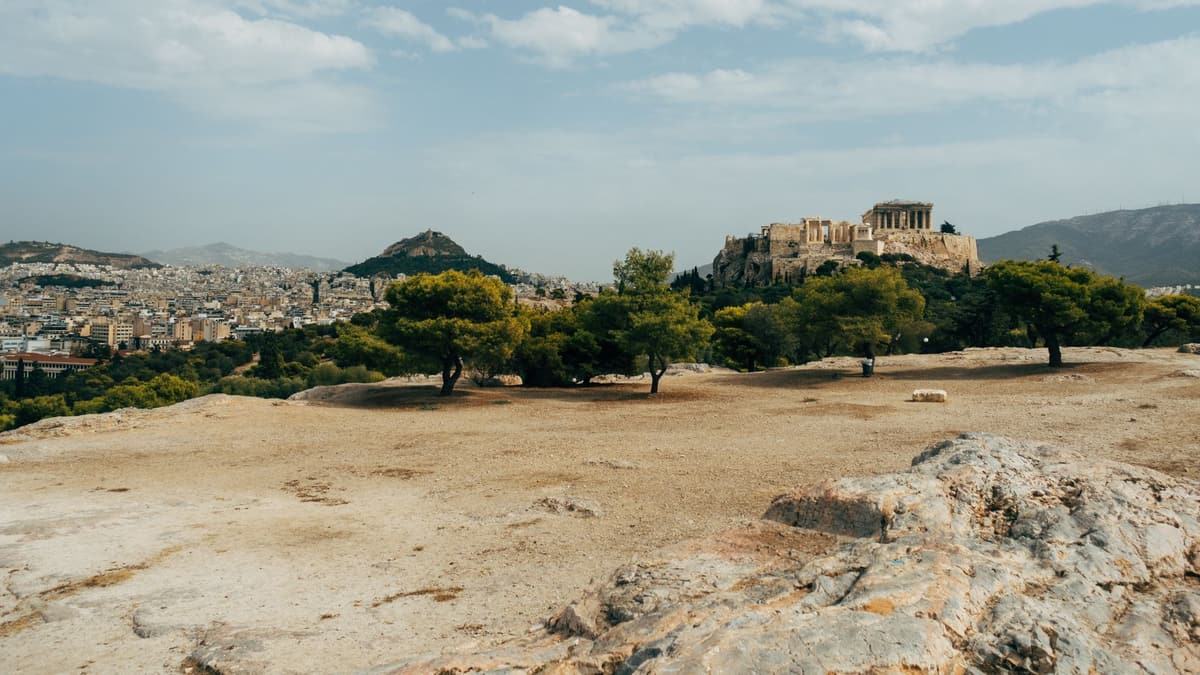
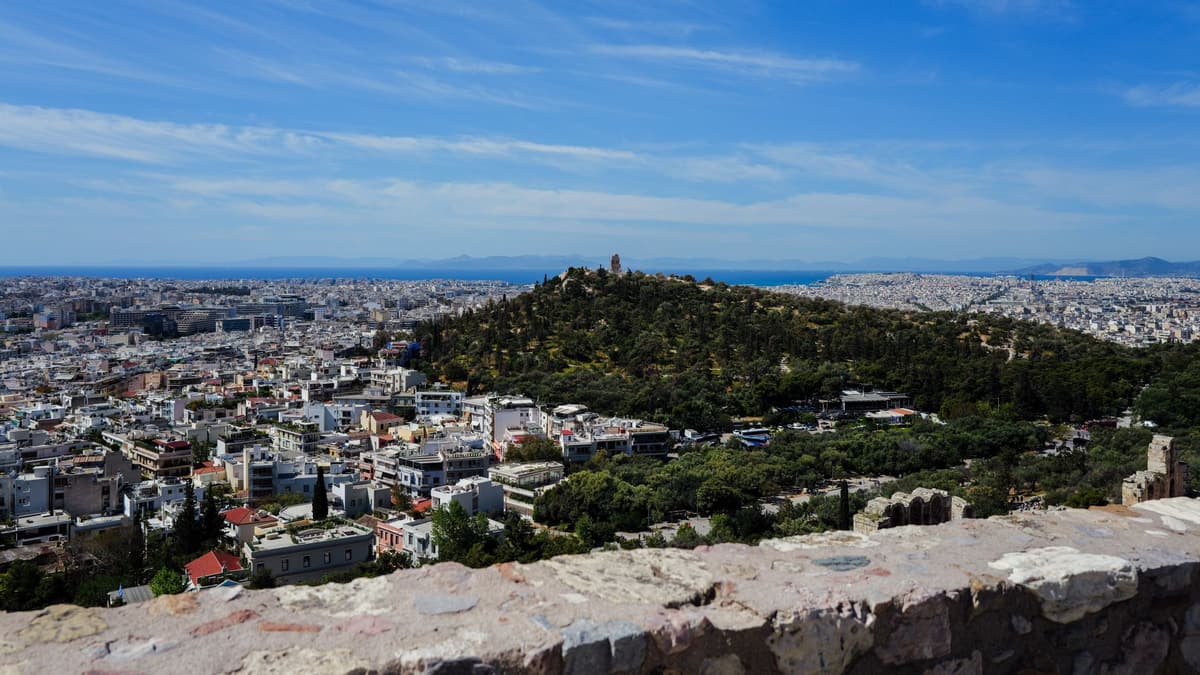
You have reached the top of the Hill of the Muses, named after Musaeus, a legendary poet said to have been buried here, and the marble monument in front of you is the tomb of a prince without a kingdom.
เนื้อหาที่เหลือของจุดนี้อยู่ในทัวร์เสียงฉบับเต็ม
เดินไปกับคนอื่นในทัวร์ที่กำหนดเวลาไว้ครั้งต่อไป
ประมาณ 3.7 กม. ใช้เวลาประมาณ 55 นาทีด้วยจังหวะสบายๆ · 6 จุดแวะ
เพื่อนเดินฟรีOctober 11, 2026 · 9 min read
From the Hollandsche Schouwburg through the old Jewish Quarter, past the Dockworker and the Dam, to the Anne Frank House on the Prinsengracht.
October 11, 2026 · 11 min read
From Van Houten's street by the Vondelpark past Leidseplein, the Rijksmuseum passage and the famous canal bench to the Anne Frank House.

October 11, 2026 · 10 min read
Follow the last days of April and May 1945 from the Anhalter Bahnhof ruin past the Gestapo site and Brandenburg Gate to the Moltke Bridge and the Reichstag.
