




 $6.99City Highlights
Charleston Audio Walking Tours
Self-guided, narrated walks through Charleston. Buy a tour once, download it, and hear the story at each stop while you walk at your own pace.
Tours from $6.99
Friends walk free. One purchase covers everyone on your walk. Start the tour, invite your friends to join, and it plays on every phone in your group.
5.0 on Google Play
Charleston audio tours
Each tour is a mapped route with narration at every stop. Buy it once and it is yours to keep, no subscription.
$6.99City Highlights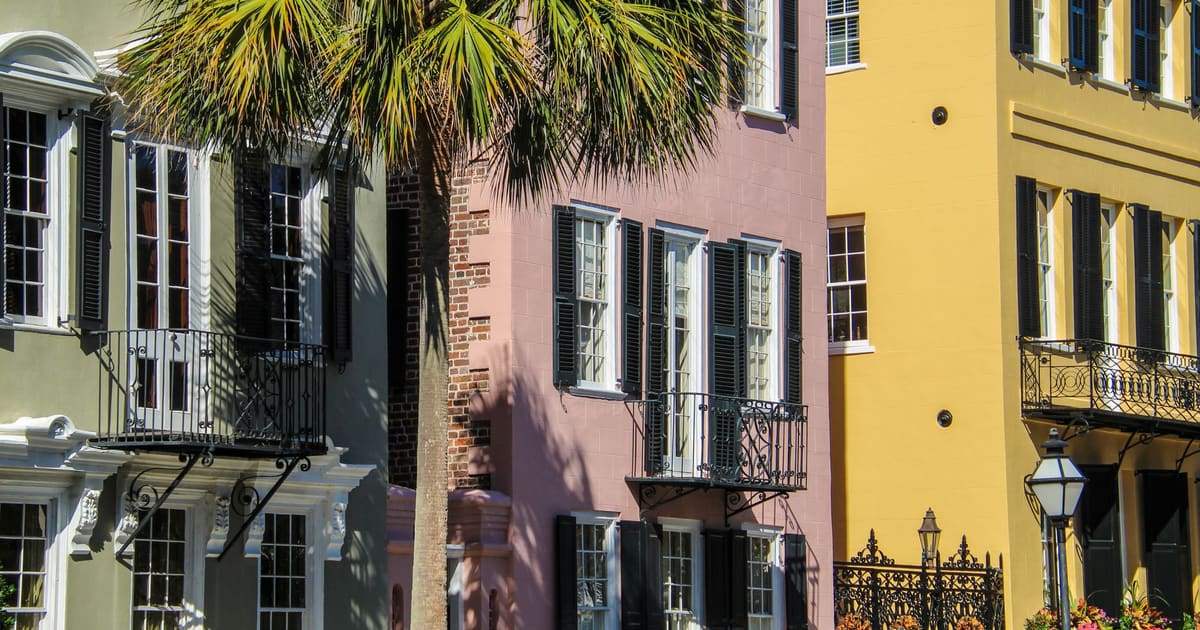 $7.99City Highlights
What to expect on a Charleston audio walking tour
A Charleston audio walk moves between the harbor and the history behind it, from the pastel fronts of Rainbow Row and the oaks of White Point Garden to the City Market, Mother Emanuel and the house where enslaved people once lived and worked.
The Battery Walk starts at the Pineapple Fountain in Waterfront Park, passes the colonial Exchange and the pastel houses of Rainbow Row, and follows the seawall promenade of the Battery to the oaks of White Point Garden, with Fort Sumter visible out in the harbor the whole way. It finishes up Meeting Street at St Michael's Church, at the crossing known as the Four Corners of Law. It covers 2.1 kilometers, about 29 minutes, over 7 stops, entirely flat.
The City Market Walk starts at the Old Slave Mart, the last known building in South Carolina where enslaved people were auctioned, then heads through the long sheds of the City Market, past one of the oldest synagogues in the country and the church known as Mother Emanuel, across Marion Square, and finishes at the Aiken-Rhett House, preserved rather than restored. It runs 2.6 kilometers, about 37 minutes, over 7 stops, mostly in a straight line up Meeting Street.
The two walks sit on either side of Broad Street and together cover both how Charleston grew rich and who paid the price for it. Morning or late afternoon suits both best, since the Battery's seawall has no shade and Meeting Street's is patchy, and either walk leaves plenty of time to sit for a while in White Point Garden or Marion Square along the way.
Where to walk in Charleston
A few of the stops you will pass, and why they are worth slowing down for.
White Point Garden
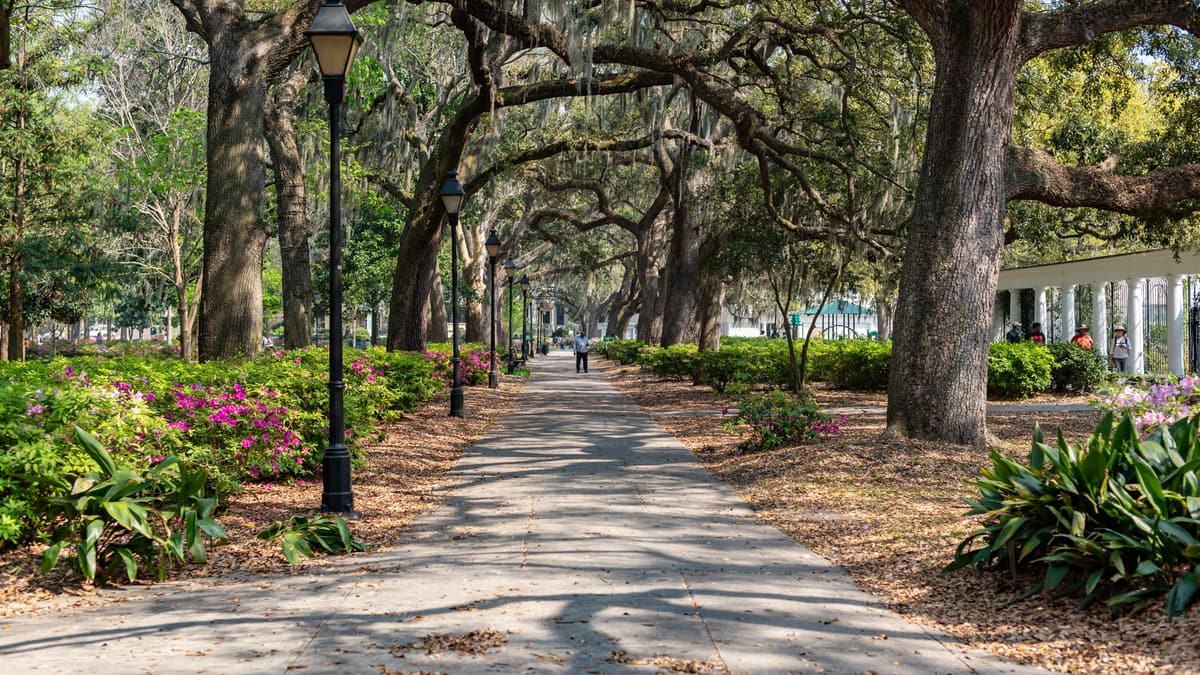
Live oaks draped in Spanish moss shade the paths of White Point Garden, at the very tip of the Charleston peninsula where locals like to say the Ashley and Cooper rivers meet to form the Atlantic. The point took its name from the white oyster shells once heaped along its shore, and in 1718 it had a grim use, when the pirate Stede Bonnet and dozens of his crew were hanged here after the colony struck back at the blockade Blackbeard had thrown over the harbor that same year. Today it is one of the peninsula's favorite spots to sit, with cannons and monuments scattered among the oaks and Fort Sumter visible out on the water, a low shape on the horizon where the Civil War began.

Charleston Harbor
From the Battery's seawall and the park at Waterfront Park, Charleston's harbor opens out in front of you, with the white cables of the Arthur Ravenel Jr. Bridge arching over the water to the north and Fort Sumter sitting low near the harbor mouth about three miles off. This stretch of water has always been the reason the city is here, the harbor that drew English settlers in 1680 and the ships that made its merchant families rich. On the evening of April 12, 1861, crowds gathered on the piazzas and rooftops along this shore to watch Confederate batteries open fire on the Union garrison at the fort, the opening shots of the Civil War, and the view out to that same low island still draws people to the water's edge today.
The Four Corners of Law
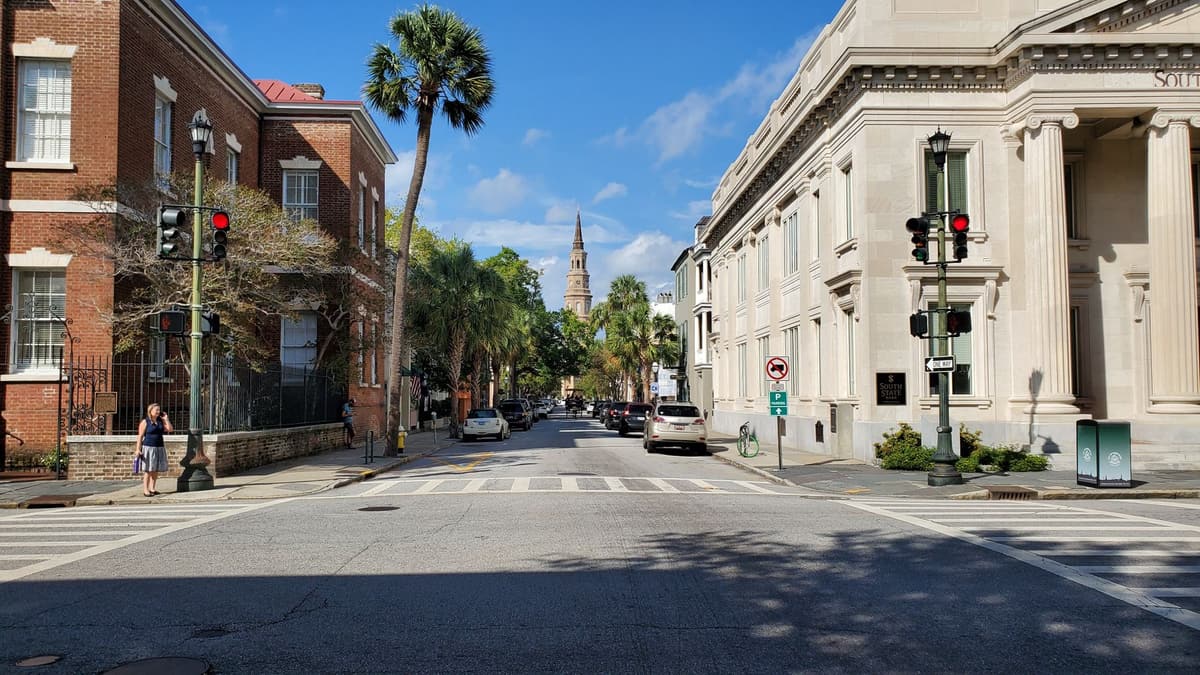
This crossing at Meeting and Broad Streets is known as the Four Corners of Law, and turning in a slow circle here shows you why: St Michael's Church stands for the law of God, City Hall for the law of the town, the county courthouse for the law of the state, and the federal courthouse and post office for the law of the nation. St Michael's steeple, visible down the street, has guided ships into the harbor for more than two and a half centuries and has been melted down and recast in London more than once after wars and fires. The intersection still carries real civic weight today, with Charleston's city and county government concentrated on these same four corners.
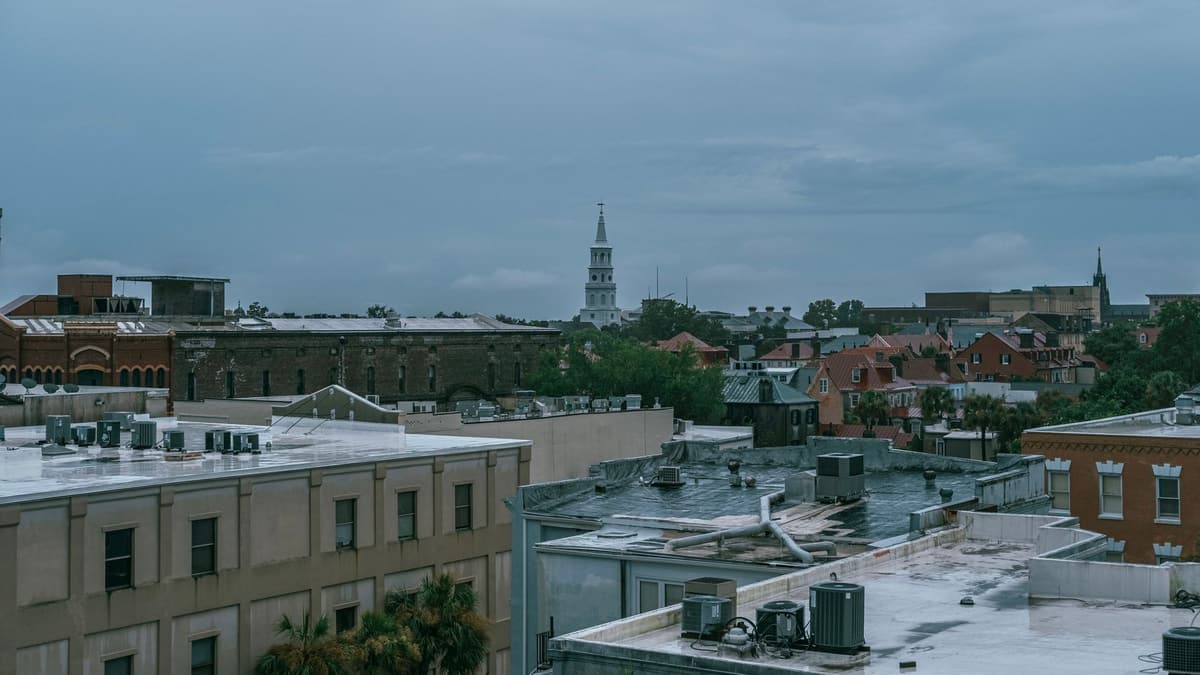
Charleston's Church Steeples
Church spires rise above the rooftops all across the old city, landmarks that have guided both sailors and walkers through the peninsula's streets for generations. Charleston earned the nickname the Holy City partly from this skyline, a legacy of the religious freedom the colony's founding constitutions promised, which drew congregations of many different faiths to build here side by side. Seen from a rooftop or a distant street, the steeples work like a map, each one marking a different church and a different chapter of the city's story, from the earliest Anglican parish churches to the AME and Jewish congregations that trace their own histories through these same few blocks.
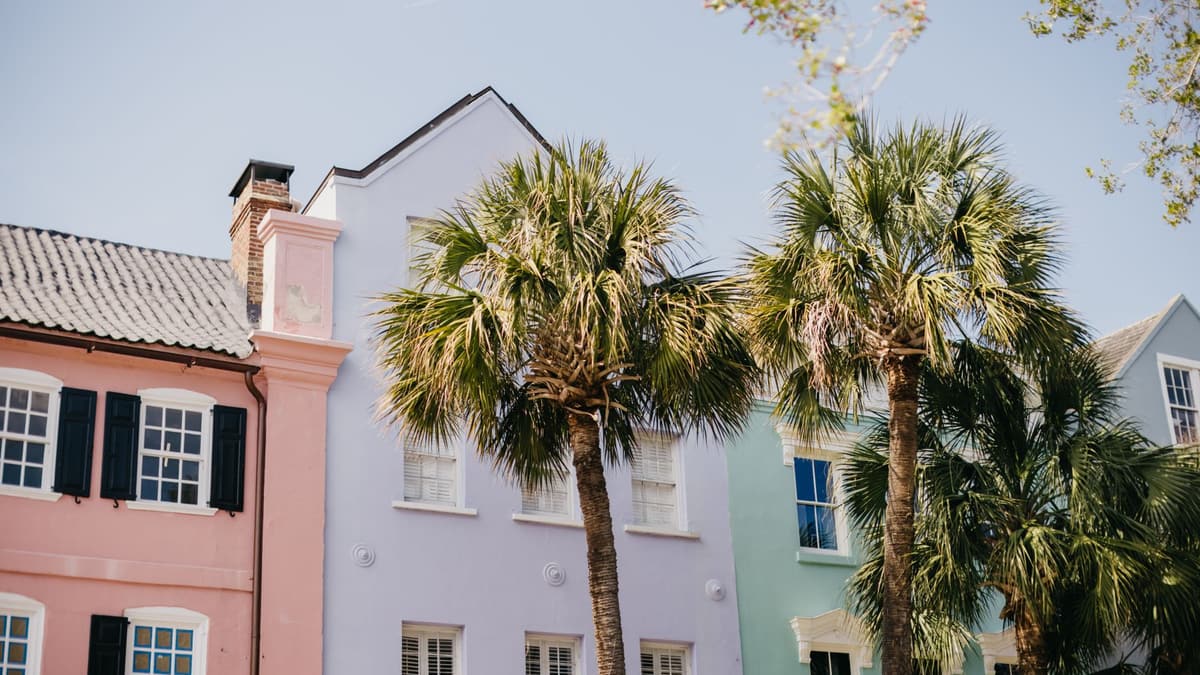
Charleston's Single Houses
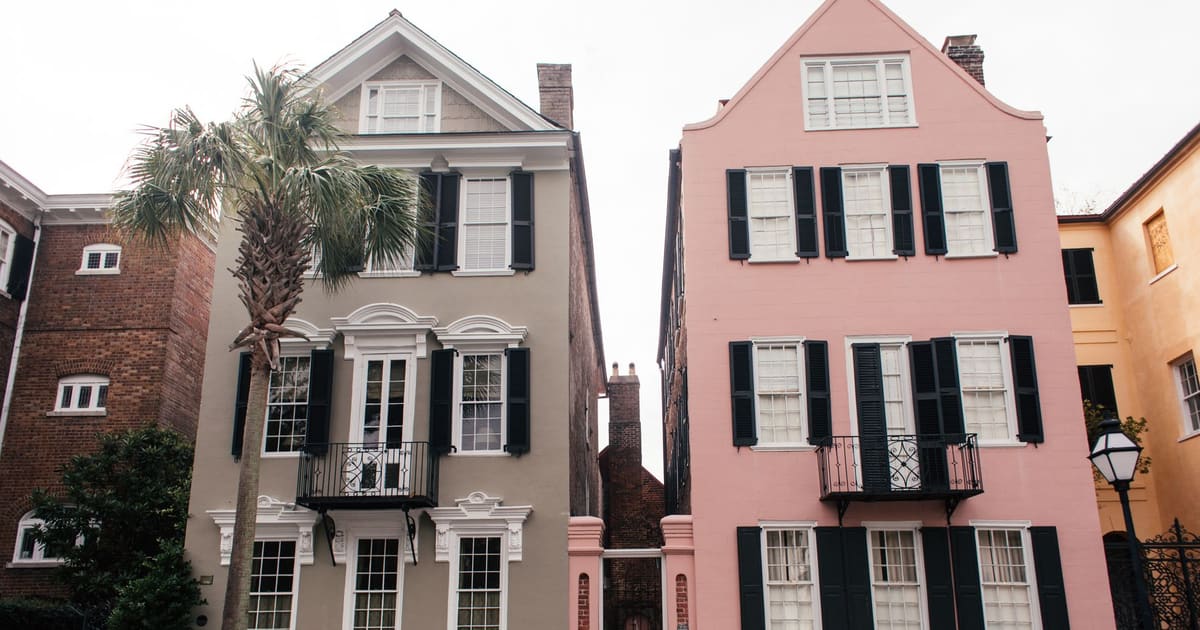
Houses like these, narrow end to the street and one room wide, are the classic Charleston single house, built with long side porches called piazzas running the depth of the lot to catch the sea breeze. The front door usually opens onto the piazza rather than straight into the house, a small detail that confuses visitors looking for a doorbell. Painted in soft pinks, lavenders and greens and fronted by palmetto trees, rows of them line the peninsula's older streets, each one angled to the prevailing wind rather than to the road. Walking past them slowly, rather than driving, is the only way to notice how many small variations hide inside what looks at first like one repeating pattern.
Get the Audio Tour in 3 Simple Steps
All in the free Walk With Me app, and the first stops of every tour are free to try.
Tap the Gold Headphones and Pick a Tour


01
Walk It Solo or Invite Someone


02
Press Play and Walk


03
Handcrafted for Your Time in the City
These tours aren't a checklist of sights. They're made to be walked slowly, headphones on, eyes on the city.
Meditative and Immersive
Each story is told where it happened. The app chimes when you reach a stop, one tap starts the story, and the stretch between stops is yours to take in at your own pace.
Handcrafted With Care
We choose every route and every stop ourselves and shape each story with care, so the time you have in the city goes to the places most worth seeing.
Better With Someone
Every walk is better with someone beside you, so if you can bring a friend, we really hope you do. That's why one purchase covers everyone you invite: they join your tour free.