




 $6.99City Highlights
Munich Audio Walking Tours
Self-guided, narrated walks through Munich. Buy a tour once, download it, and hear the story at each stop while you walk at your own pace.
Tours from $6.99
Friends walk free. One purchase covers everyone on your walk. Start the tour, invite your friends to join, and it plays on every phone in your group.
5.0 on Google Play
Munich audio tours
Each tour is a mapped route with narration at every stop. Buy it once and it is yours to keep, no subscription.
$6.99City Highlights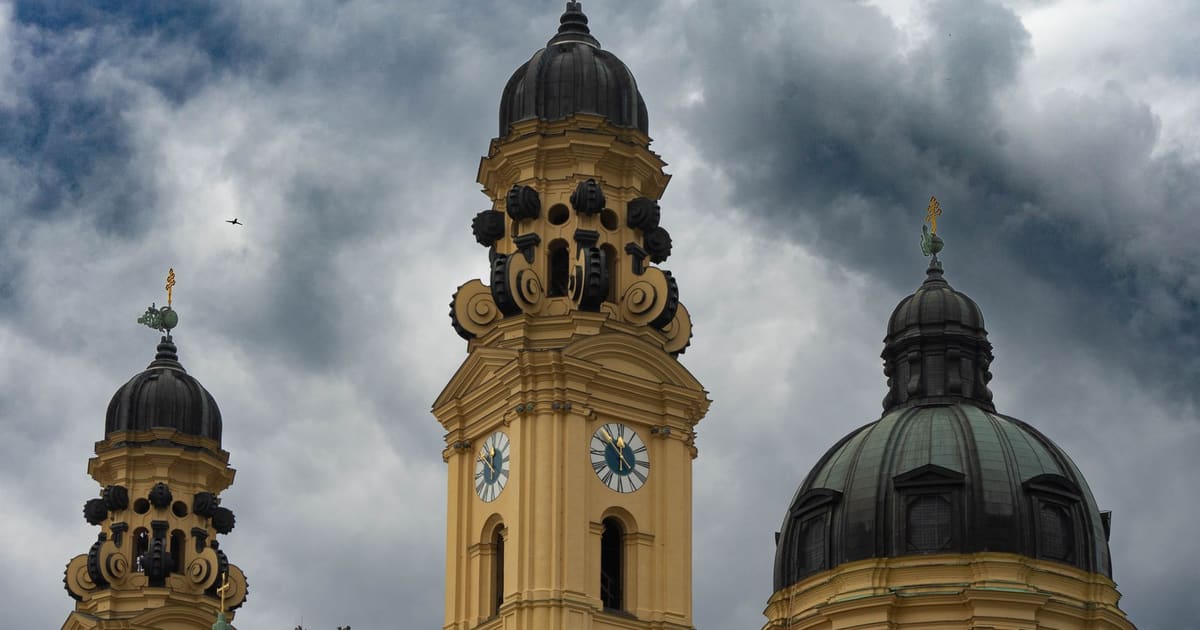 $8.99City Highlights
What to expect on a Munich audio walking tour
Munich's old town is small enough to cross on foot in twenty minutes, and an audio walk here moves from a dazzling hidden Baroque church and the onion domes of the Frauenkirche to a royal palace garden, river surfers on a city stream, and a beer garden under a Chinese pagoda.
The Munich Altstadt Walk enters the old town through Sendlinger Tor, one of its medieval gates, then passes the tiny, dazzling Asam Church and St. Michael's, the largest Renaissance church north of the Alps, before reaching the twin onion domes of the Frauenkirche. From Marienplatz it climbs toward St. Peter's, the oldest parish church in the city, with the best view in town from its tower, then finishes among the stalls of the Viktualienmarkt food market at the Hofbräuhaus. It covers 1.9 kilometers, about 26 minutes of walking, across 6 stops.
The Royal Quarter Walk starts at the opera house facing the vast Residenz palace, then crosses Odeonsplatz, where the golden-yellow Theatine Church stands beside the Feldherrnhalle loggia. It threads through the formal Hofgarten and pauses at the Eisbach Wave, where surfers ride a standing wave in the middle of the city, before climbing to the Monopteros, a Greek temple on an artificial hill with the best sunset view of the skyline. It covers 3.3 kilometers, about 44 minutes of walking, across 6 stops.
The walk ends at the Chinese Tower, a wooden pagoda standing over Munich's second-largest beer garden, in the vast English Garden that spreads out around the Monopteros. Both routes are flat and mostly pedestrianized, so the only real effort is the short climb to the temple and saving your appetite for the beer halls at the end of either one.
Where to walk in Munich
A few of the stops you will pass, and why they are worth slowing down for.
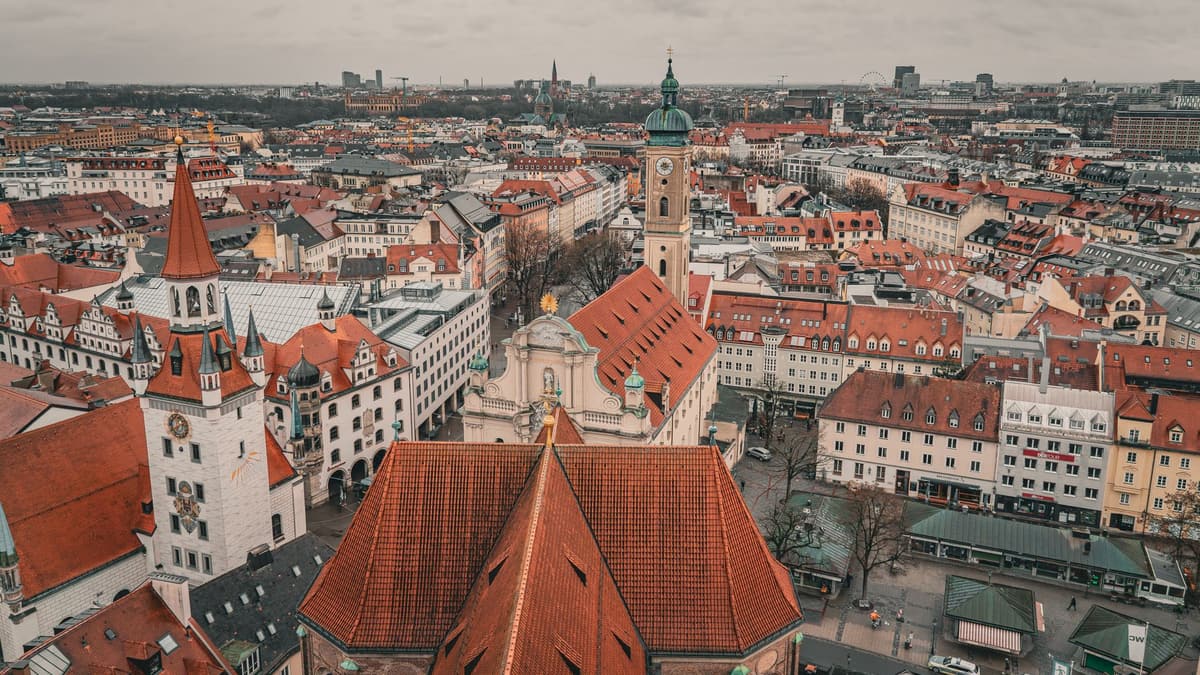
View from St. Peter's Church
Climbing St. Peter's tower, Alter Peter to locals, rewards you with a sea of red and orange roofs stretching toward the edge of the city, with the white stepped gable of the Altes Rathaus, the old town hall, rising on one side and the green dome of the Heiliggeistkirche just beyond it. Monks are said to have settled on this low rise before Munich existed, and the city's name and the little monk on its coat of arms both come from them. The climb is about three hundred steps, narrow and steep in places with no elevator, but on a clear day you can see all the way to the Alps.
Theatine Church
The Theatine Church's warm yellow facade and green dome, seen here against a dramatic sky, make it look as if it had been carried to Munich straight from Rome. Elector Ferdinand Maria and his wife, Henriette Adelaide of Savoy, built it in thanks for the birth of their son and heir in 1662, and she brought in Italian architects and an Italian order of priests who gave the church its name. Step inside and the mood changes completely, brilliant white stucco swirling with angels under a light-filled dome. Beside it stands the Feldherrnhalle, a loggia built to honor Bavaria's generals and the site of a failed coup in 1923.
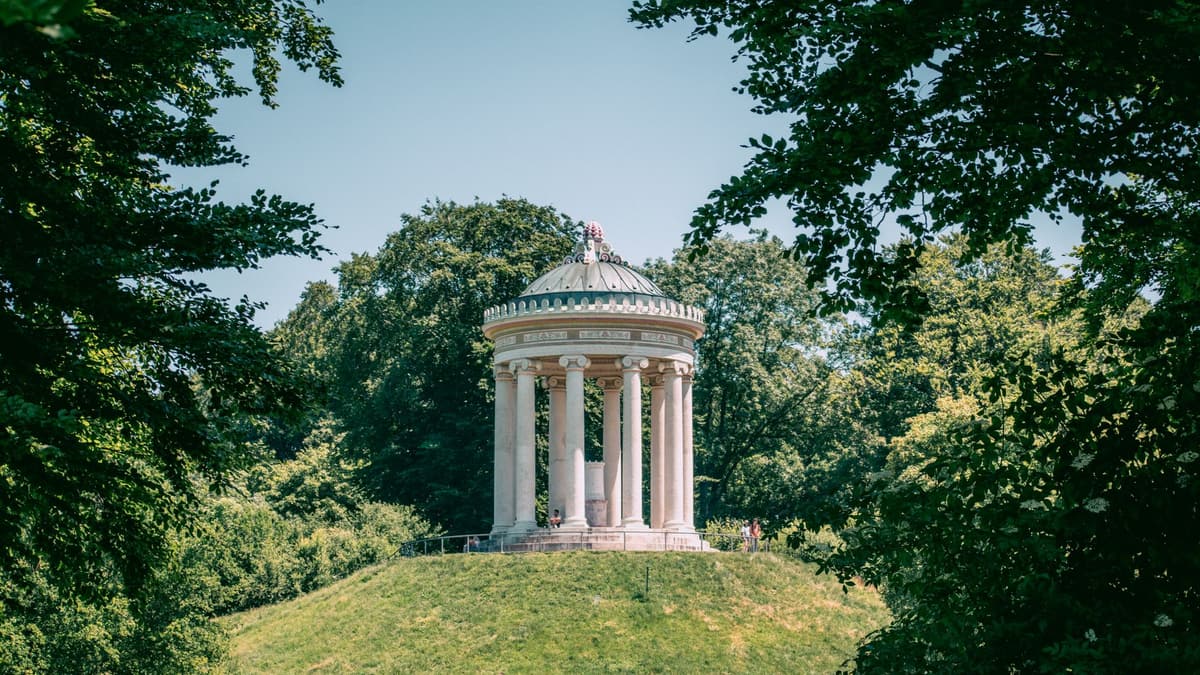
Monopteros
The Monopteros is a small round Greek temple on an artificial hill in the middle of the English Garden, built in the 1830s for King Ludwig I by the same architect who shaped the Residenz facade at the start of the royal quarter walk. Climb up to it for one of the best places in Munich to watch the sunset, with the old town skyline, including the Frauenkirche's domes and the Theatine Church's towers, lining up in front of you. The hill is entirely artificial, heaped up just to give the temple its stage, and all around it spreads one of the largest city parks in the world, bigger even than Central Park in New York.
Chinese Tower
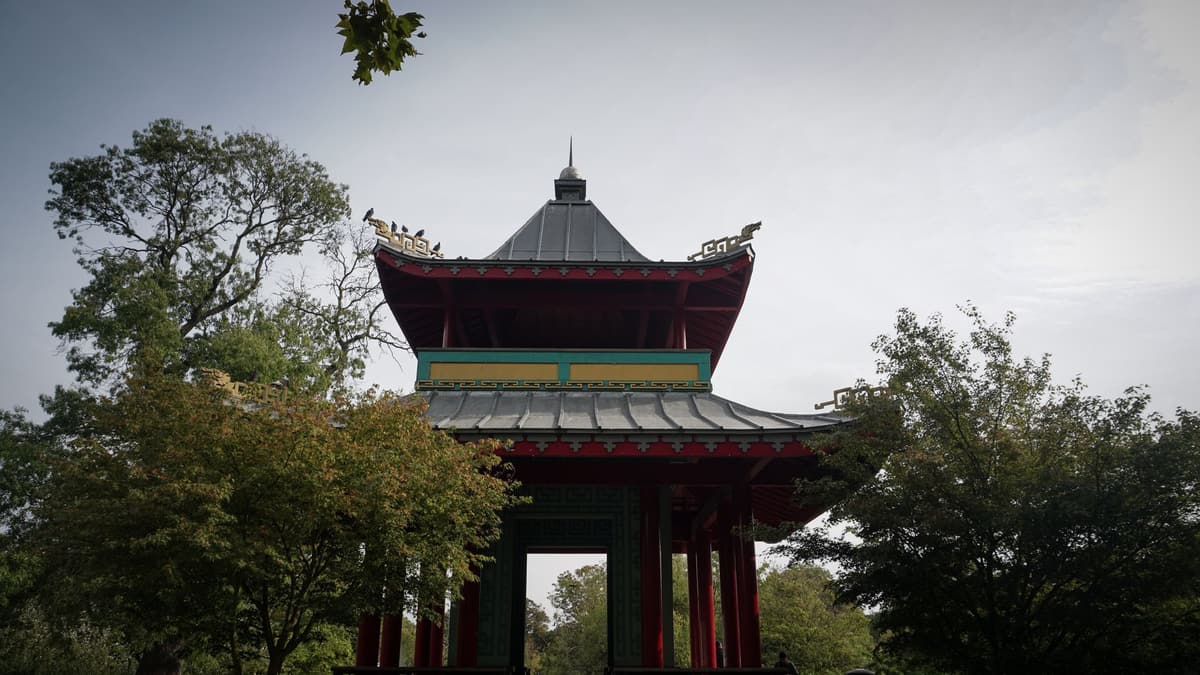
The Chinese Tower is a five-tiered wooden pagoda standing in the middle of a huge beer garden, built in 1789 and 1790 in the first years of the English Garden, when all things Chinese were the height of European fashion. The original burned in a bombing raid in 1944 and was rebuilt to the same design after the war. On many days a brass band plays from its first level, the sound floating over long tables under the chestnut trees, and the crowd is democratic, students, families and pensioners sharing the same benches. Bring your own picnic to the plain tables if you like, since the cloth-covered ones are for ordering from the kitchen.
Frauenkirche
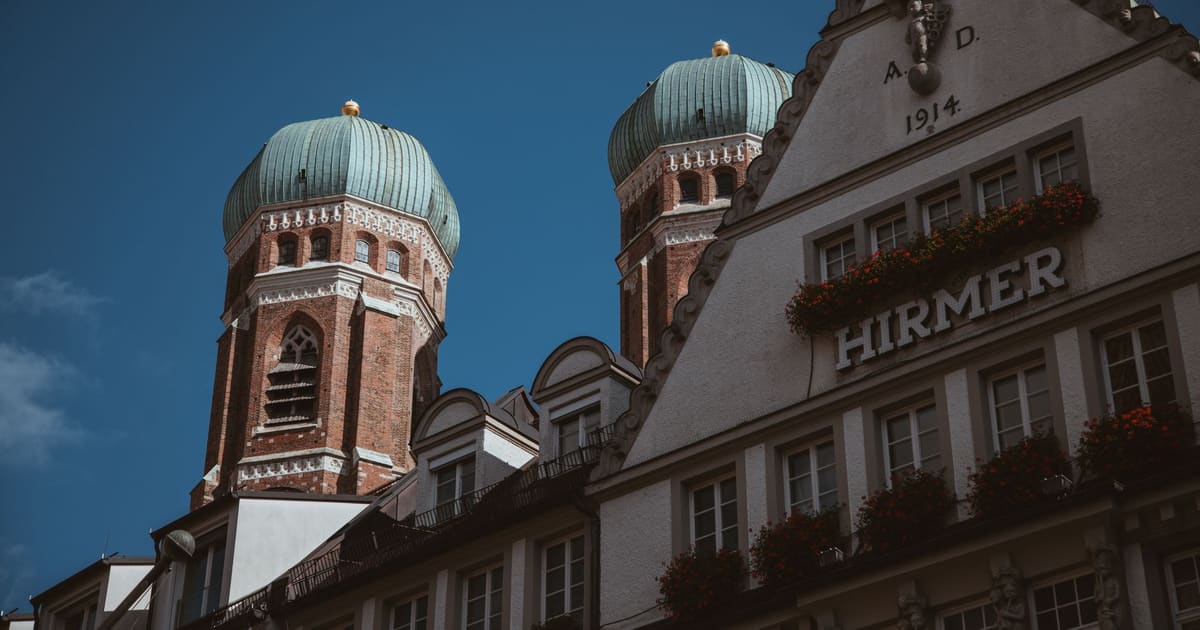
These two green onion domes belong to the Frauenkirche, the Cathedral of Our Dear Lady, and they are the emblem of Munich. The church was built in brick in barely twenty years in the late fifteenth century, astonishing speed for a building this size, with the domes added a few decades later. The towers rise to about ninety-nine meters, and Munich is so attached to this skyline that in 2004 its voters chose to keep new buildings in the inner city lower than these towers. Inside, look for the Devil's Footprint in the entrance floor, a dark mark that legend blames on a trick played on the building's own patron.
Get the Audio Tour in 3 Simple Steps
All in the free Walk With Me app, and the first stops of every tour are free to try.
Tap the Gold Headphones and Pick a Tour


01
Walk It Solo or Invite Someone


02
Press Play and Walk


03
Handcrafted for Your Time in the City
These tours aren't a checklist of sights. They're made to be walked slowly, headphones on, eyes on the city.
Meditative and Immersive
Each story is told where it happened. The app chimes when you reach a stop, one tap starts the story, and the stretch between stops is yours to take in at your own pace.
Handcrafted With Care
We choose every route and every stop ourselves and shape each story with care, so the time you have in the city goes to the places most worth seeing.
Better With Someone
Every walk is better with someone beside you, so if you can bring a friend, we really hope you do. That's why one purchase covers everyone you invite: they join your tour free.