




 $17.99Film & Fiction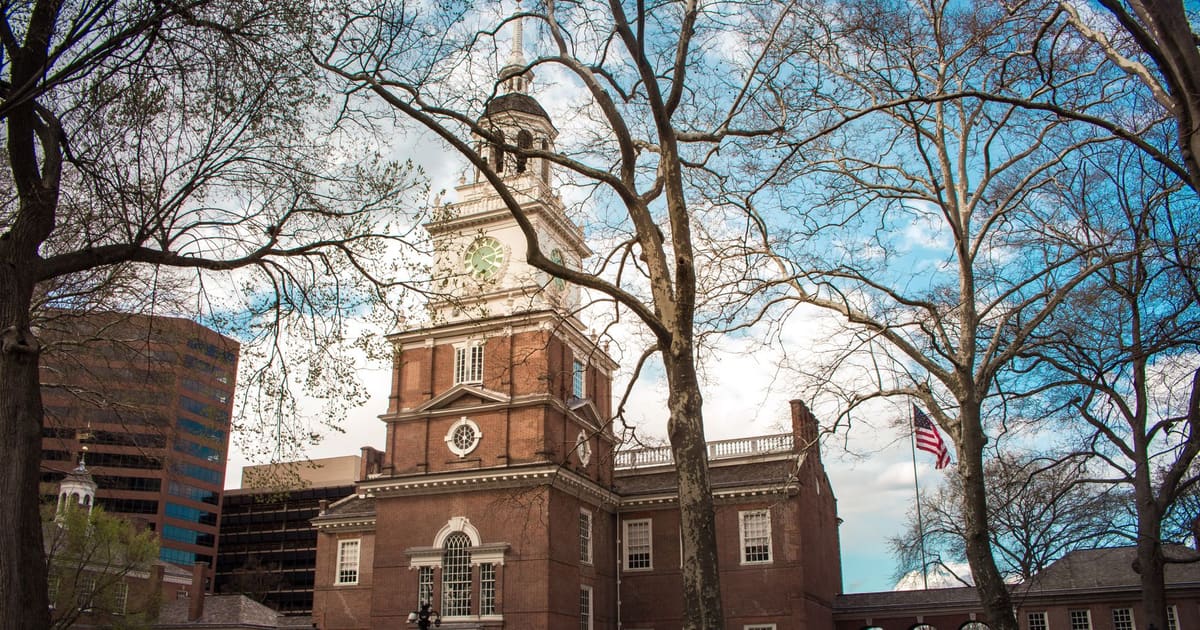
Philadelphia Audio Walking Tours
Self-guided, narrated walks through Philadelphia. Buy a tour once, download it, and hear the story at each stop while you walk at your own pace.
Tours from $7.99
Friends walk free. One purchase covers everyone on your walk. Start the tour, invite your friends to join, and it plays on every phone in your group.
5.0 on Google Play
Philadelphia audio tours
Each tour is a mapped route with narration at every stop. Buy it once and it is yours to keep, no subscription.
$17.99Film & Fiction$7.99City Highlights $8.99City Highlights
What to expect on a Philadelphia audio walking tour
A Philadelphia audio walk covers two very different lines through the city, the narrow colonial streets where the country was founded and the grand diagonal boulevard built a century later for its art museums, with narration timed to each stop so you're not juggling a map between the Liberty Bell and the Rocky Steps.
The Old City Walk starts at the Liberty Bell and Independence Hall, where the Declaration of Independence and the Constitution were both debated, then heads east past Carpenters' Hall and the Museum of the American Revolution to Christ Church, the oldest continuously inhabited street in the country at Elfreth's Alley, the Betsy Ross House, and finally Benjamin Franklin's grave at Christ Church Burial Ground. It covers 2.2 kilometers, about 31 minutes of walking, flat the whole way.
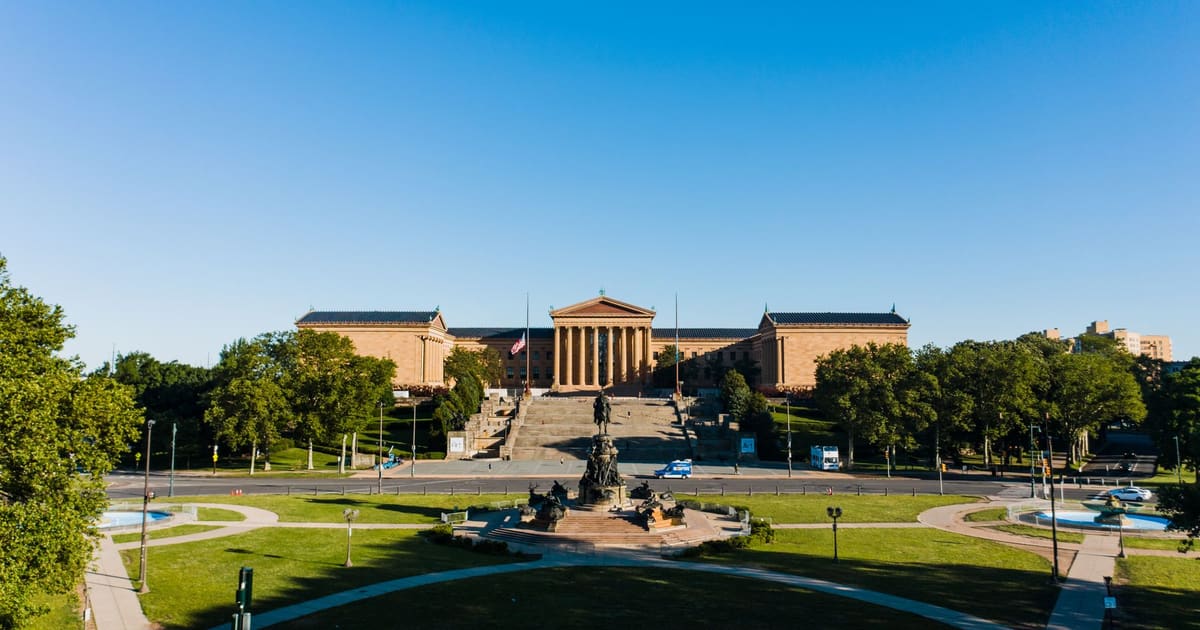
The Parkway Walk starts at Reading Terminal Market, passes the Masonic Temple and the courtyard of City Hall, then follows the Benjamin Franklin Parkway past LOVE Park and Logan Circle to the Barnes Foundation and the Rodin Museum, finishing with a climb up the seventy two Rocky Steps at the art museum. It covers 2.9 kilometers, about 42 minutes, with that one staircase as the only real climb.
Together the two walks move from the narrow brick lanes where the country's founders worked and worshipped to the broad diagonal boulevard built a century later to give the city its own version of the Champs-Elysees. Three generations of one family of sculptors, the Calders, turn up along the way, on top of City Hall, in the fountain at Logan Circle and inside the art museum at the end.
Where to walk in Philadelphia
A few of the stops you will pass, and why they are worth slowing down for.
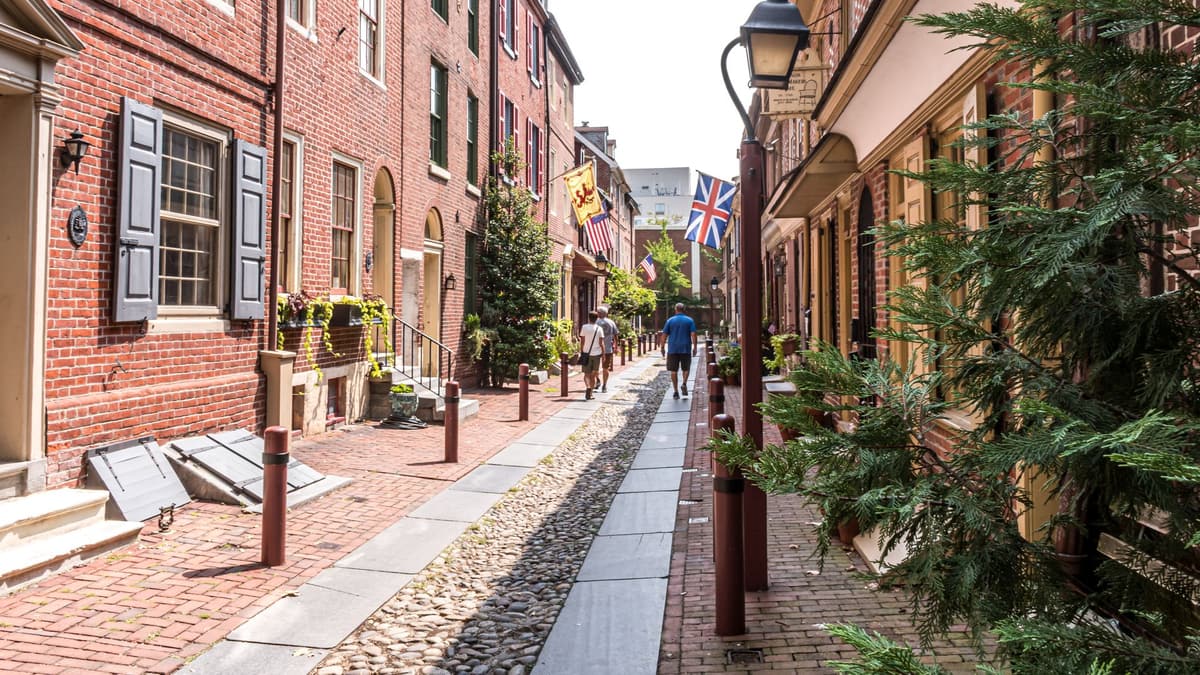
Elfreth's Alley
Elfreth's Alley is a narrow cobbled lane opened around 1702, and people have been living along it ever since, which makes it the oldest continuously inhabited residential street in the country. Its thirty or so brick houses were built between the 1720s and the 1830s for working artisans, blacksmiths, shipwrights and furniture makers who worked near the river docks a block away, not for anyone grand. Look closely at the brickwork and you'll spot a checkered pattern made from glazed brick ends, small shed roofs over some doorways, and the occasional busybody mirror angled so someone upstairs could see who was knocking without opening the door. The street is still private homes today, so the custom is to walk it quietly.
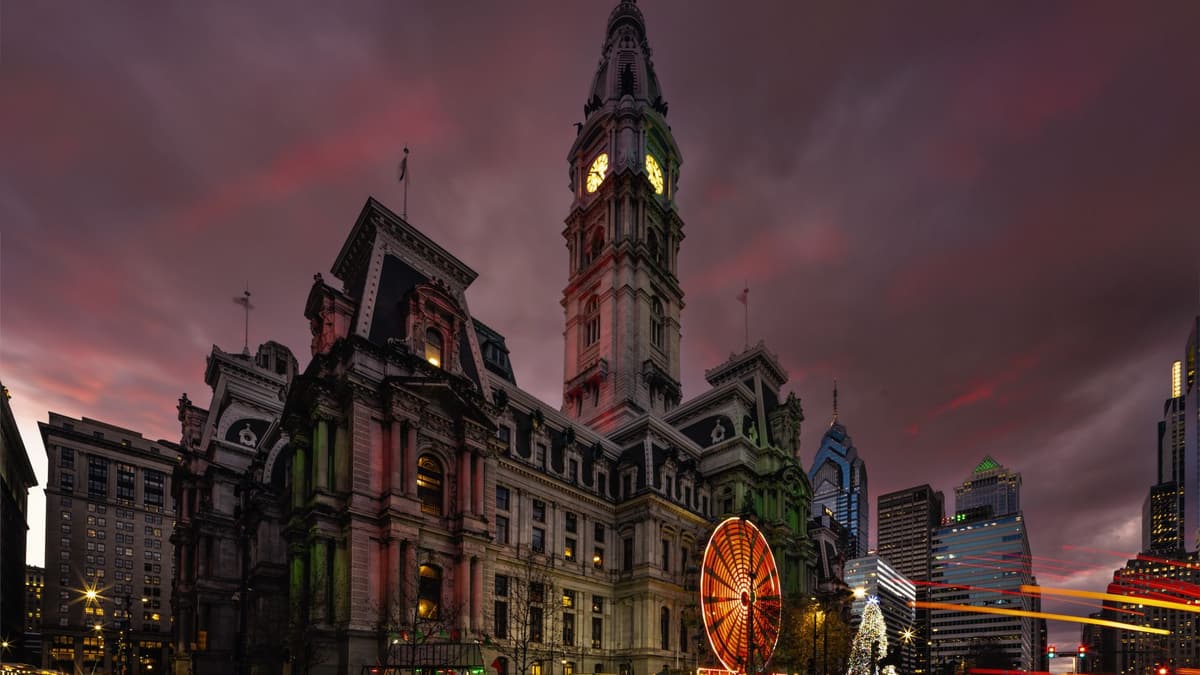
Philadelphia City Hall
Philadelphia City Hall took three decades to finish, from 1871 to 1901, and with around seven hundred rooms it's one of the largest municipal buildings in the country, topped by a bronze statue of William Penn about thirty seven feet tall. For most of the twentieth century a gentleman's agreement kept every building in the city shorter than the brim of Penn's hat, a rule that held until 1987. The courtyard at its center sits on Center Square, the middle of the street grid William Penn and his surveyor drew up in 1682, and in winter the plaza in front often fills with a holiday market, an ice rink and a Ferris wheel lit up against the old stone facade.
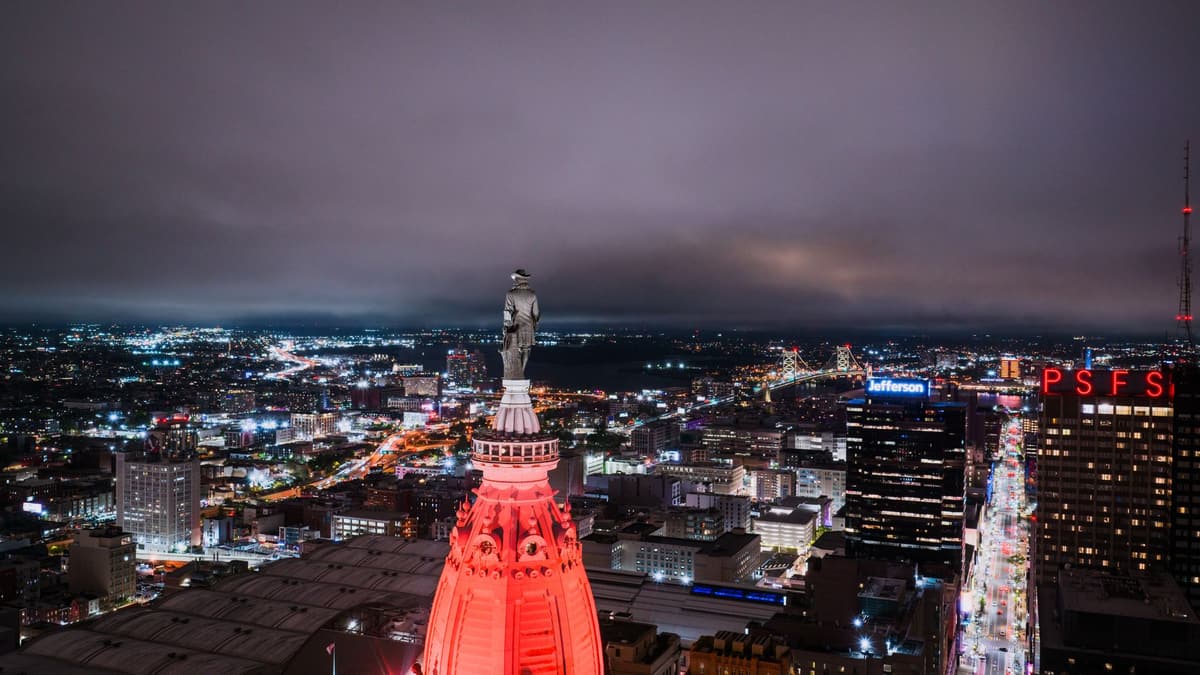
William Penn above the city
High on top of City Hall's tower stands the bronze figure of William Penn, the Quaker founder of Pennsylvania, facing northeast toward the spot by the Delaware River where tradition says he made a treaty of friendship with the Lenape people. The statue was cast by Alexander Milne Calder, the first of three generations of sculptors in his family who left their mark across this walk, his son making the fountain at Logan Circle and his grandson later becoming famous for inventing the mobile. At night, lit against the city lights spreading out below, the view from up here gives you a sense of just how much Philadelphia has grown around the plan Penn laid out more than three centuries ago.
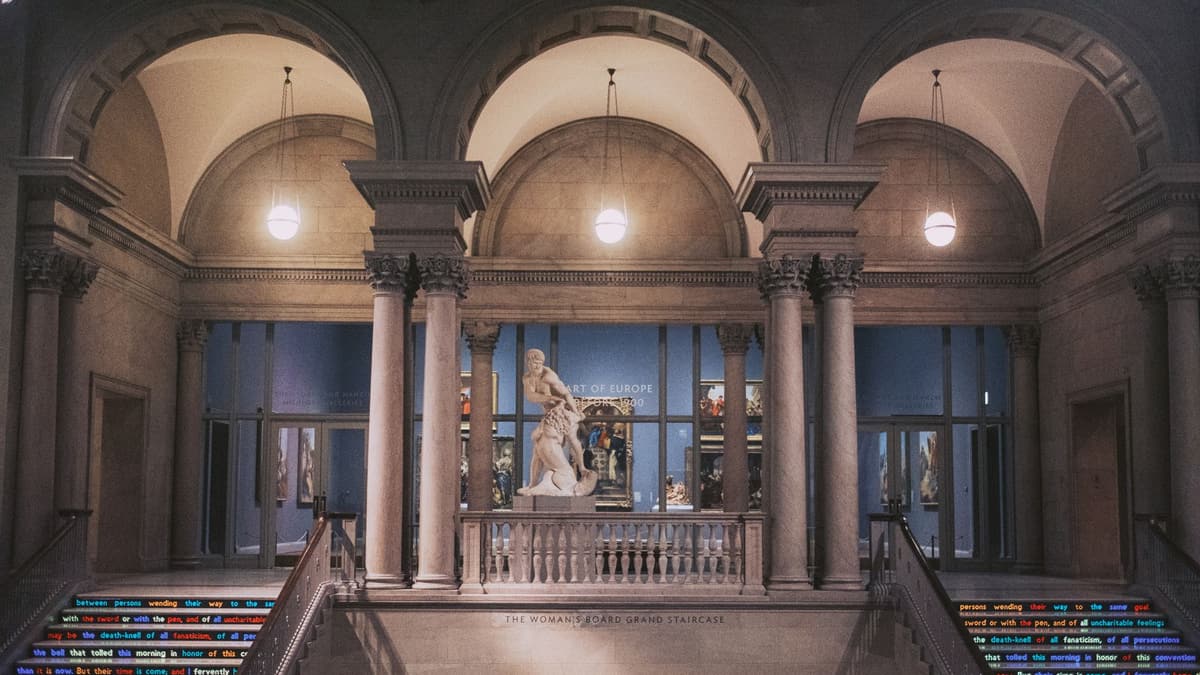
The Philadelphia Museum of Art
Inside the museum at the top of the Rocky Steps, a grand columned stair hall leads up past galleries of European art, including the mobile made by Alexander Calder, the third generation of the sculpting family you meet earlier on this walk atop City Hall and at the Logan Circle fountain. The museum opened in 1928 on Fairmount, the hill where the city's old reservoir once stood, and its collection is one of the most respected in the country. Most visitors know the building from its exterior staircase and Sylvester Stallone's training montage, but the quieter marble stair halls inside reward a slower look once you've caught your breath from the climb.
Center City skyline
Seen from above, Center City Philadelphia is a tight cluster of towers built up fast after 1987, when the first skyscraper finally rose above the brim of William Penn's hat on top of City Hall. Before that, an unwritten rule had kept the skyline low for most of a century, and the sudden rush of taller buildings afterward is still visible in how closely the glass towers crowd around the older stone City Hall at the center of it all. Walking the Parkway below gives you the ground level version of this view, with the diagonal boulevard cutting straight across the old street grid toward the museum on the hill.
Get the Audio Tour in 3 Simple Steps
All in the free Walk With Me app, and the first stops of every tour are free to try.
Tap the Gold Headphones and Pick a Tour


01
Walk It Solo or Invite Someone


02
Press Play and Walk


03
Handcrafted for Your Time in the City
These tours aren't a checklist of sights. They're made to be walked slowly, headphones on, eyes on the city.
Meditative and Immersive
Each story is told where it happened. The app chimes when you reach a stop, one tap starts the story, and the stretch between stops is yours to take in at your own pace.
Handcrafted With Care
We choose every route and every stop ourselves and shape each story with care, so the time you have in the city goes to the places most worth seeing.
Better With Someone
Every walk is better with someone beside you, so if you can bring a friend, we really hope you do. That's why one purchase covers everyone you invite: they join your tour free.