




 $15.99Film & Fiction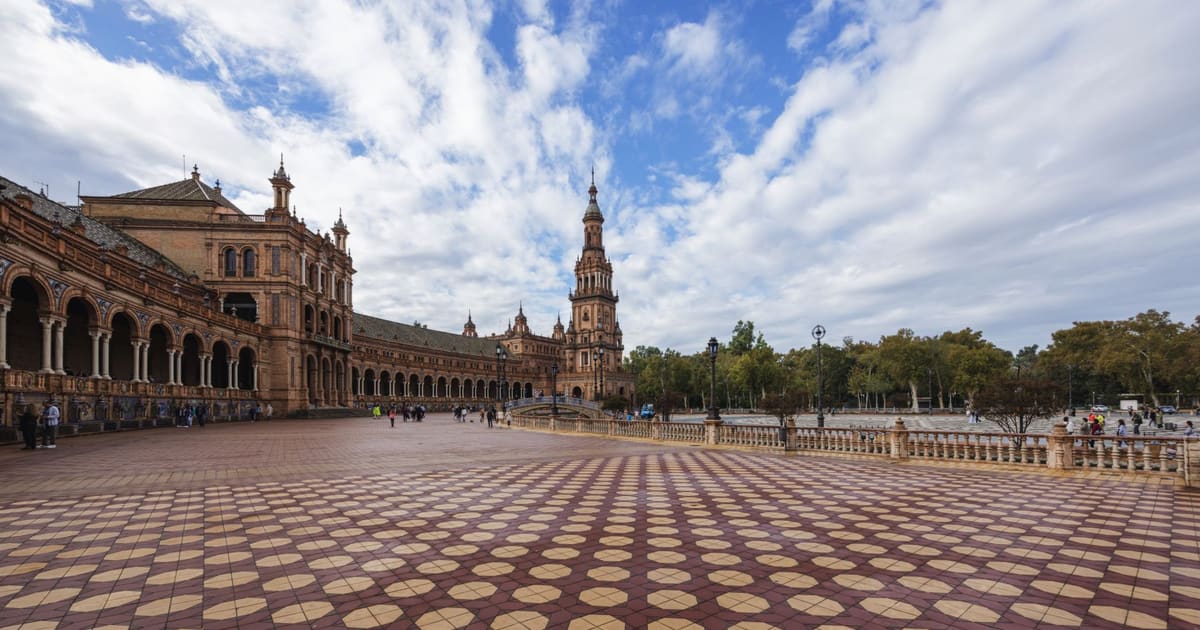
Seville Audio Walking Tours
Self-guided, narrated walks through Seville. Buy a tour once, download it, and hear the story at each stop while you walk at your own pace.
Tours from $8.99
Friends walk free. One purchase covers everyone on your walk. Start the tour, invite your friends to join, and it plays on every phone in your group.
5.0 on Google Play
Seville audio tours
Each tour is a mapped route with narration at every stop. Buy it once and it is yours to keep, no subscription.
$15.99Film & Fiction$8.99City Highlights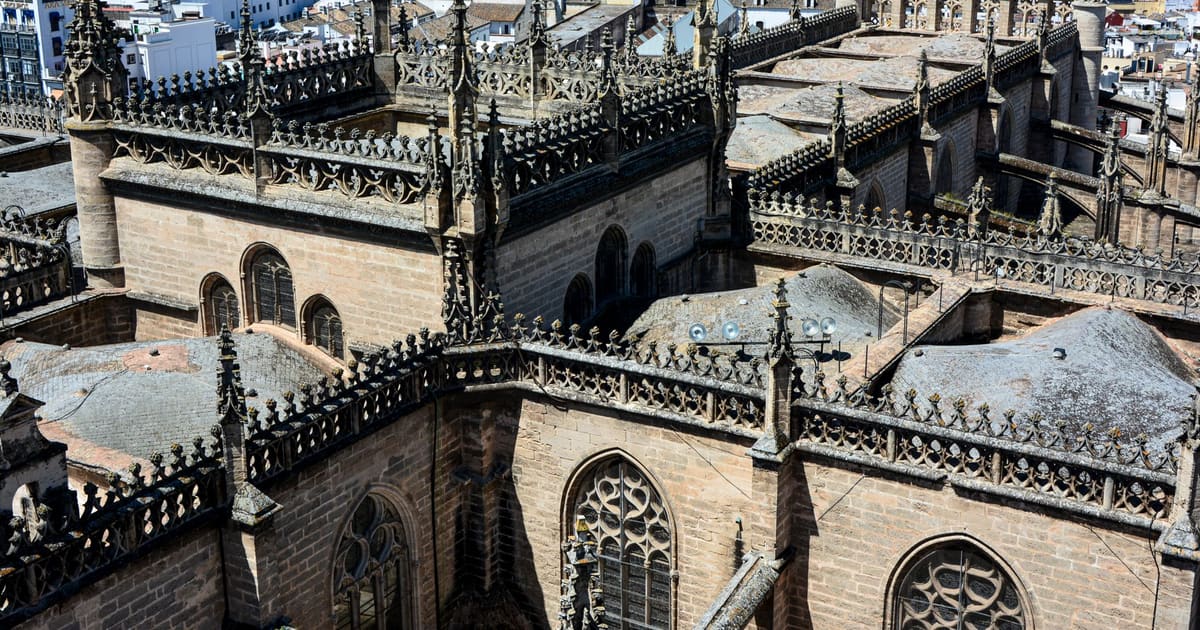 $8.99City Highlights
What to expect on a Seville audio walking tour
A Seville audio walk can cross from the tiled grandeur of Plaza de España through María Luisa Park into Triana's potters' quarter, or loop the old center past the cathedral, the Royal Alcázar and the orange scented lanes of Santa Cruz.
The Seville Park to Triana Walk starts among the 1929 Ibero-American Exposition pavilions at the south end of María Luisa Park, crosses the tiled half circle of Plaza de España, and follows the park's edge past the toy fortress of the Costurero de la Reina to the baroque Palacio de San Telmo. From there it crosses the Guadalquivir into Triana, the old sailors' and potters' barrio, past the Iglesia de Santa Ana to finish inside a converted tile factory at the Centro Cerámica Triana, about 3.5 kilometers and 47 minutes, flat the whole way.
The Seville Santa Cruz Walk starts at Plaza Nueva and reaches the enormous Seville Cathedral and its Giralda tower within a few minutes, then slips past the Archivo General de Indias into the Royal Alcázar, a working palace of Mudéjar courtyards and gardens. Coming out into the whitewashed lanes of Barrio Santa Cruz, the route passes the old Royal Tobacco Factory, now the university, down to the riverside Torre del Oro and finishes at the Plaza de Toros de la Maestranza bullring, about 3.2 kilometers and 44 minutes.
Both routes stay flat and shaded in parts, but Seville's heat is the real obstacle from June to September, so mornings and the last hours before sunset work far better than midday. Pair the two walks on consecutive days, since the Santa Cruz route covers the compact old center while the Park to Triana walk shows you the newer, leafier Seville just outside the walls, and both end naturally at a riverside bar for something cold.
Where to walk in Seville
A few of the stops you will pass, and why they are worth slowing down for.
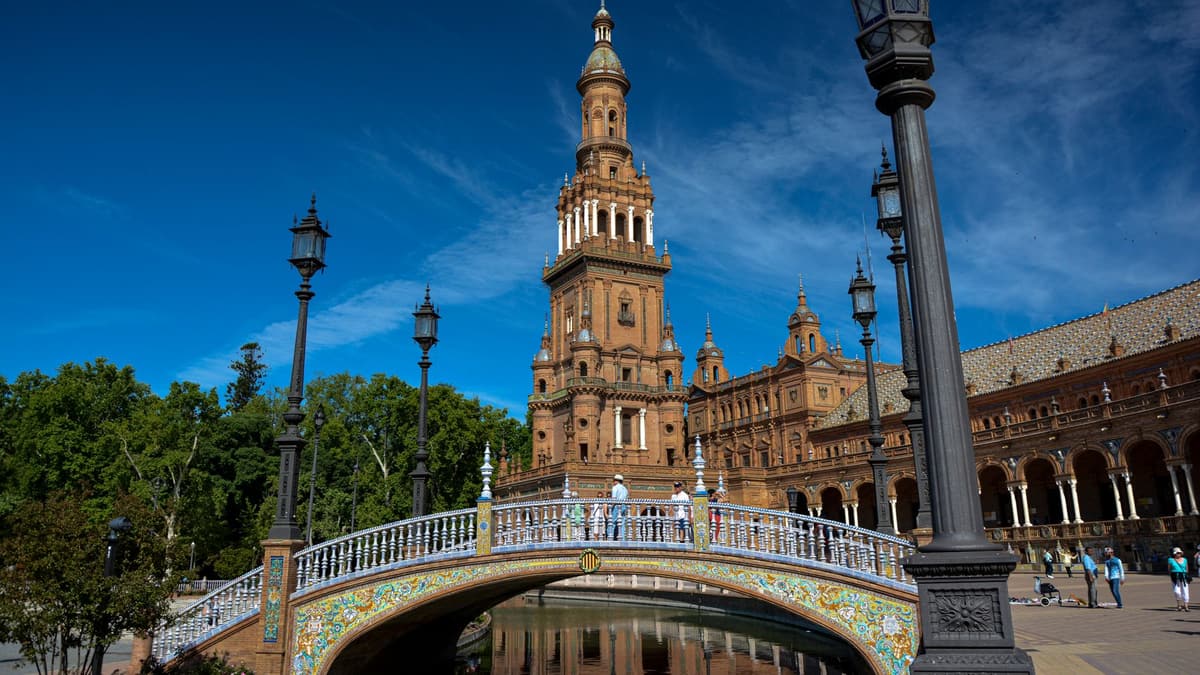
Plaza de España
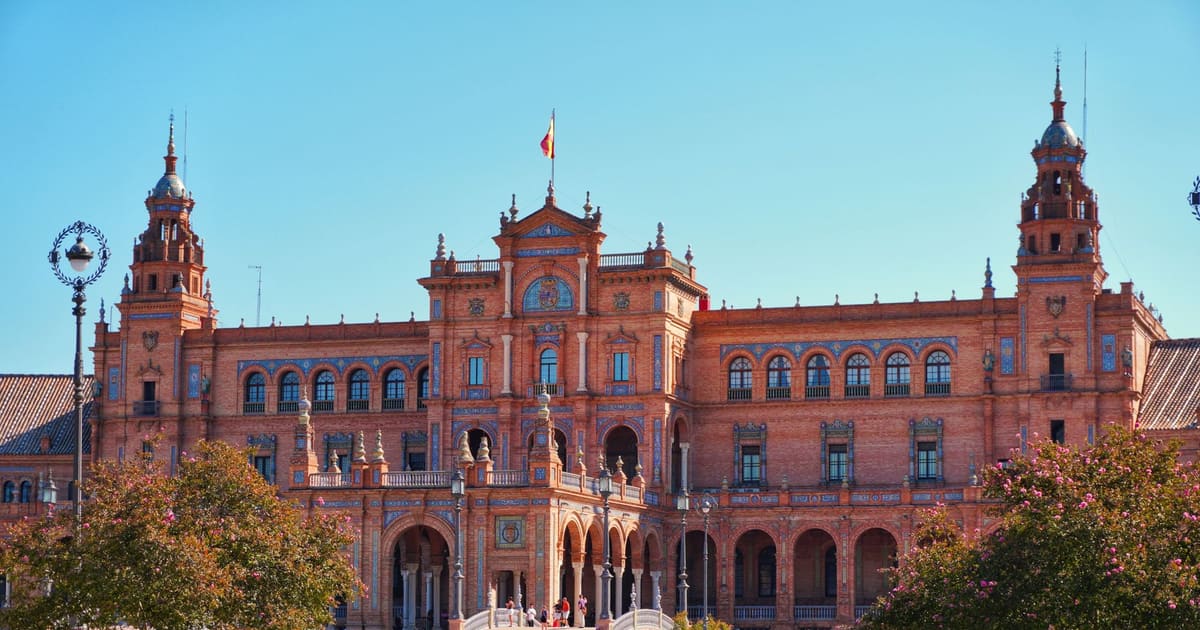
Plaza de España is a vast half circle of brick, marble and painted tile, built as the showpiece of the 1929 Ibero-American Exposition with a tower at each end and a canal crossed by four tiled bridges, one for each of the old kingdoms of Spain. Set into the base of the building are nearly fifty tiled alcoves, one for each Spanish province, each with its own map and historical scene, and visitors still like to find their home province and sit on its bench. The tiles were made by Triana's potters, just across the river where this walk ends. Film fans may recognize the plaza from Lawrence of Arabia and one of the Star Wars films, and you can still rent a small rowing boat on the canal.
Royal Alcázar and Its Gardens
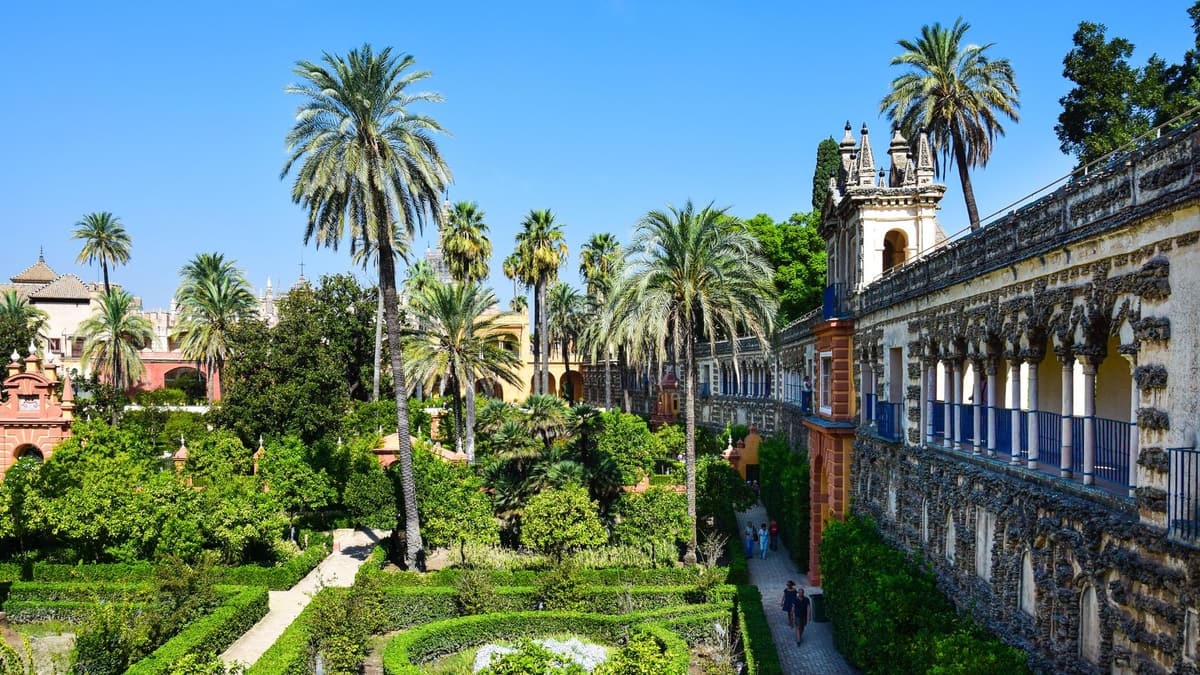
The Royal Alcázar is a working royal palace, the oldest still in use in Europe, built by Muslim craftsmen for Christian kings in a fantasy of carved plaster, tiled walls and horseshoe arches around courtyards where water runs in narrow channels. Beyond the palace rooms lie acres of gardens full of palms, orange trees, fountains and hidden ponds, with peacocks wandering the hedges, and it's easy to lose an hour wandering without a plan. Film and television crews use the palace and gardens often, so some corners may look familiar. The upper floors are still reserved for the Spanish royal family, a reminder that this is not only a museum but a palace still in use.
Barrio Santa Cruz
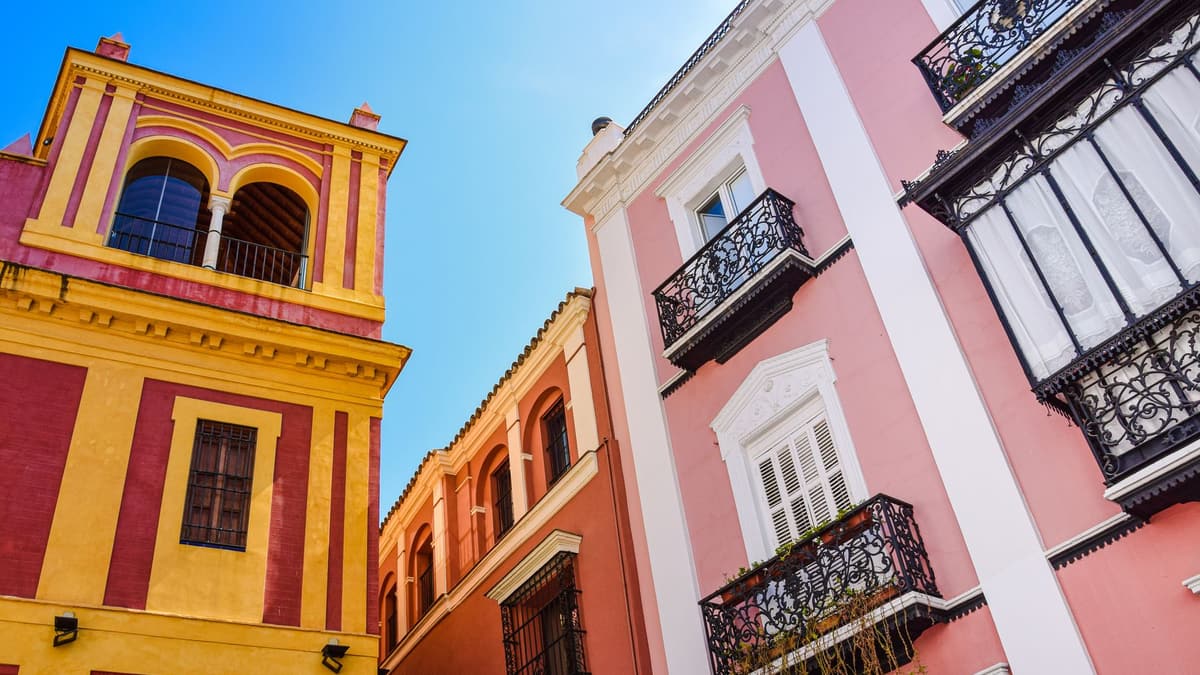
Barrio Santa Cruz is Seville's old Jewish quarter, a maze of narrow whitewashed lanes, tiny plant filled squares and wrought iron balconies dripping with geraniums, kept deliberately tight and winding to hold the shade against the summer heat. Getting a little lost here is the whole point, and the lanes open now and then into small squares like the Plaza de Santa Cruz, where orange trees stand over tiled benches and a fountain is usually the only sound. Quiet bars are tucked into the lanes serving cold sherry and small plates, a good excuse to stop. Look up as you walk, since the strips of blue sky between the white walls and the balconies overhead are half the beauty of the quarter.
Seville Cathedral and La Giralda
Seville Cathedral is the largest Gothic cathedral in the world, built on the footprint of the great mosque that stood here before, and its pointed spires, flying buttresses and pinnacles crowd the skyline from every angle. Beside it rises La Giralda, once the mosque's minaret and now the cathedral's bell tower, its lower two thirds patterned Moorish brickwork from the twelfth century topped by a Christian belfry added later. Inside, if you go in, the tomb of Christopher Columbus is held aloft by four stone kings. The tower can be climbed by a wide ramp rather than stairs, built so a rider could go up on horseback, which makes the climb far gentler than the building's scale suggests.
Triana
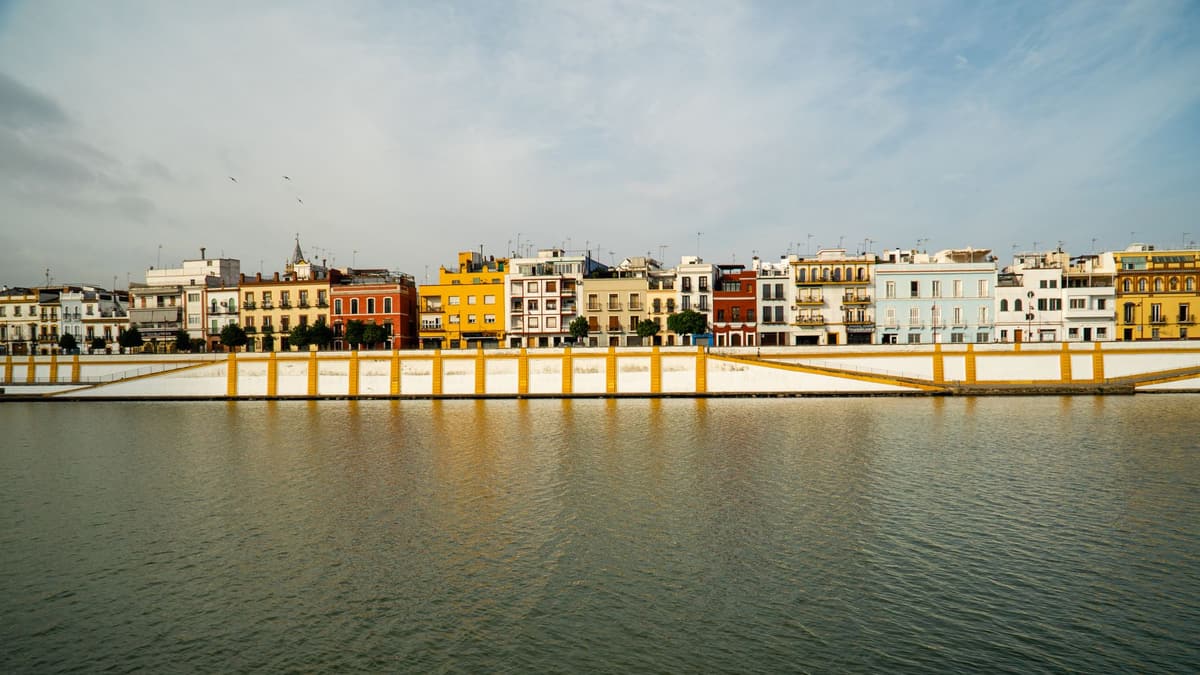
Triana is the riverside barrio across the Guadalquivir from the old center, a neighborhood of sailors, potters and flamenco with its own church, its own market and its own way of talking about the city on the far bank. Colorful houses line Calle Betis along the riverfront, facing back across the water toward the cathedral and the bullring. Men from these streets crewed the ships that sailed to the Americas, and tradition claims Rodrigo de Triana, the lookout who first sighted land on Columbus's voyage, as a son of this barrio. Its potters shipped tiles and painted pottery across Spain and the Americas for centuries, including the very tiles covering Plaza de España, and their old workshops are now museums you can step inside.
Get the Audio Tour in 3 Simple Steps
All in the free Walk With Me app, and the first stops of every tour are free to try.
Tap the Gold Headphones and Pick a Tour


01
Walk It Solo or Invite Someone


02
Press Play and Walk


03
Handcrafted for Your Time in the City
These tours aren't a checklist of sights. They're made to be walked slowly, headphones on, eyes on the city.
Meditative and Immersive
Each story is told where it happened. The app chimes when you reach a stop, one tap starts the story, and the stretch between stops is yours to take in at your own pace.
Handcrafted With Care
We choose every route and every stop ourselves and shape each story with care, so the time you have in the city goes to the places most worth seeing.
Better With Someone
Every walk is better with someone beside you, so if you can bring a friend, we really hope you do. That's why one purchase covers everyone you invite: they join your tour free.