




 $8.99City Highlights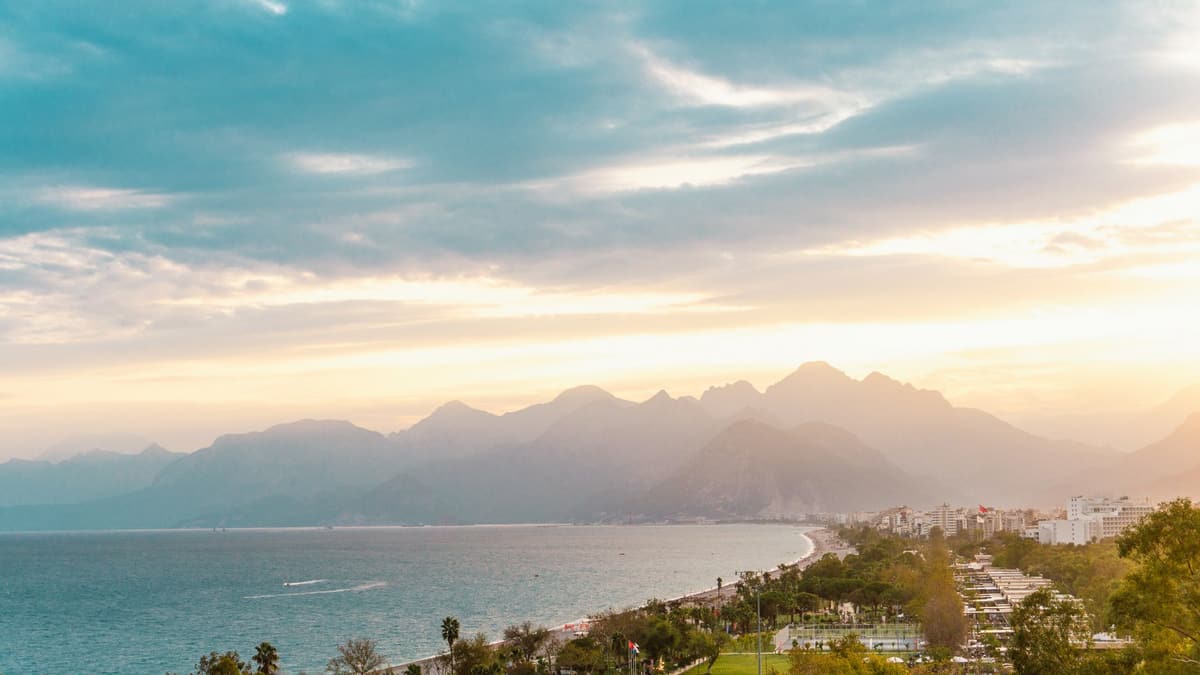
Antalya Audio Walking Tours
Self-guided, narrated walks through Antalya. Buy a tour once, download it, and hear the story at each stop while you walk at your own pace.
Tours from $6.99
Friends walk free. One purchase covers everyone on your walk. Start the tour, invite your friends to join, and it plays on every phone in your group.
5.0 on Google Play
Antalya audio tours
Each tour is a mapped route with narration at every stop. Buy it once and it is yours to keep, no subscription.
$8.99City Highlights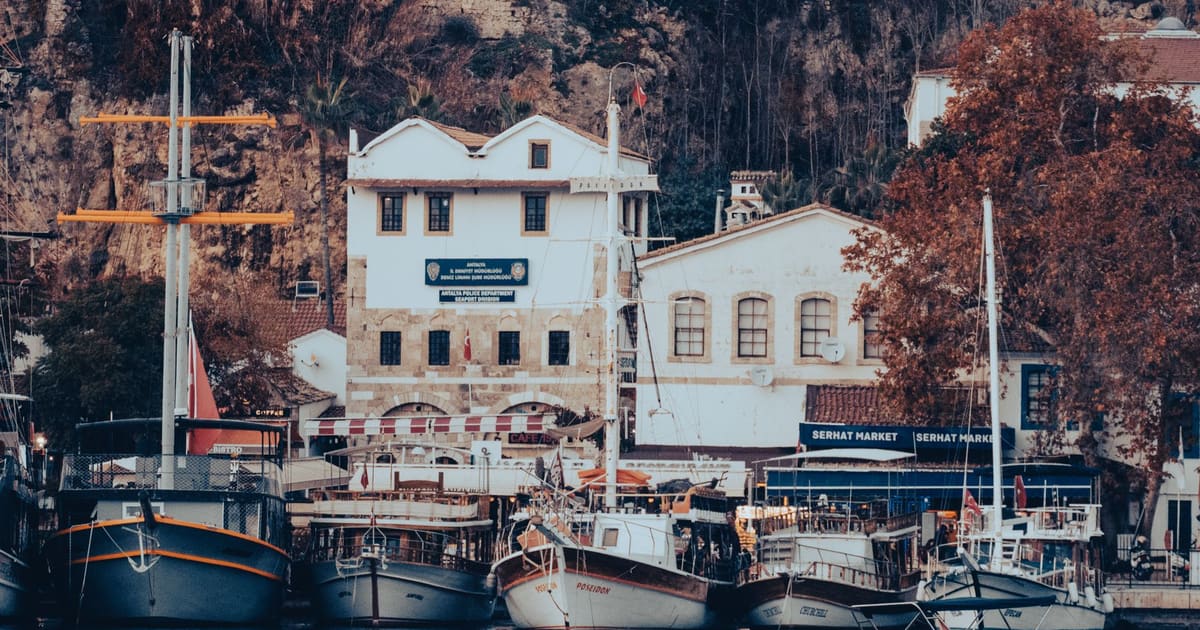 $6.99City Highlights
What to expect on a Antalya audio walking tour
An Antalya audio walk takes you along clifftop parks with the Taurus Mountains across the bay, then down into Kaleiçi, the walled old town, where a Roman gate, a Seljuk minaret and the old harbor sit only minutes apart.
The Clifftop Walk starts at the Ottoman-era Murat Paşa Mosque, then heads down to the sea and follows a chain of parks along the cliff edge, Tophane Park, Yavuz Özcan Park and Atatürk Park, with the Taurus Mountains rising across the water the whole way and Konyaaltı Beach stretching out below. It finishes at the Antalya Museum, home to Roman statues from the ancient city of Perge. It covers 3 kilometers, about 42 minutes, flat from start to finish, across 5 stops.
The Kaleiçi Walk starts in the clifftop gardens of Karaalioğlu Park, passes the Roman-era Hıdırlık Tower and the broken Kesik Minaret, then reaches Hadrian's Gate, the marble arches built for the Roman emperor's visit in 130 AD. From there it passes the old clock tower and the fluted Yivli Minaret, the city's emblem, before dropping down through the lanes to the Old Harbour where Antalya began. It runs 1.9 kilometers, about 26 minutes, across 8 stops, with a steep final stretch down to the water.
Together the two walks cover the two sides of Antalya that its people enjoy most, the open cliffs and sea views on one, and the layered Roman, Seljuk and Ottoman old town on the other. The Clifftop Walk suits late afternoon, finishing near sunset over the mountains, while the Kaleiçi Walk is best in the cool of the morning or the evening, when the old town's walls glow gold.
Where to walk in Antalya
A few of the stops you will pass, and why they are worth slowing down for.
Antalya's Travertine Cliffs
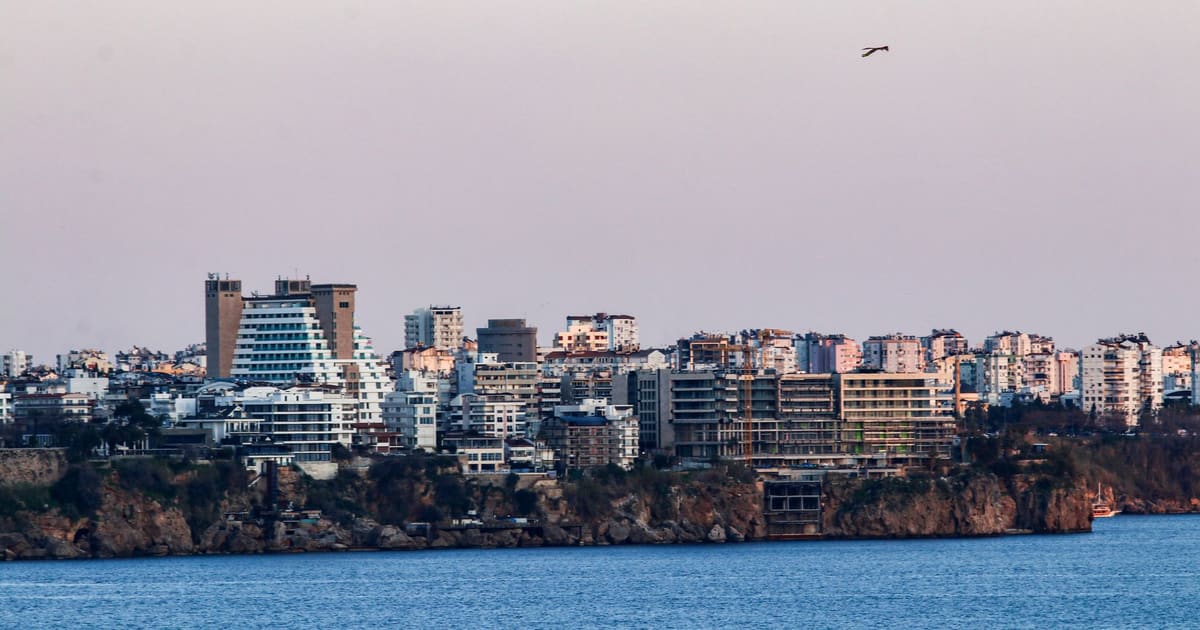
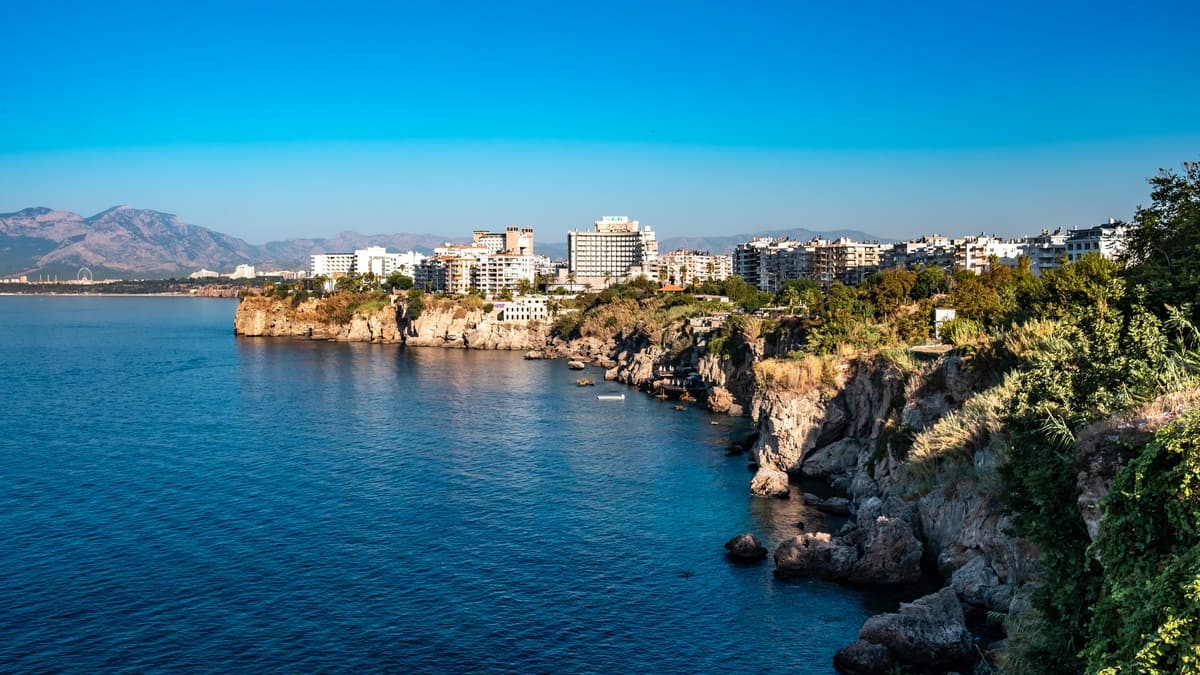
Antalya sits on a shelf of travertine, a pale, porous rock built up over many thousands of years by mineral-rich water flowing down from the Taurus Mountains. As that water spread across the coastal plain it left dissolved limestone behind, layer upon layer, until it formed the thick rock shelf the city now stands on, and where that shelf meets the sea the waves have cut it into these sheer, pock-marked cliffs. The same water still flows under and through the city, feeding the orchards and gardens that have made this plain famous for oranges and other fruit for centuries, and surfacing east of the center in a waterfall that drops straight off the cliffs into the sea.
Konyaaltı Beach
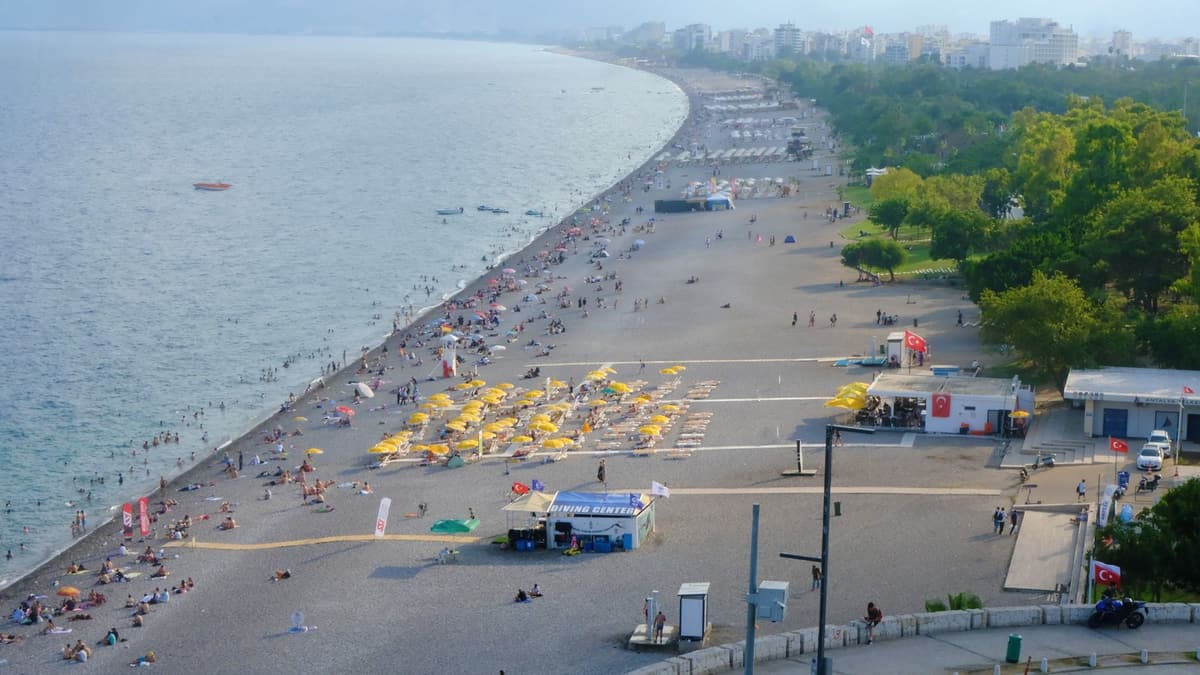
Below the clifftop promenade of Atatürk Park, Konyaaltı Beach runs for several kilometers in a long pebble sweep beneath the mountains, one of the city's favorite places to swim, walk or simply watch the sun go down. Find a bench facing west along the cliff above it and you get the classic view: the coastline curving away toward the peaks, swimmers and sunbathers scattered along the shore, and in the evening the whole range turning blue and gold as the light fades. Families gather on the clifftop grass above with tea and simit, the sesame bread rings sold from carts all over Türkiye, making this stretch as much a local gathering spot as a beach.
Antalya's Old Harbour
This small, sheltered harbor beneath the walls of Kaleiçi is the reason Antalya exists at all. The city was founded here in the second century BC by Attalus II of Pergamon, who wanted a port on this stretch of coast, and Romans, Byzantines, Seljuks and Ottomans all kept it busy afterward, shipping timber, grain and goods across the eastern Mediterranean. The harbor still roughly keeps the shape of the ancient one, and in the 1980s it was restored as a marina, which is when the old town above it began its second life as a place of guesthouses, cafes and restaurants. Wooden gulets painted in bright colors and fishing boats still line the quay today, with tour boats calling out trips along the cliffs.
The Yivli Minaret
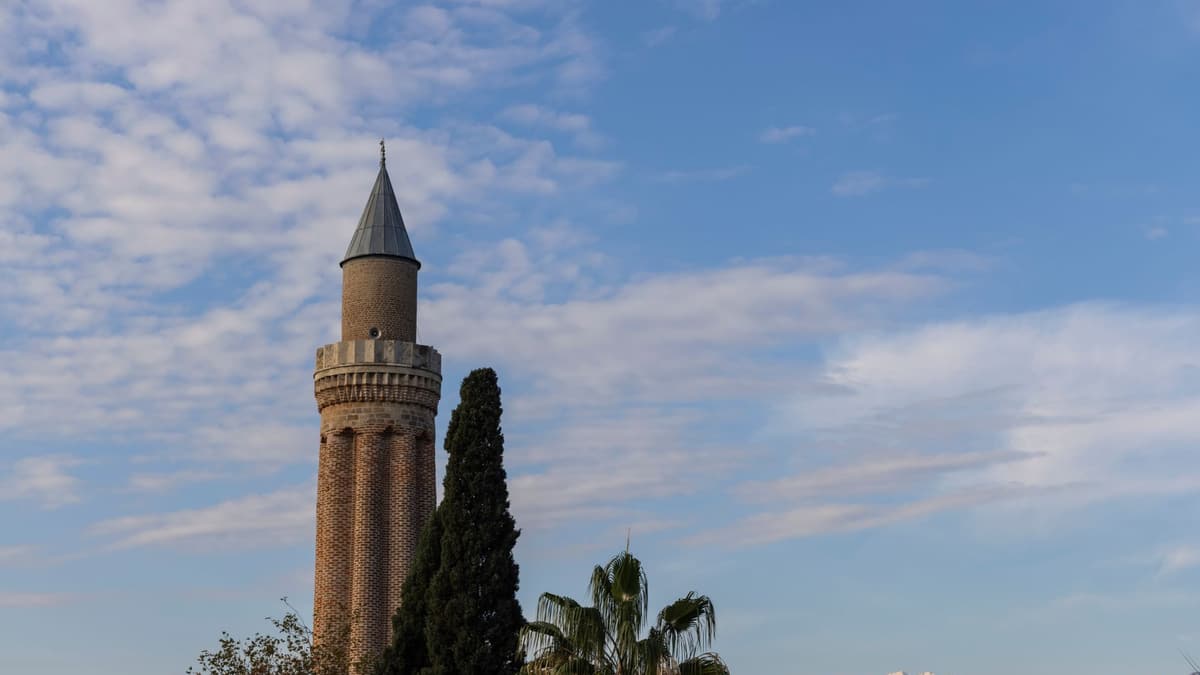
This fluted brick tower is the symbol of Antalya, its outline printed on signs and souvenirs across the city. Built in the thirteenth century by the Seljuk Turks after they took Antalya from the Byzantines in 1207, it rises nearly 40 meters in deep vertical ridges shaped like a bundle of columns, with traces of turquoise glazed tile still visible near the top. The mosque beside it dates from the fourteenth century, built under the Hamidid rulers who held the city after the Seljuks, and around them both sits a small complex that once included a lodge of the whirling Mevlevi dervishes. A terrace nearby looks straight out over the harbor and the old town's rooftops below.
Hadrian's Gate
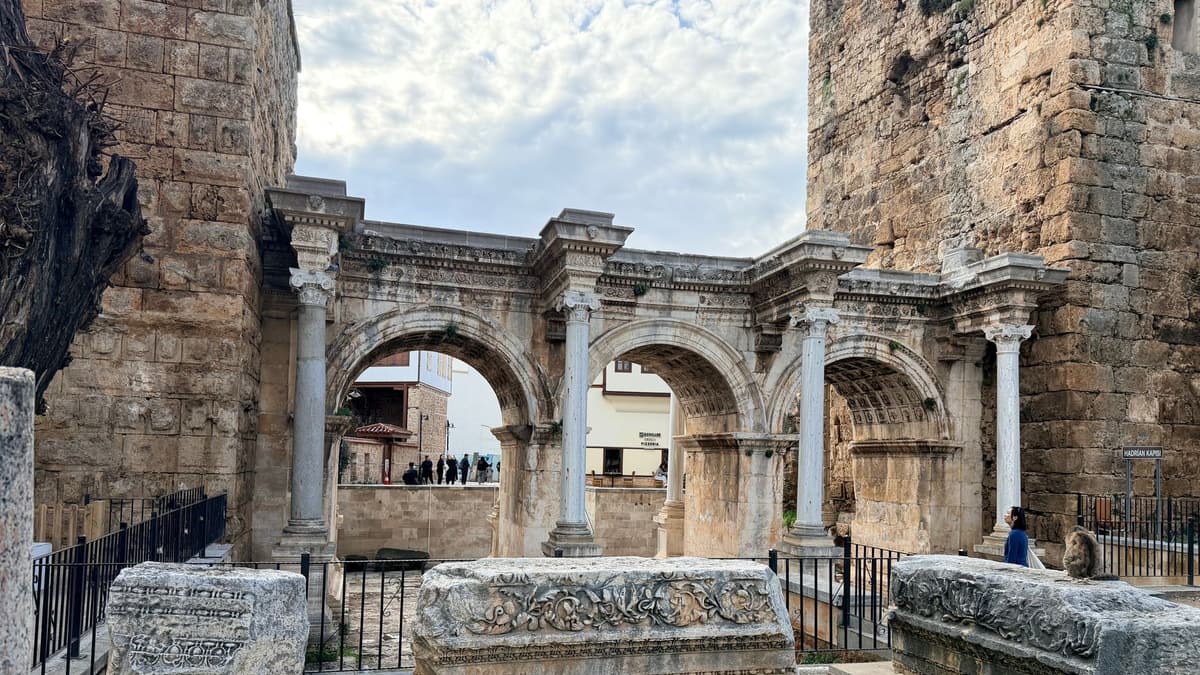
Three marble arches flanked by stone towers make up Hadrian's Gate, known locally as Üçkapılar, the Three Gates, built to honor the Roman emperor Hadrian's visit to the city in 130 AD. Walk beneath it and look up at the rosette-carved ceilings, then down at the raised walkway, worn into grooves by centuries of cart wheels on the original stone paving below. For long stretches of its history the gate was folded into the city walls and partly hidden, which is likely why it survived nearly two thousand years of earthquakes and wars when so much else around it was lost. Stepping through it still marks the line between the walled old town and the wide avenue of the modern city outside.
Get the Audio Tour in 3 Simple Steps
All in the free Walk With Me app, and the first stops of every tour are free to try.
Tap the Gold Headphones and Pick a Tour


01
Walk It Solo or Invite Someone


02
Press Play and Walk


03
Handcrafted for Your Time in the City
These tours aren't a checklist of sights. They're made to be walked slowly, headphones on, eyes on the city.
Meditative and Immersive
Each story is told where it happened. The app chimes when you reach a stop, one tap starts the story, and the stretch between stops is yours to take in at your own pace.
Handcrafted With Care
We choose every route and every stop ourselves and shape each story with care, so the time you have in the city goes to the places most worth seeing.
Better With Someone
Every walk is better with someone beside you, so if you can bring a friend, we really hope you do. That's why one purchase covers everyone you invite: they join your tour free.