




 $15.99Film & Fiction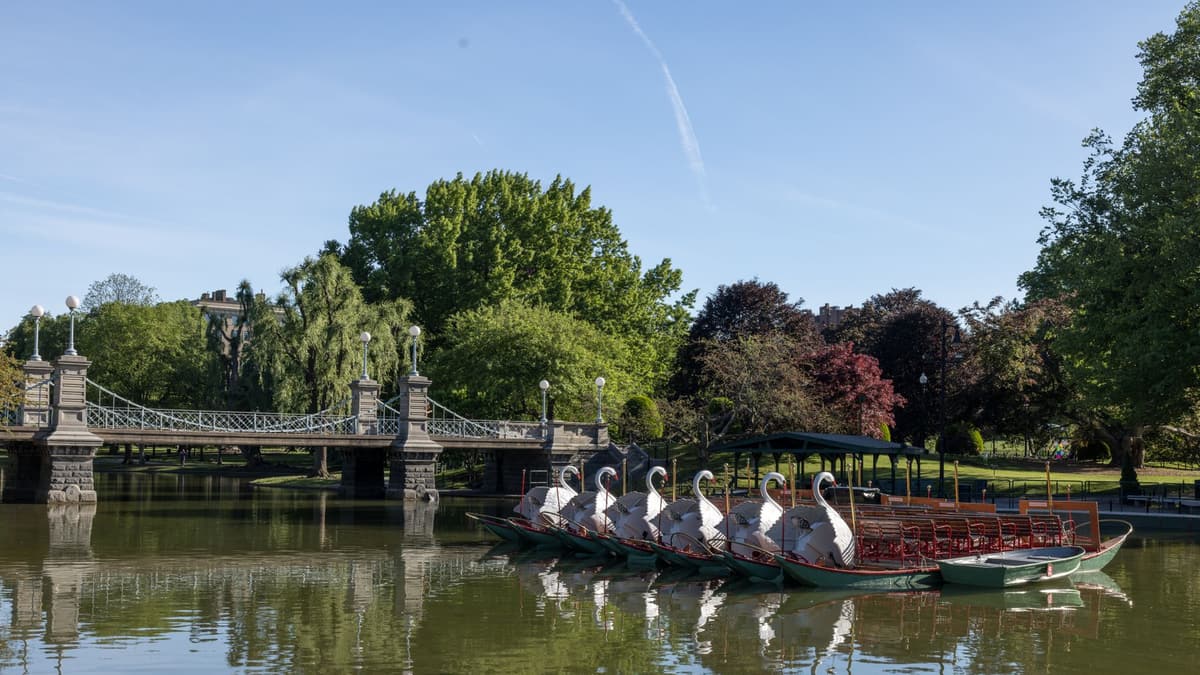
Boston Audio Walking Tours
Self-guided, narrated walks through Boston. Buy a tour once, download it, and hear the story at each stop while you walk at your own pace.
Tours from $6.99
Friends walk free. One purchase covers everyone on your walk. Start the tour, invite your friends to join, and it plays on every phone in your group.
5.0 on Google Play
Boston audio tours
Each tour is a mapped route with narration at every stop. Buy it once and it is yours to keep, no subscription.
$15.99Film & Fiction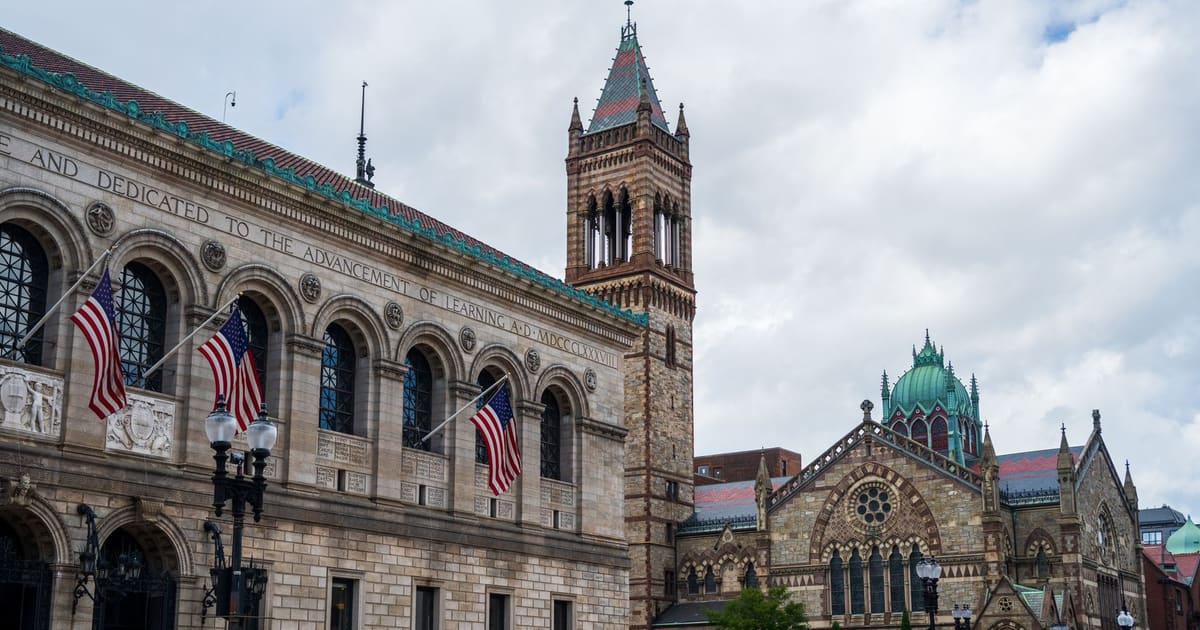 $6.99City Highlights
 $7.99City Highlights
What to expect on a Boston audio walking tour
A Boston audio walk moves between two very different cities, the brick lanes and gardens of Beacon Hill and Back Bay, and the red-brick line of the Freedom Trail, where the Revolution took shape block by block.
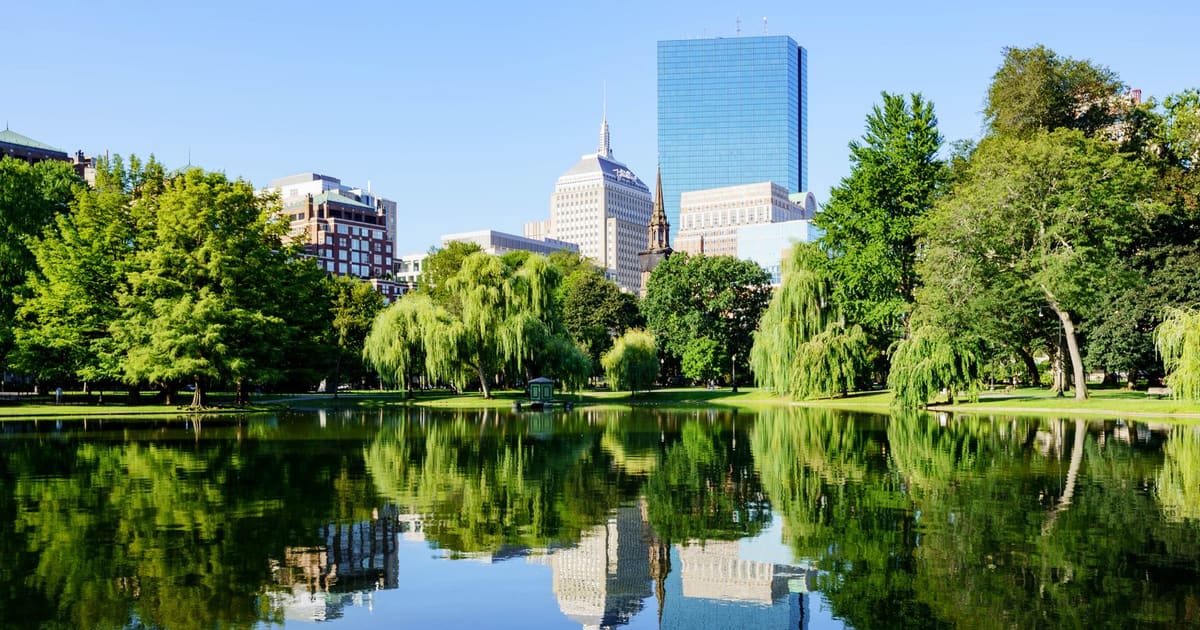
The Beacon Hill & Back Bay Walk starts among the gas lamps of Louisburg Square, drops down cobbled Acorn Street to Charles Street, and crosses the Public Garden past the swan boats and the bronze Make Way for Ducklings statues. It follows Commonwealth Avenue Mall and Newbury Street to Copley Square, finishing at the Boston Public Library beside Trinity Church. It covers 2 kilometers, about 28 minutes, over 7 stops, and shares no stops with the Freedom Trail walk.
The Freedom Trail Walk follows the red line from Boston Common past the Granary Burying Ground, where Paul Revere and Samuel Adams are buried, and Old South Meeting House, where the Boston Tea Party was planned. It continues to the Old State House, with its balcony where the Declaration was read aloud, and Faneuil Hall, before finishing in the North End at the Paul Revere House and Old North Church. It covers 2.3 kilometers, about 33 minutes, over 7 stops, unfolding roughly in the order the history happened.
The two walks pair naturally into a single day, one tracing Boston's quieter, more residential side, the other its revolutionary core. Spring flatters the gardens and the Mall with magnolias and tulips, while the Freedom Trail rewards an early start, before the red line fills with school groups and guides in tricorn hats.
Where to walk in Boston
A few of the stops you will pass, and why they are worth slowing down for.
Boston Public Library
The words carved above this entrance say it all: Free to All. Founded in 1848 as the first large free municipal library in the United States, the building in front of you, designed by Charles McKim and opened in 1895, was meant to be a palace for the people, its long facade inspired partly by a library in Paris. Inside, a wide marble staircase climbs past murals to Bates Hall, a vast barrel-vaulted reading room lined with green lamps where people still sit and read in near silence. Entry is free, and the courtyard, an arcaded garden modeled on a Renaissance palace, is worth finding even if you only have a few minutes to spare.
The Old State House
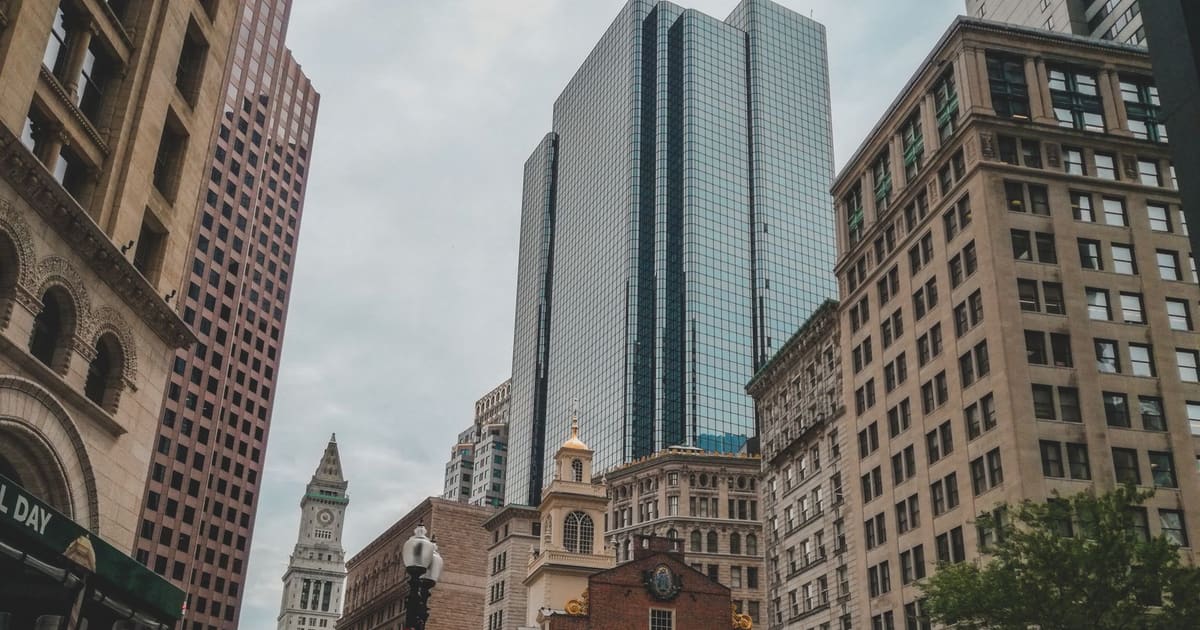
This small brick building with a tiered tower is the oldest surviving public building in Boston, built in 1713 and once the seat of royal government in Massachusetts, which is why a gilded lion and unicorn still sit on its roof. In 1761 the lawyer James Otis argued here against the crown's sweeping search warrants, a moment John Adams later called the start of American independence, and on July 18, 1776, the Declaration of Independence was read aloud from its balcony to a cheering crowd. Below that same balcony, a ring of cobblestones in the street marks the site of the Boston Massacre of 1770. Today it stands surrounded by the glass and steel of the modern financial district, a small survivor among the towers.
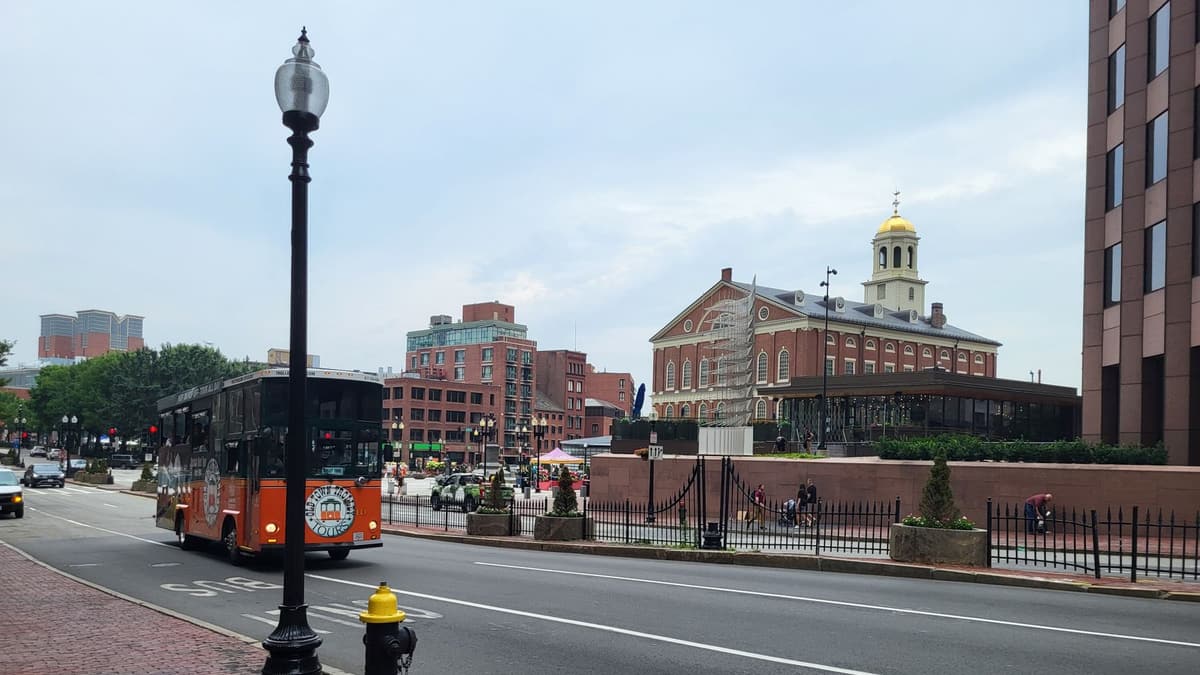
Faneuil Hall
Faneuil Hall has been Boston's marketplace and meeting room since 1742, when the merchant Peter Faneuil paid for it and gave it to the town. The gold cupola carries a weathervane shaped like a grasshopper, made by the colonial craftsman Shem Drowne, which has turned in the harbor wind for well over two centuries. The ground floor was always a market and still holds shops and stalls, while the great hall upstairs was where Bostonians argued over taxes and rights in the 1760s and 1770s, earning the building its nickname, the Cradle of Liberty. Quincy Market stretches out behind it, added in the 1820s and still a good place to stop for lunch.
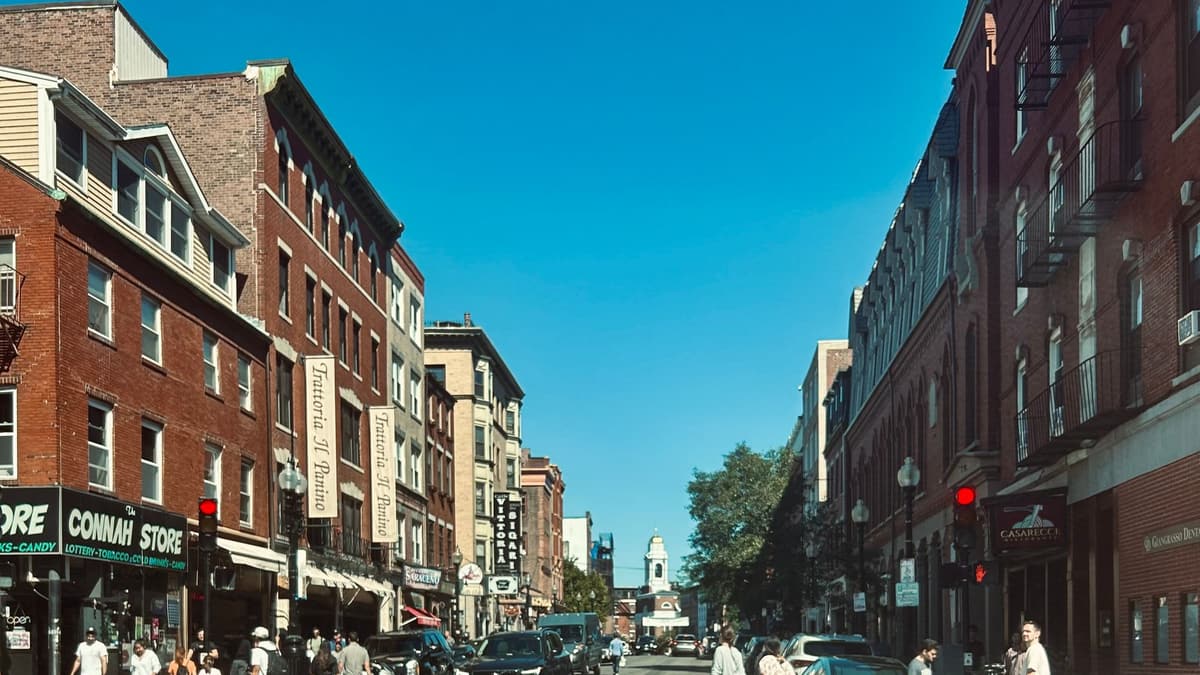
Hanover Street, the North End
Hanover Street is the main artery of the North End, Boston's old Italian quarter, lined with cafes, bakeries and restaurants that have fed the neighborhood for generations. The streets near here curve and narrow in a way that feels older than the rest of the city, a layout that survives from the seventeenth century even though most of the original wooden buildings burned long ago. Follow your nose and you will find espresso bars, pastry shops and small social clubs tucked between the restaurant fronts. It is the kind of street that rewards simply wandering a block or two off the main trail, especially around dinnertime when the smell of garlic and baking bread drifts out into the street.
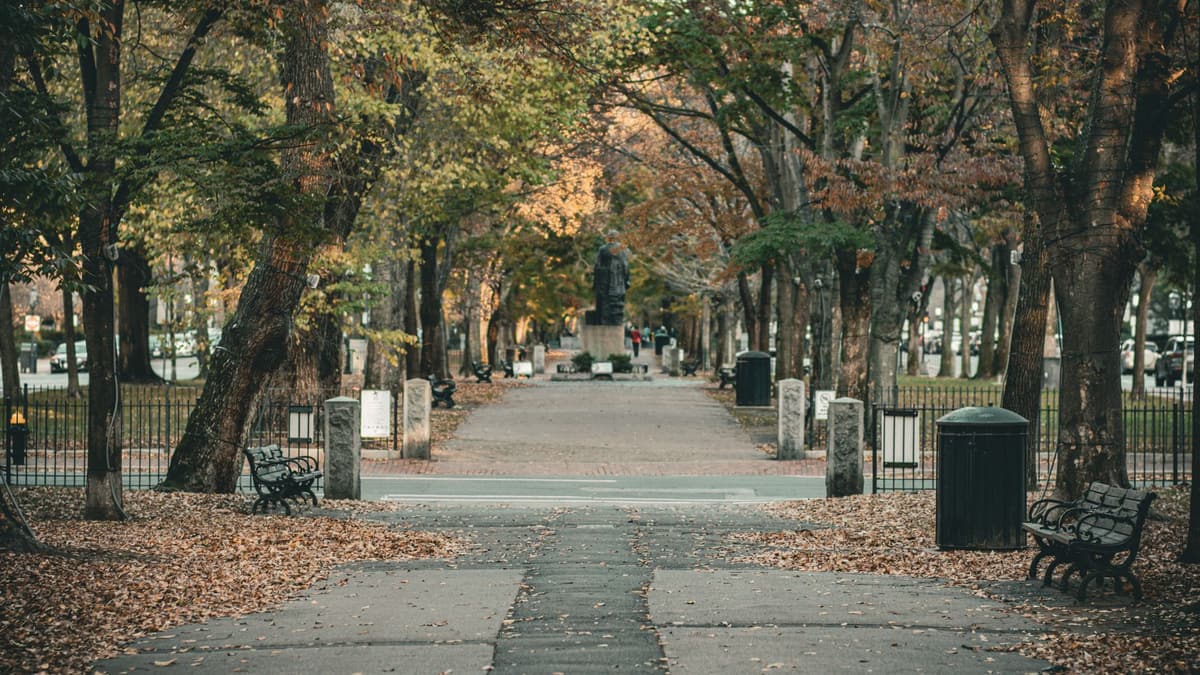
Boston Common
Boston Common is the oldest public park in the United States, bought from a solitary clergyman by Puritan settlers in 1634 and shared ground for the town for two centuries, used for grazing cattle, drilling the militia and public gatherings of every kind. In the tense years before the Revolution it became a camp for British soldiers, and on the night of April 18, 1775, redcoats mustered at its edge, then the shore of a tidal bay, before rowing off toward Lexington and Concord. Today its tree-lined paths and quiet corners are simply where Bostonians come to walk, read on a bench or cut across downtown, with the gold dome of the State House visible up the slope.
Get the Audio Tour in 3 Simple Steps
All in the free Walk With Me app, and the first stops of every tour are free to try.
Tap the Gold Headphones and Pick a Tour


01
Walk It Solo or Invite Someone


02
Press Play and Walk


03
Handcrafted for Your Time in the City
These tours aren't a checklist of sights. They're made to be walked slowly, headphones on, eyes on the city.
Meditative and Immersive
Each story is told where it happened. The app chimes when you reach a stop, one tap starts the story, and the stretch between stops is yours to take in at your own pace.
Handcrafted With Care
We choose every route and every stop ourselves and shape each story with care, so the time you have in the city goes to the places most worth seeing.
Better With Someone
Every walk is better with someone beside you, so if you can bring a friend, we really hope you do. That's why one purchase covers everyone you invite: they join your tour free.