




 $9.99City Highlights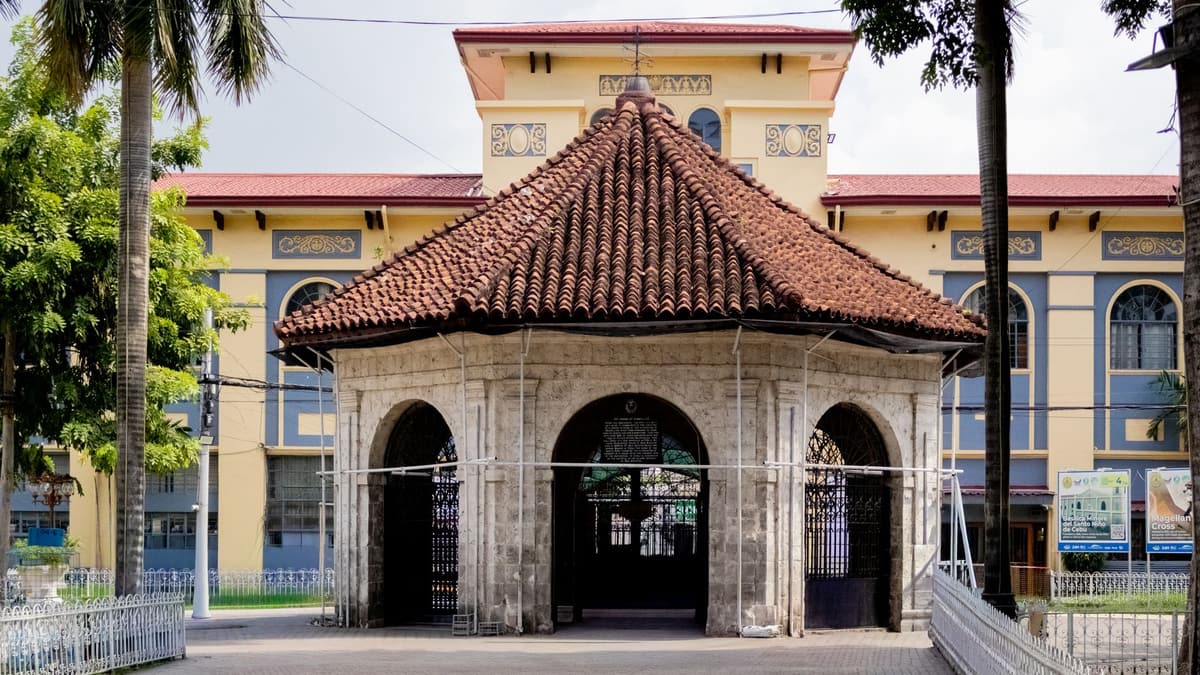
Cebu City Audio Walking Tours
Self-guided, narrated walks through Cebu City. Buy a tour once, download it, and hear the story at each stop while you walk at your own pace.
Tours from $7.99
Friends walk free. One purchase covers everyone on your walk. Start the tour, invite your friends to join, and it plays on every phone in your group.
5.0 on Google Play
Cebu City audio tours
Each tour is a mapped route with narration at every stop. Buy it once and it is yours to keep, no subscription.
$9.99City Highlights $7.99City Highlights
What to expect on a Cebu City audio walking tour
An audio walk through Cebu City moves between two different centuries, from the chaos of Colon Street and the dome of the Provincial Capitol to the harborside fort where Spain first arrived and the quiet old Chinese quarter of Parian.
The Colon to Capitol Walk starts at the obelisk on Colon Street, said to be the oldest street in the Philippines, then heads uptown past the University of San Carlos, Cebu Normal University and the old Casino Español, a social club built by the city's Spanish merchant families. It continues to the fountain circle of Fuente Osmeña, named for the Cebuano statesman who became Philippine president, and ends at the domed Provincial Capitol at the head of Osmeña Boulevard. It covers 3.8 kilometers, about 55 minutes of walking, across 7 stops.
The Fort and Parian Walk is shorter and covers the city's earliest chapter. It begins at Fort San Pedro, the small stone fort Spain built soon after Legazpi's expedition arrived in 1565, passes Magellan's Cross and the Basilica del Santo Niño, then circles the Heritage of Cebu Monument, a bronze sculpture crowding five centuries of history into one plaza in the old Chinese quarter of Parian. It runs 2.5 kilometers, about 35 minutes of walking, across 6 stops.
From the monument, the route passes the old stone house of Casa Gorordo, built by a Spanish merchant family in the 1800s, and ends at Museo Sugbo, the former provincial jail that now tells the island's story from before Magellan to the present day. Both walks are close to flat, so the real work is dodging the downtown crowds and crossing a few wide roads with care.
Where to walk in Cebu City
A few of the stops you will pass, and why they are worth slowing down for.
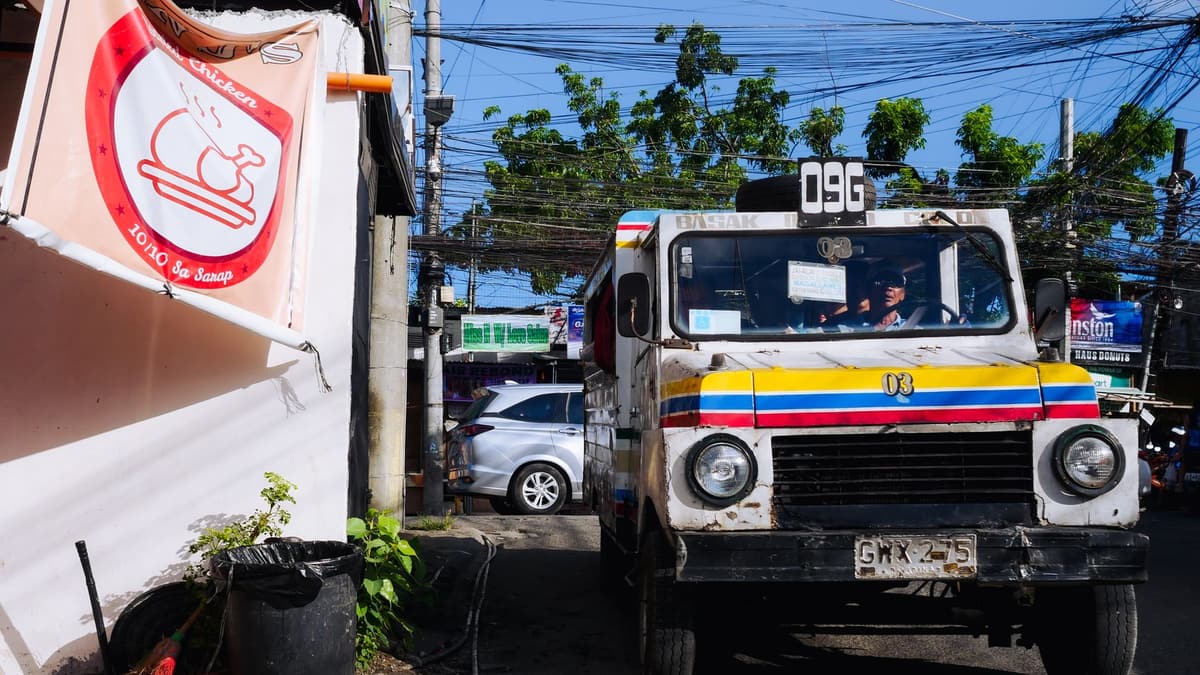
Colon Street
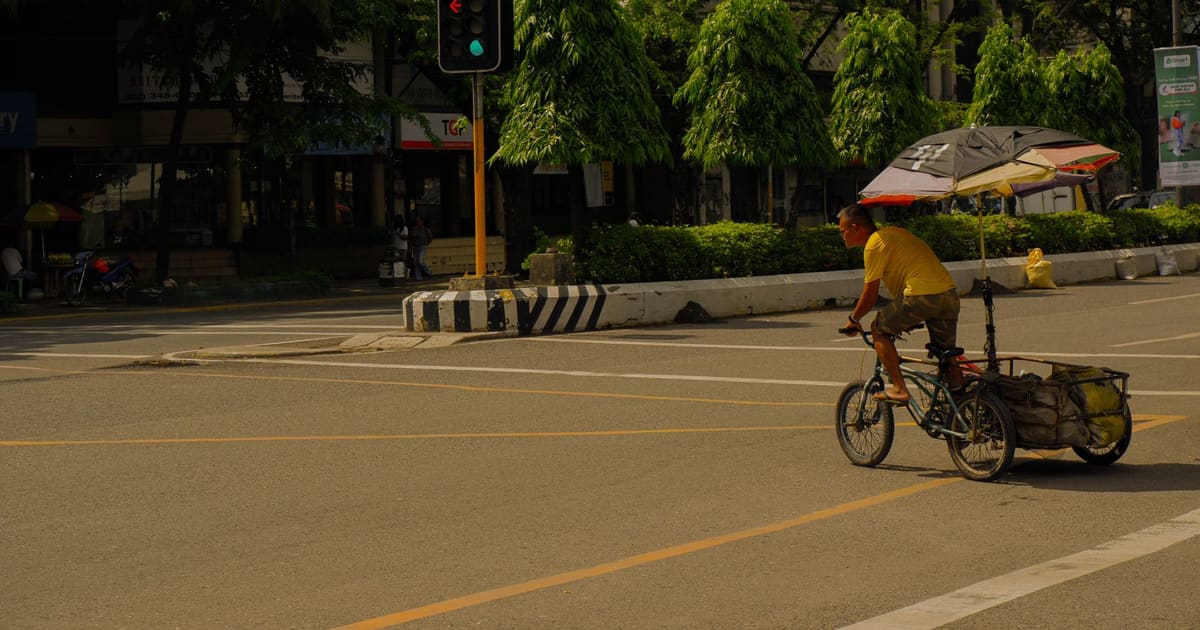
Colon Street is the oldest street in the Philippines by tradition, laid out in 1565 when the first Spanish settlers built their town beside the harbor fort. Today it is a crowded downtown shopping street, its narrow lane filled with phone stalls and shoe shops and a slow river of jeepneys, each one painted in its own bright colors and marked for a particular route. Vendors call out from the pavement and traffic edges forward in fits and starts. It was Cebu's main shopping street for most of the twentieth century, and even though the malls pulled the money uptown, Colon never grew quiet.
Fort San Pedro
Fort San Pedro is the oldest and smallest Spanish fort of its kind in the Philippines, a triangular stronghold with two walls facing the sea and a bastion at each corner, built soon after Miguel López de Legazpi's expedition landed here in 1565. What began as a stockade of logs and earth was rebuilt in stone over the following generations against raiders coming by sea. Walk the ramparts inside and you look out over the same harbor where ferries still arrive from the other islands. The fort later served as American barracks and a Japanese garrison before the city turned it into a park.
Basilica del Santo Niño
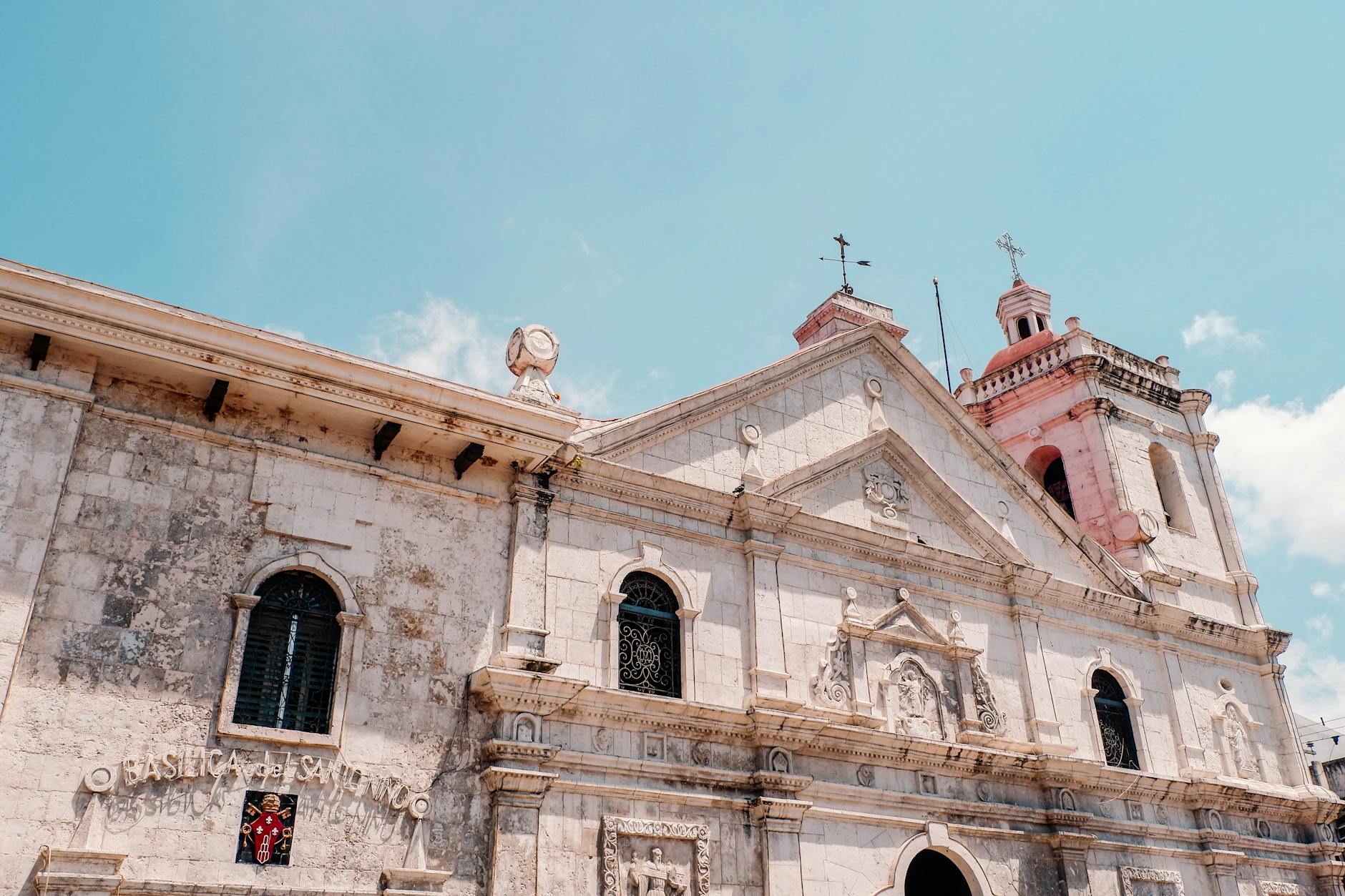
The Basilica Minore del Santo Niño is Cebu's most beloved church, built by Augustinian friars on the spot where a soldier found a small wooden statue of the Christ Child in 1565, apparently kept safe by the people of Sugbo since Magellan had given it to them forty-four years earlier. The pale stone facade and bell tower here belong to a church that rose through the Spanish centuries, was damaged in the Second World War and was carefully restored afterward. Every January the Sinulog festival fills the surrounding streets with drums and dancers in the image's honor.
Heritage of Cebu Monument
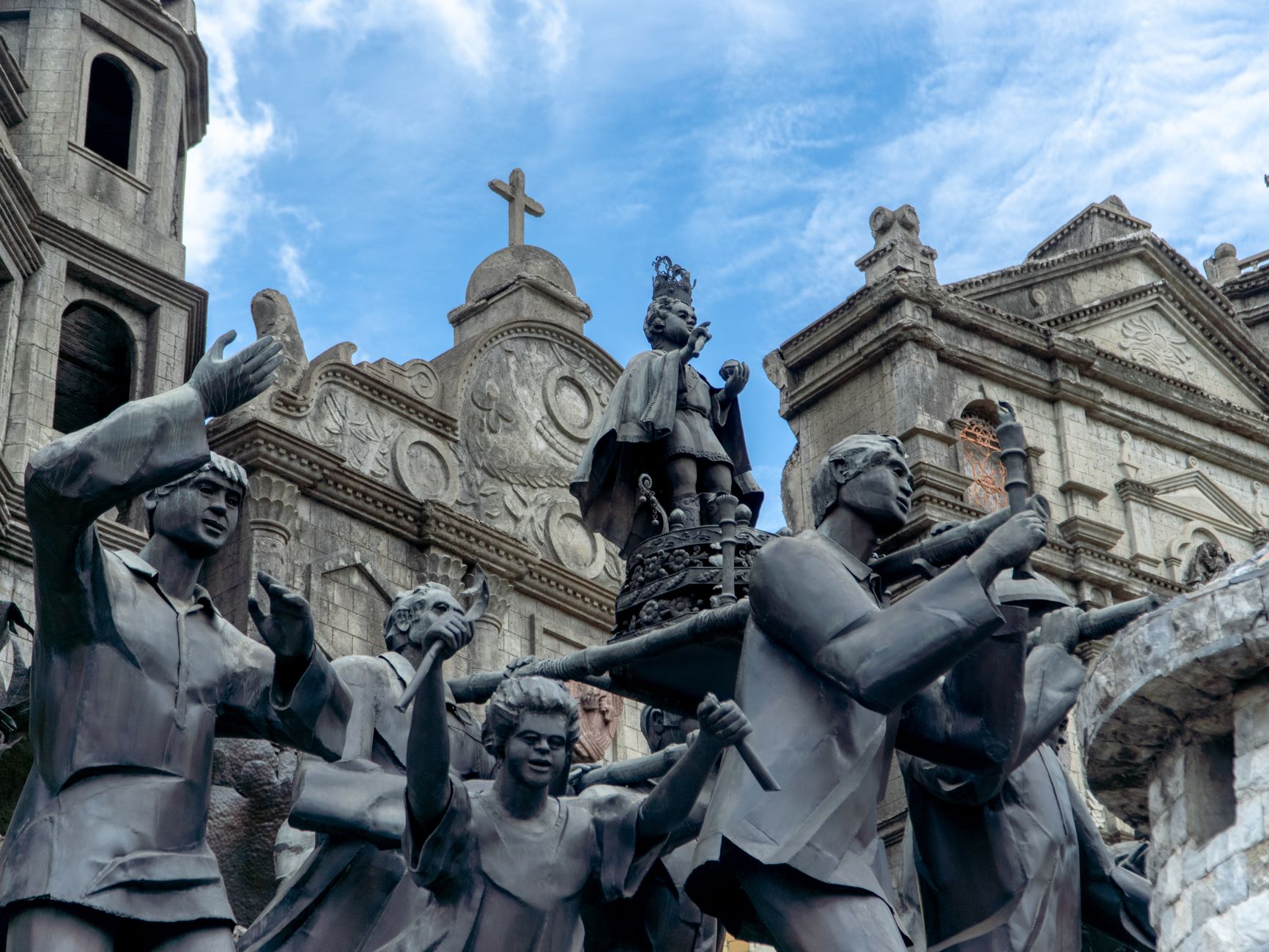
The Heritage of Cebu Monument stands in the old Parian district, the historic Chinese quarter where the colonial government once kept Chinese merchants in a neighborhood of their own. Sculpted by the Filipino artist Eduardo Castrillo, it reads like a comic strip in bronze and concrete, piling up scenes from five centuries of the city's history, among them Rajah Humabon's court, the baptism of 1521 and the fight at Mactan. Walk all the way around it to pick out the different episodes rather than viewing it from just one side, and look for the old Chinese mestizo houses still standing nearby.
Get the Audio Tour in 3 Simple Steps
All in the free Walk With Me app, and the first stops of every tour are free to try.
Tap the Gold Headphones and Pick a Tour


01
Walk It Solo or Invite Someone


02
Press Play and Walk


03
Handcrafted for Your Time in the City
These tours aren't a checklist of sights. They're made to be walked slowly, headphones on, eyes on the city.
Meditative and Immersive
Each story is told where it happened. The app chimes when you reach a stop, one tap starts the story, and the stretch between stops is yours to take in at your own pace.
Handcrafted With Care
We choose every route and every stop ourselves and shape each story with care, so the time you have in the city goes to the places most worth seeing.
Better With Someone
Every walk is better with someone beside you, so if you can bring a friend, we really hope you do. That's why one purchase covers everyone you invite: they join your tour free.