
October 11, 2026 · 9 min read
Amsterdam Anne Frank Walking Tour
From the Hollandsche Schouwburg through the old Jewish Quarter, past the Dockworker and the Dam, to the Anne Frank House on the Prinsengracht.
589

October 9, 2026 · 12 min read

 Friends walk free
Every tour also runs as a scheduled group walk you can join in the app.
See the Jászberény audio tour page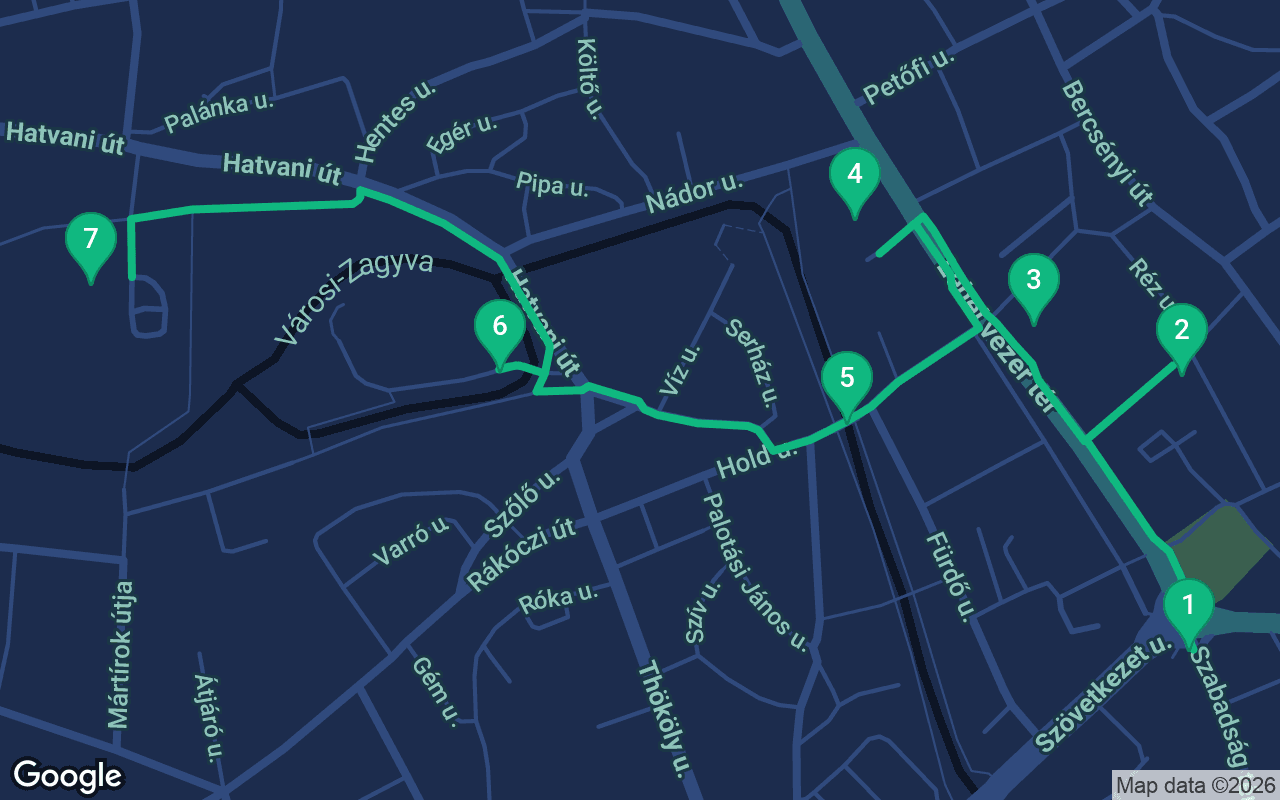
About 1.8 km, roughly 25 minutes at an easy pace.
This tour is narrated
Press play on the first 3 stops for a 30-second demo of the narration. In the app, the intro and those 3 stops play in full for free, each one chiming as you arrive. The whole narrated tour is yours for $6.99, a one-time purchase you keep for good.
Works with Garmin, Komoot, Strava, OS Maps and any GPX app.

Jászberény is the old capital of the Jászság, a stretch of the Great Hungarian Plain about 80 kilometers east of Budapest, and it carries more history than its size suggests. This walk starts at a shepherd's well at the southern end of the long main square, follows the square past the museum that keeps Lehel's Horn, the house where a whole people bought back their freedom and the church with a crown on its tower, then crosses to the Zagyva River and ends at a Gothic friary the Turks once turned into a fort. It is a little under two kilometers, just over a mile, and one of the easiest small-town self-guided walking tours in Hungary.
Allow about an hour and a half at an easy pace, and longer if you go inside the Jász Museum, which you really should if it is open. The walking itself takes less than half an hour. The whole route is flat, on paved squares, sidewalks and a riverside promenade, so it works with a stroller and in ordinary shoes. The main square has trees along much of its length, and the promenade by the Zagyva is shaded, but the open stretches can be hot on a summer afternoon, so carry water. Mornings are calm, and the late afternoon light is lovely on the yellow and white facades of the square. The museum and the churches keep their own hours, and churches may close between services, so check before you go if there is one you especially want to see inside. There are cafés and benches all along the main square if you want to break the walk.
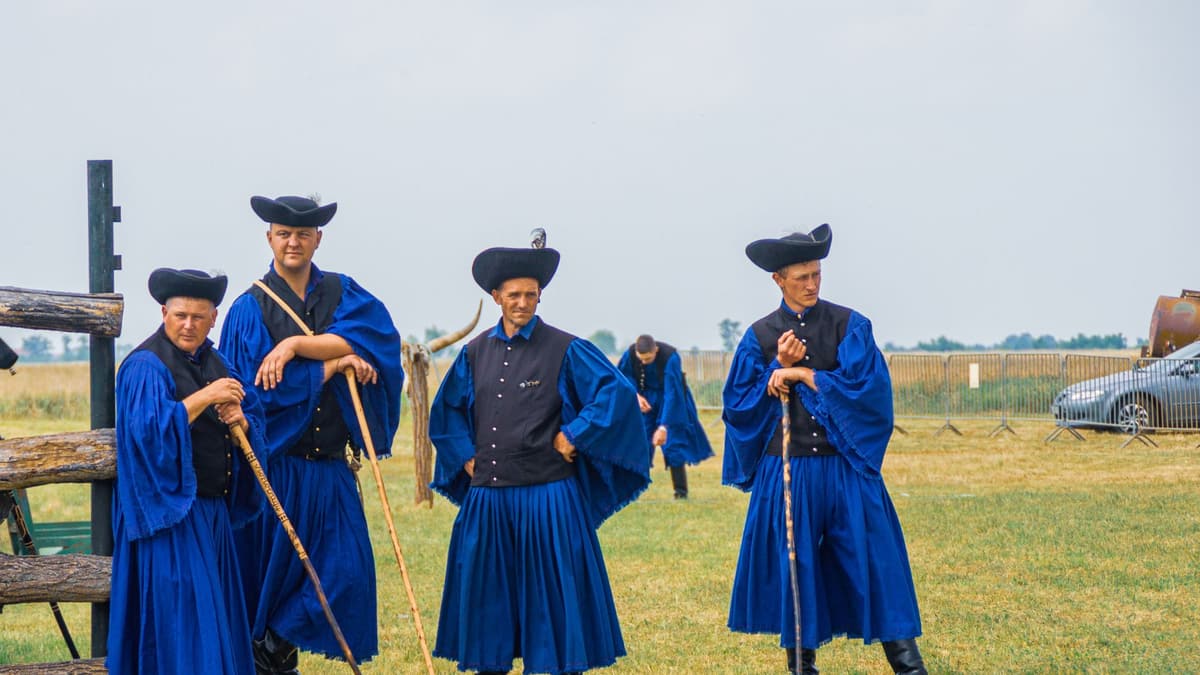
You are standing on Szabadság tér, at the southern end of the town's long main square, in front of a statue of a shepherd wrapped in a heavy cloak with a lamb beside him. That cloak is the bunda, the sheepskin coat that shepherds of the Hungarian plain wore against wind and frost, made from the wool of the long-horned racka sheep. It gives the well its name. In 1908 the town drilled an artesian well here, tapping water that rose on its own from deep underground, a real gift for a town on the dry plain. Four years later, in 1912, the sculptor Gyula Jankovits set this shepherd on top of it, and for a model he used László Benedek, one of the town's own shepherds. Not everyone was delighted. Records from the time say plenty of locals found the statue odd and said so, as people often do with new public art. The well was moved to the spot where you see it now in 1960, and it no longer gives water, but the shepherd has long since become one of the town's favorite landmarks. It is a good reminder of where Jászberény's wealth came from: cattle, sheep and horses grazing the open plain. Now walk north along the square for about three minutes. On your left you pass the pale classical Town Hall; you will hear its story shortly. Just after it, turn right into Táncsics Mihály utca, and the museum is on your right.
 In front of you is the Jász Museum, one of the oldest country museums in Hungary. It was founded on Christmas Eve 1874, after Orbán Sipos, a deputy captain of the district, argued that the region's treasures deserved a worthy home, and it has been in this building since 1931. The building had a humbler past as a stable, a military storehouse and a tax office. The museum's most famous object is a horn, and it is one of the most cherished relics in the country. Lehel's Horn is carved from a single elephant tusk, about 43 centimeters long, and covered in bands of tiny figures: hunters, fighting lions, centaurs, duelling men, acrobats and ball players, a harpist and an eagle with griffins. It was long thought to be Byzantine, and some researchers now place it in southern Italy, roughly a thousand years ago. The legend is better than any dating. In 955 the Hungarian raiders were crushed at the Battle of Augsburg, and their chieftain Lehel was captured. The chronicles say that before his execution he asked to blow his horn one last time, then struck the emperor dead with it, crying that the emperor would go before him and serve him in the next world. Real history is plainer, and Lehel was executed, but the horn has been the town's own since at least 1642, used as a drinking horn and an emblem at oaths and ceremonies. The museum also remembers Mihály Székely, the great bass singer born in Jászberény. Now walk back along Táncsics Mihály utca to the main square, turn right, and in about two minutes the long, low Baroque building of the District House is on your right.
This long building is the Jászkun District House, and it stands for the proudest day in the region's history. To understand it, go back to the thirteenth century, when King Béla IV settled two peoples from the east on royal land here: the Cumans and the Jász. The Jász descended from the Alans, horsemen of the steppes, and spoke an Iranian language, related to the Ossetian still spoken in the Caucasus. They slowly became Hungarian in speech, but they kept their own name and their own freedoms. Then, in 1702, King Leopold I, short of money after the wars against the Ottomans, pledged the whole Jász and Cuman lands to the Teutonic Order for 500,000 Rhenish florins. Overnight, free people found they had a landlord. They spent decades collecting money, family by family, and borrowing the rest, and on May 6, 1745, Queen Maria Theresa signed the deed of the Redemption. They paid 575,900 florins and promised to equip 1,000 horsemen for the crown. In return they won back the right to elect their own officials and priests, to judge their own courts and to be free of tolls and feudal dues. This building, designed by Anton Erhard Martinelli and finished in 1745, became the seat of the Jászkun District, which ruled itself until 1876. It was later reworked in rococo and then classical style. Look back down the square too, at the Town Hall you passed earlier, built in 1838 and 1839 to plans drawn by the district engineer Lőrinc Bedekovich, with a facade taken from designs by Mihály Pollack, the architect of the Hungarian National Museum in Budapest. Now continue north along the square for about two minutes toward the big church.
What's included
Our tours are made to be meditative and immersive: you keep moving and simply listen. They're always better together, and the app plays the narration in sync, so you, your partner and your friends hear every stop at the same moment.
Before you reach the church, stop at the bronze hussar on his tall stone pedestal. He remembers the Jászkun hussars killed in the First World War.
The rest of this stop is in the full audio tour.

You have reached the Zagyva, the river that winds through the town on its way south to the Tisza, and the oldest bridge across it.
The rest of this stop is in the full audio tour.
This bust shows Déryné, born Rozália Schenbach in Jászberény on Christmas Eve 1793, and she is one of the great figures of the Hungarian stage.
The rest of this stop is in the full audio tour.
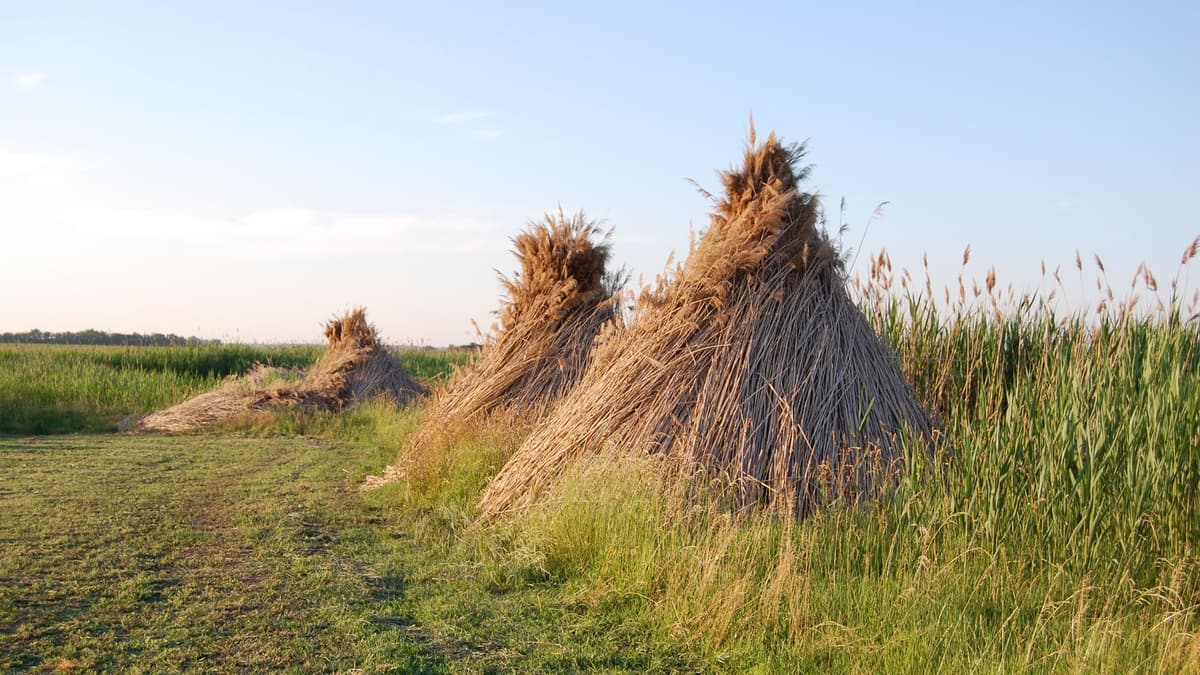
You end at the oldest building in Jászberény. The Franciscan friars built their church and friary here between about 1460 and 1472, the year Pope Sixtus IV confirmed it to them, and by 1535 sixteen friars lived here.
The rest of this stop is in the full audio tour.
Do this walk with other people on the next scheduled tour.
About 1.8 km, roughly 25 minutes at an easy pace · 7 stops
Friends walk freeOctober 11, 2026 · 9 min read
From the Hollandsche Schouwburg through the old Jewish Quarter, past the Dockworker and the Dam, to the Anne Frank House on the Prinsengracht.
October 11, 2026 · 11 min read
From Van Houten's street by the Vondelpark past Leidseplein, the Rijksmuseum passage and the famous canal bench to the Anne Frank House.

October 11, 2026 · 10 min read
Follow the last days of April and May 1945 from the Anhalter Bahnhof ruin past the Gestapo site and Brandenburg Gate to the Moltke Bridge and the Reichstag.
