
October 11, 2026 · 9 min read
Amsterdam Anne Frank Walking Tour
From the Hollandsche Schouwburg through the old Jewish Quarter, past the Dockworker and the Dam, to the Anne Frank House on the Prinsengracht.
589

October 11, 2026 · 14 min read

 Friends walk free
Every tour also runs as a scheduled group walk you can join in the app.
More audio tours in London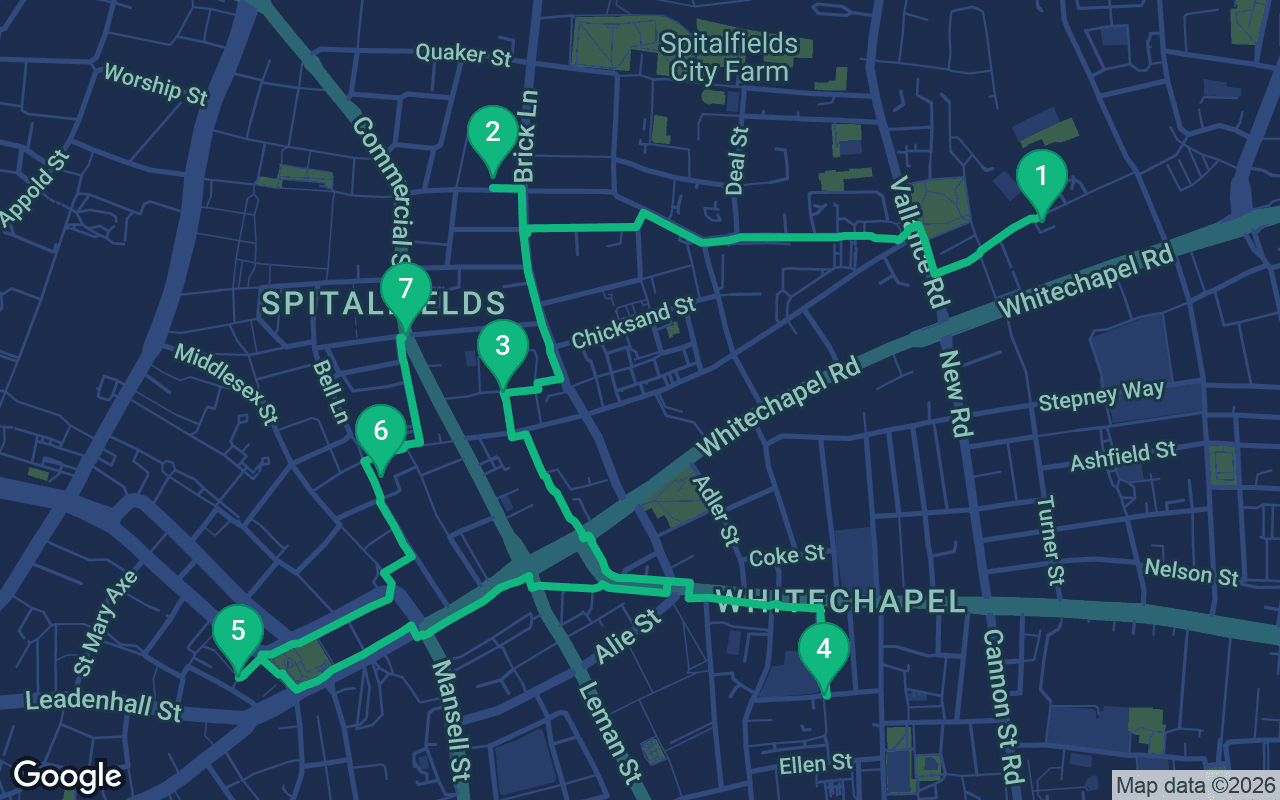
About 4.1 km, roughly 58 minutes at an easy pace.
This tour is narrated
Press play on the first 3 stops for a 30-second demo of the narration. In the app, the intro and those 3 stops play in full for free, each one chiming as you arrive. The whole narrated tour is yours for $15.99, a one-time purchase you keep for good.
Works with Garmin, Komoot, Strava, OS Maps and any GPX app.
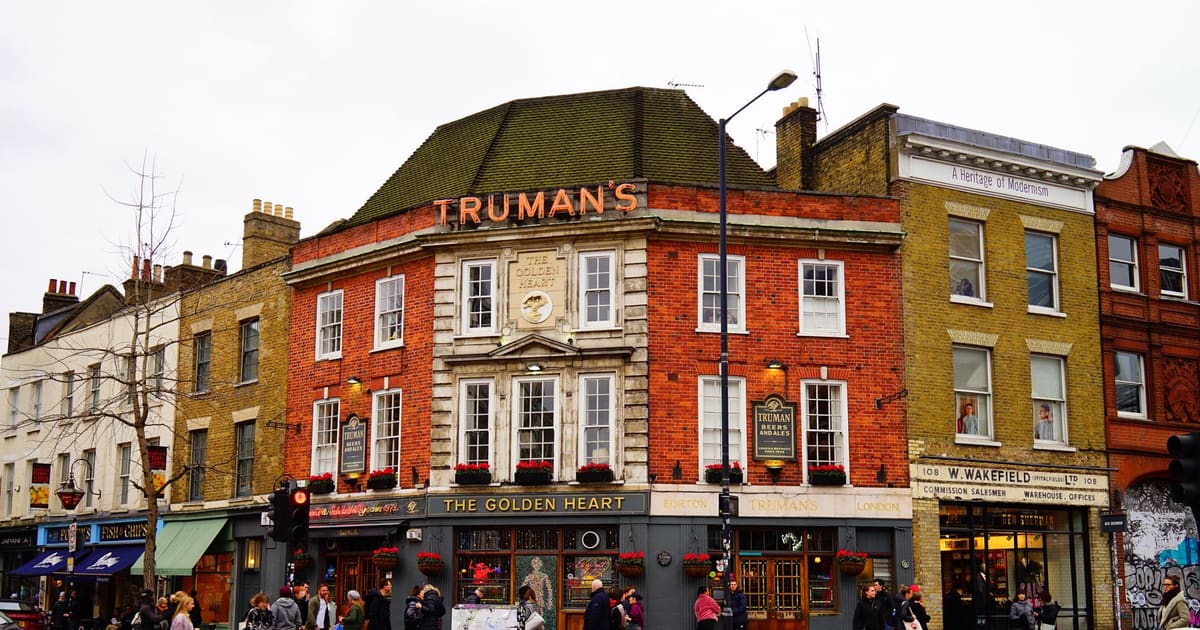
Between the last day of August and the ninth of November 1888, five women were killed in and around Whitechapel and Spitalfields, in London's East End. Their names were Mary Ann Nichols, Annie Chapman, Elizabeth Stride, Catherine Eddowes and Mary Jane Kelly. They were poor, most of them in their forties, and they lived night to night in lodging houses where a bed cost a few pennies. The killer was never caught, and the name the world remembers came from a letter that many police officers believed was a hoax. This walk tells those ten weeks in the order they happened, and it keeps its eyes on the women: where they slept, what they said, who they were with on their last day. It runs about four kilometers, from Durward Street behind Whitechapel station to the site of Dorset Street, by Christ Church Spitalfields. It is one of our more serious self-guided walking tours, so walk it gently.
Allow about two hours with the stories. Start at Whitechapel station, served by the Elizabeth line, the District, Hammersmith and City and the Overground. Durward Street runs right behind it. You finish on Commercial Street, a short walk from Liverpool Street or Aldgate East. The route is flat and paved, with busy road crossings around Aldgate and Commercial Road, so take those slowly. Daylight is the best time. These are working neighborhoods, so keep your voice down and step aside for residents, especially at Henriques Street, where a primary school stands on one of the sites. Almost nothing from 1888 survives along the route, so most stops ask you to picture a street that is gone.
You're on Durward Street, behind the station. In 1888 it was called Buck's Row; the name was changed on 25 October 1892. Look for the tall old Board School, now flats called Trinity Hall. It is the only building on this street that stood in 1888.
Mary Ann Walker was born in August 1845 just off Fleet Street, in the City, the daughter of a blacksmith named Edward Walker. She was known as Polly. She married William Nichols in 1864, and they had five children. The marriage broke down for good around 1880, and for the next years Polly moved in and out of workhouses, Lambeth among them. In the spring of 1888 she found a place as a servant in a house in Wandsworth, and she wrote to her father. "I am settled in my new place, and going all right up to now," she told him. "It is a grand place inside, with trees and gardens back and front." She left that summer, taking clothing worth three pounds ten shillings.
On her last night she was turned out of a lodging house on Thrawl Street because she didn't have the money for a bed. She wasn't worried. "Never mind," she said. "I'll soon get my doss money. See what a jolly bonnet I've got now." At half past two she met a friend, Emily Holland, on the corner of Whitechapel Road and Osborn Street, and told her she'd had her bed money three times that day and spent it. "It won't be long before I'm back," she said.
At about 3.40 that morning, Friday 31 August, a carman named Charles Cross, walking to work, saw her lying in a stableyard gateway here. He called over another carman, Robert Paul. Minutes later PC John Neil found her too. Her throat had been cut. She was buried on 6 September.
Walk west along Durward Street, then follow your map up Vallance Road and left into Hanbury Street. Follow it west and just across Brick Lane, about thirteen minutes in all.
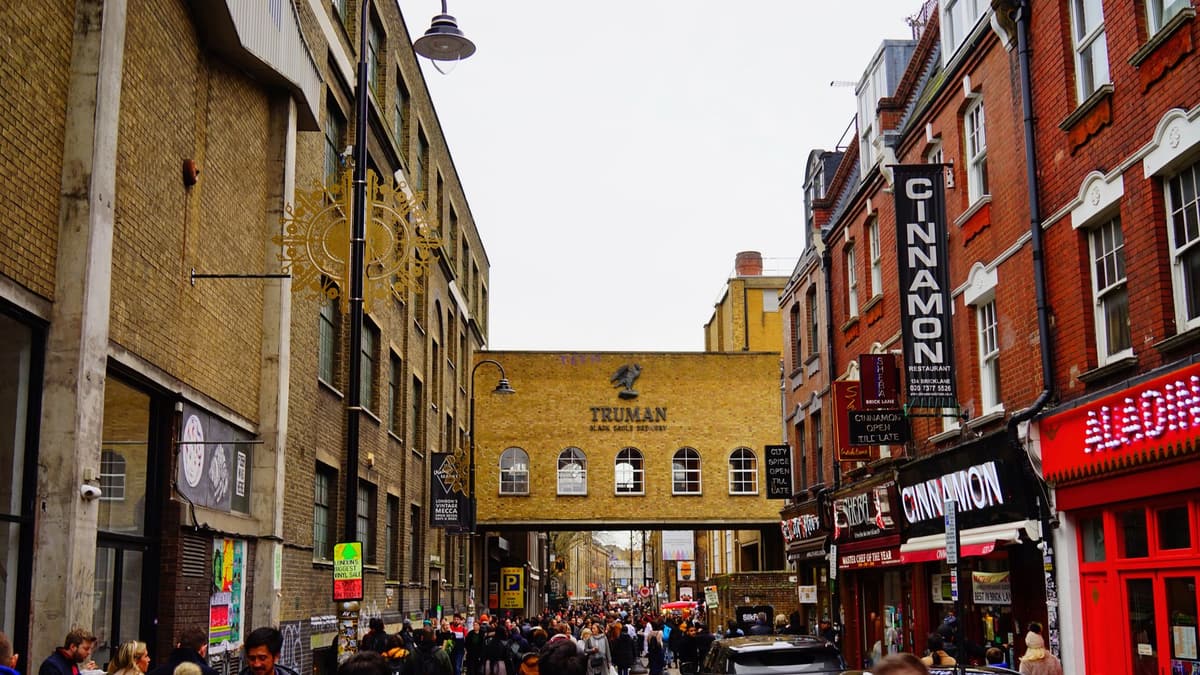 You're on Hanbury Street, beside the long brick buildings of the Old Truman Brewery. Look along the frontage for a large number 29. It marks where a house stood until it was pulled down in March 1970. Behind that house was a small back yard.
Annie was born Eliza Ann Smith, in the autumn of 1840 or 1841; the records disagree. In 1869 she married John Chapman, a coachman, and they had three children. Their eldest, Emily, died of meningitis at twelve. Their son John, born in 1880, was disabled and was cared for in an institution. Annie and John separated in the mid-1880s, but he sent her ten shillings a week by Post Office order. She lived on that and on what she made from crochet work and selling flowers. Then, on Christmas Day 1886, John died, and the money stopped. When she told a friend about his death, she cried.
By the summer of 1888 she was lodging at Crossingham's, at 35 Dorset Street, a few minutes from here. Remember that street; it's where this walk ends. Her usual bed there was number 29. At about 1.35 on the morning of Saturday 8 September she told the deputy, Timothy Donovan, that she didn't have enough for her bed, and asked him to keep it for her. On her way out she spoke to the night watchman, John Evans. "I won't be long, Brummy. See that Tim keeps the bed for me."
She never came back for it. A little before six that morning, John Davis, a carman who lived with his family on the third floor of number 29, went down to the back yard and found her there. She had been killed and mutilated. Annie's funeral, on 14 September, was kept secret; only her relatives were there.
Head back to Brick Lane and walk south, then follow your map right into the housing estate to Flower and Dean Walk, about six minutes.
You're on a footpath through a 1980s housing estate. The path keeps the name of Flower and Dean Street, which ran here in 1888 and was one of the poorest streets in London. It was lined with common lodging houses: big shared dormitories where you paid each night for a bed, and if you didn't have the pennies, you walked the streets until you did.
This stop is about the women's lives, not their deaths. Polly Nichols had stayed at number 56 the week before she died. Elizabeth Stride had lodged at number 32, on and off, since 1882. Catherine Eddowes stayed at Cooney's, number 55, with her partner, John Kelly. Three of the five women in this story slept on this one street.
Here is where the story picks up the night of 29 September. Elizabeth Stride spent that Saturday at number 32, cleaning rooms for sixpence. Sometime between seven and eight in the evening she went out, and she gave a fellow lodger, Catherine Lane, a large piece of green velvet to hold for her until she came back. Catherine Eddowes and John Kelly had come back from hop picking in Kent that week, short of money. On the Friday, Kelly earned sixpence. She took twopence and told him to have the bed at Cooney's, while she went to the casual ward instead.
How should we describe these women? In 1888, police and press simply assumed all five were prostitutes. In 2019 the historian Hallie Rubenhold published The Five, which won the Baillie Gifford Prize. She argues there is no firm evidence that three of them, Polly, Annie and Catherine, ever earned money that way, and that they were more likely women sleeping rough. Many Ripper researchers reject this and say all five had, at some point, sold sex to survive. The argument has been fierce, and it isn't settled. What's not in doubt is that each of them was poor, mostly in her forties, and trying to find the price of a bed.
Follow your map south-east across Whitechapel High Street and then over Commercial Road to Henriques Street, about eleven minutes.
What's included
Our tours are made to be meditative and immersive: you keep moving and simply listen. They're always better together, and the app plays the narration in sync, so you, your partner and your friends hear every stop at the same moment.
You're on Henriques Street. In 1888 this was Berner Street; it was renamed in 1961 after Basil Henriques.
The rest of this stop is in the full audio tour.
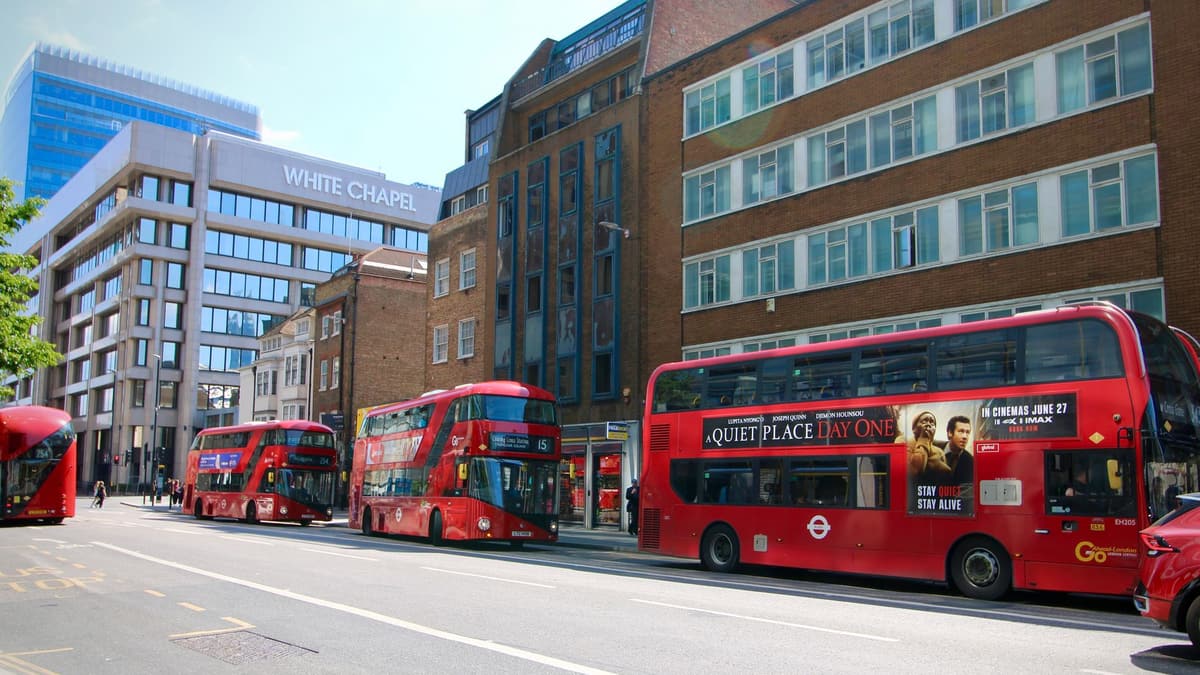
You're in Mitre Square, a small paved square ringed by offices. The outline is old, but every building from 1888 is gone, and the square has been rebuilt more than once, most recently around 2018.
The rest of this stop is in the full audio tour.
You're on Goulston Street. Look for the tall 1880s block called Wentworth Dwellings.
The rest of this stop is in the full audio tour.
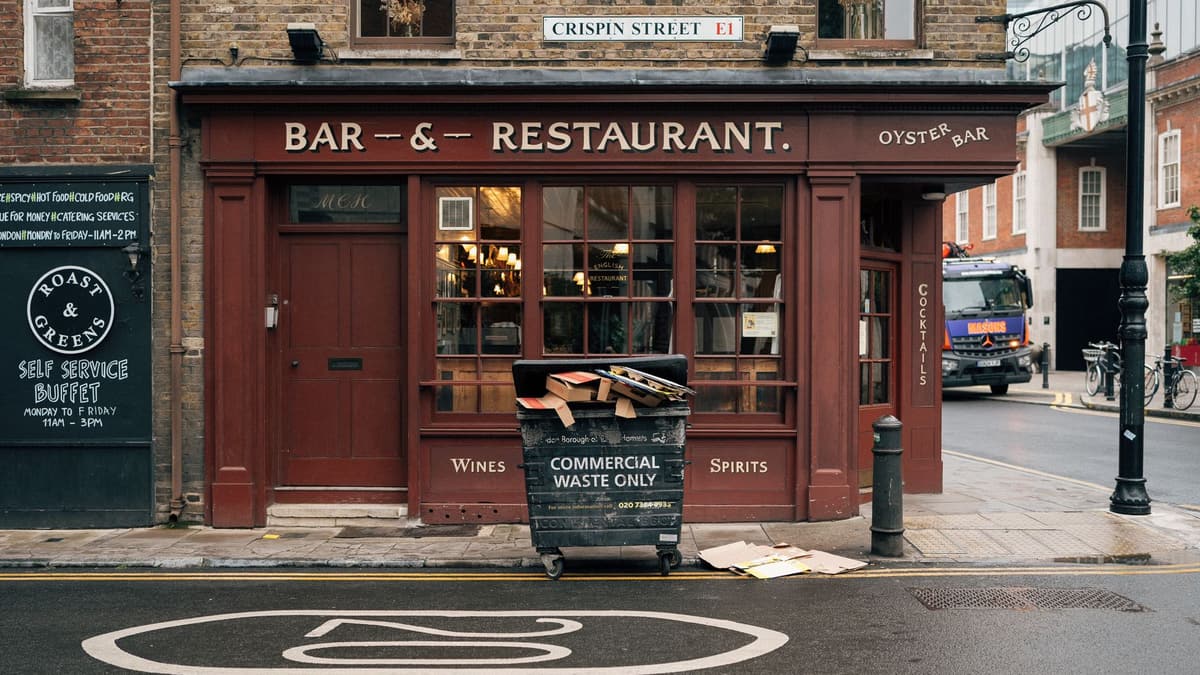
You're on Commercial Street. Across the road rises Christ Church Spitalfields, Nicholas Hawksmoor's great white church.
The rest of this stop is in the full audio tour.
Do this walk with other people on the next scheduled tour.
About 4.1 km, roughly 58 minutes at an easy pace · 7 stops
Friends walk freeOctober 11, 2026 · 9 min read
From the Hollandsche Schouwburg through the old Jewish Quarter, past the Dockworker and the Dam, to the Anne Frank House on the Prinsengracht.
October 11, 2026 · 11 min read
From Van Houten's street by the Vondelpark past Leidseplein, the Rijksmuseum passage and the famous canal bench to the Anne Frank House.

October 11, 2026 · 10 min read
Follow the last days of April and May 1945 from the Anhalter Bahnhof ruin past the Gestapo site and Brandenburg Gate to the Moltke Bridge and the Reichstag.
