




 $7.99City Highlights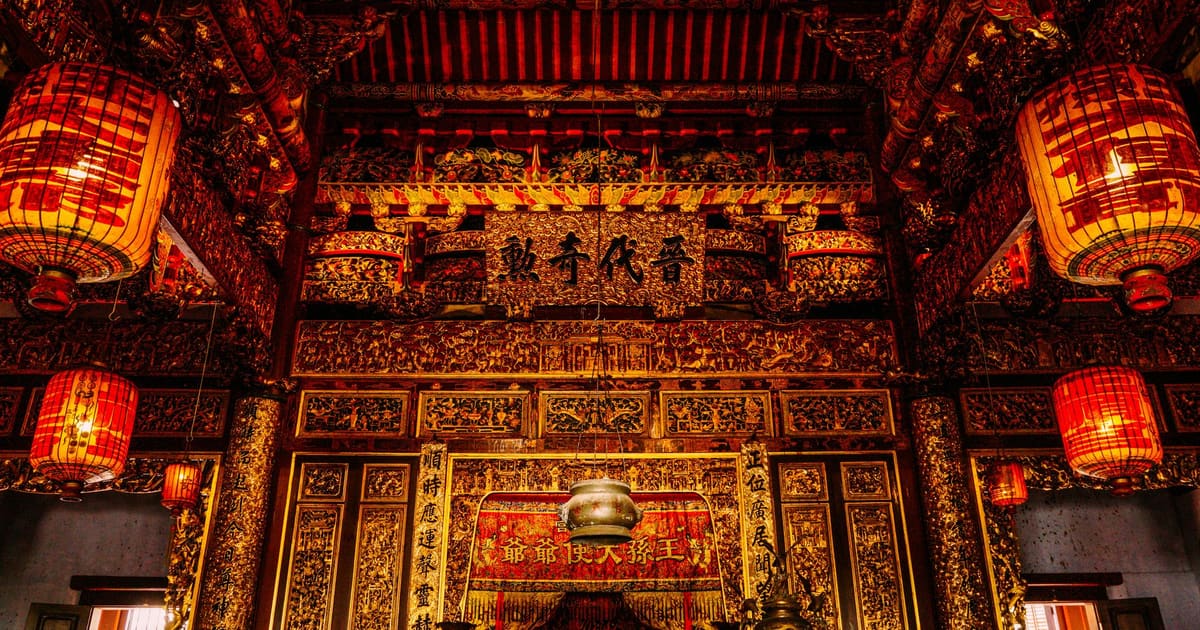
George Town Audio Walking Tours
Self-guided, narrated walks through George Town. Buy a tour once, download it, and hear the story at each stop while you walk at your own pace.
Tours from $7.99
Friends walk free. One purchase covers everyone on your walk. Start the tour, invite your friends to join, and it plays on every phone in your group.
5.0 on Google Play
George Town audio tours
Each tour is a mapped route with narration at every stop. Buy it once and it is yours to keep, no subscription.
$7.99City Highlights$7.99City HighlightsWhat to expect on a George Town audio walking tour
A George Town audio walking tour moves between the British seafront of colonial Penang and the packed, fragrant streets where Chinese, Malay and Indian communities have lived side by side for centuries, with narration timed to each doorway and temple gate.
The George Town Colonial Walk starts at the grand Eastern & Oriental Hotel on the seafront, visits the indigo-painted Cheong Fatt Tze Mansion, and passes St George's Church, the oldest Anglican church in Southeast Asia, on its way to Penang City Hall on the old parade ground. From there it reaches Fort Cornwallis, where Francis Light first landed in 1786, and ends inside the gilded Pinang Peranakan Mansion. It covers about 2.5 kilometers, around 35 minutes of walking.
The George Town Heritage Walk begins at the foot of Komtar tower, detours for a bowl of the city's most famous cendol, and visits the Hainan Temple before reaching the Street of Harmony, where a Chinese temple, mosque and Hindu temple stand within a few minutes of each other.
From the Street of Harmony the route continues to Khoo Kongsi, the most lavish clan house in Malaysia, and finishes on the wooden boardwalks of Chew Jetty, a stilt village still home to families descended from its first settlers. It runs about 2.8 kilometers, roughly 39 minutes of walking, through some of the most densely layered streets in Southeast Asia.
Where to walk in George Town
A few of the stops you will pass, and why they are worth slowing down for.
Cheong Fatt Tze Mansion
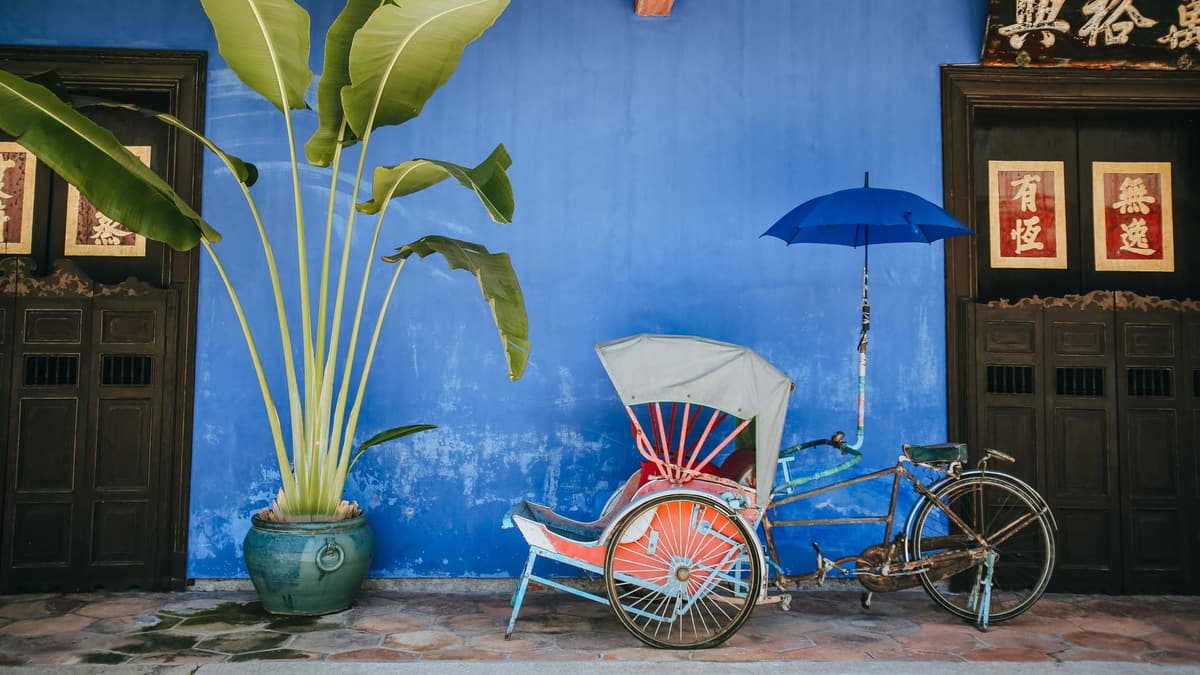
Painted a deep indigo blue that is impossible to miss, the Cheong Fatt Tze Mansion is better known to everyone in Penang simply as the Blue Mansion. At street level, a parked trishaw and a potted banana plant lean against the vivid color of its wall. The house was built around the turn of the twentieth century for a Hakka businessman who made one of the great fortunes of the region in shipping and banking, and it follows the rules of feng shui closely, with courtyards built to catch the rain and keep wealth flowing inward. It decayed into crowded lodgings for decades before conservationists rescued it in the 1990s, work that won a UNESCO heritage award. The trishaws parked along streets like this one, often decorated with plastic flowers, are still a common sight and a fun way to see more of the old town if your feet need a break.
Penang City Hall
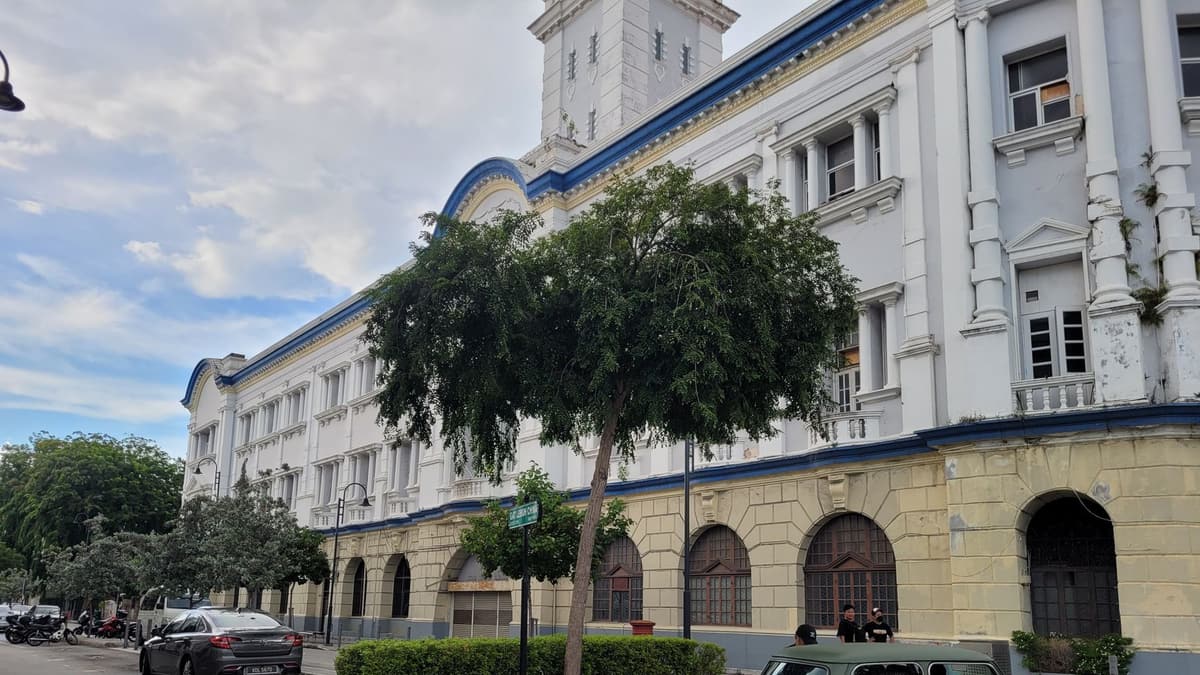
Seen across the lawn of the Padang, the old parade ground, Penang City Hall is a gleaming white Edwardian building from 1903, with columns, balustrades and a central pediment behind its shading tree. It was built for the town's municipal commissioners and is said to have been the first building in Penang fitted with electric lights and fans. Soldiers once drilled on this open ground and cricket matches filled the afternoons, while the townspeople strolled the seafront road in the cool of the evening. George Town was made a city by royal charter here in 1957, the first in what was then the Federation of Malaya, just months before independence, and the building still belongs to the city council today.
Khoo Kongsi
Step through the narrow entrance to this hidden square and the most dazzling building in George Town opens up around you: gilded carvings, painted beams and a glowing hall lit by red lanterns hanging from the ceiling. This is the clan house of the Khoo family, Hokkien people whose ancestors came from one village in Fujian province, and clan houses like it once looked after newcomers, settled disputes and kept the worship of shared ancestors. An earlier hall is said to have burned down soon after it was finished, seen as a sign that it was too grand, and the present building, completed in 1906, was made a little more modest, though it is still hard to believe looking at the detail inside. Rows of ancestral tablets line the hall, and it rewards taking your time with every carved surface.
Chew Jetty
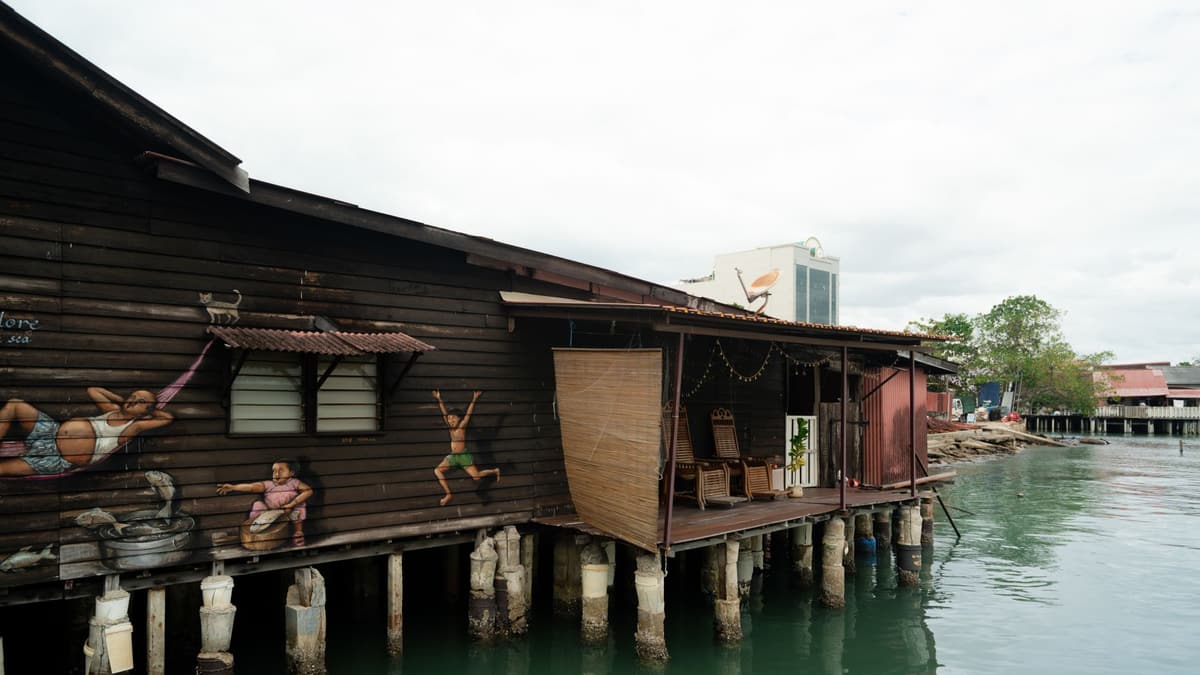
Chew Jetty is a wooden village built on stilts over the sea, a long boardwalk lined with houses on both sides, weathered timber walls painted with murals of community life, a porch with rocking chairs, and the water lapping at the pilings below. The jetties grew up from the late nineteenth century, when Chinese immigrants found work at the busy port as boatmen, porters and fishermen and built their homes out over the water near the wharves. Each jetty became home to one surname clan, and families descended from those first settlers still live here today, so keep your voice down, stay out of open doorways, and ask before photographing anyone, since this is a living neighborhood rather than an open air museum.
Historic Shophouses of the Old Town
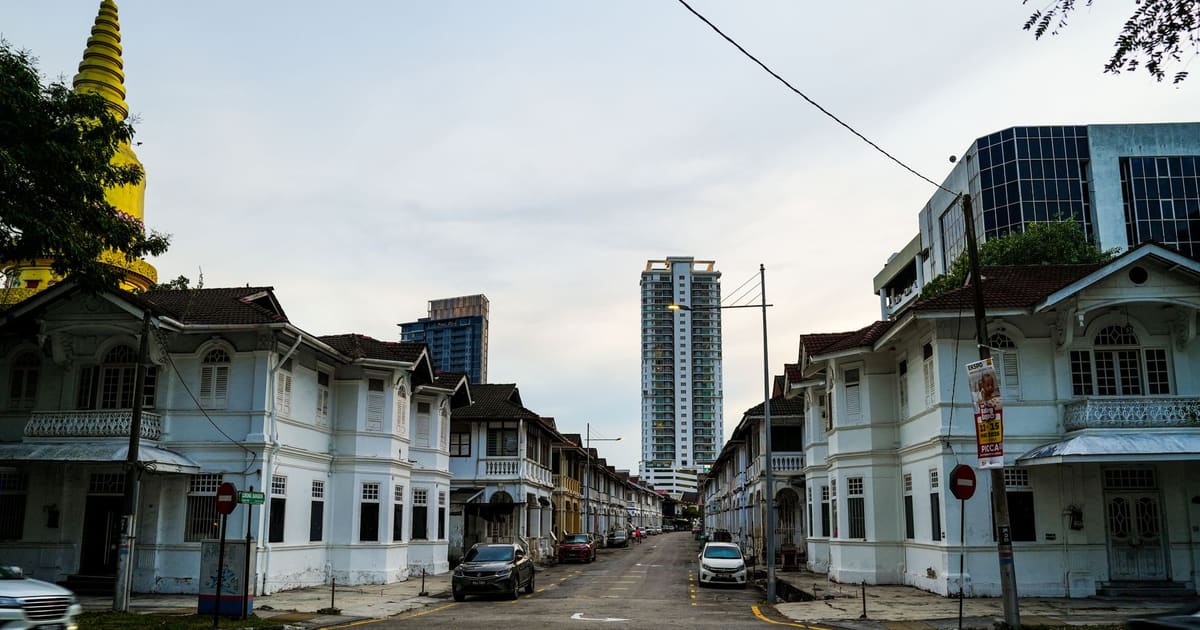
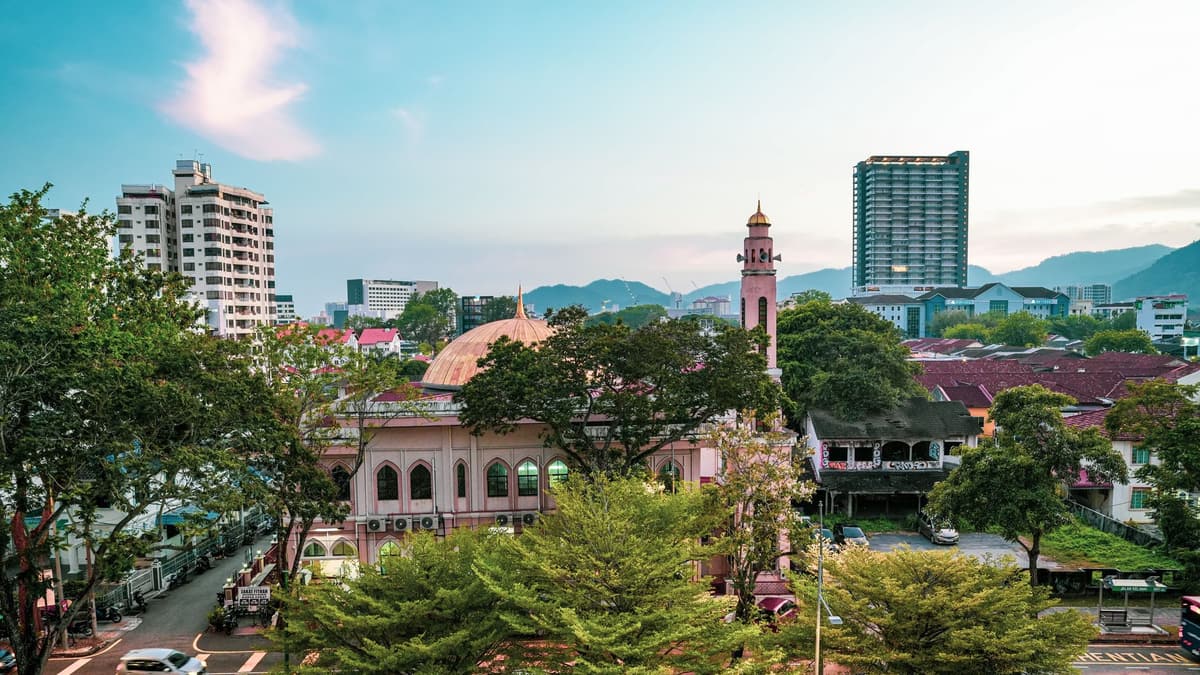
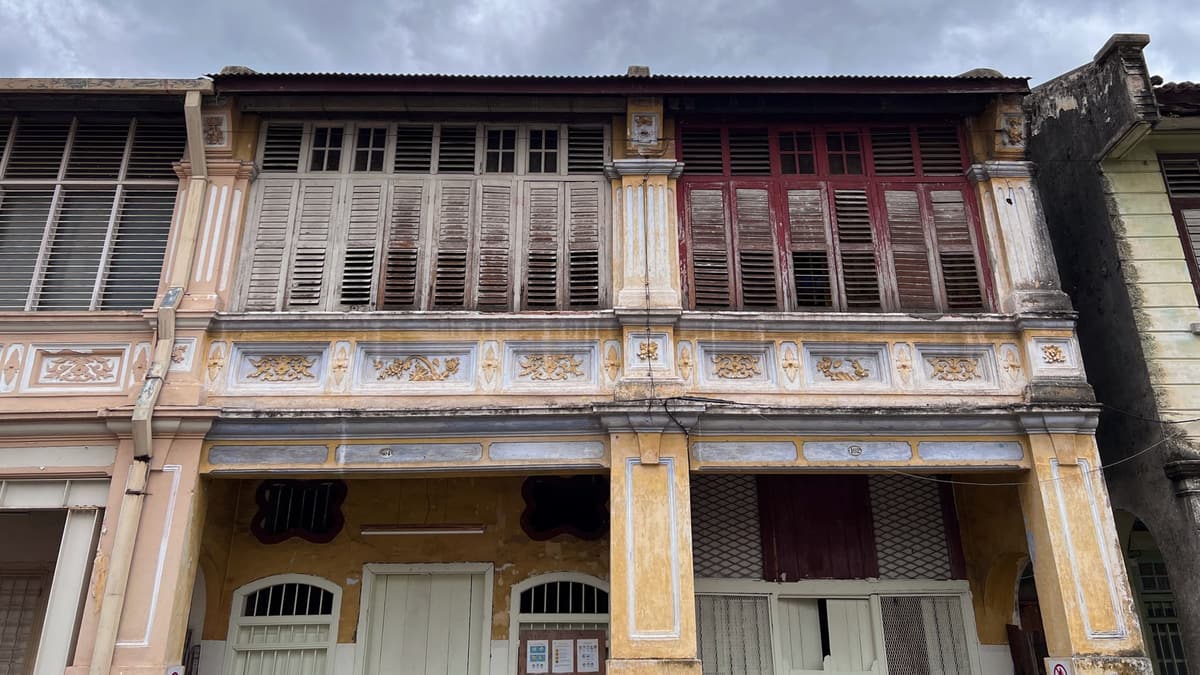
This weathered facade, with its wooden shutters, faded paint and carved plaster panels, is typical of the two-story shophouses that line street after street of George Town's old town, its texture visible up close in the peeling red and cream paint, the shuttered upper windows where families once lived above their shops. Streets like this one connect the temples, mosque and clan houses of the Street of Harmony, each community building within a few minutes' walk of the next over close to two centuries. The conservation movement that saved buildings like this one gathered pace after redevelopment cleared whole blocks elsewhere in the city, and in 2008 UNESCO listed this old town, together with Malacca, as the Historic Cities of the Straits of Malacca.
Get the Audio Tour in 3 Simple Steps
All in the free Walk With Me app, and the first stops of every tour are free to try.
Tap the Gold Headphones and Pick a Tour


01
Walk It Solo or Invite Someone


02
Press Play and Walk


03
Handcrafted for Your Time in the City
These tours aren't a checklist of sights. They're made to be walked slowly, headphones on, eyes on the city.
Meditative and Immersive
Each story is told where it happened. The app chimes when you reach a stop, one tap starts the story, and the stretch between stops is yours to take in at your own pace.
Handcrafted With Care
We choose every route and every stop ourselves and shape each story with care, so the time you have in the city goes to the places most worth seeing.
Better With Someone
Every walk is better with someone beside you, so if you can bring a friend, we really hope you do. That's why one purchase covers everyone you invite: they join your tour free.