




 $9.99City Highlights
Phuket Old Town Audio Walking Tours
Self-guided, narrated walks through Phuket Old Town. Buy a tour once, download it, and hear the story at each stop while you walk at your own pace.
Tours from $9.99
Friends walk free. One purchase covers everyone on your walk. Start the tour, invite your friends to join, and it plays on every phone in your group.
5.0 on Google Play
Phuket Old Town audio tours
Each tour is a mapped route with narration at every stop. Buy it once and it is yours to keep, no subscription.
$9.99City Highlights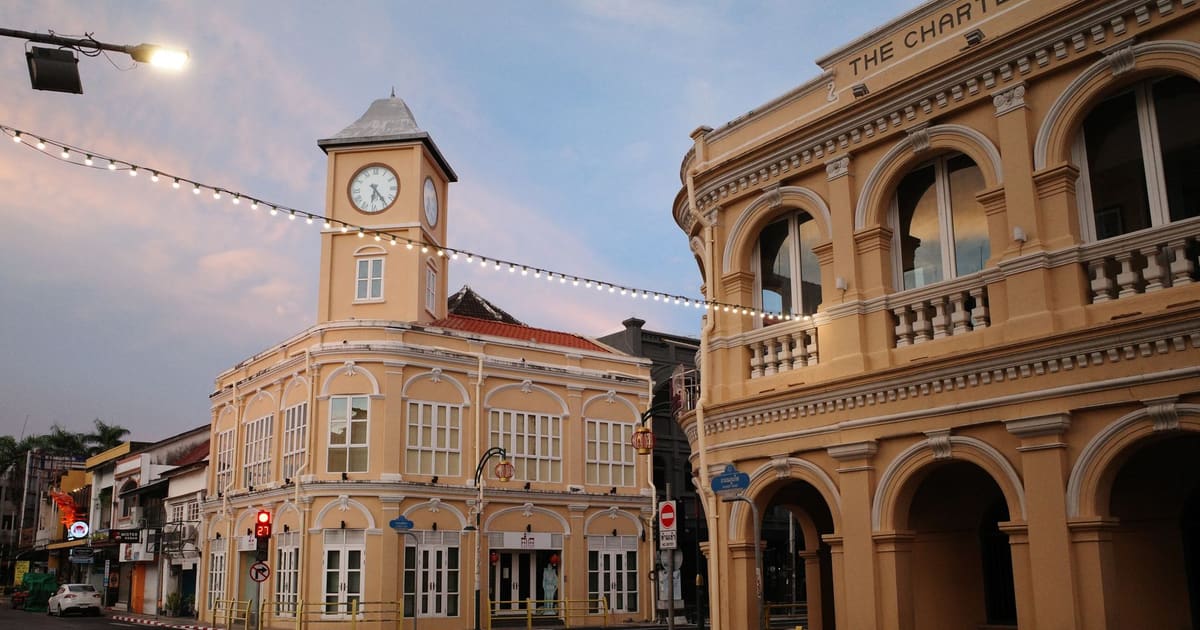 $9.99City Highlights
What to expect on a Phuket Old Town audio walking tour
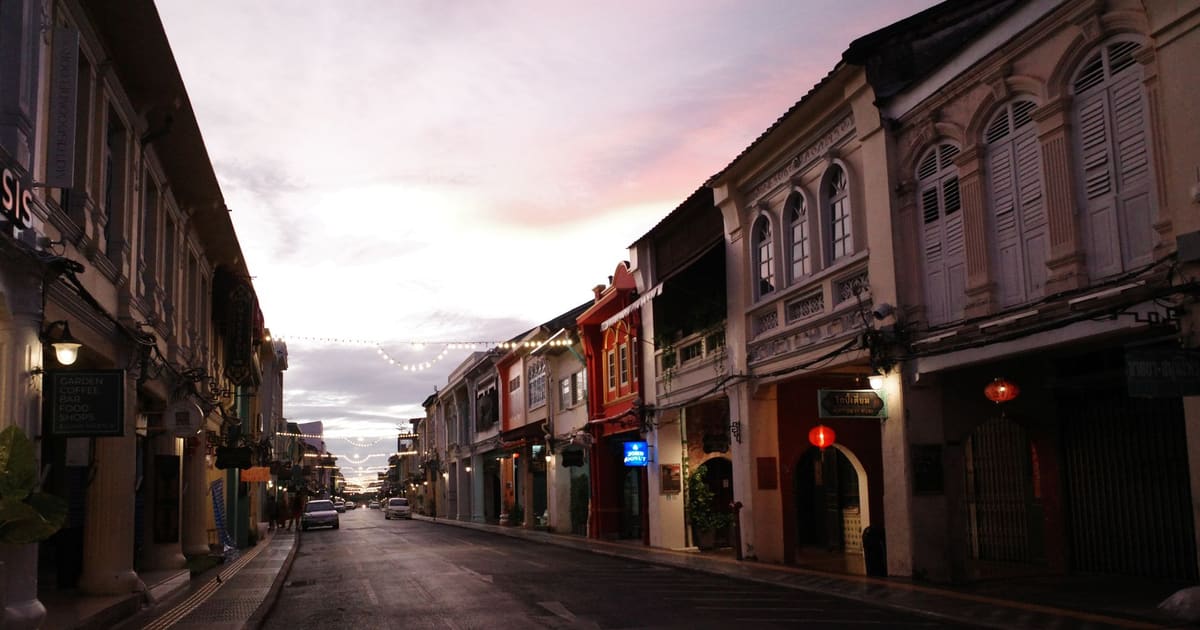
A Phuket Town audio walk takes you through the streets the island's Hokkien families built, past carved mansions, incense-filled shrines and rows of pastel Sino-Portuguese shophouses, from a hilltop viewpoint down to the heart of the old town.
The Mansions & Shrines Walk starts at the Khao Rang viewpoint above town, then comes down past a hilltop temple and a quiet Buddhist nunnery to the Chinpracha House, a grand Hokkien family mansion. It carries on to Jui Tui Shrine, the busiest Chinese shrine on the island, and the old Thai Hua school building, now a museum of the town's mixed community, before finishing at Wat Mongkol Nimit near the prettiest shophouse streets in Phuket. It covers 4 kilometers, about 54 minutes, almost all downhill or flat, across 7 stops.
The Old Town Walk starts at Bang Niew Shrine, one of the main stages of the island's Vegetarian Festival, then passes the clock tower at Surin Circle and the grand former Chartered Bank building from the tin-mining boom. From the old post office it heads out through two neighborhood temples, Wat Kuan and Wat Lang San, finishing at a shrine below Toh Sae hill. It also runs about 3.4 kilometers, around 54 minutes, across 7 stops on flat streets.
Both walks move through the same Hokkien story from different angles, one tracing the family mansions and shrines built on tin money, the other crossing the old banking and trading quarter from south to north. Either pairs well with time afterward in the shophouse lanes around Thalang Road and Soi Romanee, where cafes and old shopfronts sit a few minutes from both routes' final stops.
Where to walk in Phuket Old Town
A few of the stops you will pass, and why they are worth slowing down for.
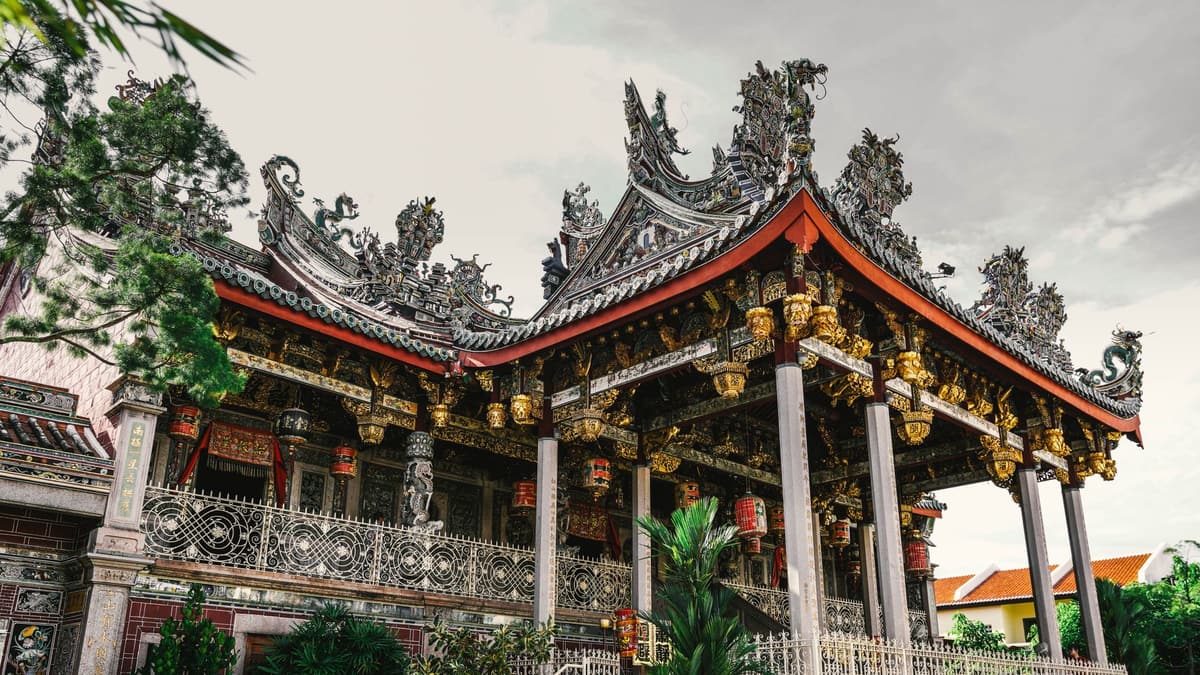
Jui Tui Shrine
Jui Tui is the busiest Chinese shrine in Phuket Town, its roof ridges crowded with dragons and its doors guarded by painted door gods, with the smell of incense drifting out before you even reach the gate. On an ordinary day people come in to buy incense and candles and work their way from altar to altar, bowing with smoking sticks held in both hands before planting them in big bronze urns, or shaking a cylinder of numbered bamboo sticks to read their fortune. Every October it becomes the heart of the island's Vegetarian Festival, when spirit mediums in trance walk the streets outside with skewers through their cheeks. On any other day it is simply a working place of worship, so visitors are welcome to look quietly without walking in front of people who are praying.
Surin Circle and the Chartered Bank
This corner marks where the newer provincial capital meets the old tin town, with the clock tower at Surin Circle standing in front of the former Chartered Bank of India, Australia and China. The bank opened early in the twentieth century to serve the tin trade, its colonial columns and arched windows built to look like something from Penang or Singapore, because for most of its history Phuket's tin economy looked south to those British ports rather than north to Bangkok. Ore and money once moved between here and the region's ports by ship, and a bank like this lent to mine owners and changed currency between them. It now houses a museum of Phuket's Peranakan culture, a short stop that ties the tin money to the mansions and shrines it built.
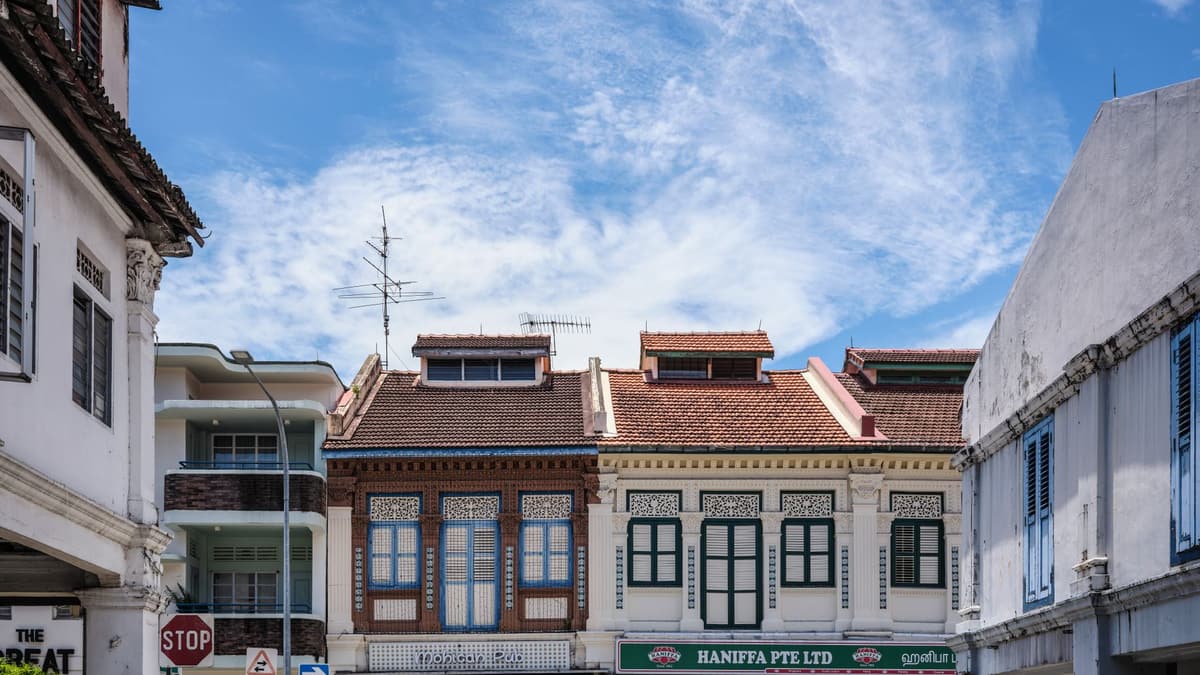
Sino-Portuguese Shophouses
Rows of two-story shophouses like these are Phuket Old Town's signature look, shops at street level and homes above, with Chinese doors and tiles below and European arches, columns and shuttered windows up top. The style came from Hokkien families who grew rich on tin in the nineteenth and early twentieth centuries and built in the fashion of the Straits ports where many of them had traded or studied. A covered walkway called the five-foot way shades the pavement in front, a rule of town planning borrowed from those same ports, and it still keeps the street cool and shaded for walkers even at midday. Wander a block in any direction and you will find cafes and small shops tucked behind these same facades.
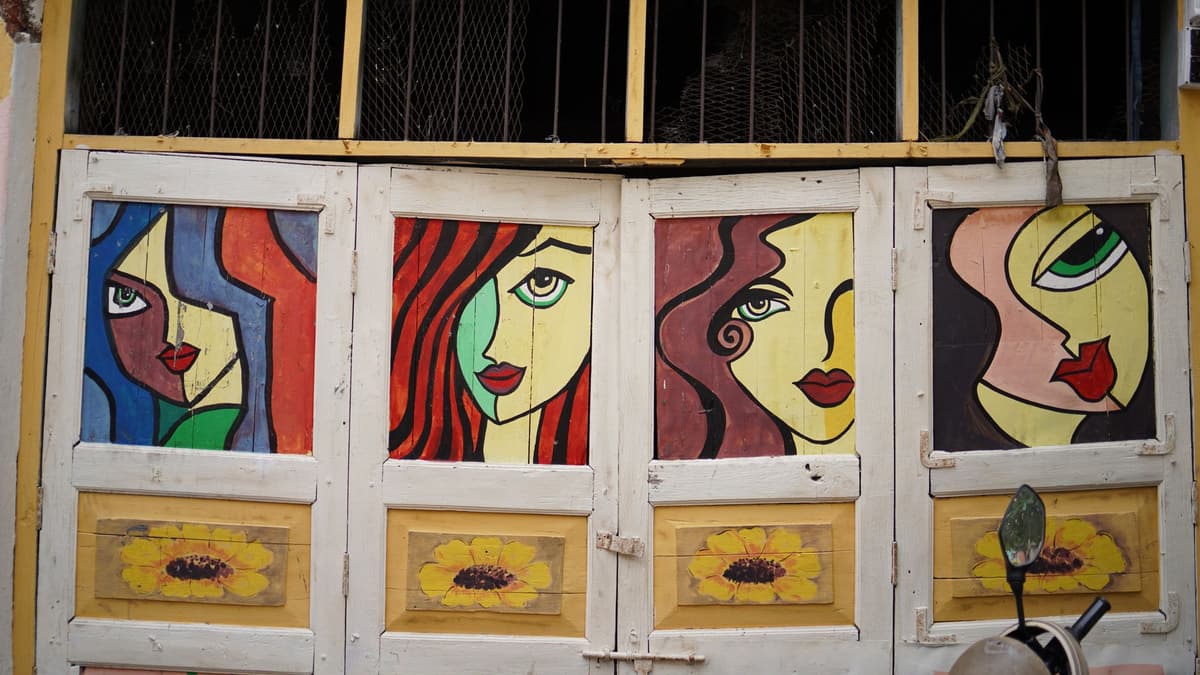
Soi Romanee's Street Art
Painted doors and murals like these brighten the shophouse walls around Soi Romanee, a short lane that was once the town's notorious red-light street and is now its most photographed corner. The art sits directly on old wooden shutters and doorframes, a modern layer added to buildings that have stood since the Hokkien families built this quarter on tin money. It is a good stretch to walk slowly, since the murals change from block to block and new ones appear between visits. Cafes and small restaurants line the lane behind the painted doors, making it an easy place to stop for a cold drink partway through either walk.
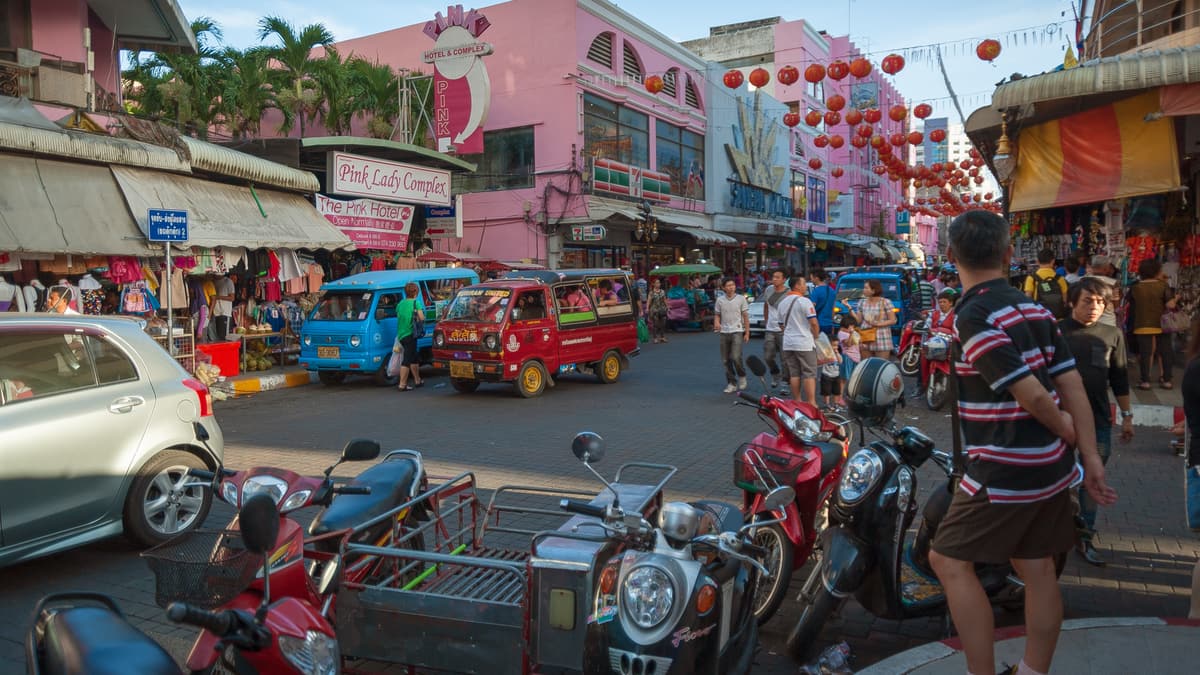
Where Old Town Meets the Modern City
Not every corner of Phuket Old Town is hushed colonial architecture, and this busy junction shows the everyday side of it: tuk-tuks and motorbikes threading through traffic, shopfronts strung with red lanterns for the season, and a modern complex standing right alongside older shophouses. It is a reminder that this is a working town rather than a museum piece, with locals doing their shopping and commuting through the same streets that tin money built more than a century ago. Crossing through a corner like this between quieter stops gives a fuller sense of Phuket Town than the postcard streets alone, and it is usually only a few minutes' walk back to somewhere calmer.
Get the Audio Tour in 3 Simple Steps
All in the free Walk With Me app, and the first stops of every tour are free to try.
Tap the Gold Headphones and Pick a Tour


01
Walk It Solo or Invite Someone


02
Press Play and Walk


03
Handcrafted for Your Time in the City
These tours aren't a checklist of sights. They're made to be walked slowly, headphones on, eyes on the city.
Meditative and Immersive
Each story is told where it happened. The app chimes when you reach a stop, one tap starts the story, and the stretch between stops is yours to take in at your own pace.
Handcrafted With Care
We choose every route and every stop ourselves and shape each story with care, so the time you have in the city goes to the places most worth seeing.
Better With Someone
Every walk is better with someone beside you, so if you can bring a friend, we really hope you do. That's why one purchase covers everyone you invite: they join your tour free.