




 $7.99City Highlights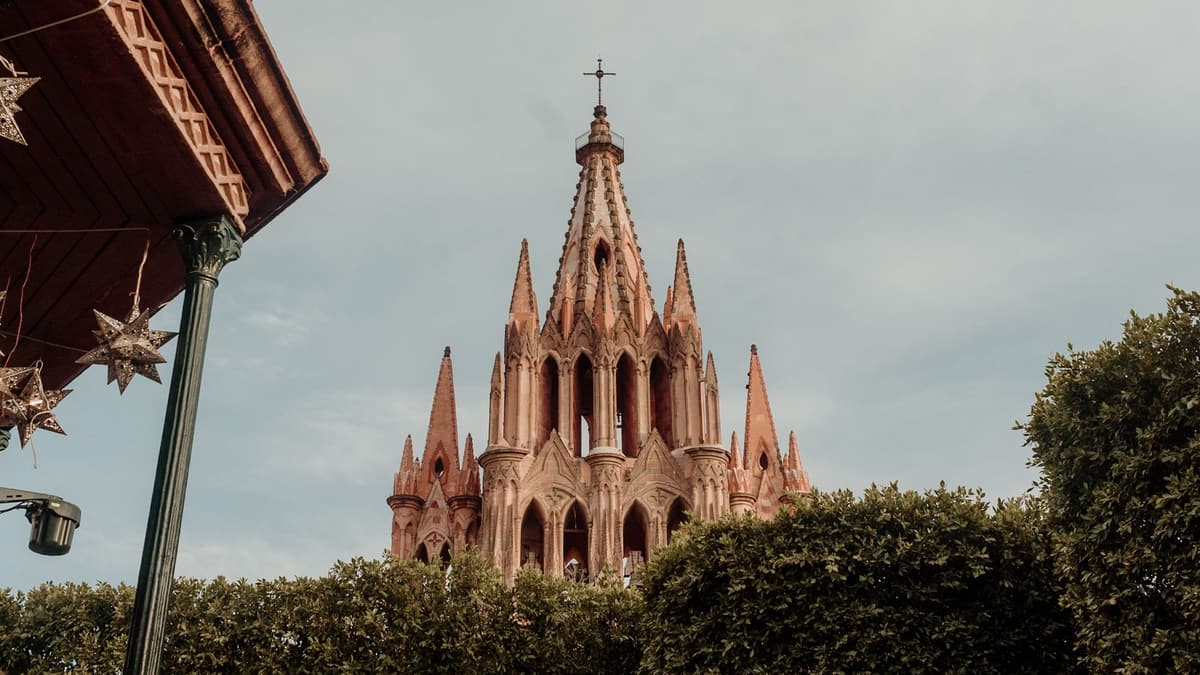
San Miguel de Allende Audio Walking Tours
Self-guided, narrated walks through San Miguel de Allende. Buy a tour once, download it, and hear the story at each stop while you walk at your own pace.
Tours from $7.99
Friends walk free. One purchase covers everyone on your walk. Start the tour, invite your friends to join, and it plays on every phone in your group.
5.0 on Google Play
San Miguel de Allende audio tours
Each tour is a mapped route with narration at every stop. Buy it once and it is yours to keep, no subscription.
$7.99City Highlights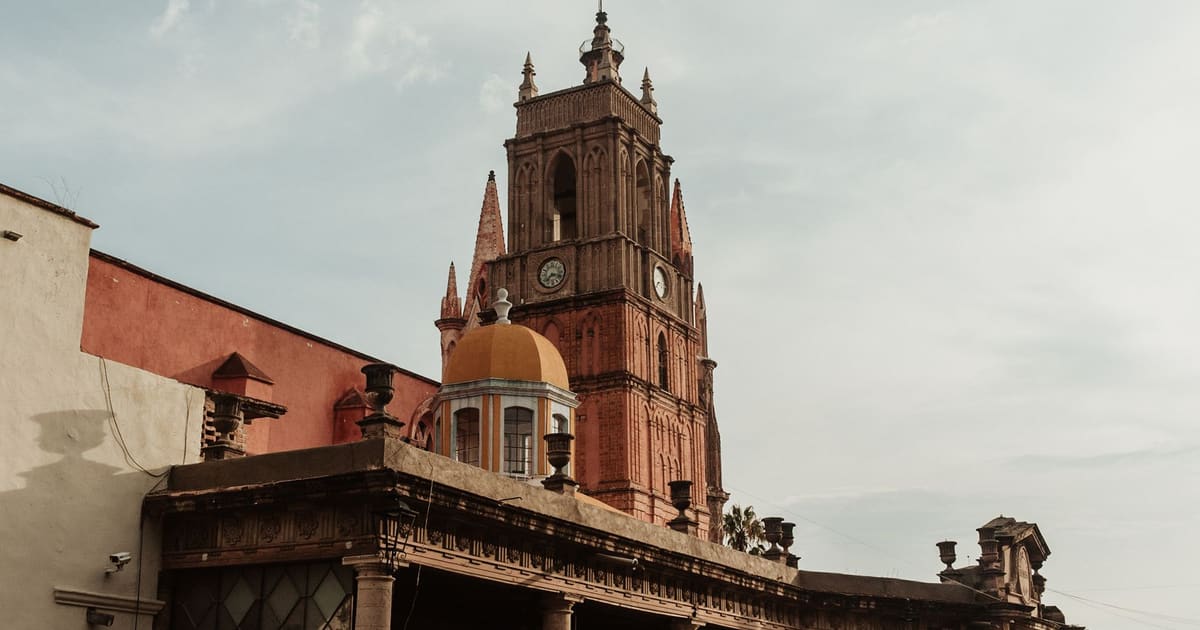 $8.99City Highlights
What to expect on a San Miguel de Allende audio walking tour
A San Miguel de Allende audio walking tour can trace the town's life as an artists' colony, from a barrio church to a veterans' art school and a hero's birthplace, or follow the classic route up to the pink spires of the Parroquia and on to an old textile mill turned gallery, with narration for every cobblestone.
The San Miguel Arts Walk starts in the barrio of San Antonio, home to the riotous June parade of the Desfile de los Locos, then passes the Instituto Allende, the art school that drew hundreds of American veterans after the Second World War on the GI Bill. From there it visits the Museo Casa de Allende, birthplace of the independence hero, the convent-turned-art-school of Centro Cultural El Nigromante, and the Biblioteca Pública before finishing at Templo de la Salud. It covers about 2 kilometers, around 30 minutes of walking.
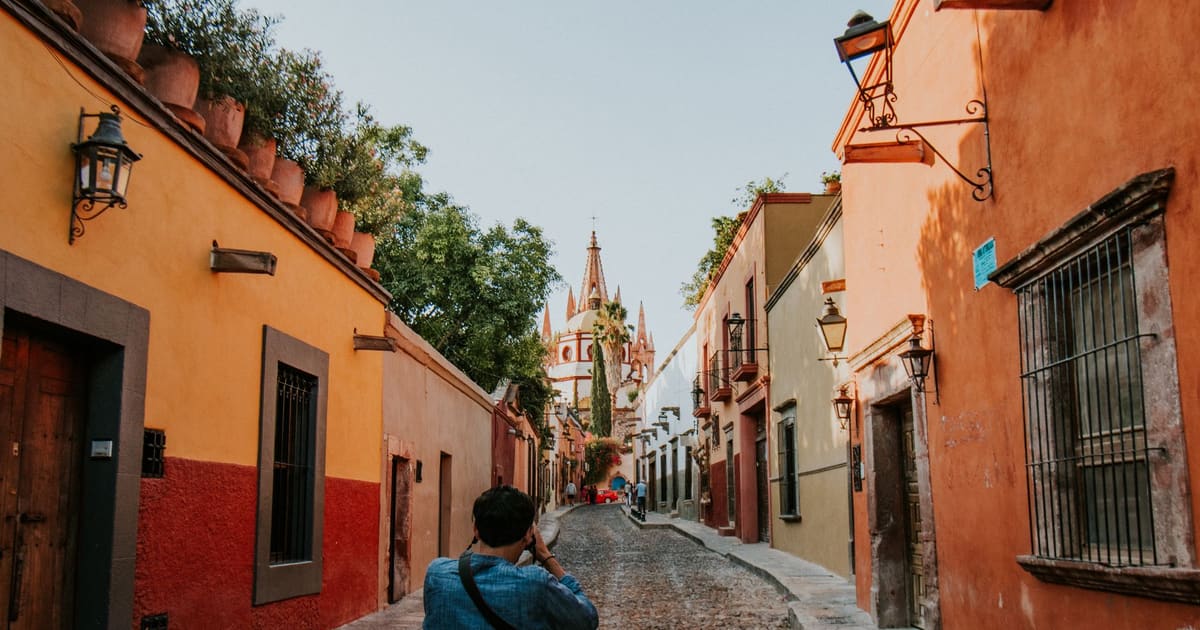
The San Miguel Parroquia Walk begins in the shade of Parque Juárez, climbs to the spring at El Chorro where the town was founded, and comes up Calle Aldama for the classic view of the pink Gothic spires rising at the end of the street, before crossing the main square in front of La Parroquia de San Miguel Arcángel itself.
From the Parroquia the route passes the baroque Templo de San Francisco and the Oratorio de San Felipe Neri, steps down through the stalls of the Mercado de Artesanías, and finishes at Fábrica La Aurora, an old textile mill now full of galleries and studios. It runs about 3 kilometers, roughly 44 minutes of walking, and it is one of the most photogenic routes we offer.
Where to walk in San Miguel de Allende
A few of the stops you will pass, and why they are worth slowing down for.
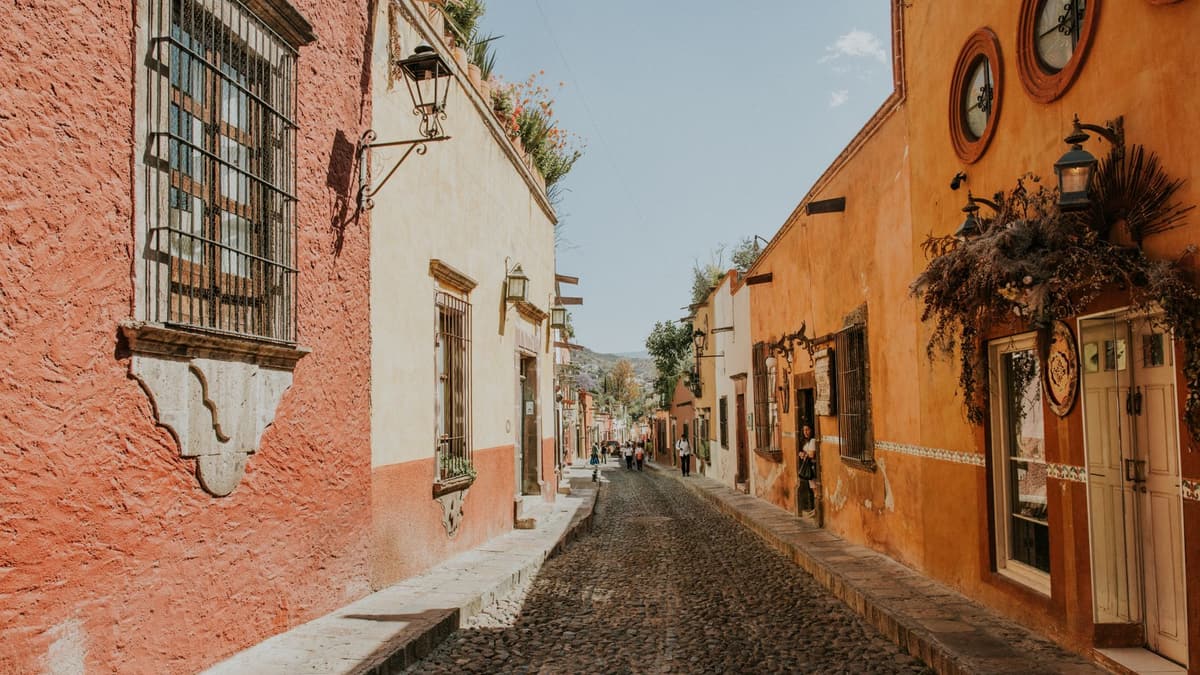
Quiet Streets Near the Instituto Allende
This empty cobbled street, its houses painted in cream and dusty pink with iron grilles over the windows, is typical of the quieter lanes around the Instituto Allende, caught here in the soft morning light. Since the middle of the twentieth century this part of town has been shaped by the art school behind its arched gateway, which drew hundreds of American veterans here on the GI Bill after the Second World War to study painting, weaving and silverwork. Many stayed or came back to retire, and the foreign community that grew from that first wave still shapes this part of San Miguel today. Walking these streets slowly, rather than heading straight for the main square, is how you find the town's quieter character.
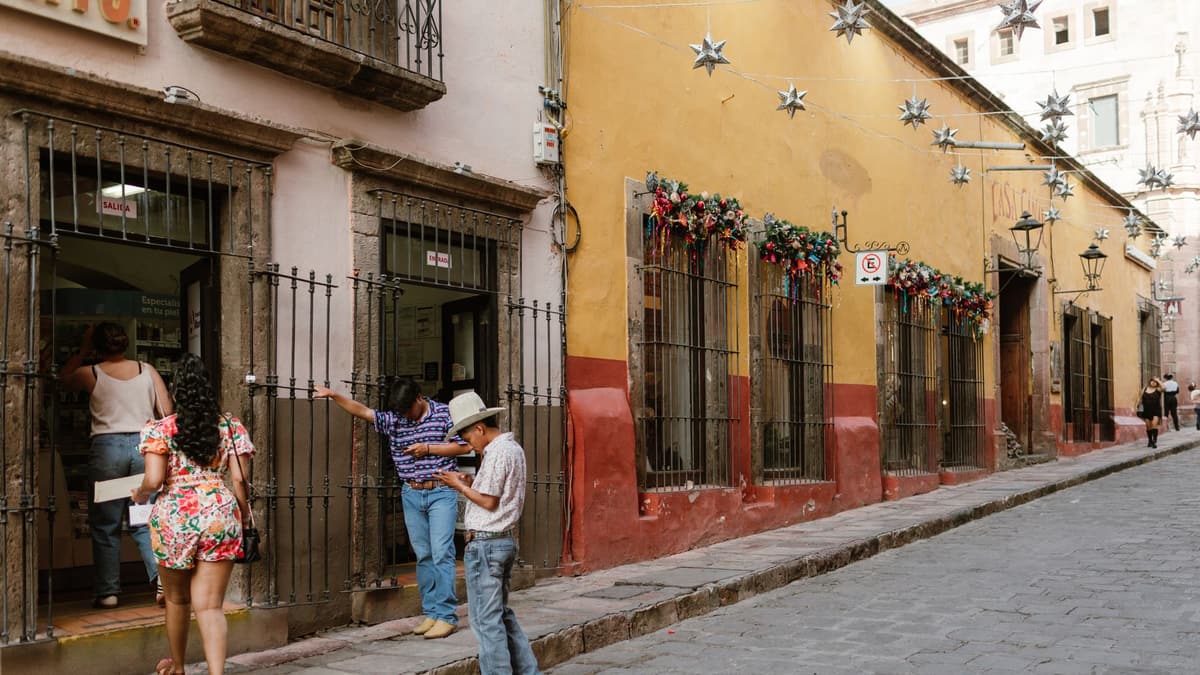
Centro Cultural El Nigromante and Town Life
A small group chats outside a shop strung with silver star lanterns, a scene typical of the streets around Centro Cultural El Nigromante, the former convent where the art school that built San Miguel's reputation first opened its doors in the late 1930s. Inside the building's great cloister, a mural by the muralist David Alfaro Siqueiros sits unfinished, the result of a quarrel with the school's management during his stay here in the late 1940s. The building takes its name from the writer Ignacio Ramírez, who wrote under the pen name El Nigromante and shocked the country with his attacks on the church. Streets like this one, just outside, carry on that same mix of ordinary town life and artistic history.
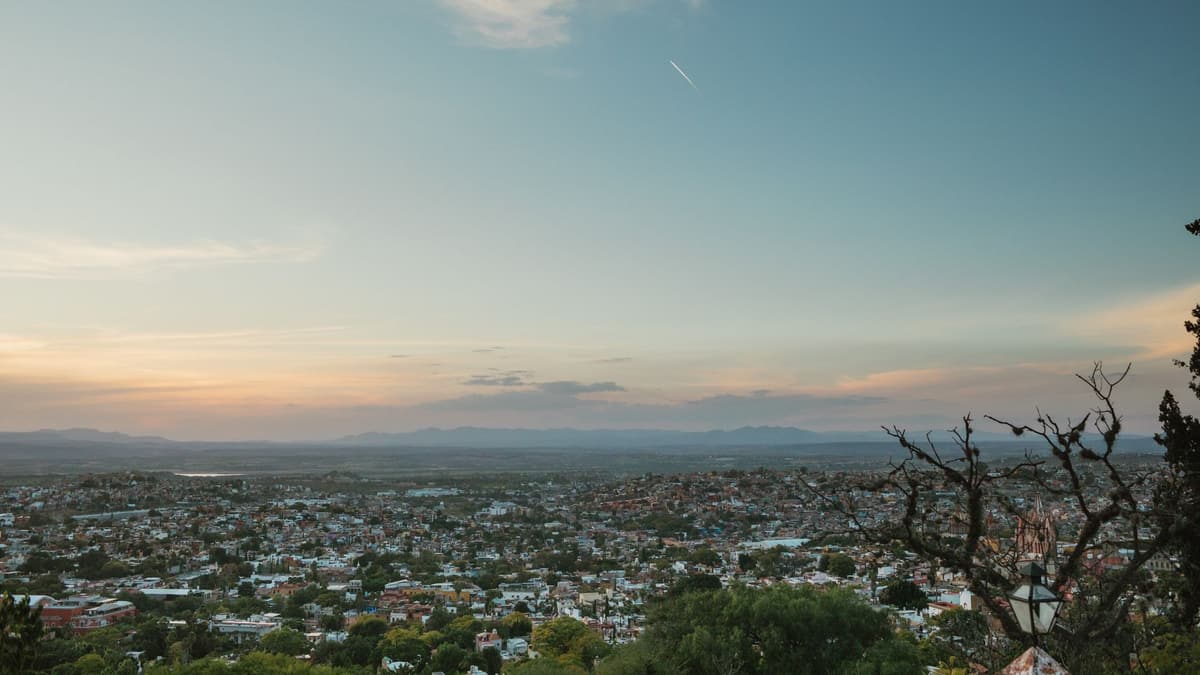
View Over San Miguel de Allende
This wide view over rooftops and distant hills, caught at dusk, captures why San Miguel de Allende has drawn painters and visitors for generations: a hill town of cobbled streets spreading out across the valley, with mountains fading into the haze on the horizon. The town's blend of colonial architecture and later artistic reputation grew from a series of reinventions, a frontier settlement on the silver road, then a wealthy colonial town, the cradle of Mexico's war of independence, and finally the artists' colony it is today. Looking out over it like this is a good reminder of how all those layers sit together in one small, walkable place.
La Parroquia's Bell Tower
Seen up close, the tower of La Parroquia de San Miguel Arcángel reveals just how inventive its design really is, Gothic arches and finials rendered in the town's warm pink stone beside a small yellow-domed chapel. The church itself is an older colonial parish building from the late seventeenth century, but in the 1880s the town gave it this new face, designed by Zeferino Gutiérrez, a local master mason with no formal architectural training. Town folklore says he worked from postcards of European cathedrals and explained his plans to the workmen by scratching drawings in the dirt with a stick. Whatever the truth of it, the result has no real twin anywhere in the world.
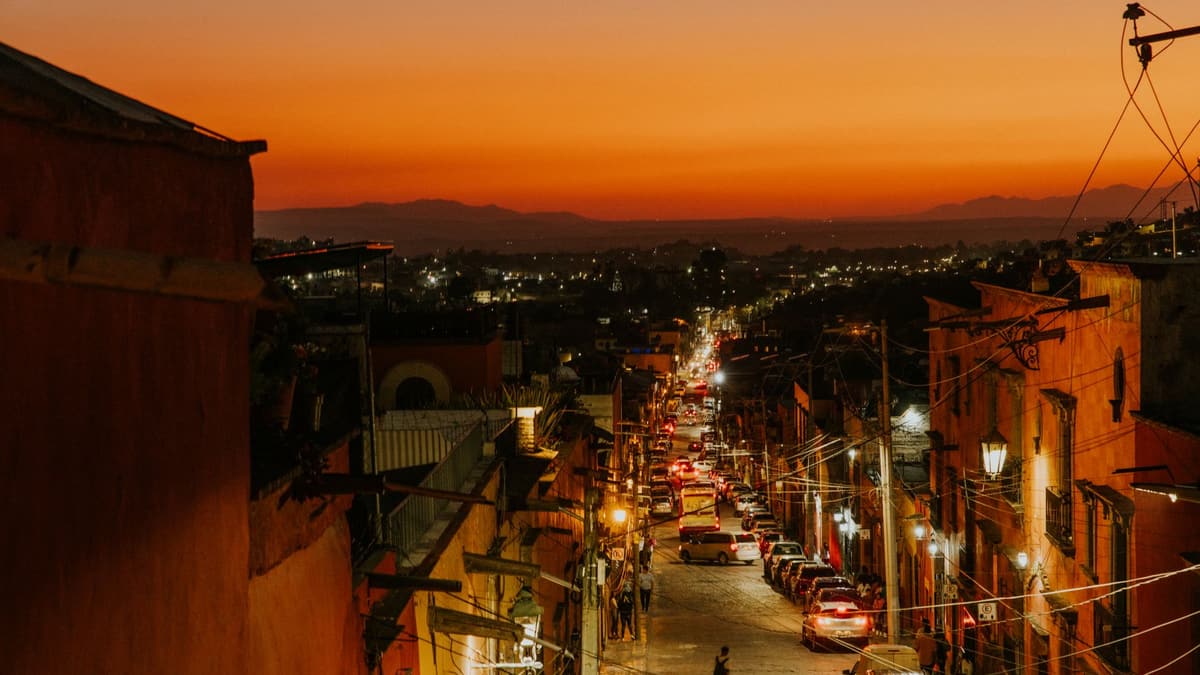
San Miguel de Allende at Dusk
Streetlights and headlights glow against a deep orange sky, a steep San Miguel street seen from above as evening settles over the town. The hills tilt the streets up and down throughout the old town, which is part of why this walk builds in a short, steep climb near the start at El Chorro, the spring where the town was founded in the 1540s. Late afternoon and early evening are when the warm pink stone of the Parroquia and the streets around it glow at their best, and a scene like this one is a good reason to time the end of your walk for just after sunset.
Get the Audio Tour in 3 Simple Steps
All in the free Walk With Me app, and the first stops of every tour are free to try.
Tap the Gold Headphones and Pick a Tour


01
Walk It Solo or Invite Someone


02
Press Play and Walk


03
Handcrafted for Your Time in the City
These tours aren't a checklist of sights. They're made to be walked slowly, headphones on, eyes on the city.
Meditative and Immersive
Each story is told where it happened. The app chimes when you reach a stop, one tap starts the story, and the stretch between stops is yours to take in at your own pace.
Handcrafted With Care
We choose every route and every stop ourselves and shape each story with care, so the time you have in the city goes to the places most worth seeing.
Better With Someone
Every walk is better with someone beside you, so if you can bring a friend, we really hope you do. That's why one purchase covers everyone you invite: they join your tour free.