




 $6.99City Highlights
Ubud Audio Walking Tours
Self-guided, narrated walks through Ubud. Buy a tour once, download it, and hear the story at each stop while you walk at your own pace.
Tours from $6.99
Friends walk free. One purchase covers everyone on your walk. Start the tour, invite your friends to join, and it plays on every phone in your group.
5.0 on Google Play
Ubud audio tours
Each tour is a mapped route with narration at every stop. Buy it once and it is yours to keep, no subscription.
$6.99City Highlights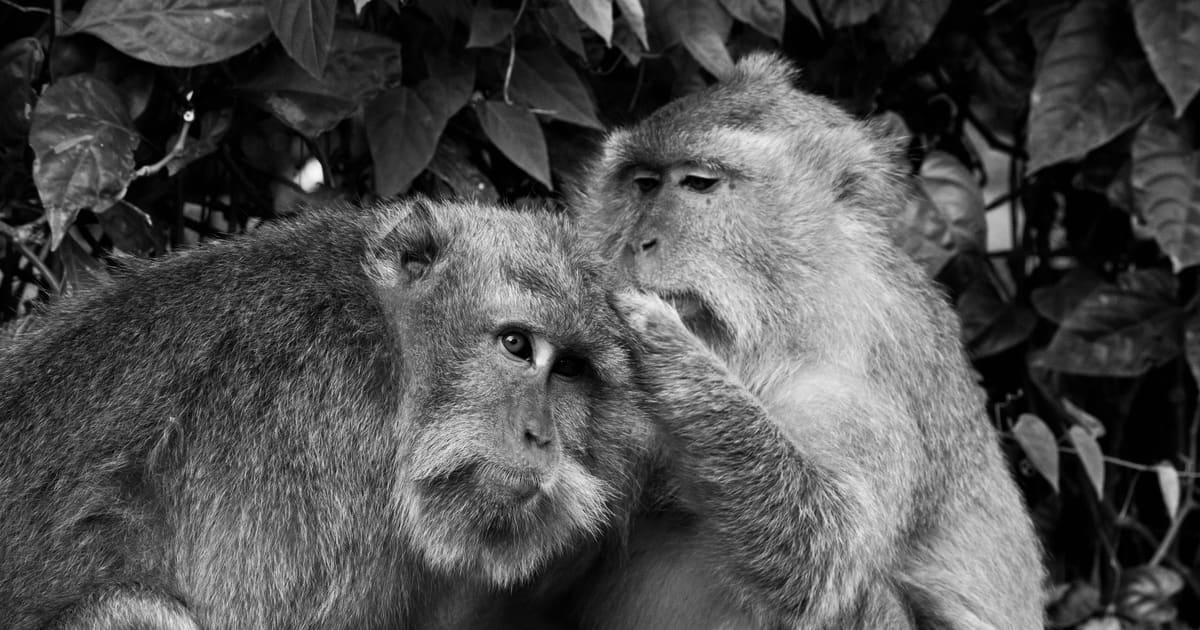 $7.99City Highlights
What to expect on a Ubud audio walking tour
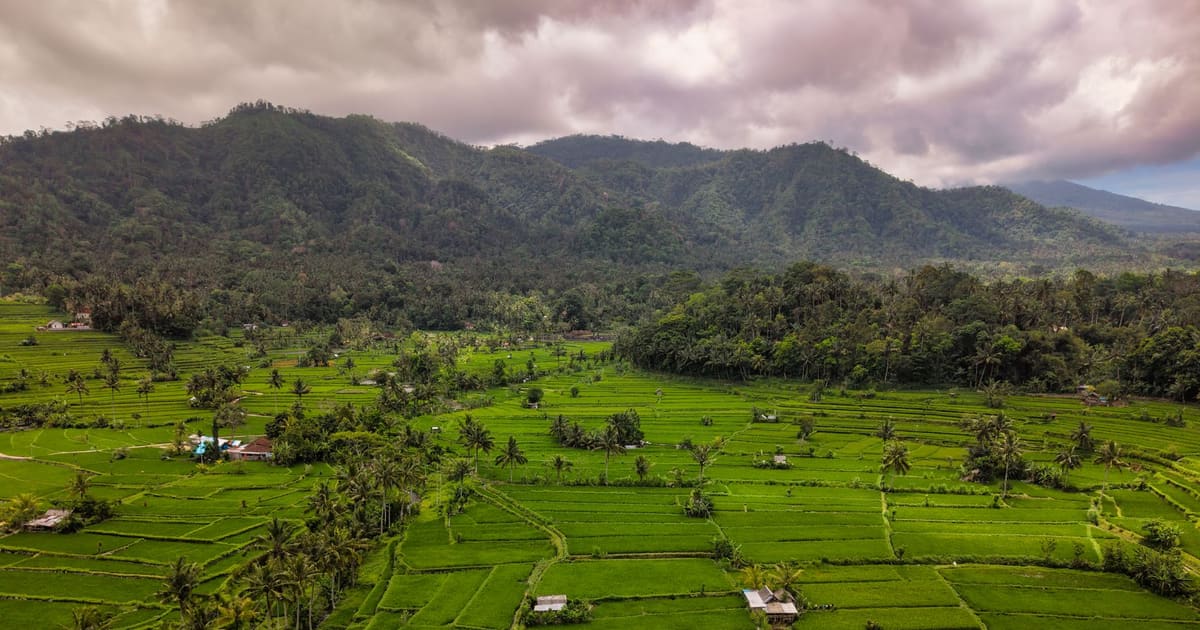
Ubud sits in Bali's green hill country, and an audio walk here moves from a ridge path above two river gorges out to rice terraces worked by a farmers' cooperative, then down through the town's royal heart to a forest temple shared with more than a thousand monkeys.
The Campuhan Ridge Walk starts at Pura Gunung Lebah, a temple at the spot where two rivers meet, climbs onto the grassy Campuhan Ridge between two jungle valleys, and crosses its high point before dropping into the village of Bangkiang Sidem, where the path becomes a lane between rice terraces fed by the subak, the farmers' cooperative that has shared water across these fields for more than a thousand years. It covers 1.7 kilometers out to Karsa Kafe, about 28 minutes of walking each way, across 5 stops, and you return the same way.
The Ubud Monkey Forest Walk starts at Pura Taman Saraswati, a water temple to the goddess of learning set behind a lotus pond, passes the royal family's palace and the village football field, and follows Jalan Monkey Forest downhill to the Sacred Monkey Forest Sanctuary, home to more than a thousand long-tailed macaques. It covers 2.4 kilometers, about 32 minutes of walking, across 5 stops, gently downhill most of the way.
Inside the forest the path winds between moss covered statues and banyan trees to Pura Dalem Agung Padangtegal, a temple of the dead at the sanctuary's heart. Both walks are best started early, before the heat and the crowds build, and neither one covers much ground, so there is no reason to hurry either route.
Where to walk in Ubud
A few of the stops you will pass, and why they are worth slowing down for.
Campuhan Ridge
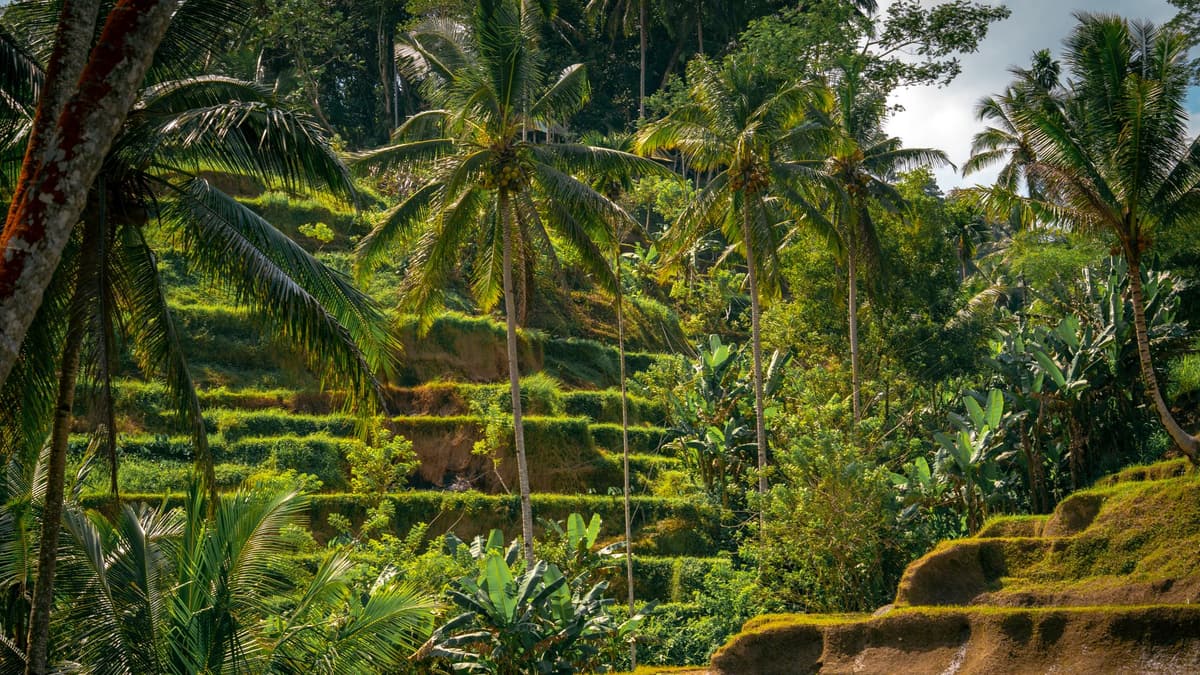
Coconut palms rise above stepped rice terraces cut into the hillside below the Campuhan Ridge, the kind of view that opens up on both sides of the path as it climbs out of the river gorge. The ridge is covered in alang-alang, a tall pale grass the Balinese have long cut and dried to thatch the roofs of shrines and pavilions, and beyond it the ground drops into river valleys thick with jungle. Down by the river where the two streams meet, the German painter Walter Spies built a house in the late 1920s that became the most famous address on the island, helping make Ubud known abroad as a center of art.
Rice Terraces at Bangkiang Sidem
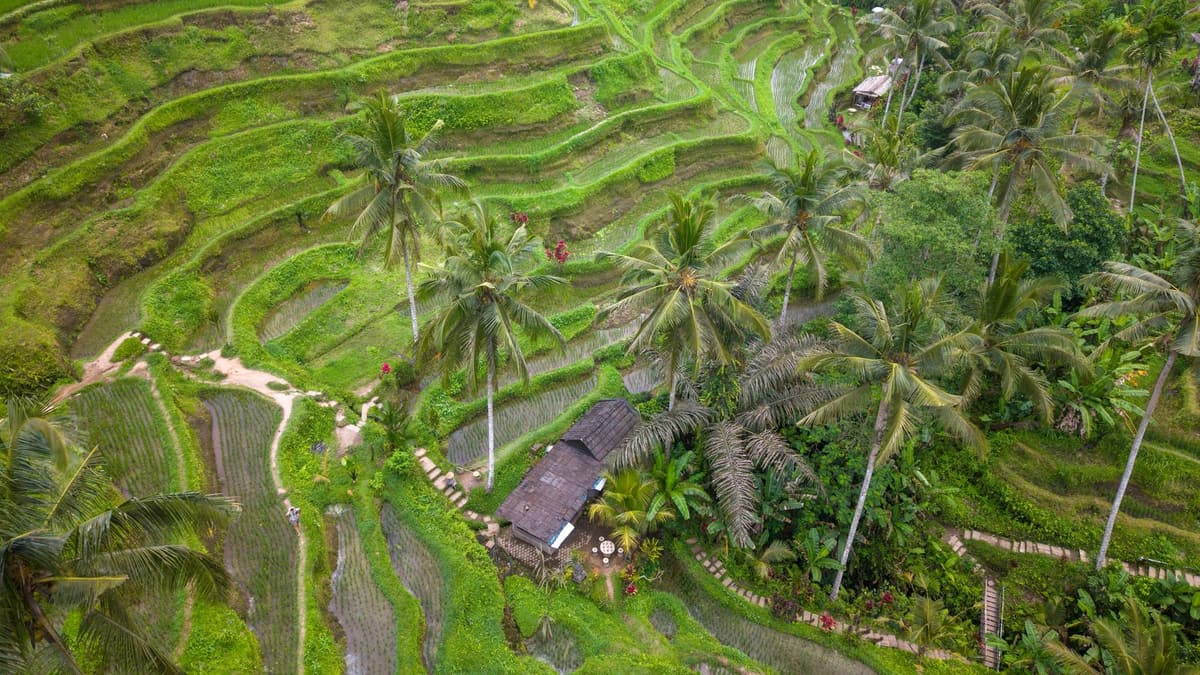
This aerial view over the terraces near Bangkiang Sidem shows the small channels, earth dams and bamboo pipes that carry water down from one paddy to the next, the daily work of the subak, the cooperative of farmers that has shared water across Bali's rice fields for more than a thousand years. Each subak is organized around water temples, where farmers make offerings and decide together when to flood the fields and plant, a system so effective that researchers later found it had been managing pests and water shortages better than schedules imposed from outside. Look for small shrines tucked among the paddies, often dedicated to Dewi Sri, the rice goddess.
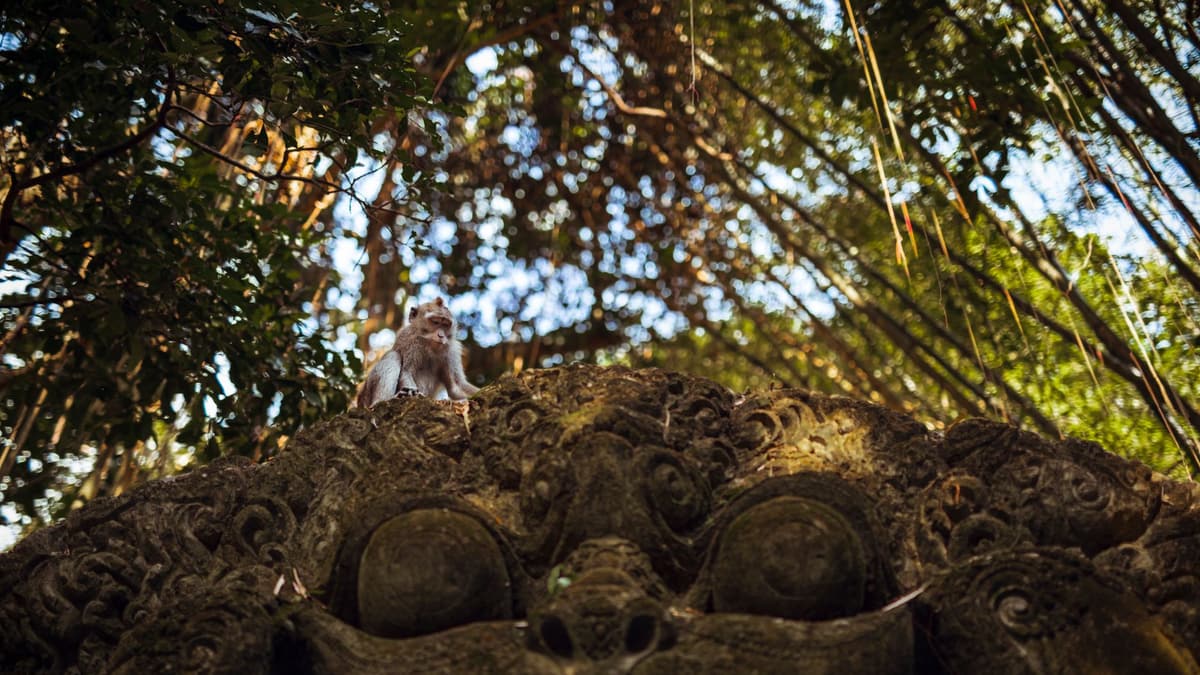
Sacred Monkey Forest Sanctuary
A long-tailed macaque perches on a carved, moss covered gate deep inside the Sacred Monkey Forest Sanctuary, known in Balinese as Mandala Suci Wenara Wana. More than a thousand of these macaques live here in several troops, each with its own part of the forest, among huge banyan trees whose aerial roots hang down like curtains over paths lined with stone statues. The sanctuary belongs to the customary village of Padangtegal, which looks after it as a sacred place under the Balinese idea of harmony between people, nature and the gods. The monkeys are wild and very used to people, so keep bags zipped, sunglasses away, and never feed or touch them.
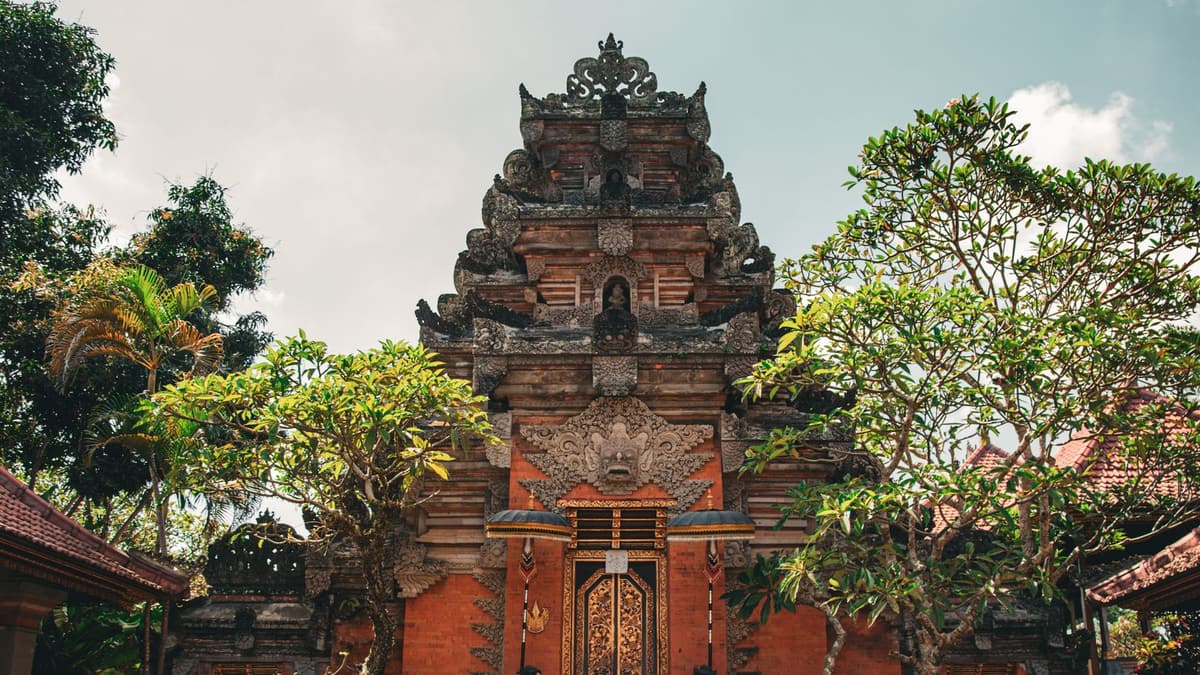
Ubud Palace
This richly carved gateway, with a fierce guardian face set above the door and frangipani trees framing it on either side, opens into Puri Saren Agung, the palace of Ubud's royal family. The palace is not one building but a set of walled courtyards and pavilions much like a very large family home, and the royal family, descendants of the princely line of Sukawati, still lives in its inner parts today. Most evenings a dance performance takes place in the courtyard, and the family continues to support the temple ceremonies and music and dance troupes that have shaped the town's identity since Western artists were first welcomed here in the 1930s.
Get the Audio Tour in 3 Simple Steps
All in the free Walk With Me app, and the first stops of every tour are free to try.
Tap the Gold Headphones and Pick a Tour


01
Walk It Solo or Invite Someone


02
Press Play and Walk


03
Handcrafted for Your Time in the City
These tours aren't a checklist of sights. They're made to be walked slowly, headphones on, eyes on the city.
Meditative and Immersive
Each story is told where it happened. The app chimes when you reach a stop, one tap starts the story, and the stretch between stops is yours to take in at your own pace.
Handcrafted With Care
We choose every route and every stop ourselves and shape each story with care, so the time you have in the city goes to the places most worth seeing.
Better With Someone
Every walk is better with someone beside you, so if you can bring a friend, we really hope you do. That's why one purchase covers everyone you invite: they join your tour free.