




 $7.99City Highlights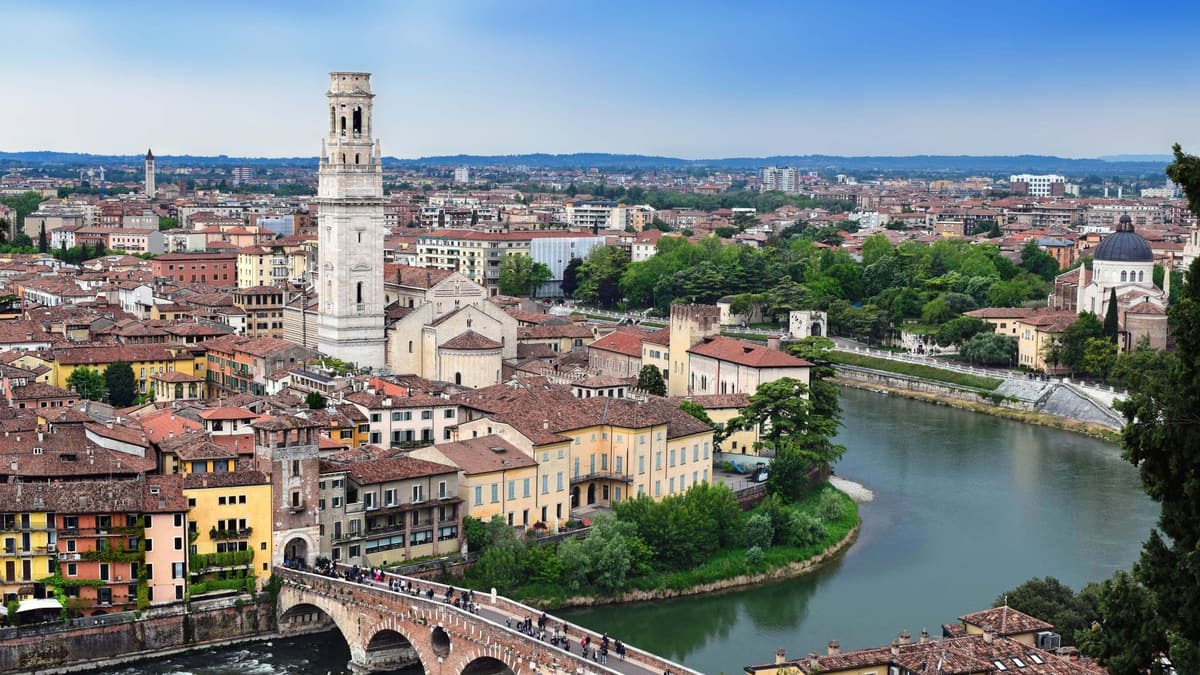
Verona Audio Walking Tours
Self-guided, narrated walks through Verona. Buy a tour once, download it, and hear the story at each stop while you walk at your own pace.
Tours from $7.99
Friends walk free. One purchase covers everyone on your walk. Start the tour, invite your friends to join, and it plays on every phone in your group.
5.0 on Google Play
Verona audio tours
Each tour is a mapped route with narration at every stop. Buy it once and it is yours to keep, no subscription.
$7.99City Highlights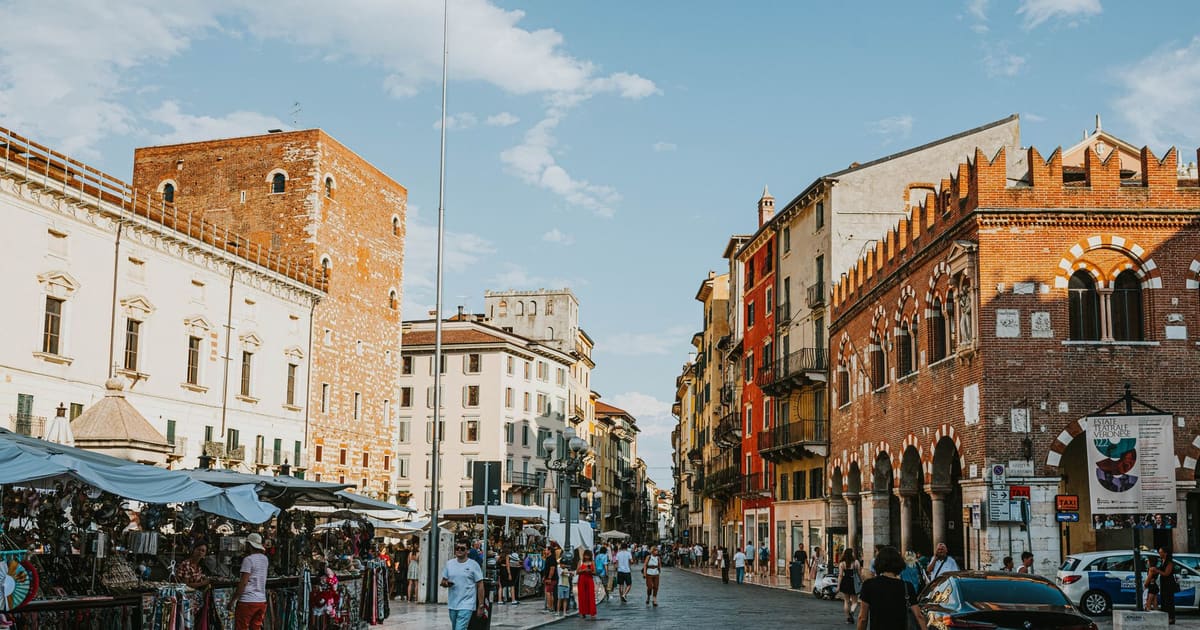 $7.99City Highlights
What to expect on a Verona audio walking tour
A Verona audio walk packs two thousand years into a small bend of the river Adige, from a Romanesque basilica and a medieval castle to a Roman gate and a market square that was once the forum, with narration timed to each stop as the layers of history stack up around you.
The Verona San Zeno to Arena Walk begins at the Basilica di San Zeno, one of the finest Romanesque churches in northern Italy, follows the river to the red brick castle of the Scaliger lords, then passes through the Roman gate of Porta Borsari onto the old high street and into Piazza delle Erbe, the market square that was once the Roman forum. It's about 2.6 kilometers, roughly 35 minutes of walking, and finishes at the Arena on Piazza Bra, by way of Juliet's House.
The Verona Roman Theatre Walk takes the quieter route instead, starting at Sant'Anastasia, the city's largest church, and the cathedral, then crossing the Adige on the old Roman stone bridge, Ponte Pietra, to the Roman Theatre built into the hillside beyond it.
From there it strolls the far bank to the Giardino Giusti, one of the loveliest Renaissance gardens in Italy, and returns past the church where a teenage Mozart played the organ to finish at San Fermo, where one church sits on top of another. It's about 2.6 kilometers, roughly 36 minutes of walking.
Where to walk in Verona
A few of the stops you will pass, and why they are worth slowing down for.
Castelvecchio
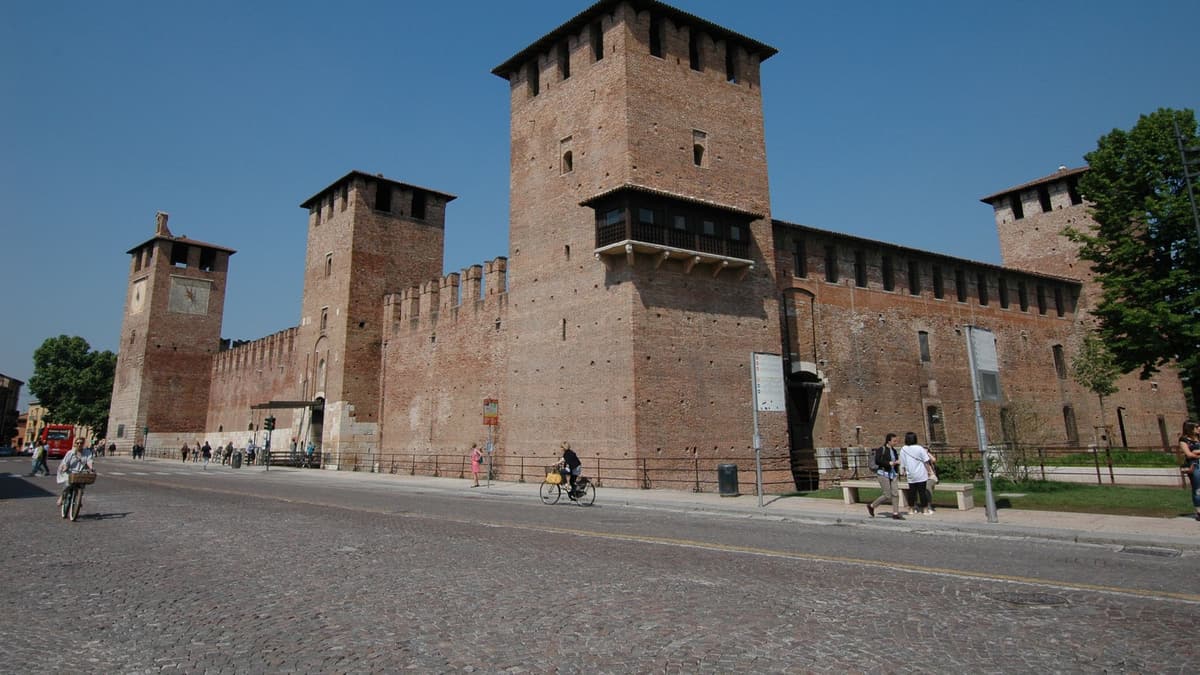
The red brick walls and swallowtail battlements of Castelvecchio, the old castle, were built in the 1350s by Cangrande II della Scala, whose family ruled Verona for much of the thirteenth and fourteenth centuries. The fortress tells you how little Cangrande trusted his own people: a private bridge beside it gave him an escape route north toward the Alps if the city ever rose against him. Inside is the city's art museum, redesigned from the late 1950s by the architect Carlo Scarpa, whose mix of old stone, concrete and steel is studied by architects worldwide, including a platform that sets a medieval statue of Cangrande I in midair.
Piazza delle Erbe
This long, busy market place, ringed by tall houses painted in faded frescoes, is the old Roman forum, though today it's Piazza delle Erbe, the square of herbs. A fountain topped by a statue known as Madonna Verona has presided over the market since the fourteenth century, and a column nearby carries the winged lion of Saint Mark from the centuries Venice ruled the city. The tall Torre dei Lamberti, the highest tower in Verona, rises behind the stalls, and an archway off the square hangs with a whale bone that legend says will fall on the first person beneath it who has never told a lie.
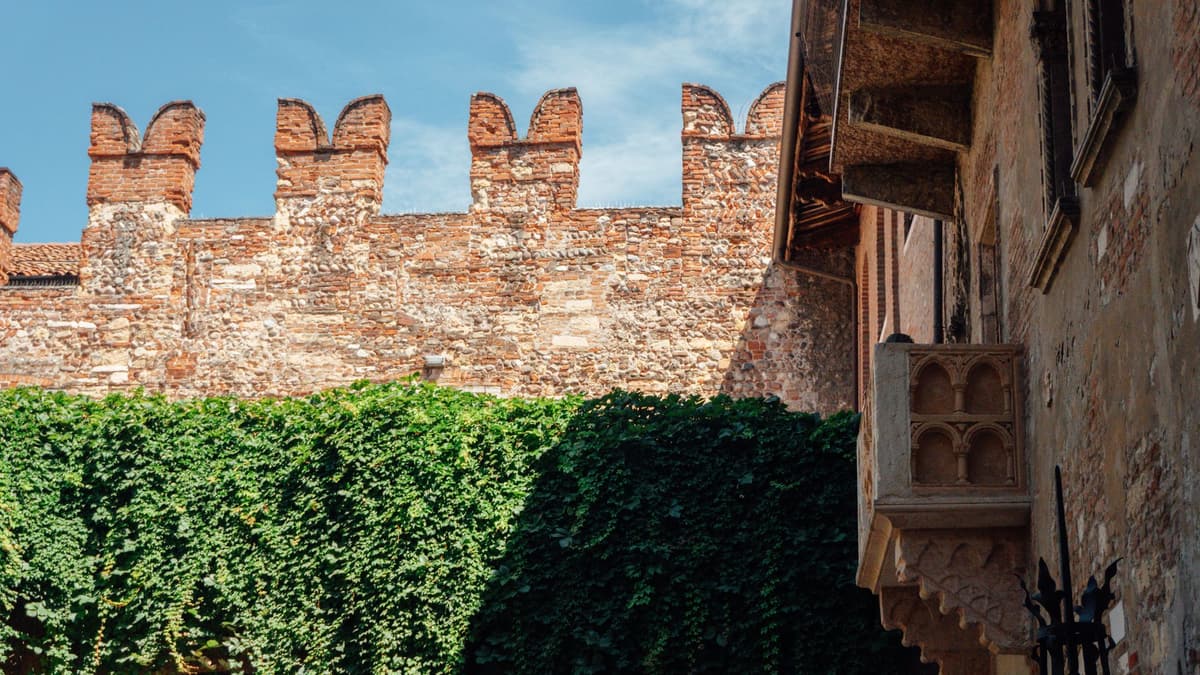
Juliet's House
Above this small courtyard is surely one of the most photographed balconies in Italy, added in the 1930s and pieced together from old carved stone to give visitors the scene from Romeo and Juliet. Here's the gentle truth: the house is real and medieval, and it belonged to the Dal Cappello family, whose name sounds close to Capulet, and you can spot their emblem, a carved hat, on the inner courtyard arch. But Romeo and Juliet themselves are fiction, told by Italian writers and borrowed by Shakespeare. None of that has stopped the romance: thousands of letters addressed simply to Juliet arrive each year, and volunteers answer every one.
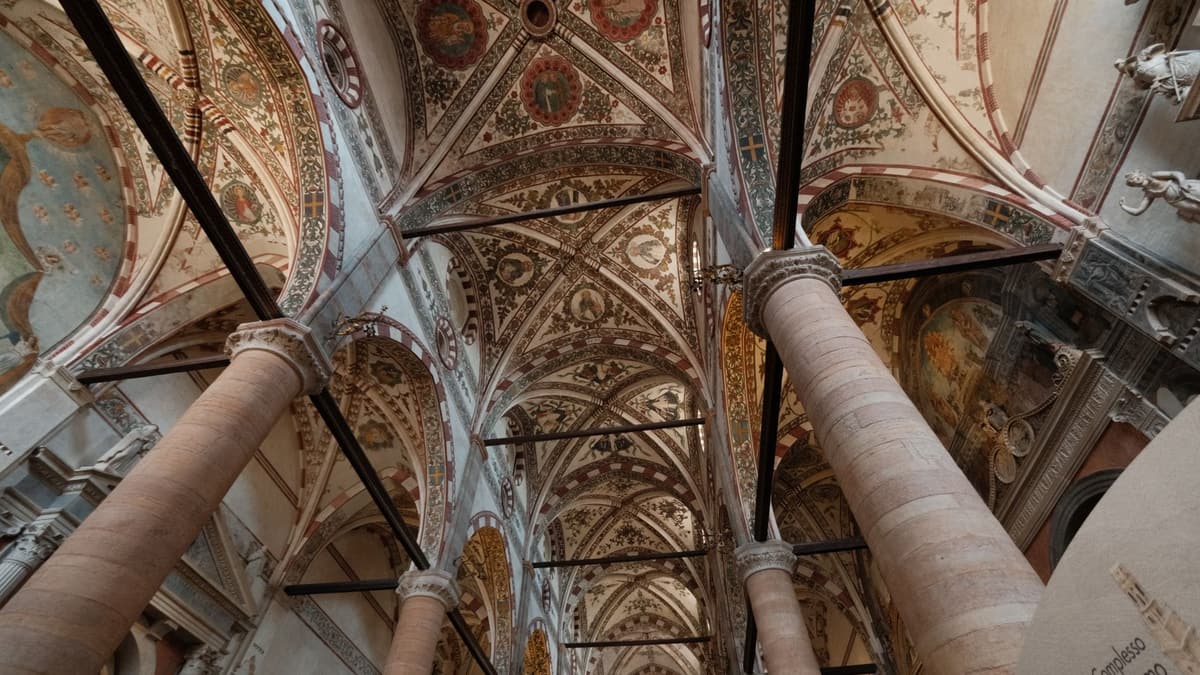
Verona's frescoed churches
Inside churches like this one, painted vaults stretch overhead in bands of color, saints and patterns repeating down the nave. Sant'Anastasia, the city's largest church, holds a fresco by Pisanello of Saint George about to ride off and fight the dragon, while the cathedral nearby keeps an Assumption of the Virgin by Titian, quieter than his famous version in Venice. Across the river, San Fermo is two churches stacked one on the other, a Romanesque crypt beneath a Gothic church with a ceiling shaped like an upturned ship's hull, painted with rows of saints gazing down.
The Roman Theatre and the river
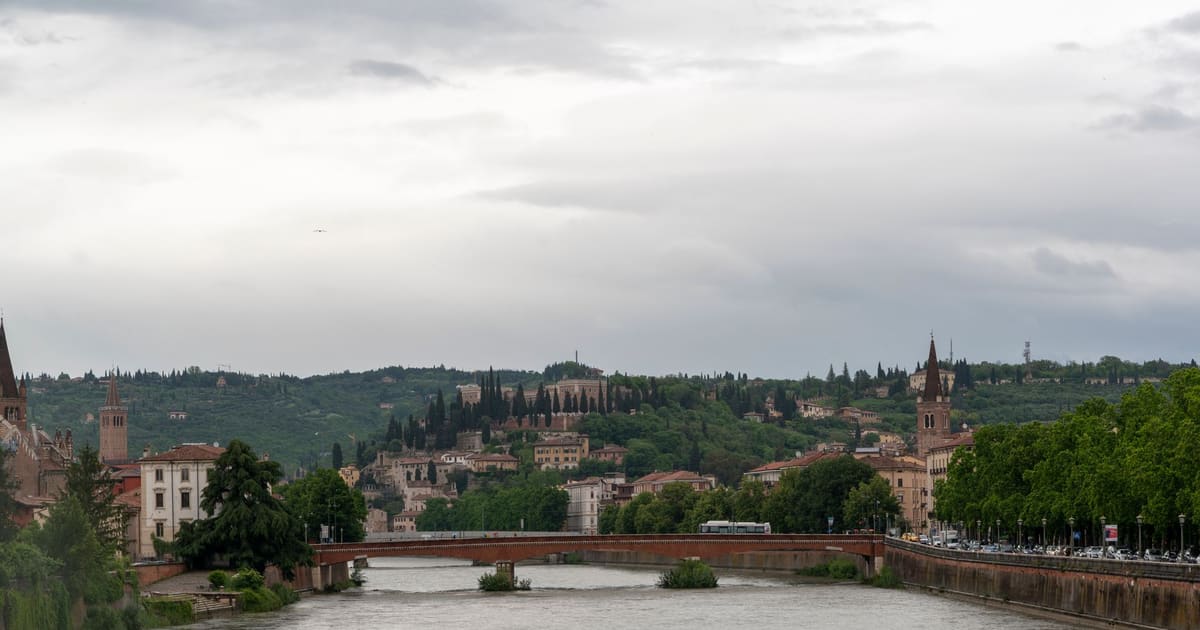
Across the Adige from the old town, the hillside you can see here climbs in the curving rows of a Roman theatre built at the end of the first century before Christ, so its audience looked out over the stage toward the river and the city. For centuries it lay buried under a whole neighborhood, until a wealthy Veronese bought up the properties in the nineteenth century and had them cleared. In summer the seats fill again for an open-air festival. Above the theatre, steps or a funicular climb to Castel San Pietro for the best view in the city, red roofs spread across the river bend.
Get the Audio Tour in 3 Simple Steps
All in the free Walk With Me app, and the first stops of every tour are free to try.
Tap the Gold Headphones and Pick a Tour


01
Walk It Solo or Invite Someone


02
Press Play and Walk


03
Handcrafted for Your Time in the City
These tours aren't a checklist of sights. They're made to be walked slowly, headphones on, eyes on the city.
Meditative and Immersive
Each story is told where it happened. The app chimes when you reach a stop, one tap starts the story, and the stretch between stops is yours to take in at your own pace.
Handcrafted With Care
We choose every route and every stop ourselves and shape each story with care, so the time you have in the city goes to the places most worth seeing.
Better With Someone
Every walk is better with someone beside you, so if you can bring a friend, we really hope you do. That's why one purchase covers everyone you invite: they join your tour free.