




 $17.99Film & Fiction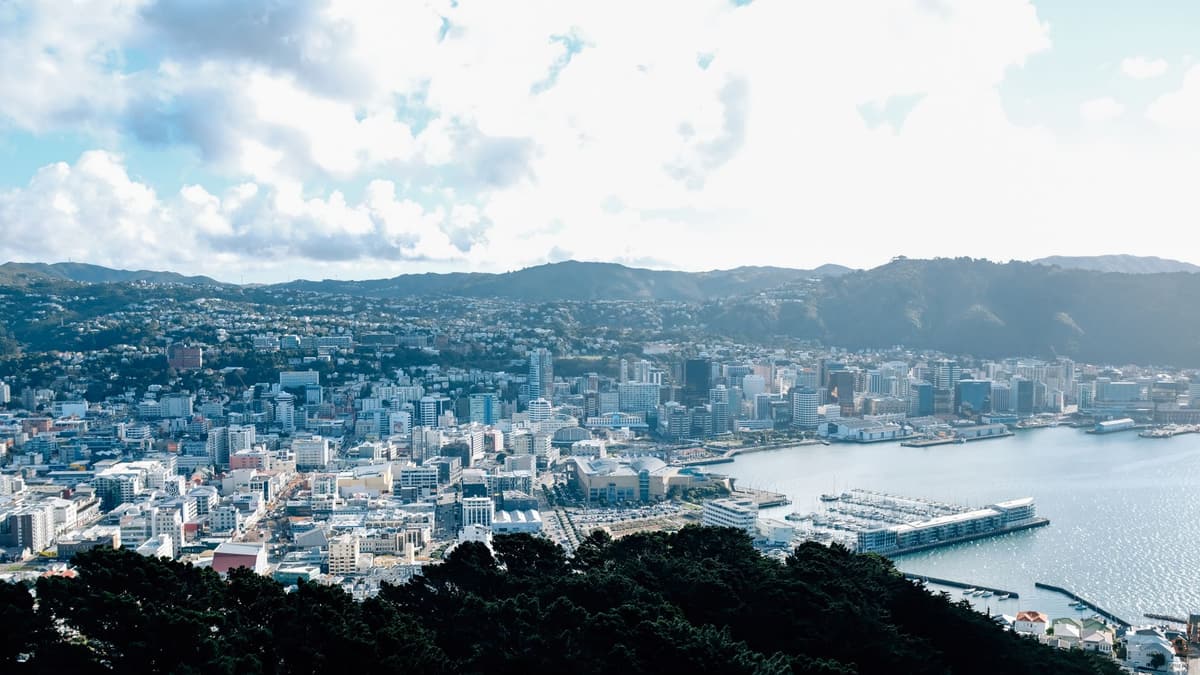
Wellington Audio Walking Tours
Self-guided, narrated walks through Wellington. Buy a tour once, download it, and hear the story at each stop while you walk at your own pace.
Tours from $7.99
Friends walk free. One purchase covers everyone on your walk. Start the tour, invite your friends to join, and it plays on every phone in your group.
5.0 on Google Play
Wellington audio tours
Each tour is a mapped route with narration at every stop. Buy it once and it is yours to keep, no subscription.
$17.99Film & Fiction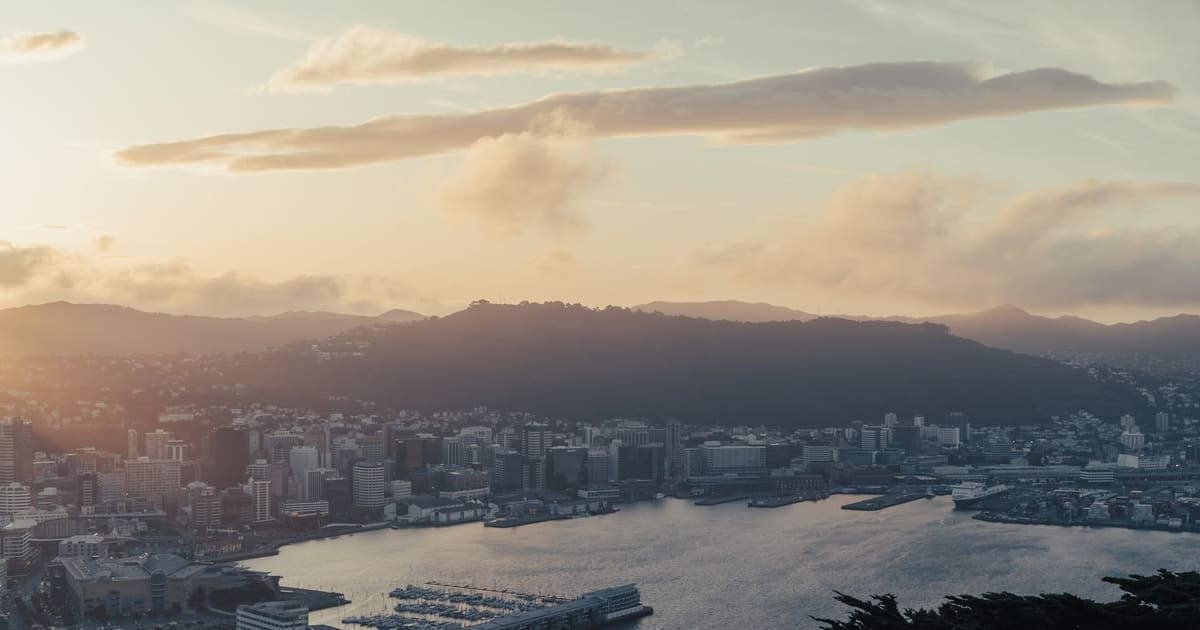 $7.99City Highlights
 $8.99City Highlights
What to expect on a Wellington audio walking tour
Wellington squeezes a capital city's museums, theaters and government buildings onto a narrow strip between steep hills and a famous harbour, and these two audio walks cover it mostly downhill and almost entirely on foot.
The Cable Car Walk starts at the top of Wellington's little red cable car in Kelburn, with the best introduction to the city laid out below, then heads downhill through the Botanic Garden past Space Place and the Lady Norwood Rose Garden, through the graves of Bolton Street Cemetery, and down to Parliament's Beehive and the timber Gothic interior of Old St Paul's. It's about 2.4 kilometers and 32 minutes, nearly all of it downhill.
The Waterfront Walk begins at the Wellington Museum on Queens Wharf, crosses the carved City to Sea Bridge into Civic Square, and continues through the bohemian shops of Cuba Street, home to the splashy Bucket Fountain, to the bright lights of Courtenay Place and the Embassy Theatre, where The Lord of the Rings had its world premiere.
From there the route reaches Te Papa, the national museum built on base isolators to ride out an earthquake, then follows the shore past Waitangi Park to the golden sand of Oriental Bay. It's 3.4 kilometers and about 47 minutes, almost entirely flat but often windy, since Wellington sits right on Cook Strait.
Where to walk in Wellington
A few of the stops you will pass, and why they are worth slowing down for.
Wellington Harbour at Dusk
The city and its harbour spread out below in the last light of the day, ferries and yachts resting at anchor while the hills of the far shore fade into silhouette. Te Whanganui a Tara, the great harbour of Tara, shapes practically everything about Wellington, including the wind the city is famous for, funneled straight through Cook Strait. Wellington squeezes between these hills and the water on a narrow strip of reclaimed and original land, which is why its best known walks cover so much ground on foot. Lights begin to come on across downtown as the sky deepens.
Wellington Botanic Garden
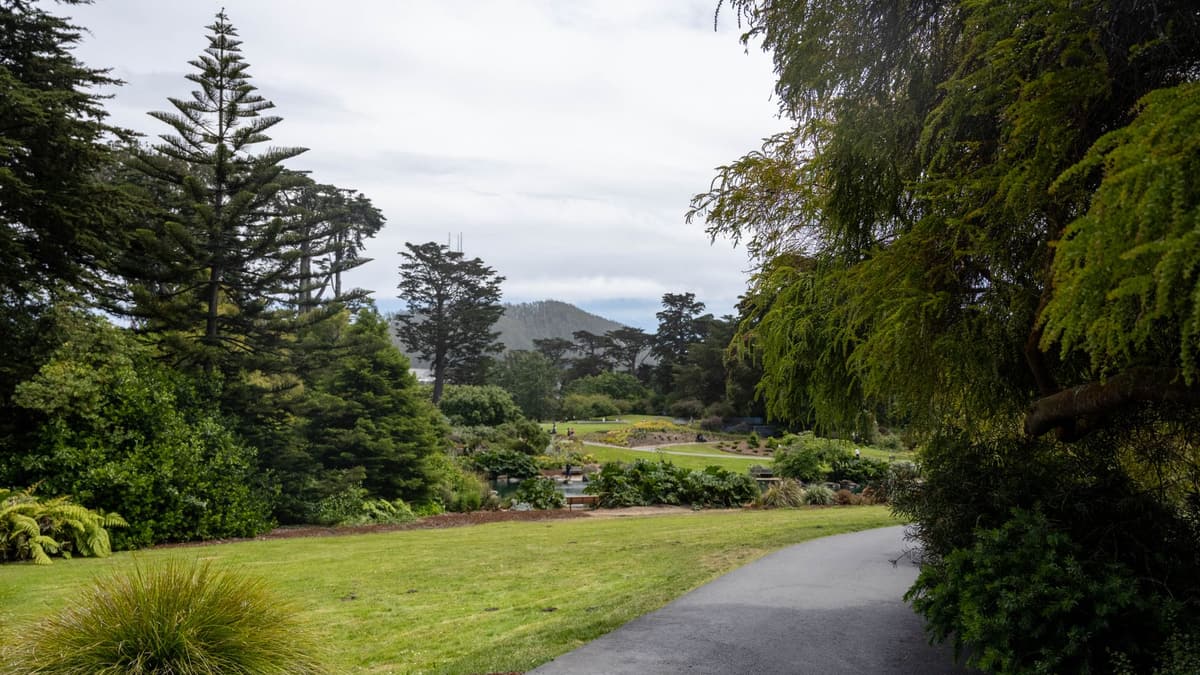
A gravel path curves gently downhill between towering conifers and a quiet garden pond, with the hills of the city visible through a gap in the trees. This is the Wellington Botanic Garden, one of the oldest public gardens in New Zealand, set aside from the Town Belt in 1844 and officially established in 1868 to test which imported plants could thrive here. Native tree ferns and kawakawa grow alongside those early exotic conifers, so native and introduced planting sit side by side across the slopes. Somewhere nearby, the formal beds of the Lady Norwood Rose Garden hold around three hundred rose varieties at the height of summer.
Parliament Buildings
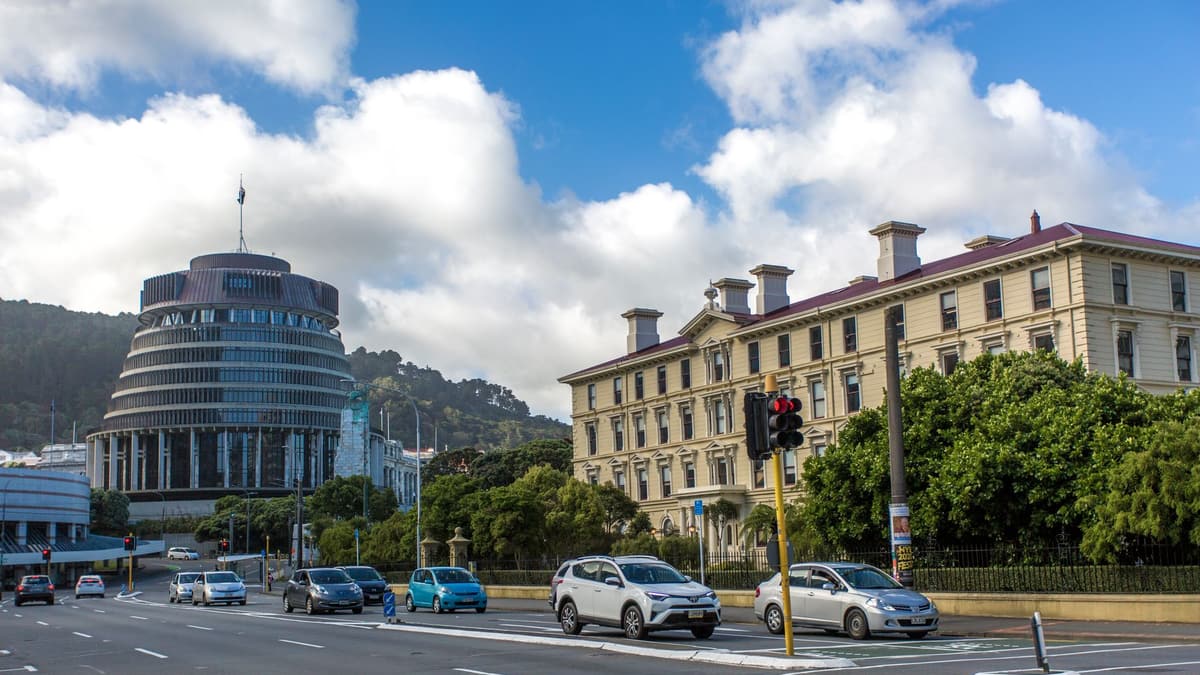
The round, dark shape of the Beehive, New Zealand's executive wing, stands beside an elegant Victorian building with tall chimneys, cars queued at the lights on the road in front. Designed by Sir Basil Spence and built between 1969 and 1981, the Beehive still divides opinion decades on, while the sandstone building beside it predates the fire that destroyed the original wooden parliament in 1907. This is the seat of government that passed the law in 1893 making New Zealand the first self governing country where women could vote in national elections. Free guided tours run most days if you want to see inside either building.
Courtenay Place by Night
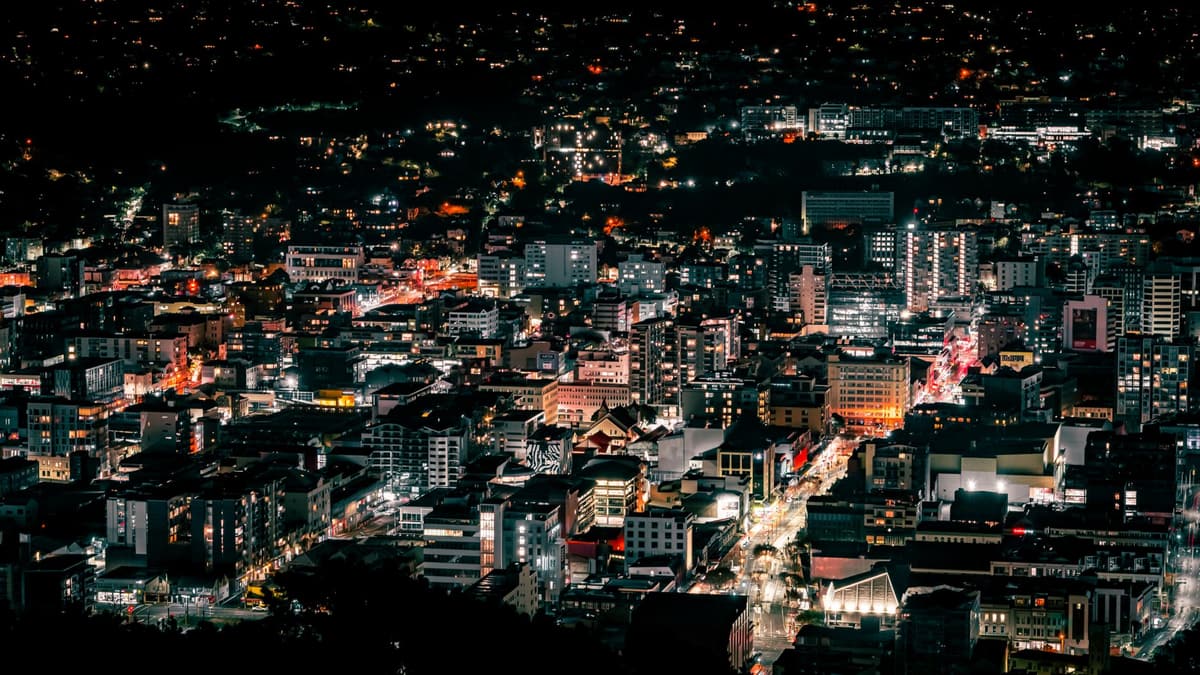
City lights spread out across Wellington after dark, streets and tower blocks glowing against the black hillside behind them, with a single bright strip cutting through the middle of the scene. That strip of light is close to Courtenay Place, the city's main nightlife strip, quiet by day and loud by night, home to the Embassy Theatre where The Lord of the Rings: The Return of the King had its world premiere in 2003. Wellington earned the nickname Wellywood on nights exactly like this one, when red carpets and film premieres took over these same streets. By day the area empties into cafes and shops, but after dark it's the liveliest few blocks in the capital.
Oriental Bay
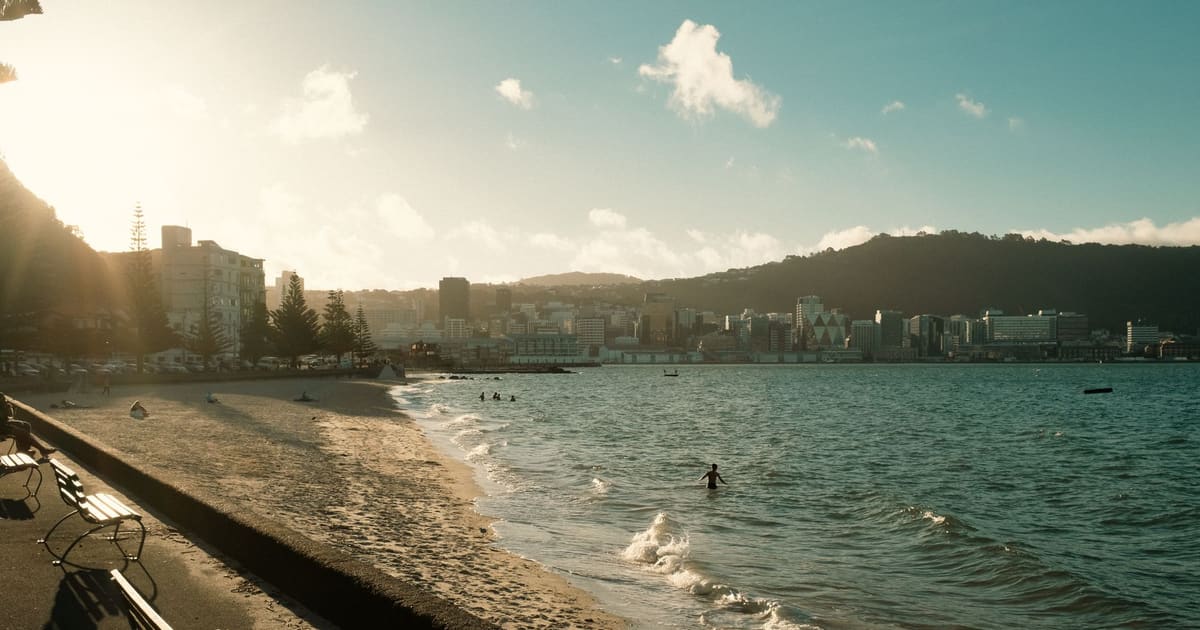
Waves lap at the golden sand of Oriental Bay as the evening sun throws long shadows across the beach, a scatter of swimmers making the most of the last warm light. This is Wellington's city beach, its sand partly brought in from Golden Bay at the top of the South Island to widen the original shoreline in 2004. Norfolk pines line the promenade behind it, with the wooden villas of Mount Victoria stacked up the hill beyond. The bay takes its name from the Oriental, one of the first New Zealand Company ships to bring settlers here in 1840. It's one of the best places in the country to sit and look back across the harbour at dusk.
Get the Audio Tour in 3 Simple Steps
All in the free Walk With Me app, and the first stops of every tour are free to try.
Tap the Gold Headphones and Pick a Tour


01
Walk It Solo or Invite Someone


02
Press Play and Walk


03
Handcrafted for Your Time in the City
These tours aren't a checklist of sights. They're made to be walked slowly, headphones on, eyes on the city.
Meditative and Immersive
Each story is told where it happened. The app chimes when you reach a stop, one tap starts the story, and the stretch between stops is yours to take in at your own pace.
Handcrafted With Care
We choose every route and every stop ourselves and shape each story with care, so the time you have in the city goes to the places most worth seeing.
Better With Someone
Every walk is better with someone beside you, so if you can bring a friend, we really hope you do. That's why one purchase covers everyone you invite: they join your tour free.