
October 13, 2026 · 8 min read
Where to Find Walking Groups
Trying to find walking groups near me? We compare Meetup, Facebook Groups, and walking apps to see which platform gets you out on foot faster.

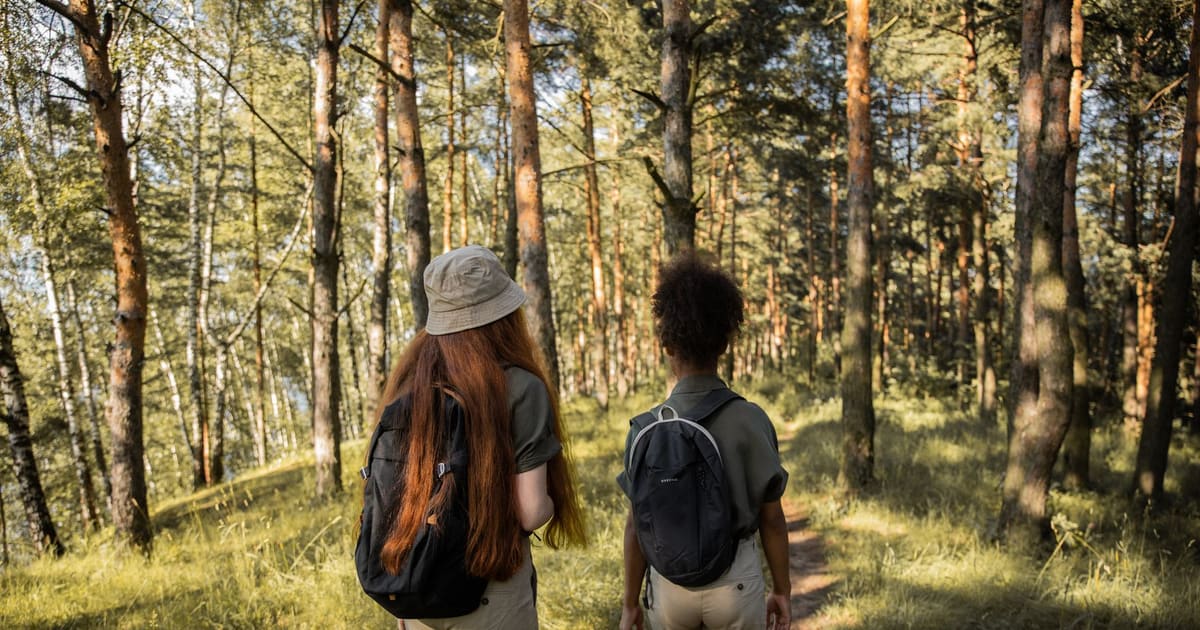
Will I be safe walking into the woods with a bunch of strangers I met online? It is the quiet question everyone asks themselves but rarely says out loud. The short answer is yes, but only if you know how to spot the red flags first. If you want to start meeting people on walks without constantly looking over your shoulder, you need a system to filter out the chaotic meetups from genuine, safe walking groups.
I get it. Showing up to a trailhead at 7:30 AM to meet six people you only know by their username feels like the setup for a horror movie. Your brain is wired to keep you safe, so it screams at you to stay in bed. But isolation is its own kind of risk. The trick is not to stay home. The trick is to become exceptionally good at vetting.
When I was designing Walk With Me, safety was the first thing we coded. I spent weeks thinking about how to bridge the gap between digital trust and physical safety. Through that process, and after a lot of conversations with group leaders, I realized that secure communities do not happen by accident. They have structure. Here is how you can spot a secure, well run walking group before you ever leave your house.
Anonymity is the enemy of safety. When you join a casual walking group, your first task is to identify the person in charge. Is there a clear host, or is it just a vague collective where whoever shows up first is the leader?
A group with no clear leader is a recipe for chaos. If something goes wrong, if someone gets hurt, or if an uninvited person starts making everyone uncomfortable, you need to know who is responsible for handling it. An active leader sets the tone for the entire group. They establish the boundaries and make sure everyone feels welcome and secure.
Look at the event description. A responsible host does not just post a time and a place. They tell you exactly what to expect. They will post the route, the expected pace, and what you need to bring. More importantly, they will respond to questions.
Try sending the host a direct message before the walk. Ask a simple question like, "Hey, I am a bit slow, is that okay for this route?"
A good host will reply within a day. They will be welcoming, clear, and reassuring. If they ignore you, or if their response is a dismissive "just show up," that is your cue to stay home. You want to walk with people who care about the individuals in their group, not just their head count.
Here is a quick rule of thumb. If you cannot find a real name, a real face, and a responsive host attached to the event, do not go. It is that simple.
This is the single most useful safety check you can run, and almost nobody talks about it. It is what I call the Sweep Test.
In serious hiking and walking clubs, a sweep is a designated volunteer who walks at the very back of the pack. Their entire job is to stay behind the slowest walker. They make sure nobody gets left behind, nobody takes a wrong turn, and nobody twists an ankle in silence.
Before you join any of the safe walking groups in your area, ask the host a direct question: "Who is your designated sweep for this walk?"
Their answer will tell you everything you need to know about how they operate.
If they reply with, "Oh, we do not have one, we just all stick together," be cautious. Sticking together sounds nice in theory, but in practice, the fast walkers naturally pull ahead. The group stretches out like a rubber band. Before you know it, the people at the back are walking alone in an unfamiliar area.
If they reply with, "I walk at the back," or "Sarah is our sweep today, she will have a red backpack," you have found a winner. This shows the group has organizational maturity. They have thought about the worst-case scenario and planned for it.
Wry aside: I once joined a casual city walk where the leader was so intent on showing off his brisk pace that he left three people behind at a traffic light and did not notice for two miles. We found them at a coffee shop later, looking highly unimpressed. Do not be those three people.
Your first walk with a new group should never be an eight mile trek through a dense forest with zero cell reception. That is not just risky, it is stressful. You will spend the entire time worrying instead of enjoying the scenery.
Instead, look for what I call high-escape routes.
A high-escape route is a path that has multiple points where you can easily leave the group and get back to your car or public transport. Think of a loop around a busy city park, a paved waterfront trail, or a path through a well lit residential neighborhood.
Let us compare your options:
| Feature | High-Escape Route (Safer First Choice) | Low-Escape Route (Wait Until You Know Them) |
|---|---|---|
| Location | City park, paved trail, busy neighborhood | Wilderness trail, dense forest, remote hills |
| Cell Service | Strong, consistent coverage | Spotty or non-existent |
| Exit Points | Every 5 to 10 minutes | Only at the start and end of the loop |
| Public Presence | Lots of other bystanders around | Empty trails, isolated paths |
| Terrain | Flat, predictable pavement or gravel | Steep, rocky, easily tripped over |
If you are meeting a group for the first time, stick to the left column. You warm up in the first ten minutes, and if you realize the group vibe is completely wrong, you can easily say, "Hey guys, I am going to head off here," and walk away. You do not want to be stuck three miles deep in a canyon with people who make your skin crawl.
Before you show up in person, do some digital detective work. A safe walking group almost always leaves a trail of breadcrumbs online.
Start by looking at their past events. Do they have photos of previous walks? Look closely at those photos. Do the people look relaxed and happy? Is there a diverse mix of people, or does it look like an exclusive club? If all the photos feature the exact same three people and nobody else, it might not be the open, welcoming community you are looking for.
Next, check the member list. In shady or poorly managed groups, you will see a lot of empty profiles with no profile pictures, weird usernames, and zero activity. In active, healthy groups, you will see real people talking to each other in the comments. They will be sharing photos, thanking the host, or asking about the next route.
Look for cross-platform presence. Does the group exist only on a single, anonymous forum, or do they have a verified presence? If you can find their events listed on a dedicated app like Walk With Me, you have a massive advantage. On a platform built specifically for walking, you can open the host's profile and see how many walks they have hosted before you decide.
Look at the timing of the posts. Shady setups often pop up out of nowhere with a high-urgency post. "Everyone meet at this dark trailhead tonight at 9 PM!" A real, safe group schedules walks in advance. They give you time to plan, ask questions, and look at the route.
You did your prep, you checked the route, and you showed up. But standing in the parking lot, your gut is screaming that something is wrong.
Maybe the host is different from the person online. Maybe the group is much smaller or larger than advertised. Or maybe there is just an energy that makes you uncomfortable.
Trust your gut. Your subconscious processes thousands of tiny social cues before your conscious mind can put them into words. If it says leave, leave.
You do not owe anyone an elaborate explanation. You do not need to apologize. You can use a simple, polite exit line.
Here are three scripts you can use:
Say it with a smile, turn around, and walk away. A safe, healthy group will understand and wish you well. If they try to guilt trip you or pressure you into staying, you just got definitive proof that leaving was the right call.
Always have a backup plan. If you are going to a new group, tell a friend exactly where you are going and when you expect to be back. You can send them a quick text when you arrive and another when you finish. It takes ten seconds and gives you complete peace of mind.
When we built Walk With Me, we wanted to make this entire vetting process effortless. You do not have to dig through sketchy forums or guess who is showing up. You can see active walks on a live map and check out the host's profile before you ask to join. Safety is built in too, like shifting each walk's pin on the map by up to 200 meters, host approval on join requests by default, and one-tap blocking.
You deserve to find your community without sacrificing your peace of mind. If you are ready to find safe walking groups near you, check out Walk With Me on the App Store or Google Play today. Let us make your next walk a safe one.
October 13, 2026 · 8 min read
Trying to find walking groups near me? We compare Meetup, Facebook Groups, and walking apps to see which platform gets you out on foot faster.
October 3, 2026 · 7 min read
If you feel nervous to meet new people for a walk, these practical tactics will calm your nerves and set you up for a great first outing.

September 20, 2026 · 8 min read
Discover how netwalking for professionals replaces stiff networking events with fresh-air business connections that feel entirely natural.