
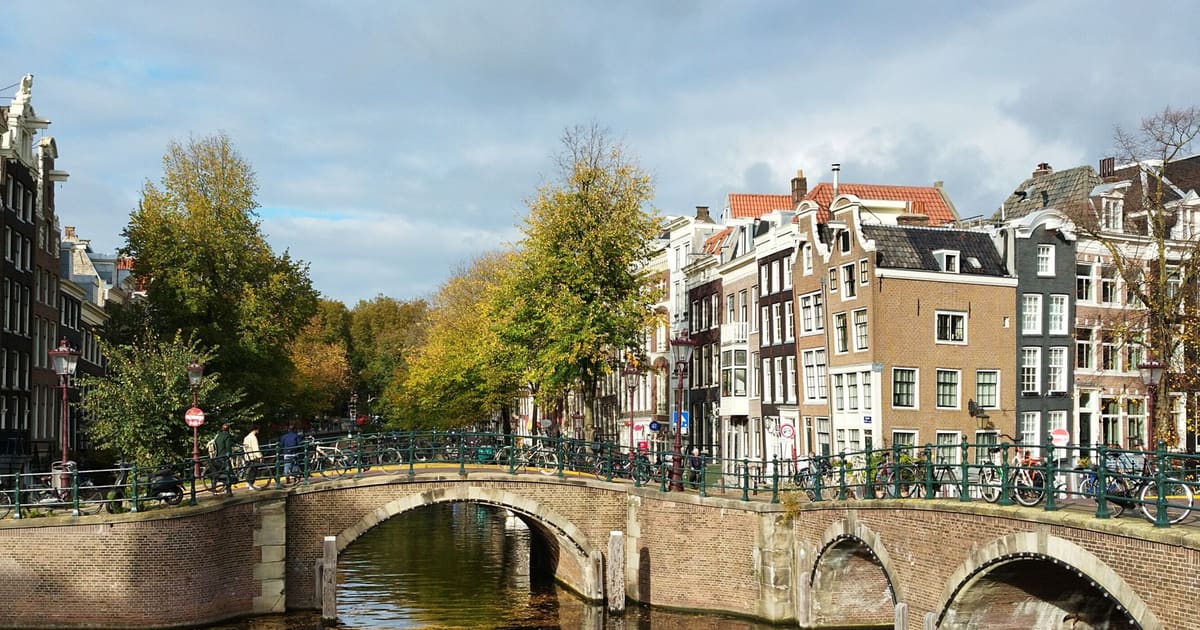
 $16.99Famous Lives
Amsterdam Walking Tour: Vondelpark, the Great Museums and De Pijp
Choose how you'll do this walk in our app

 Friends walk free
Every tour also runs as a scheduled group walk you can join in the app.
More audio tours in Amsterdam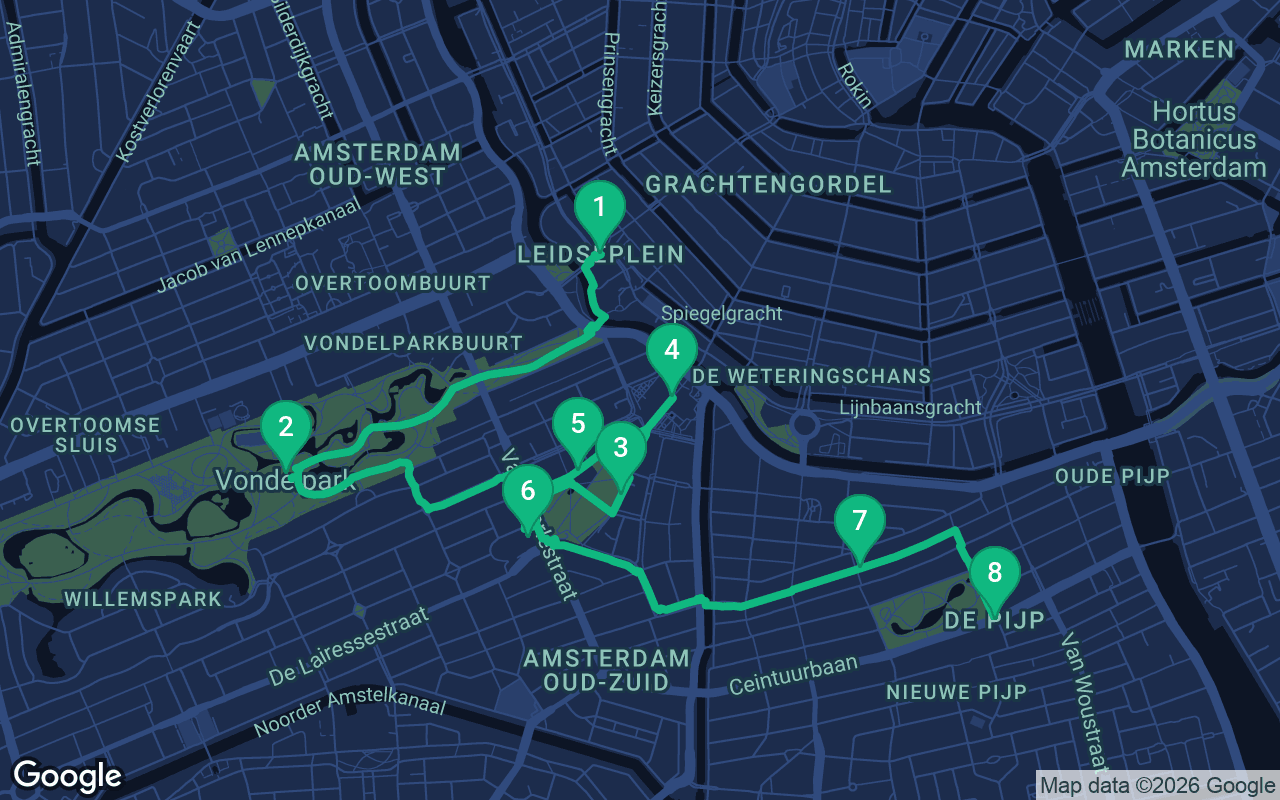
About 3.4 km, roughly 47 minutes at an easy pace.
- 1Vondelpark
- 2Concertgebouw
- 3Van Gogh Museum~€25 · optionalOptional entry ticket, not included
- 4MuseumpleinFull tour
- 5Rijksmuseum~€25 · optionalOptional entry ticket, not includedFull tour
- 6Albert Cuyp MarketFull tour
- 7De PijpFull tour
Not included in the tour: ~€50 entry (optional)Average per person. Prices change, so check before you go.
This tour is narrated
Press play on the first 3 stops for a 30-second demo of the narration. In the app, the intro and those 3 stops play in full for free, each one chiming as you arrive. The whole narrated tour is yours for $8.99, a one-time purchase you keep for good.
Works with Garmin, Komoot, Strava, OS Maps and any GPX app.

South of the canal ring, Amsterdam opens up. The streets get wider, the buildings get grander, and the city that grew rich in the Golden Age shows off what it did with the money two centuries later: a great park, a world-famous concert hall and the museums that hold its painters. This walk starts in the middle of Vondelpark, crosses Museumplein past the Concertgebouw, the Van Gogh Museum and the Rijksmuseum, and then trades high culture for street food at the Albert Cuyp Market, finishing in the cafes and green squares of De Pijp. It covers about three kilometers on flat ground, one of the most varied self-guided walking tours you can do in an afternoon.
Before you set off
Plan on about two hours at a stroll, without going inside anything. If you want to visit a museum, add at least two hours for each and book a time slot online in advance, because the Van Gogh Museum in particular sells out. The whole route is flat, on park paths and paved streets, and easy for strollers and wheelchairs. Watch for cyclists everywhere, but especially in Vondelpark, where they share the paths with you, and in the passage under the Rijksmuseum, where they come through at speed. The Albert Cuyp Market runs most days but not Sundays, so check before you go if the market is part of your plan, and come hungry, since lunch from the stalls is half the point. Vondelpark gives you plenty of shade; Museumplein gives you almost none, so bring a hat in summer and a rain layer at any time of year. To reach the start, enter the park from its main gate near Leidseplein and walk about ten minutes along the main path to the ponds in its middle.
Vondelpark
You are in the middle of Vondelpark, among the ponds, lawns and big old trees that make this the city's favorite back garden. It opened in 1865, laid out by a group of well-off citizens who wanted somewhere to walk and ride in the fresh air, and its designers gave it the look of an English landscape: winding paths, irregular ponds, carefully placed clumps of trees, nothing in a straight line. A few years later a statue of Joost van den Vondel, the great seventeenth century poet and playwright, was put up in the park, and the park took his name. It looks effortless, but it is not. The ground here is soft peat, and the park has had to be raised and drained more than once to stop it sinking. Look around and you will see the round white Blue Teahouse, a small modernist cafe from the 1930s, and nearby the open-air theater, which puts on free performances in summer. Somewhere in the greenery stands a large concrete sculpture by Picasso, given to the park for its hundredth birthday. On a sunny day the lawns fill with picnics, birthdays and people who have simply decided not to go back to work. To move on, walk east along the main path to the bridge where Van Baerlestraat crosses over the park, leave the park there and follow that street southeast, away from the park, for about eight minutes.
Concertgebouw
 In front of you stands the Concertgebouw, a palace of red brick and pale stone with a golden lyre on its roof. It opened in 1888, when Amsterdam decided it needed a concert hall worthy of a modern capital, and it was built on what was then open land at the edge of the city. What made it famous is invisible from out here. The main hall turned out to have some of the finest acoustics in the world, warm and clear, and musicians regularly rank it alongside the great halls of Vienna and Boston. Nobody fully planned that, which is part of the legend. Its orchestra, now the Royal Concertgebouw Orchestra, became one of the best in the world, and in the early twentieth century Gustav Mahler came here again and again to conduct his own symphonies for an audience that loved them before most of Europe did. Like everything in Amsterdam, the building stands on wooden piles driven into the soft ground, and in the 1980s it began to sink and needed a major rescue of its foundations. The glass entrance pavilion on the side dates from that time. Free lunchtime concerts are held on some weekdays outside the summer, so check before you go. Now walk north along the edge of Museumplein for about three minutes to the low modern building with the curving glass entrance.
Van Gogh Museum
This is the Van Gogh Museum, home to the largest collection of Vincent van Gogh's work anywhere, around two hundred paintings together with hundreds of drawings and letters. The main building was designed by the Dutch architect Gerrit Rietveld and opened in 1973, and the curved glass entrance hall facing the square was added much later. The collection exists because of a family. Vincent painted for only about ten years and sold very little while he lived, and when he died in 1890 most of his work passed to his brother Theo, who had supported him all along. Theo died months later, and it was Theo's widow, Jo van Gogh-Bonger, who spent the rest of her life promoting Vincent's art, organizing exhibitions and publishing his letters. Her son, also named Vincent, later placed the collection in a foundation so that it would stay together, and this museum was built to hold it. There is a lovely thread to that story: when that nephew was born, Vincent painted a branch of almond blossom against a blue sky as a gift for the new parents, and that painting hangs inside today. Even if you are not going in, it is worth standing here to think about how close this work came to being forgotten. Then step out onto the open lawn right in front of you.
The full tour continues in the app
- Distance
- 3.4 km
- Walking
- 47 min
- Steps
- ~4,700
- Narration
- 13 min
What's included
- All 7 stops, fully narrated
- Works offline once downloaded in the app
- Friends walk free one purchase covers everyone on your walk
Our tours are made to be meditative and immersive: you keep moving and simply listen. They're always better together, and the app plays the narration in sync, so you, your partner and your friends hear every stop at the same moment.
Museumplein
This wide green lawn is Museumplein, Museum Square, and from the middle of it you can turn in a slow circle and see a remarkable set of buildings: the Rijksmuseum at the northern end, the Concertgebouw at the southern end, and the Van Gogh Museum…
The rest of this stop is in the full audio tour.
Rijksmuseum
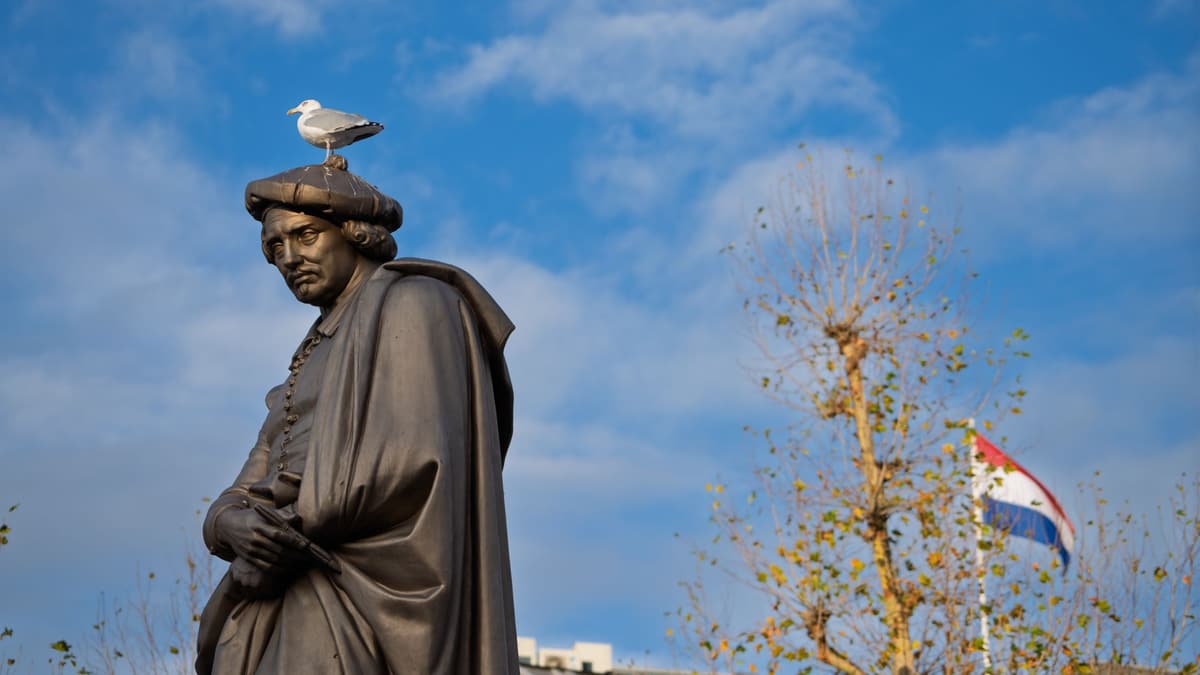
You have reached the Rijksmuseum, the national museum of the Netherlands, and the building is as much a work of art as anything inside it.
The rest of this stop is in the full audio tour.
Albert Cuyp Market
Welcome to the Albert Cuyp Market, the city's best-known street market, which has run along this street for more than a century.
The rest of this stop is in the full audio tour.
De Pijp
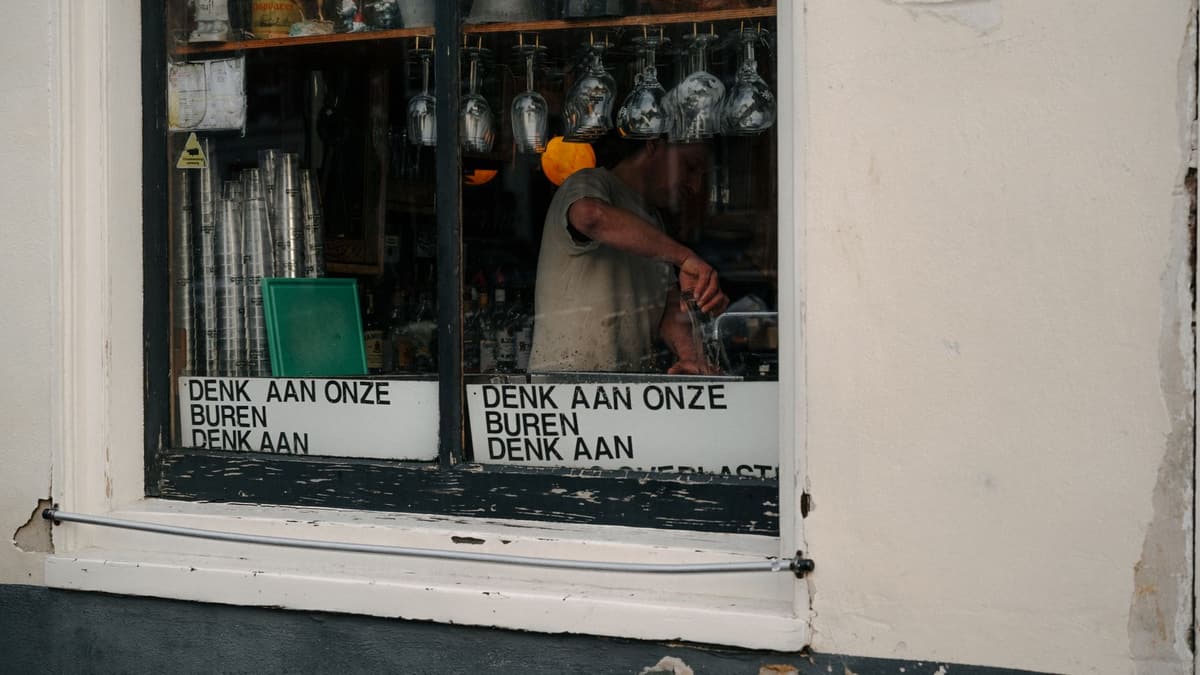
You finish in De Pijp, at the edge of Sarphatipark, a small green park in the middle of the neighborhood.
The rest of this stop is in the full audio tour.
Do this walk with other people on the next scheduled tour.
About 3.4 km, roughly 47 minutes at an easy pace · 7 stops
Friends walk freeMore audio tours in Amsterdam
$16.99Famous Lives $15.99Film & Fiction
 $8.99City Highlights
 $8.99City Highlights