
 $14.99Food & Tastings
Lisbon Baixa and Chiado Audio Walking Tour (Self-Guided)
Choose how you'll do this walk in our app

 Friends walk free
Every tour also runs as a scheduled group walk you can join in the app.
More audio tours in Lisbon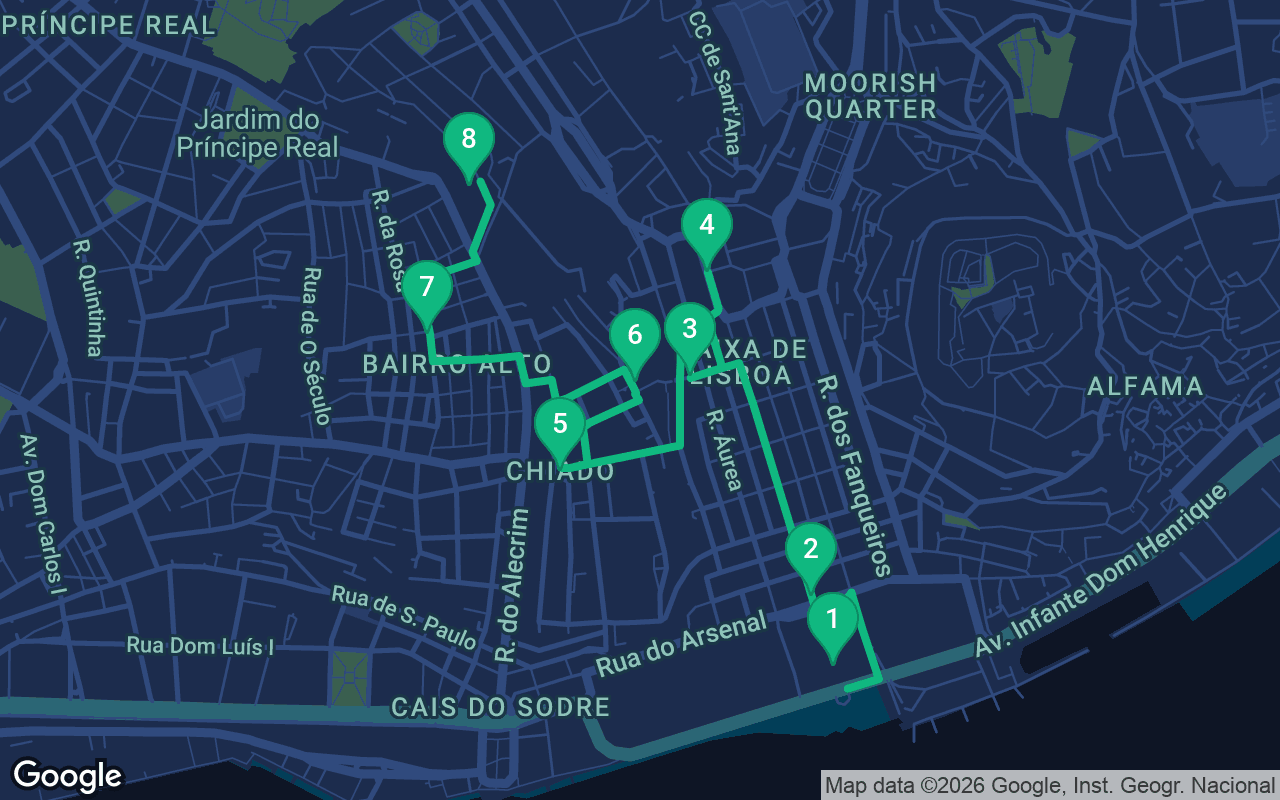
About 2.6 km, roughly 41 minutes at an easy pace.
- 1Praca do Comercio
- 2Rua Augusta Arch~€3.50 · optionalOptional entry ticket, not included
- 3Rossio Square
- 4Santa Justa Lift~€6.20Entry ticket, not includedFull tour
- 5Carmo Convent~€7 · optionalOptional entry ticket, not includedFull tour
- 6ChiadoFull tour
- 7Bairro AltoFull tour
- 8Miradouro de Sao Pedro de AlcantaraFull tour
Not included in the tour: ~€6.20 entry · ~€10.50 entry (optional)Average per person. Prices change, so check before you go.
This tour is narrated
Press play on the first 3 stops for a 30-second demo of the narration. In the app, the intro and those 3 stops play in full for free, each one chiming as you arrive. The whole narrated tour is yours for $8.99, a one-time purchase you keep for good.
Works with Garmin, Komoot, Strava, OS Maps and any GPX app.
On the morning of All Saints' Day in 1755, an earthquake, a tsunami and a firestorm destroyed much of central Lisbon in a single day. What rose from the rubble was something new: the Baixa, a downtown laid out on a straight grid, with rows of matching buildings designed to stand up to the next quake. This walk starts at its grand riverside square, runs up its main street to Rossio, then climbs the hill to the west, past a Gothic church left open to the sky, through the elegant cafes of Chiado and the tight lanes of Bairro Alto, to finish at one of the best viewpoints in the city. It covers about two kilometers, flat at first and then steep, and it is one of the most rewarding self-guided walking tours in Lisbon for understanding how the city became what it is.
Before you set off
Allow about two hours with stops, and more if you go inside the convent ruins, ride the Santa Justa Lift or linger over coffee in Chiado. The first half, through the Baixa, is flat. The second half climbs steadily, and Lisbon's polished limestone pavements can be slippery even when dry, so wear shoes with real grip. Mornings are best for the Baixa, before the shopping crowds, and the walk ends at a viewpoint that is lovely at sunset if you time it that way. Summer afternoons are hot, and the climb has little shade, so carry water. The lift, the convent and the arch's rooftop terrace all charge for entry and set their own hours, so check before you go, and expect a queue at the lift in high season. Bairro Alto is sleepy by day and loud late at night, so if you would rather see its quiet face, walk it before evening. Keep an eye on your bag in the busiest streets, as you would in any big city.
Praca do Comercio
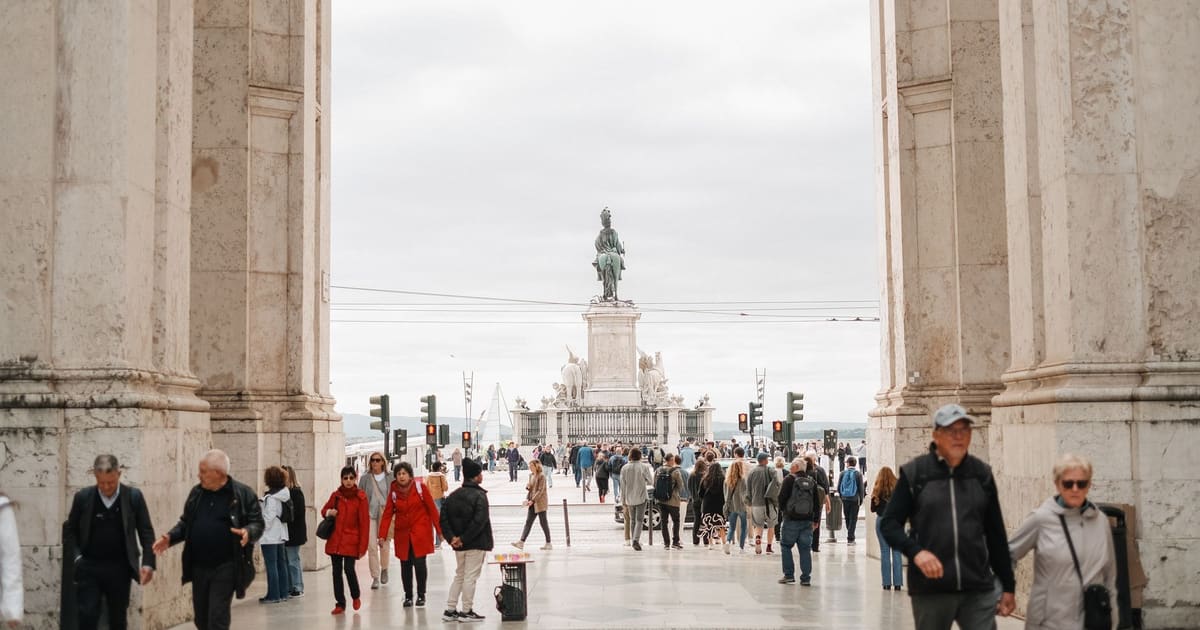
You are standing in Praça do Comércio, one of the great squares of Europe, open on one side to the wide Tagus River. Walk toward the water first and look at the two stone columns standing at the top of a flight of steps that runs right down into the river. For centuries this was the city's front door, where ambassadors, kings and cargo arrived by boat. Before 1755 the royal palace stood here, and Lisboetas still call this the Terreiro do Paço, the palace yard. The earthquake and tsunami swept the palace away, and the king's chief minister, the Marquis of Pombal, had the whole district rebuilt around this square, with yellow arcaded buildings on three sides to house the offices of trade and government. In the center rides a bronze statue of King José the First, the king who reigned during the disaster. The square has darker memories too. In 1908 King Carlos the First and his heir were shot dead in an open carriage at its corner, a killing that hastened the end of the monarchy two years later. Under the arcades on the eastern side is Martinho da Arcada, one of the oldest cafes in Lisbon and a favorite of the poet Fernando Pessoa. When you are ready, turn your back on the river and walk to the great arch on the north side of the square.
Rua Augusta Arch
Stand beneath the Rua Augusta Arch and look up. This triumphal gateway links the riverside square to the grid of the Baixa beyond, and it took a very long time to build: it was planned as part of the reconstruction after the earthquake but not finished until 1875. At the top, a figure of Glory crowns two others representing Genius and Valor. Below them stand statues of Portuguese heroes, among them the explorer Vasco da Gama, who first sailed from Europe to India, and the Marquis of Pombal himself, the man who rebuilt the city. The Latin inscription dedicates the arch to the virtues of the ancestors, as a lesson to all. You can ride a lift inside and climb to a terrace on the roof for a view straight down Rua Augusta in one direction and across the river in the other. Now look through the arch at the street ahead. Rua Augusta is the spine of Pombal's grid, and the streets around it still carry the names of the trades that were given them: the gold street, the silver street, the shoemakers and the leather workers. Walk north along Rua Augusta, a pedestrian street lined with shops and street performers, to the big square at its far end, about eight minutes away.
Rossio Square
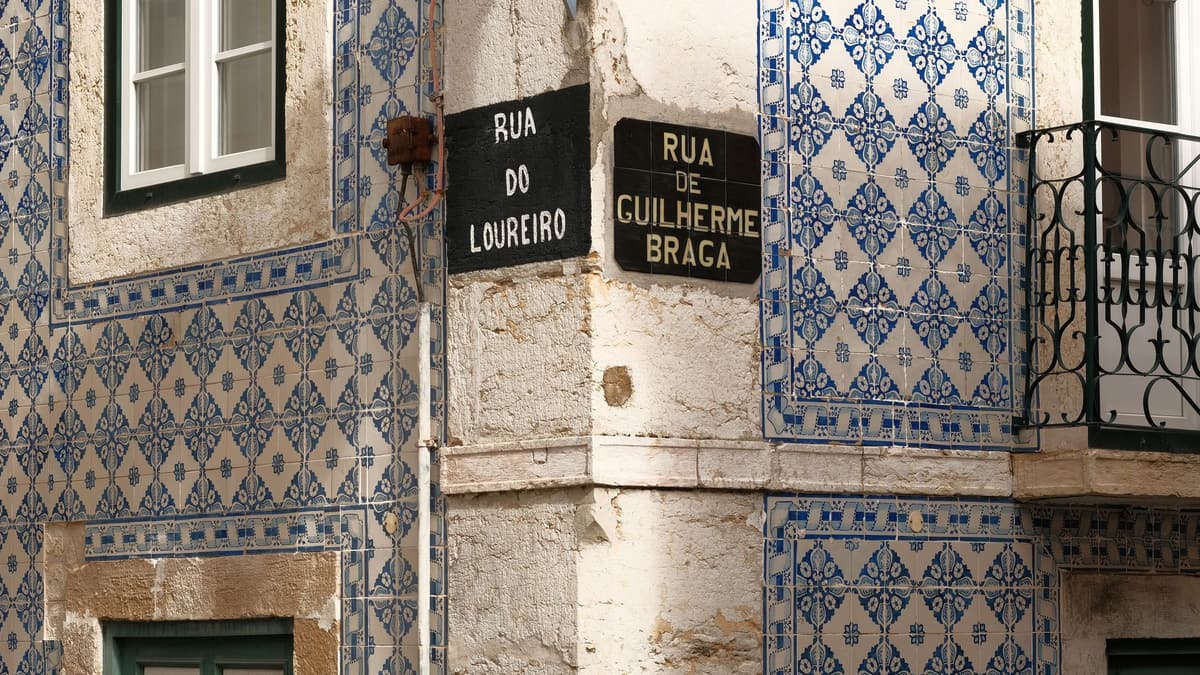 Rossio has been the beating heart of Lisbon for centuries, and it still feels that way. Look down first. The paving under your feet is laid in black and white stones in great rolling waves, a pattern so strong it can make you feel slightly seasick. This is Portuguese pavement, calçada portuguesa, set by hand stone by stone, and this design, laid in the nineteenth century, became one of the most famous in the world. In the middle, a tall column carries a statue of King Pedro the Fourth, who was also the first emperor of Brazil, and two bronze fountains splash at either end. Across the top of the square stands the National Theatre. It was built on the site of the palace of the Inquisition, and this square once hosted its grim public ceremonies of judgment. Just beyond the northwest corner, look for the railway station with its fanciful facade and two horseshoe-shaped doorways, and in a little square off the northeast corner you will find tiny bars selling ginjinha, a sweet cherry liqueur, by the shot. The old cafes around Rossio have been meeting places for writers and gossips since the eighteenth century. From the southwest corner, walk back south a couple of blocks and turn right into the short street that ends at a tall iron tower, about three minutes away.
The full tour continues in the app
- Distance
- 2.6 km
- Walking
- 41 min
- Steps
- ~3,600
- Narration
- 15 min
What's included
- All 8 stops, fully narrated
- Works offline once downloaded in the app
- Friends walk free one purchase covers everyone on your walk
Our tours are made to be meditative and immersive: you keep moving and simply listen. They're always better together, and the app plays the narration in sync, so you, your partner and your friends hear every stop at the same moment.
Santa Justa Lift
At the end of the street, a slender tower of black iron lace rises above the rooftops: the Santa Justa Lift.
The rest of this stop is in the full audio tour.
Carmo Convent
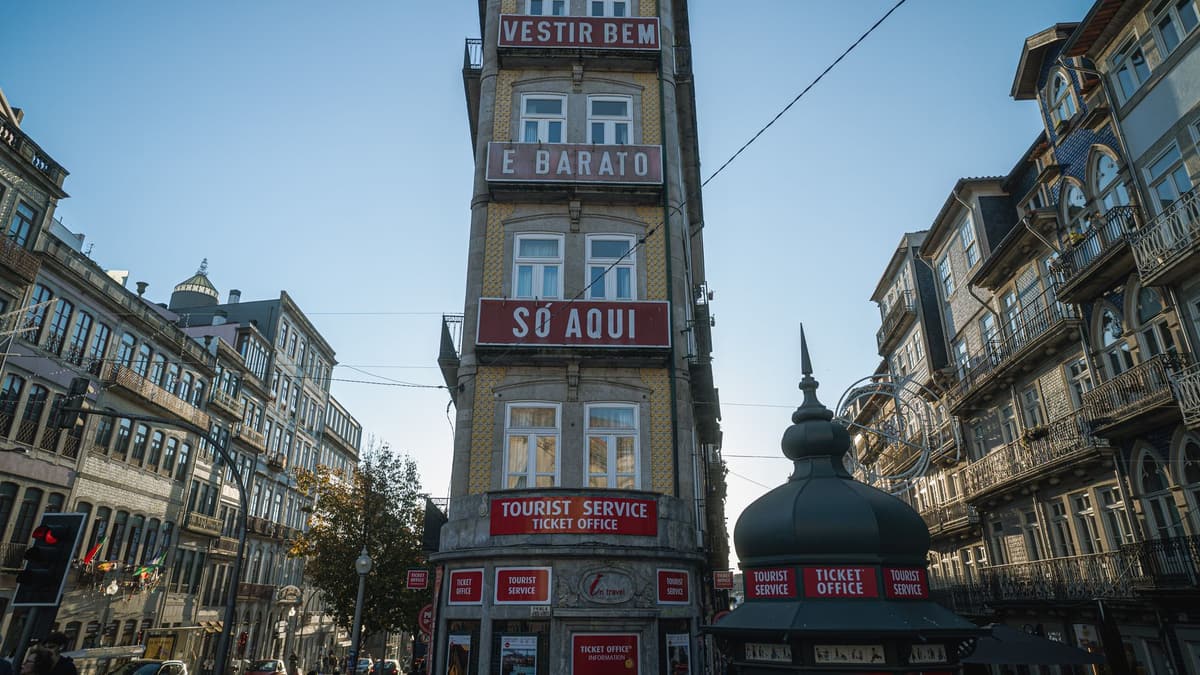
You are standing beside one of the most moving sights in Lisbon. The Carmo Convent was founded in the late fourteenth century by Nuno Álvares Pereira, the general who secured Portugal's independence from Castile and later gave up his wealth to become a friar here.
The rest of this stop is in the full audio tour.
Chiado
Chiado is Lisbon at its most elegant, a neighborhood of old shops, theaters, bookstores and grand cafes spread over the hill between the Baixa and Bairro Alto. Look for the bronze man sitting at a cafe table on the pavement.
The rest of this stop is in the full audio tour.
Bairro Alto
Bairro Alto means the high neighborhood, and you are now on top of the hill. Look along the street and notice how straight it is.
The rest of this stop is in the full audio tour.
Miradouro de Sao Pedro de Alcantara
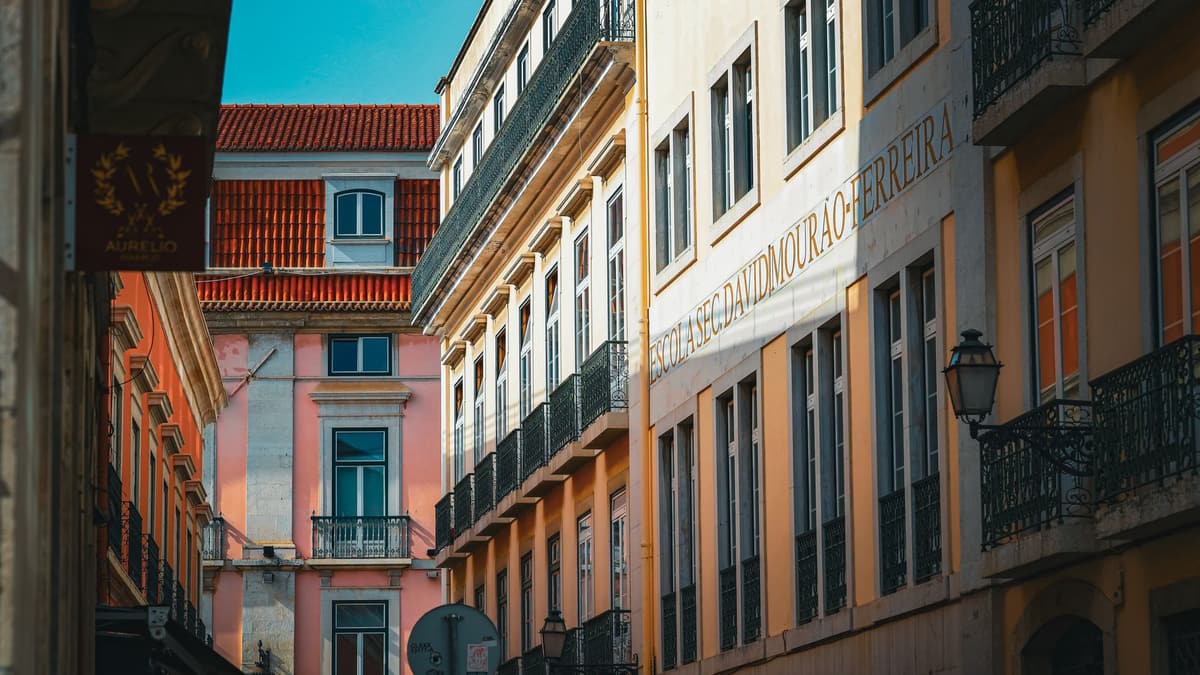
The walk ends at the Miradouro de São Pedro de Alcântara, a garden terrace on the edge of the hill with one of the finest views in Lisbon. Walk to the railing and look east across the valley.
The rest of this stop is in the full audio tour.
Do this walk with other people on the next scheduled tour.
About 2.6 km, roughly 41 minutes at an easy pace · 8 stops
Friends walk freeMore audio tours in Lisbon
$14.99Food & Tastings $6.99City Highlights