
 $14.99Food & Tastings
Lisbon Walking Tour: Alfama from the Fado Museum to the Castle
Choose how you'll do this walk in our app

 Friends walk free
Every tour also runs as a scheduled group walk you can join in the app.
More audio tours in Lisbon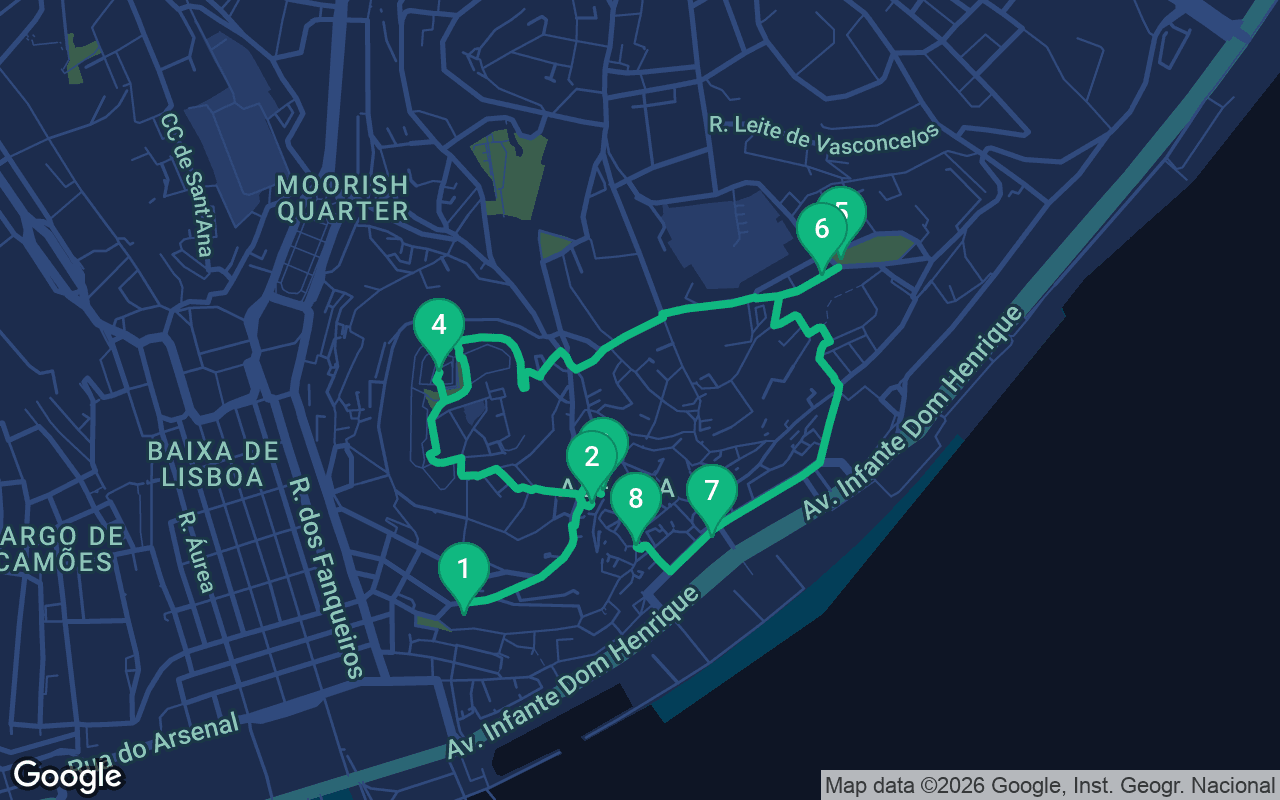
About 1.7 km, roughly 29 minutes at an easy pace.
- 1Fado Museum~€5 · optionalOptional entry ticket, not included
- 2Lower Alfama Alleys
- 3Lisbon Cathedral~€2.50 · optionalOptional entry ticket, not included
- 4Miradouro de Santa LuziaFull tour
- 5Miradouro das Portas do SolFull tour
- 6São Jorge Castle~€17 · optionalOptional entry ticket, not includedFull tour
Not included in the tour: ~€24.50 entry (optional)Average per person. Prices change, so check before you go.
This tour is narrated
Press play on the first 3 stops for a 30-second demo of the narration. In the app, the intro and those 3 stops play in full for free, each one chiming as you arrive. The whole narrated tour is yours for $6.99, a one-time purchase you keep for good.
Works with Garmin, Komoot, Strava, OS Maps and any GPX app.
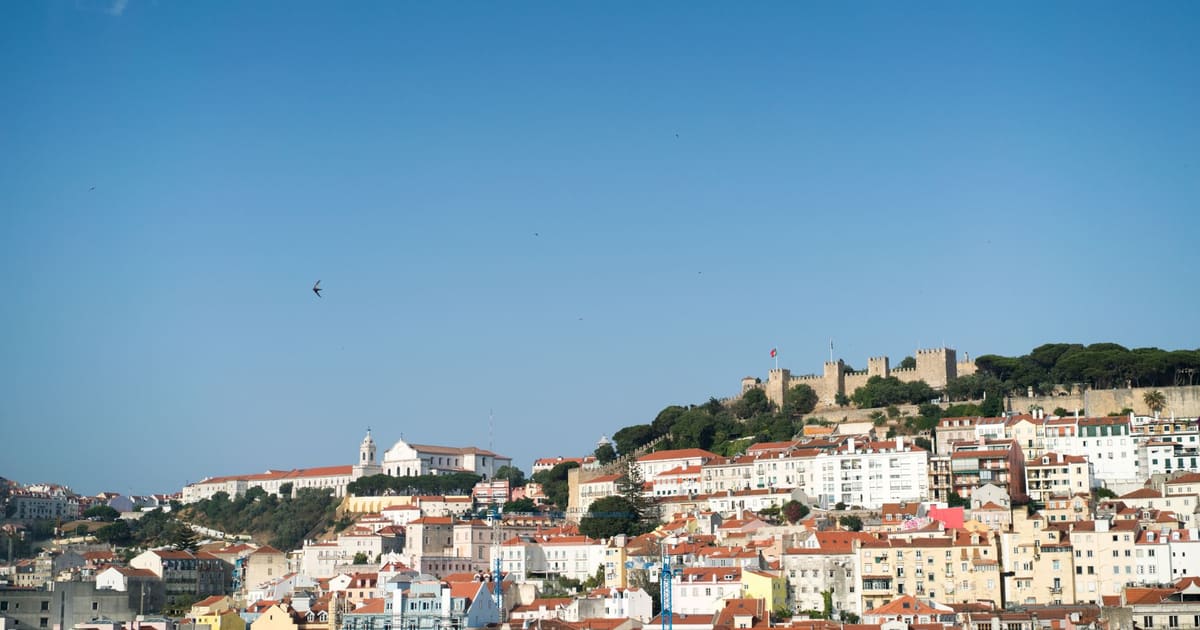
Alfama is the oldest neighborhood in Lisbon, a steep jumble of lanes, stairways and tiny squares spilling down the hill below the castle to the river. It survived the great earthquake of 1755 better than the rest of the city, so its street plan still follows the twists of the medieval town and, beneath that, the Moorish one. This walk starts at the bottom, at the Fado Museum, loses itself in the lower lanes, then climbs past the cathedral and two of the best viewpoints in Lisbon to finish on the castle walls at the very top. It is short, under two kilometers, but nearly all of it goes uphill, and it is one of the most atmospheric self-guided walking tours you can do in Europe, with laundry overhead, the smell of grilled fish and, if you are lucky, a voice singing fado through an open window.
Before you set off
Plan for about two hours, including stops, and longer if you go inside the museum, the cathedral cloister or the castle. The distance is small, but the climbing is real: Alfama is all slopes and steps, and the cobbles, polished smooth by centuries of feet, get slippery in the wet, so wear shoes with good grip. Mornings are lovely here, when residents are out shopping and the light comes in low off the river, and late afternoon is good too, when the viewpoints glow. Summer days are hot and the upper streets have little shade, so carry water and take the climb slowly. The Fado Museum, the cathedral cloister and the castle all charge for entry and set their own hours, so check before you go. Remember that Alfama is a living neighborhood, not an open-air museum. People live behind those doors and windows, so keep your voice down in the narrow lanes and ask before photographing anyone. Getting a little lost is part of the fun, and if you do, just head uphill to reach the castle or downhill to reach the river.
Fado Museum
You start in Largo do Chafariz de Dentro, a small square at the bottom of Alfama, a few steps from the river. The name means the square of the fountain inside, a reminder that this fountain once stood just inside the city walls. On one side of the square, in a pale building that once belonged to the city's water supply, is the Fado Museum, dedicated to the music that Lisbon thinks of as its soul. Fado was born in the poor waterfront neighborhoods of the city in the early nineteenth century, in taverns full of sailors, dockworkers and washerwomen, and Alfama has been one of its homes ever since. It is music of longing, built around a feeling the Portuguese call saudade, a homesick ache for something lost or far away. A singer stands with two guitarists, one playing the pear-shaped Portuguese guitar with its twelve bright metal strings, the other a classical guitar, and the room goes quiet. Fado's greatest star, Amália Rodrigues, took fado to concert halls around the world in the twentieth century, and in 2011 UNESCO added fado to its list of the intangible cultural heritage of humanity. If you go in, the museum's recordings and portraits are a fine introduction. Then leave the square on its western side and step into the narrow lane just behind the museum, two minutes away.
Lower Alfama Alleys
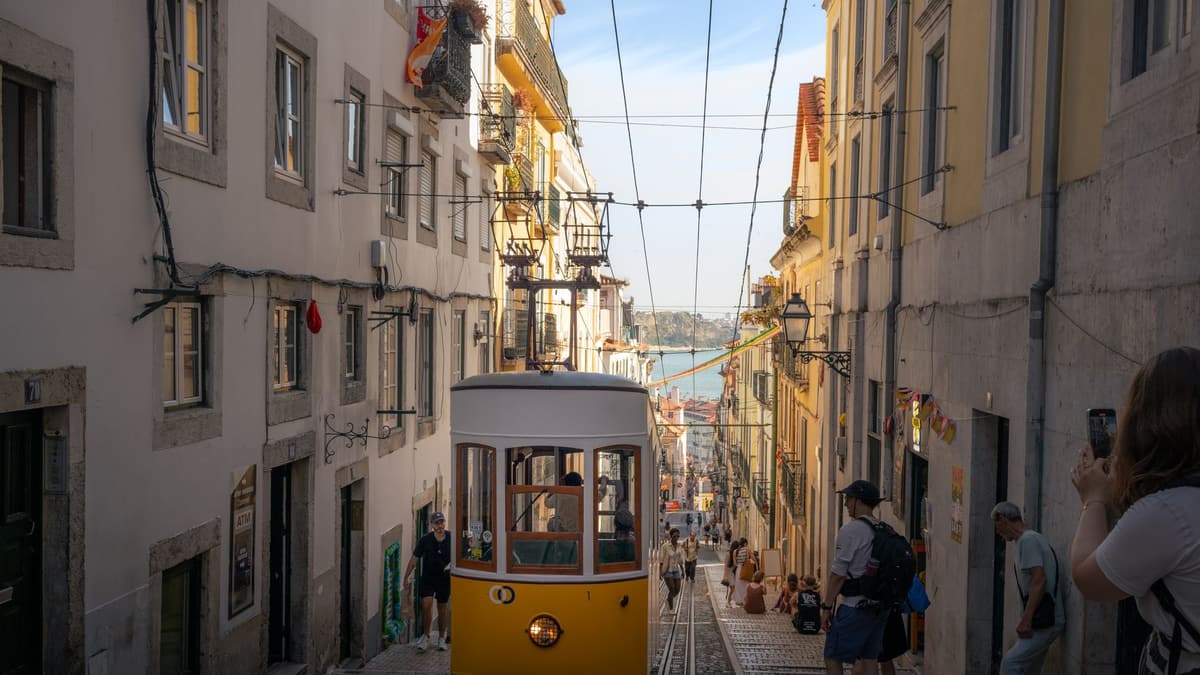 Now you are in the heart of the labyrinth. The lanes here are so narrow that neighbors can almost shake hands across them from their windows, and they bend, split and climb without any obvious plan. That is because there was no plan. This street pattern goes back to the Moorish city, when Lisbon was ruled from North Africa and Spain for more than four centuries, and the name Alfama itself probably comes from an Arabic word for springs or baths. Look around you: tiled facades in blue, green and yellow, washing strung between balconies, potted geraniums on every ledge, small grocers and taverns tucked into doorways. Little alleys called becos lead off to dead ends and tiny courtyards. Somewhere nearby, look for a small square with a fragment of the old city wall, a reminder that this was once the edge of the town. Close by was a medieval Jewish quarter, still remembered in the name of a street. Come in June and these lanes are hung with paper garlands, and the whole neighborhood fills with grills, sardines and music for the festival of Saint Anthony. On any day, wander slowly, and remember people live here. When you are ready, follow the lanes west, gently uphill, toward the twin towers of the cathedral, about six minutes away.
Lisbon Cathedral
Stand back in the small square in front of the cathedral and look up at its face: two heavy towers with battlements and a great round rose window between them. It looks more like a fortress than a church, and that is no accident. Lisbon Cathedral, the Sé, was begun in 1147, the year Portugal's first king, Afonso Henriques, captured the city from its Moorish rulers with the help of crusaders sailing to the Holy Land. It was built where the city's main mosque is thought to have stood, and in an age of war it was designed to be defended. Over the centuries, earthquakes knocked parts of it down and new styles were added, so inside you will find a simple, solemn Romanesque nave alongside a later Gothic ambulatory. If you visit the cloister, look into the excavations in its center, where archaeologists have uncovered remains from Roman, Moorish and medieval Lisbon, all stacked in one deep pit. Saint Anthony, the city's best loved saint, was born in a house just down the hill and is said to have been baptized here. Watch for the old yellow trams that rattle past the front, squeezing through gaps that look far too narrow for them. From here, follow the tram tracks uphill to the east, past the side of the cathedral. The climb is steep, about seven minutes.
The full tour continues in the app
- Distance
- 1.7 km
- Walking
- 29 min
- Steps
- ~2,400
- Narration
- 12 min
What's included
- All 6 stops, fully narrated
- Works offline once downloaded in the app
- Friends walk free one purchase covers everyone on your walk
Our tours are made to be meditative and immersive: you keep moving and simply listen. They're always better together, and the app plays the narration in sync, so you, your partner and your friends hear every stop at the same moment.
Miradouro de Santa Luzia
The street opens onto a terrace beside a small church, and suddenly all of Alfama is spread at your feet. This is the Miradouro de Santa Luzia, one of the loveliest viewpoints in Lisbon.
The rest of this stop is in the full audio tour.
Miradouro das Portas do Sol
A few steps on, the view opens even wider at the Miradouro das Portas do Sol, the Gate of the Sun. The name comes from one of the gates in the old city wall, which stood near here and faced east toward the sunrise.
The rest of this stop is in the full audio tour.
São Jorge Castle
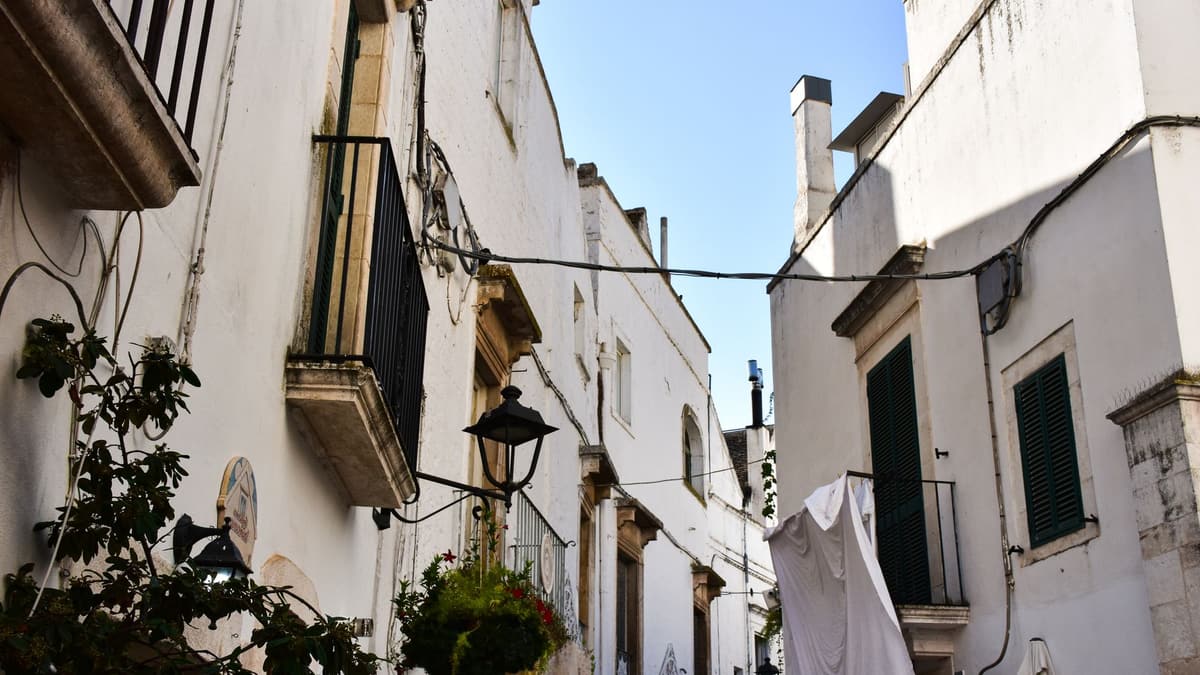
You have reached the top of the hill, and Lisbon lies all around you. São Jorge Castle crowns the highest point of the old city, and people have lived on this hilltop since long before the Romans.
The rest of this stop is in the full audio tour.
Do this walk with other people on the next scheduled tour.
About 1.7 km, roughly 29 minutes at an easy pace · 6 stops
Friends walk freeMore audio tours in Lisbon
$14.99Food & Tastings $8.99City Highlights