
 $19.99Turning Points
Paris Walking Tour: Montmartre from Abbesses to Sacré-Cœur
Choose how you'll do this walk in our app

 Friends walk free
Every tour also runs as a scheduled group walk you can join in the app.
More audio tours in Paris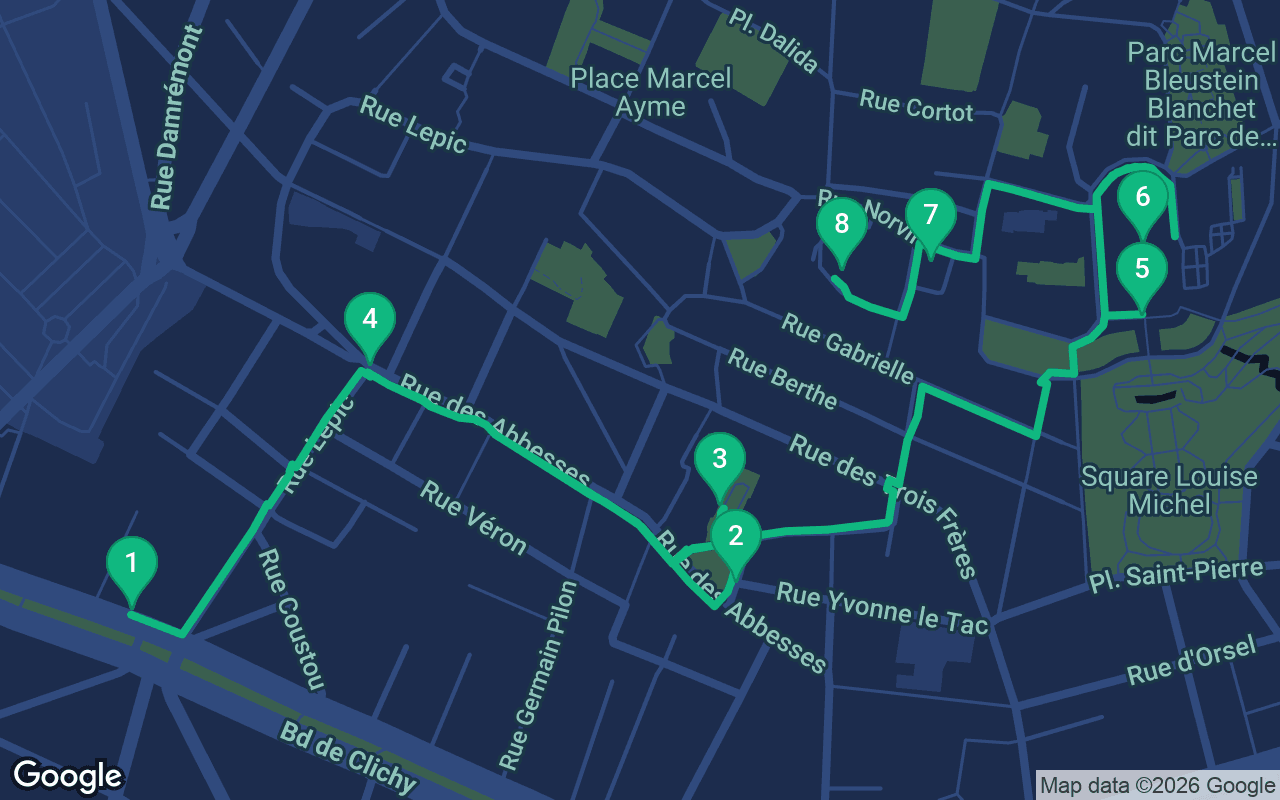
About 1.9 km, roughly 30 minutes at an easy pace.
- 1Place des Abbesses and the Wall of Love
- 2Bateau-Lavoir
- 3Moulin de la Galette
- 4Clos Montmartre VineyardFull tour
- 5Place du TertreFull tour
- 6Sacré-Cœur BasilicaFull tour
- 7Square Louise MichelFull tour
This tour is narrated
Press play on the first 3 stops for a 30-second demo of the narration. In the app, the intro and those 3 stops play in full for free, each one chiming as you arrive. The whole narrated tour is yours for $7.99, a one-time purchase you keep for good.
Works with Garmin, Komoot, Strava, OS Maps and any GPX app.
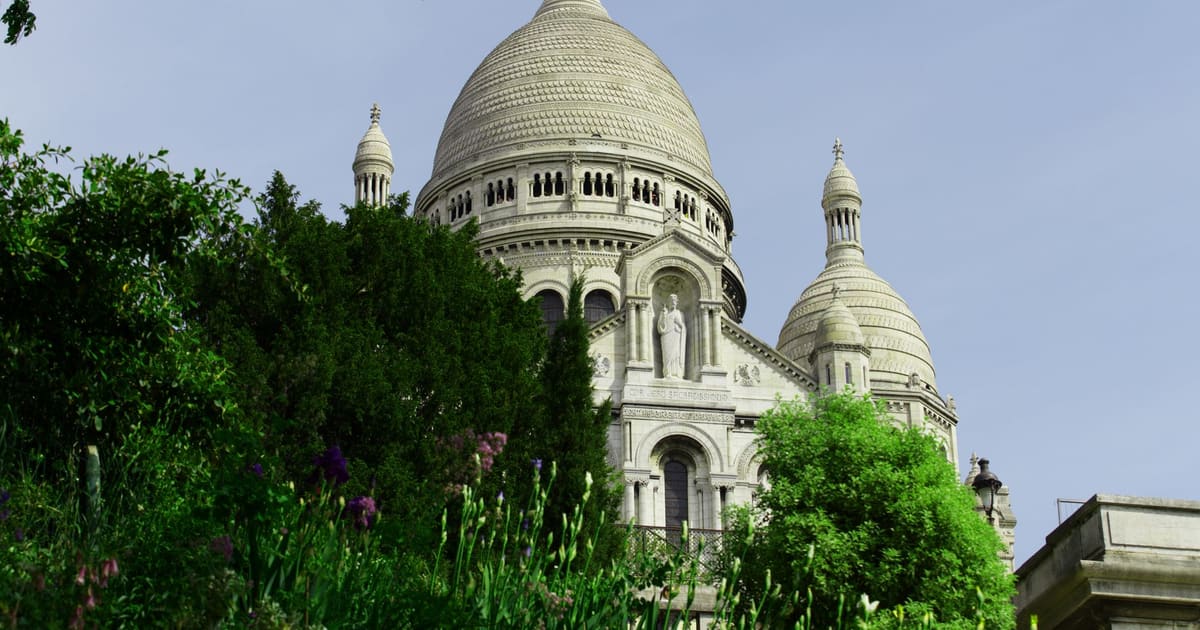
Montmartre was a village before it was part of Paris, and on its hilltop you can still feel it. Windmills, a vineyard, steep cobbled lanes and a little square where painters set up their easels all sit on the highest hill in the city, crowned by the white domes of Sacré-Cœur. A century and more ago, this was where poor artists came for cheap rents, cheap wine and each other's company, and Picasso, Renoir, Van Gogh and many more lived and worked on these slopes. This walk starts in Place des Abbesses, climbs past Picasso's old studio and the last windmills, crosses the top of the hill by the vineyard and Place du Tertre, then visits the basilica and goes down the terraced gardens below it. It is under two kilometers, but steep, and it is one of the most charming self-guided walking tours in Paris.
Before you set off
The walk itself takes about forty minutes, but give yourself two hours or so to wander, sit in a cafe and go inside the basilica. Montmartre is a hill, and some of the streets are very steep, with long flights of steps and uneven cobbles, so wear comfortable shoes with grip. Go early in the morning if you can, when the lanes are quiet, the light is soft and the painters are just setting up. By midday Place du Tertre and the front of Sacré-Cœur are packed. There is little shade on the steps and the upper square, so bring water in summer. Entry to the basilica is free, while the dome and the Montmartre Museum charge and set their own hours, so check before you go. Around the steps of Sacré-Cœur, people sometimes approach visitors offering string bracelets or petitions, then ask for money: a polite, firm no and walking on is enough. Keep an eye on your bag in the crowds, as you would anywhere busy.
Place des Abbesses and the Wall of Love
Start in Place des Abbesses, a small, lively square shaded by trees and ringed by cafes and bakeries. Look at the metro entrance in front of you, with its curling green ironwork, amber lamps and a glass roof shaped like a dragonfly's wings. It was designed by Hector Guimard at the start of the twentieth century, in the flowing Art Nouveau style, and it is one of only two of his entrances in Paris that still have their original glass canopy. It was moved here from another station in the 1970s. The station underneath is the deepest in Paris, and the long spiral stairs are painted with murals of the neighborhood. The square takes its name from the abbesses of the old Benedictine abbey that owned much of this hill until the French Revolution. Now step into the small garden next to the square and find the Wall of Love, a wall of dark blue tiles covered in white handwriting. It says "I love you" more than three hundred times in around two hundred and fifty languages. Look for the scattered red splashes, which represent the pieces of a broken heart. Then cross the square and climb the steep street heading north, up the hill, to a small sloping square, about three minutes.
Bateau-Lavoir
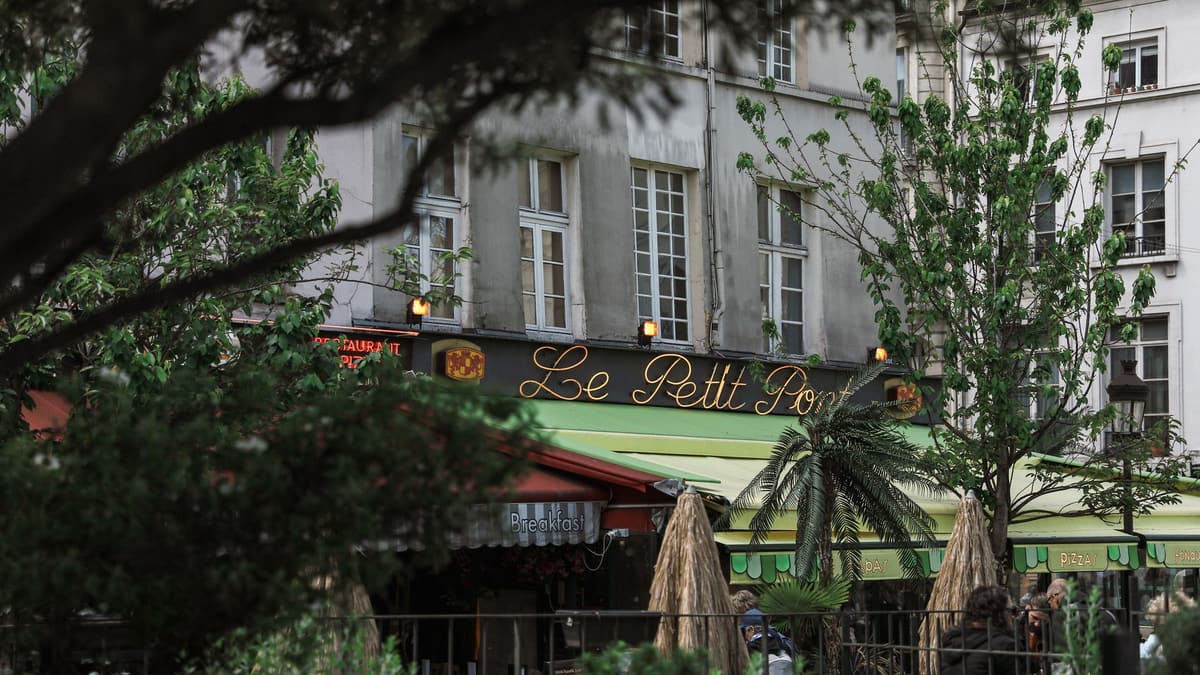 You have reached Place Émile-Goudeau, a quiet little square on the slope, with a green iron drinking fountain and a few benches under the trees. Look for the plain building at number 13, with a small display window on the square. That is the Bateau-Lavoir, and modern art was born behind those walls. The original building was a ramshackle wooden warren of studios, so flimsy that it creaked and swayed, and the poet Max Jacob named it after the laundry boats moored on the Seine. In the early 1900s a young Pablo Picasso lived and worked here, poor, cold and surrounded by friends, and it was here, in 1907, that he painted Les Demoiselles d'Avignon, the shocking, angular picture that opened the way to Cubism. Georges Braque visited often, the painters Juan Gris and Kees van Dongen lived here too, and poets and writers crowded into the studios at all hours. The old building burned down in 1970 and was rebuilt, and it still holds artists' studios today, which is why it is not open to visitors. Look in the window for photos and notes about its history. From here, take the lanes north and west up to Rue Lepic, then follow it as it climbs and curves to the windmill on the corner, about four minutes.
Moulin de la Galette
Look up at the corner and you will see a wooden windmill perched above a restaurant, its sails spread against the sky. Montmartre once had many windmills, grinding grain and pressing grapes for the village, and this is one of only two left on the hill. In the nineteenth century the family of millers who owned them, the Debrays, opened an open-air dance hall here, and the name Moulin de la Galette comes from the little flat loaves of bread they served. On Sundays, working Parisians climbed the hill to drink, eat and dance under the trees. In 1876 Pierre-Auguste Renoir painted the scene in his famous Bal du moulin de la Galette, all dappled sunlight, swirling couples and straw hats, and the canvas now hangs in the Musée d'Orsay. Van Gogh and Toulouse-Lautrec painted the windmills too. In fact, Van Gogh lived a few steps back down this very street, in an apartment he shared with his brother Theo, and painted views of the hill from his window. The second surviving windmill stands on private ground nearby, hidden behind walls and trees. From the windmill, walk north along Rue Girardon to a small square with a bust of the singer Dalida, then turn right along the lane to the pink house at the end, about five minutes.
The full tour continues in the app
- Distance
- 1.9 km
- Walking
- 30 min
- Steps
- ~2,600
- Narration
- 13 min
What's included
- All 7 stops, fully narrated
- Works offline once downloaded in the app
- Friends walk free one purchase covers everyone on your walk
Our tours are made to be meditative and immersive: you keep moving and simply listen. They're always better together, and the app plays the narration in sync, so you, your partner and your friends hear every stop at the same moment.
Clos Montmartre Vineyard
On the corner stands La Maison Rose, a little pink restaurant with green shutters, painted by Maurice Utrillo and photographed by just about everyone since.
The rest of this stop is in the full audio tour.
Place du Tertre
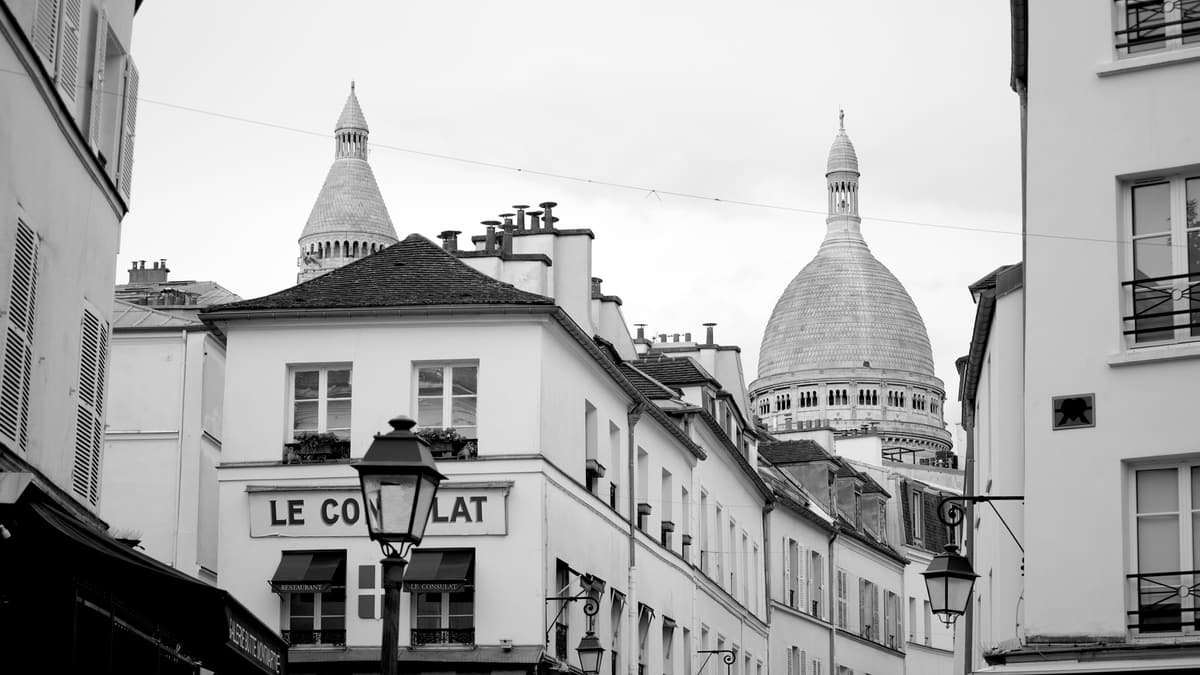
Here is the heart of the old village of Montmartre, a small square shaded by trees and packed, from morning to night, with easels.
The rest of this stop is in the full audio tour.
Sacré-Cœur Basilica
You are standing in front of the Basilica of Sacré-Cœur, the great white church that you can see from almost everywhere in Paris. Stand back from the entrance and look up at its domes, as white as wedding cake.
The rest of this stop is in the full audio tour.
Square Louise Michel
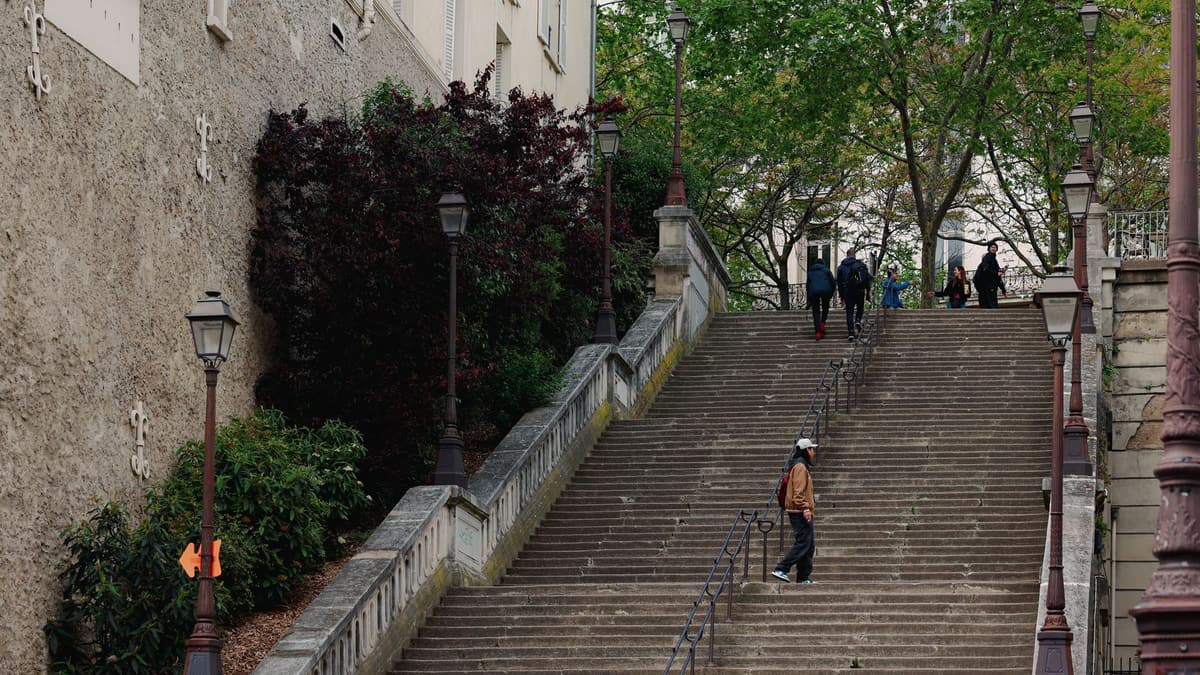
The walk ends in Square Louise Michel, the terraced gardens that spill down the hill below the basilica, with lawns, flower beds, fountains and stairs zigzagging between them.
The rest of this stop is in the full audio tour.
Do this walk with other people on the next scheduled tour.
About 1.9 km, roughly 30 minutes at an easy pace · 7 stops
Friends walk freeMore audio tours in Paris
$19.99Turning Points $16.99Turning Points
 $14.99Film & Fiction
 $17.99Games IRL
 $16.99Food & Tastings
 $16.99Film & Fiction
 $15.99Film & Fiction
 $16.99Film & Fiction
 $17.99Film & Fiction
 $16.99Film & Fiction
 $14.99Film & Fiction
 $8.99City Highlights
 $11.99City Highlights