
 $17.99Film & Fiction
Rome Walking Tour: Campo de' Fiori to Piazza del Popolo
Choose how you'll do this walk in our app

 Friends walk free
Every tour also runs as a scheduled group walk you can join in the app.
More audio tours in Rome
About 3.9 km, roughly 54 minutes at an easy pace.
- 1Campo de' Fiori
- 2Piazza Navona
- 3The Pantheon~€7 · optionalOptional entry ticket, not included
- 4Piazza ColonnaFull tour
- 5Trevi FountainFull tour
- 6The Spanish StepsFull tour
- 7Ara Pacis~€14Entry ticket, not includedFull tour
- 8Piazza del PopoloFull tour
Not included in the tour: ~€14 entry · ~€7 entry (optional)Average per person. Prices change, so check before you go.
This tour is narrated
Press play on the first 3 stops for a 30-second demo of the narration. In the app, the intro and those 3 stops play in full for free, each one chiming as you arrive. The whole narrated tour is yours for $9.99, a one-time purchase you keep for good.
Works with Garmin, Komoot, Strava, OS Maps and any GPX app.

This is the walk most people picture when they dream of Rome: fountains, domes, bells, and one great square after another. It starts among the market stalls of Campo de' Fiori and runs in one steady line north, through Piazza Navona, past the Pantheon and the Trevi Fountain, up to the Spanish Steps and over to the river, finishing at the old north gate in Piazza del Popolo. It is just under four kilometers on flat ground, and of all the self-guided walking tours in the city it is the one that shows you how emperors and popes, fifteen centuries apart, built the same few streets into a stage.
Before you set off
Plan on two and a half to three hours at a stroll, and a whole morning if you go inside the Pantheon and stop for coffee, which you should. The route is flat but almost entirely on cobblestones, the dark square sampietrini that are lovely to look at and hard on thin soles, so wear proper walking shoes. This is the busiest part of Rome, and the big sights are crowded from mid-morning on; starting early, around eight, lets you see the Trevi Fountain and the Spanish Steps with room to breathe, and the Campo market is already up and running by then. The Pantheon now has a small entry ticket, and the arrangements at the Trevi Fountain have changed in recent years as the city tries to manage the crowds, so check both before you go. Shade comes and goes in the narrow streets, and the big squares are fully exposed, so carry water in summer and refill at the free drinking fountains. Keep an eye on your bag in the crowds, especially around Trevi.
Campo de' Fiori
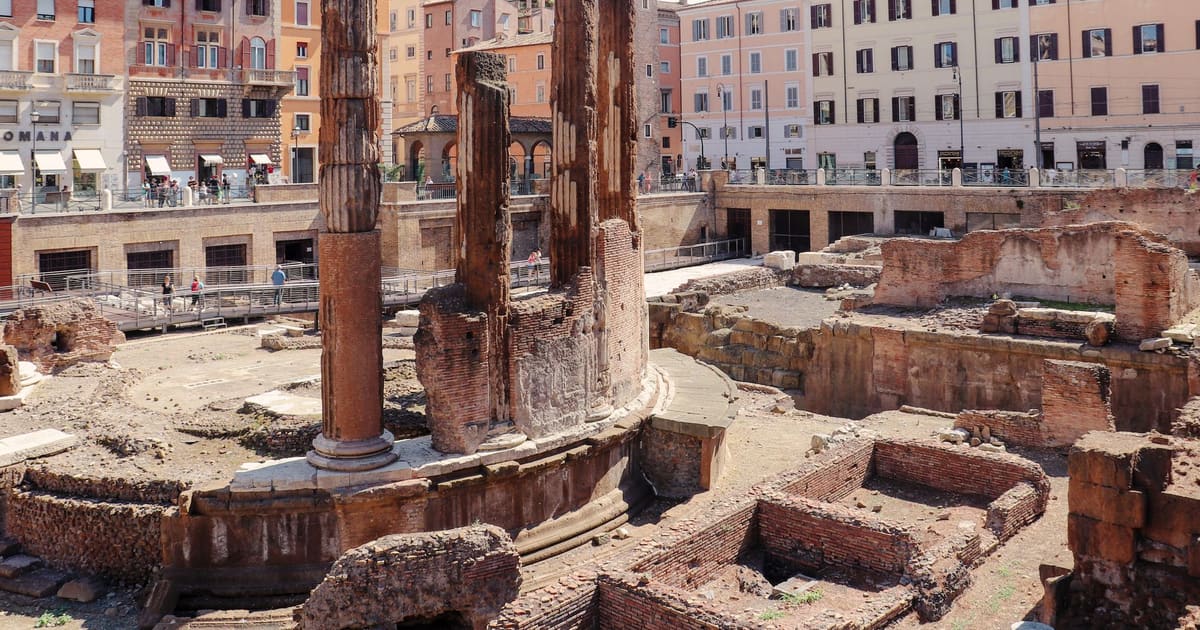
Stand in the middle of the square, by the dark hooded figure on the tall pedestal. Campo de' Fiori means the field of flowers, from the meadow that covered this spot in the Middle Ages, and since the 1800s it has been the market square of central Rome. Most mornings it is a riot of fruit, vegetables, flowers and dried pasta, and by night the same square fills with bars and noise. Unusually for Rome, there is no church on it. The statue gives the place its darker history. This is Giordano Bruno, a philosopher and former friar who argued, among other things, that the universe was infinite and full of other worlds like ours. He was burned alive on this spot as a heretic on 17 February 1600. The statue went up in 1889, when Rome had become the capital of a new, secular Italy, and its sculptor turned Bruno's face toward the Vatican on purpose. Every year on the anniversary, people still leave flowers at his feet. Look at the buildings just east of the square; their curved line follows the seating of the ancient Theater of Pompey, buried beneath them. To continue, cross the busy Corso Vittorio Emanuele to the north, follow the short lanes straight ahead, and in about five minutes you enter a long, narrow square.
Piazza Navona
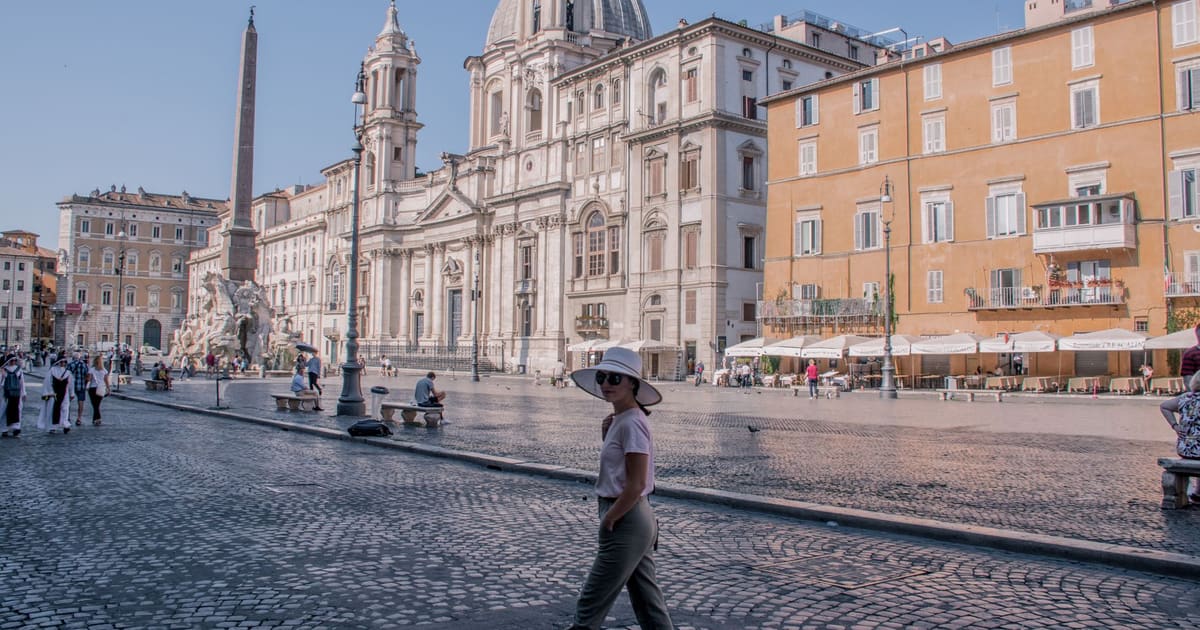
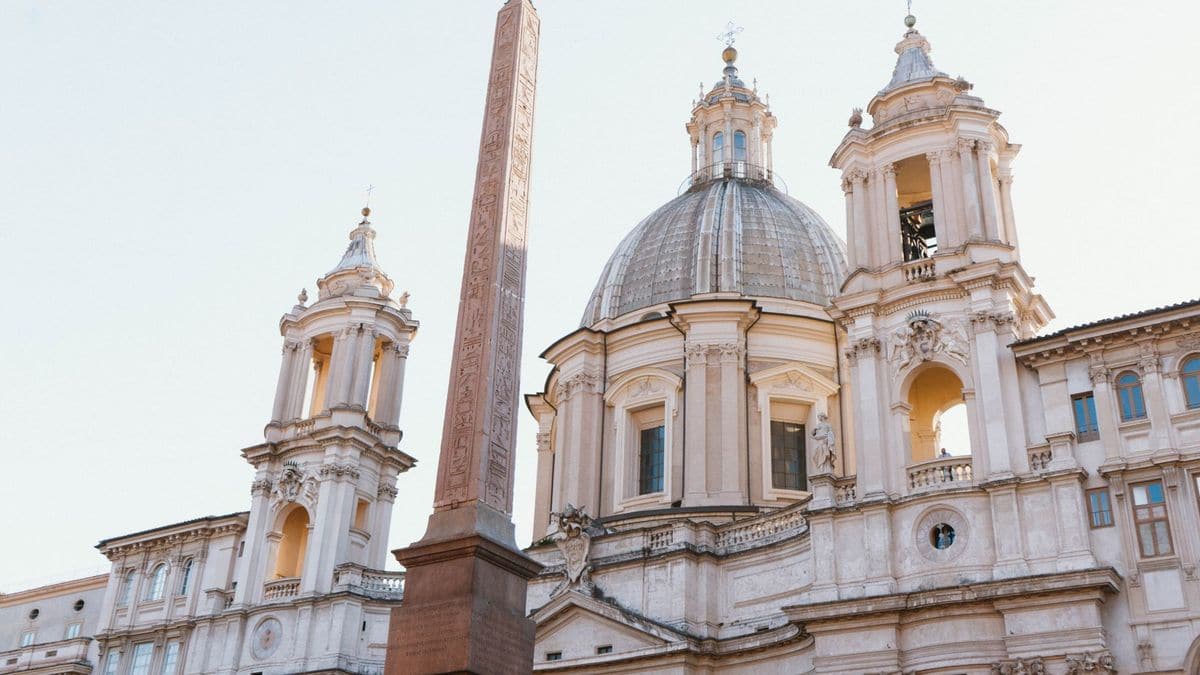
Notice the shape first. Piazza Navona is long and narrow with one rounded end because it is built on the outline of a stadium, raised by the emperor Domitian in the first century for athletic contests. The houses stand on top of the old seating, and the open square is the old track. At the north end, below street level, you can still see some of its foundations. The centerpiece is Bernini's Fountain of the Four Rivers, finished in 1651 for Pope Innocent X, whose family palace and church line the square. Four giant figures lounge on the rocks, one for each continent then known: the Nile, the Ganges, the Danube and the Río de la Plata. The Nile has his head covered, because nobody in Bernini's day knew where its source was. Guides love to tell you that he is shielding his eyes from the church facade opposite, designed by Bernini's great rival Borromini, but it is only a joke: the fountain was finished before the facade was begun. For two centuries the square had another trick. On hot August weekends the drains were blocked and the piazza flooded, and Romans splashed through it in carriages. To continue, leave by the narrow passage in the middle of the eastern side, cross Corso del Rinascimento, and follow the lanes east past the church of San Luigi dei Francesi, about five minutes.
The Pantheon
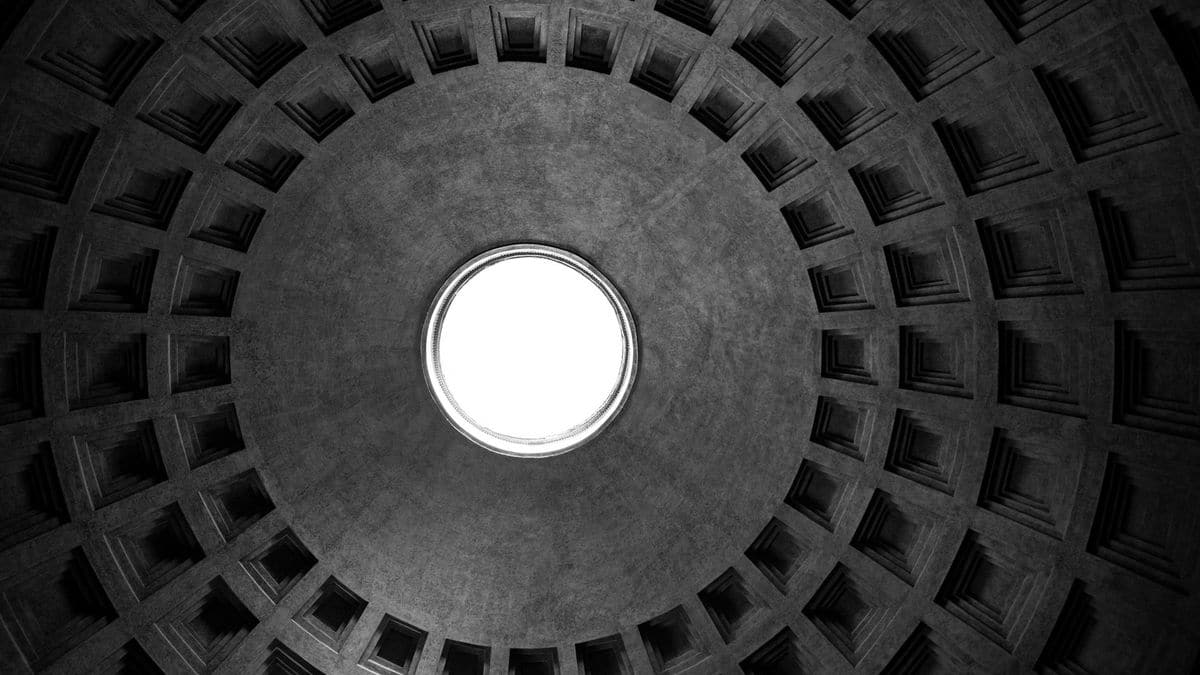
 You come out into the little square in front of the best-preserved building of ancient Rome. Walk up between the great granite columns of the porch and look up at the inscription. It says that Marcus Agrippa built this, but the building you see is a rebuild by the emperor Hadrian, nearly a century and a half later, who kindly left Agrippa's name on it. Step inside and stand in the middle. The dome is exactly as wide as the building is tall, so a perfect sphere would fit inside, and nearly two thousand years later it is still the largest dome of unreinforced concrete in the world. The Romans made the concrete lighter as they went up, mixing in volcanic stone near the top. In the center is the oculus, the open eye, the only window, through which a disc of sunlight moves across the walls during the day. When it rains, the rain falls straight in, and the marble floor slopes gently to small drain holes, which you can find if you look down. The building survived when so much else was stripped because it was given to the church in the seventh century. Raphael is buried here, and so are the first two kings of Italy. To continue, leave the square by the street on its eastern side, Via dei Pastini, and follow it to Piazza di Pietra, where eleven ancient columns of a temple to Hadrian are built into a later palace. Turn left there, and the next column rises ahead, about seven minutes in all.
The full tour continues in the app
- Distance
- 3.9 km
- Walking
- 54 min
- Steps
- ~5,400
- Narration
- 15 min
What's included
- All 8 stops, fully narrated
- Works offline once downloaded in the app
- Friends walk free one purchase covers everyone on your walk
Our tours are made to be meditative and immersive: you keep moving and simply listen. They're always better together, and the app plays the narration in sync, so you, your partner and your friends hear every stop at the same moment.
Piazza Colonna
The tall column in the middle of the square was raised to honor the emperor Marcus Aurelius, the philosopher emperor, after his death at the end of the second century.
The rest of this stop is in the full audio tour.
Trevi Fountain
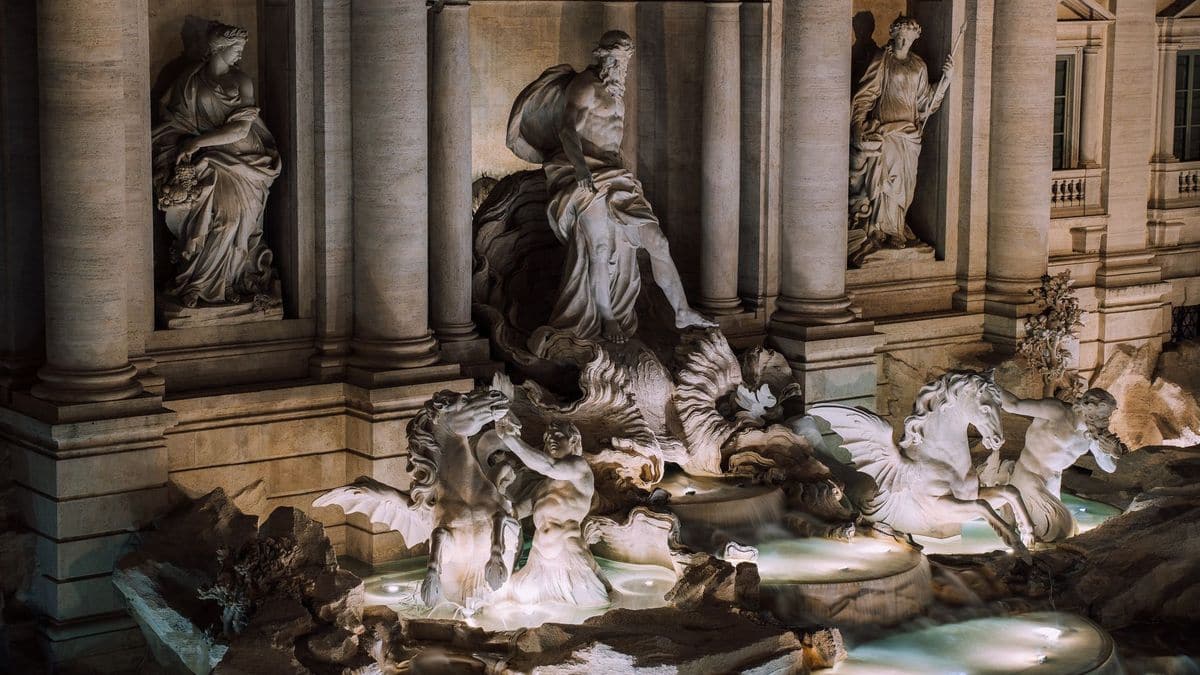
The lane opens and suddenly the whole of the little square is filled with water and stone.
The rest of this stop is in the full audio tour.
The Spanish Steps
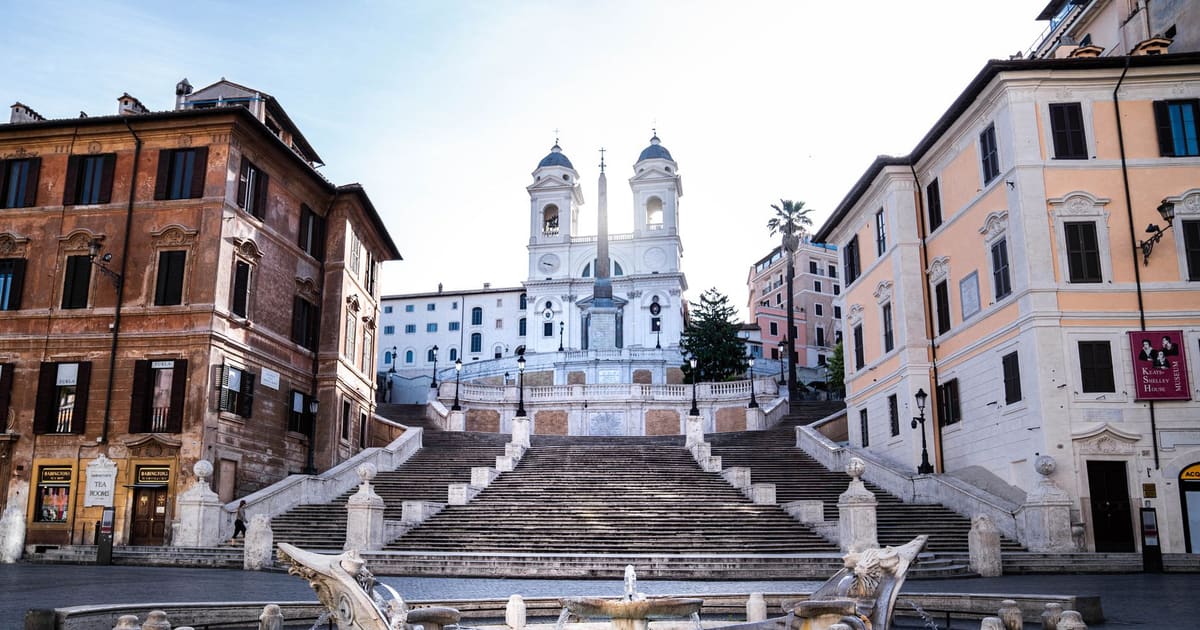
At the foot of the famous staircase, in the middle of Piazza di Spagna, a stone boat sits half sunk in a pool.
The rest of this stop is in the full audio tour.
Ara Pacis
Inside the glass and white stone pavilion by the river stands the Altar of Augustan Peace, voted by the Senate in 13 BC when Augustus came home from campaigns in Spain and Gaul, and dedicated four years later.
The rest of this stop is in the full audio tour.
Piazza del Popolo
You end in one of the great squares of Europe. For centuries this was the front door of Rome.
The rest of this stop is in the full audio tour.
Do this walk with other people on the next scheduled tour.
About 3.9 km, roughly 54 minutes at an easy pace · 8 stops
Friends walk freeMore audio tours in Rome
$17.99Film & Fiction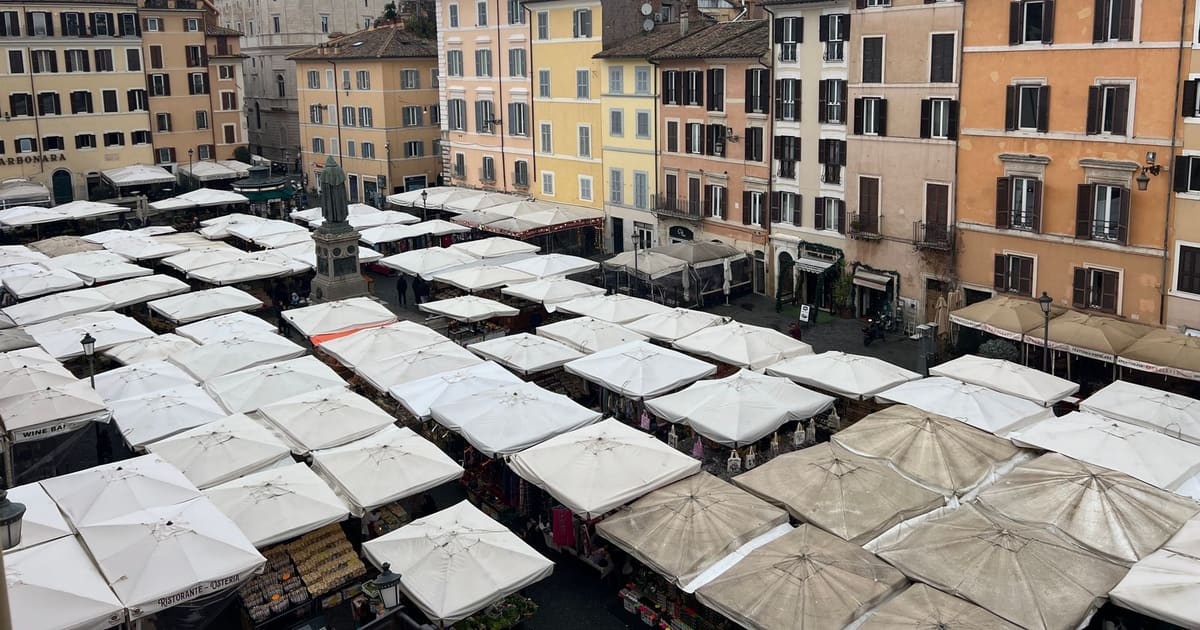 $14.99Food & Tastings
 $14.99Film & Fiction
 $15.99Film & Fiction
 $17.99Games IRL
 $14.99Turning Points
 $10.99City Highlights
 $8.99City Highlights