
 $17.99Film & Fiction
Ancient Rome Walking Tour: From the Capitol Down to the River
Choose how you'll do this walk in our app

 Friends walk free
Every tour also runs as a scheduled group walk you can join in the app.
More audio tours in Rome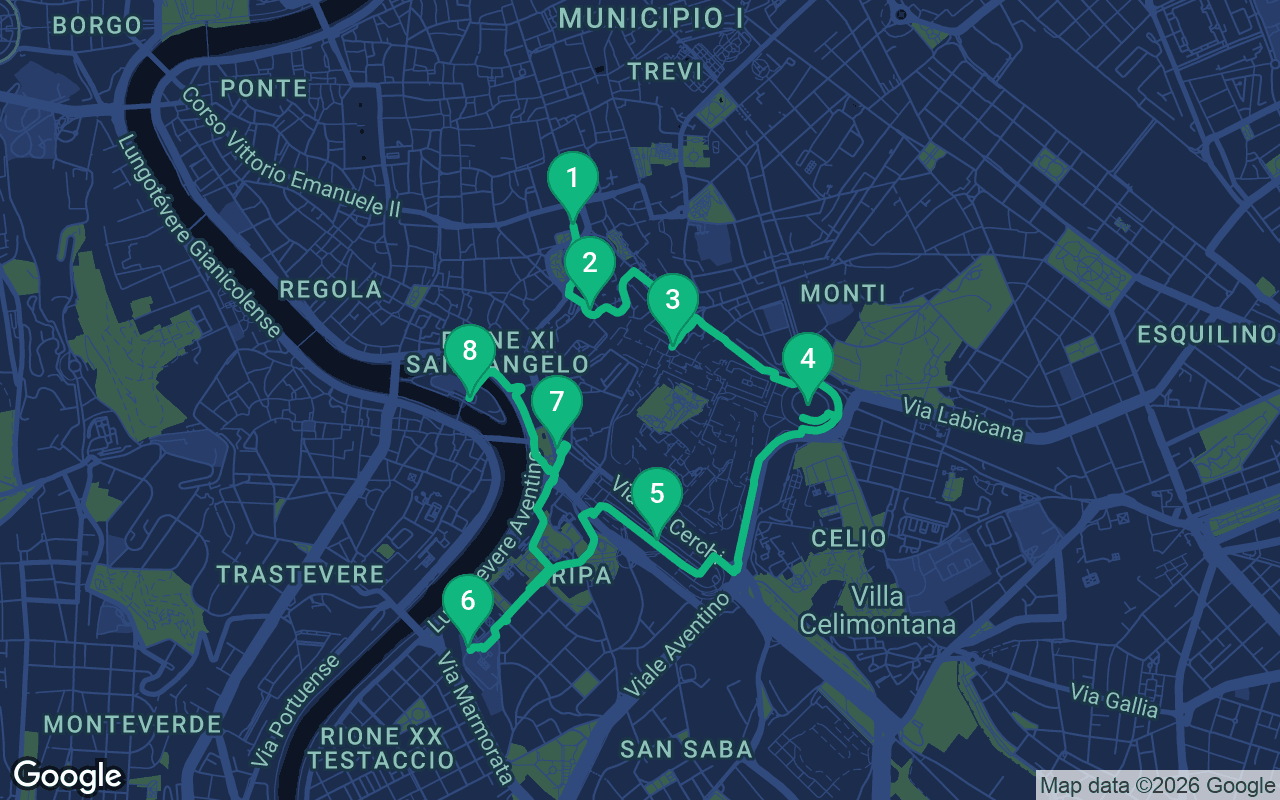
About 4.7 km, roughly 66 minutes at an easy pace.
- 1Piazza Venezia
- 2Capitoline Hill
- 3Roman Forum~€18Entry ticket, not included
- 4The ColosseumSame ticketCovered by the ticket for Roman ForumFull tour
- 5Circus MaximusFull tour
- 6Bocca della VeritaFull tour
- 7Tiber IslandFull tour
Not included in the tour: ~€18 entryAverage per person. Prices change, so check before you go.
This tour is narrated
Press play on the first 3 stops for a 30-second demo of the narration. In the app, the intro and those 3 stops play in full for free, each one chiming as you arrive. The whole narrated tour is yours for $10.99, a one-time purchase you keep for good.
Works with Garmin, Komoot, Strava, OS Maps and any GPX app.
This walk follows Rome back to where it started. It begins in the traffic of Piazza Venezia, climbs the small hill where the ancient city kept its gods, drops into the valley of the Forum, circles the Colosseum, runs the length of the old chariot track and ends on the island in the Tiber where the city first crossed the river. It is about four kilometers, mostly on foot paths and pavement, and it is one of the most rewarding self-guided walking tours you can do in Rome, because the ruins only make sense once you have felt the distances between them with your own legs.
Before you set off
Allow three hours at an easy stroll, and a full day if you plan to go inside the Forum, the Palatine and the Colosseum, which share a combined ticket. Those sites have timed entry and the slots sell out in busy months, so book ahead and check the current rules before you go. The ground is a mix of smooth paving, worn Roman stones and gravel paths, with one short climb up the Capitoline Hill near the start, so wear shoes with a good grip. There is very little shade among the ruins, and Rome in summer is hot by mid-morning, so start early, wear a hat and carry water. The city's little drinking fountains, the nasoni, run cold and free all day, and you will pass several. Traffic around Piazza Venezia and the Colosseum is fast and loud, so cross at the lights and keep your eyes up. If the Forum is closed or you would rather not go in, the route works from the outside too: the terraces on the Capitoline Hill and the pavement along Via dei Fori Imperiali give you fine views down into the ruins.
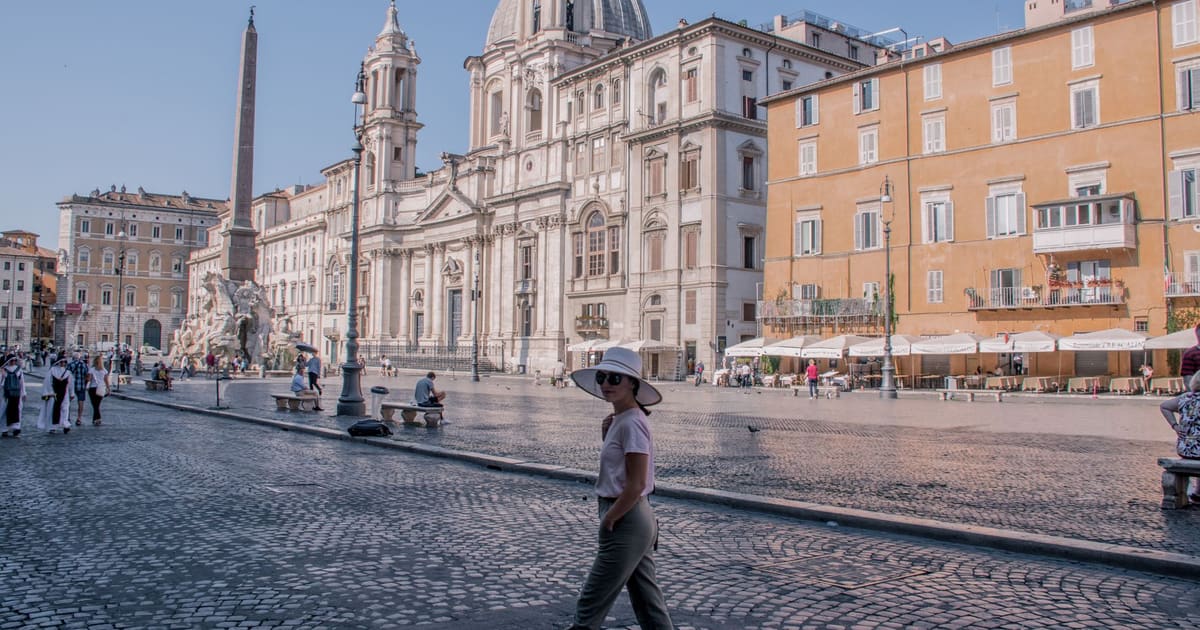
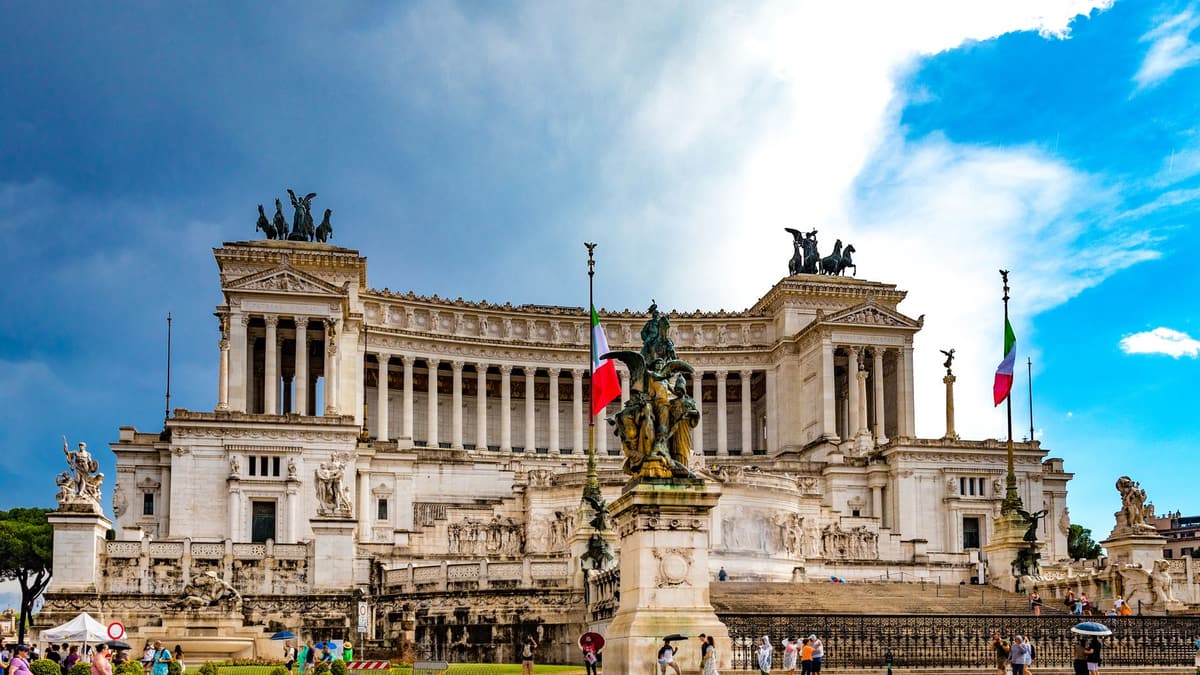
Piazza Venezia
You are standing in the busiest crossroads in Rome, and the building in front of you is impossible to ignore. That enormous white marble mountain of columns, stairs and bronze chariots is the Vittoriano, the monument to Victor Emmanuel II, the first king of a united Italy. It was begun in the 1880s and took decades to finish, and Romans have never quite forgiven it for its size or its glaring white stone, which is why they call it the wedding cake or the typewriter. Halfway up, guarded by soldiers, lies the Tomb of the Unknown Soldier. On your right, as you face the monument, stands the older and darker Palazzo Venezia, a Renaissance palace whose small central balcony is where Mussolini made his speeches to the crowds below. Look past the left side of the monument and you will see a tall column carved with a spiral of tiny soldiers. That is Trajan's Column, raised in the second century, and it is the first real sign of the ancient city under your feet. Everything modern here sits on top of something older. To start the climb, walk along the right side of the monument, keeping it on your left, and in about three minutes you reach the foot of a broad, gently sloping staircase.
Capitoline Hill
 Climb the shallow ramp of steps, the Cordonata, and you arrive in a square designed by Michelangelo. In the 1530s the pope asked him to tidy up the hill, which had become a scruffy, muddy hilltop, before a visit by the emperor Charles V. Michelangelo turned it to face the new city rather than the ancient Forum behind it, framed it with three palaces, and drew the star-shaped pattern in the pavement that you are standing on. The bronze horseman in the middle is Marcus Aurelius, or rather a copy of him; the original is kept indoors in the museum on your right. It is the only bronze equestrian statue of a Roman emperor to come through the Middle Ages intact, and it survived because people believed it showed Constantine, the first Christian emperor, so nobody melted it down. In ancient times this was the holiest hill in Rome, crowned by the great temple of Jupiter. Legend says that when the Gauls crept up the cliff by night, the sacred geese kept here began honking and woke the defenders just in time. Now walk around the left side of the central palace, the city hall, to the terrace behind it, and the whole Forum opens up below you. Then follow the lane and steps down that side of the hill, past the old Mamertine prison, and in about eight minutes you reach the Forum entrance on Via dei Fori Imperiali.
Roman Forum
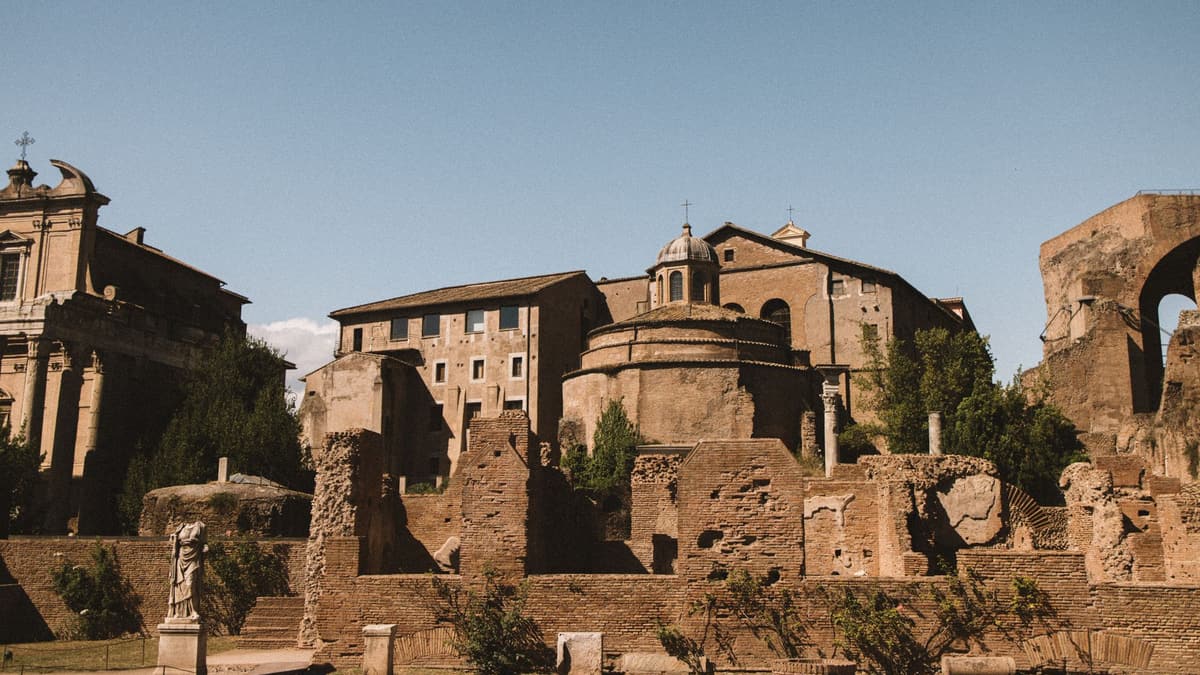
This valley was a marsh once, a soggy low point between hills that the early Romans drained with a great sewer, the Cloaca Maxima, which still runs beneath your feet. Once it was dry it became the center of everything: markets, law courts, temples, speeches, triumphs and funerals. Find the paved road running through the middle. That is the Sacred Way, along which victorious generals paraded their captives and their loot. Look for the brick building with the plain square front; that is the Senate house, and it is still standing because it was turned into a church. Near it, in the middle of the valley, are the remains of a small temple built on the spot where Julius Caesar's body was burned after his murder in 44 BC. People still leave flowers there. After the empire fell, the Forum silted up so deeply that for centuries it was a cow pasture known as the Campo Vaccino, with columns poking out of the grass. At the far, eastern end stands the Arch of Titus, and on the inside of its passage you can see a carved procession carrying a great seven-branched candlestick, taken from the Temple in Jerusalem in AD 70. Walk out under that arch and follow the slope down; the Colosseum fills your view, only five minutes away.
The full tour continues in the app
- Distance
- 4.7 km
- Walking
- 66 min
- Steps
- ~6,500
- Narration
- 13 min
What's included
- All 7 stops, fully narrated
- Works offline once downloaded in the app
- Friends walk free one purchase covers everyone on your walk
Our tours are made to be meditative and immersive: you keep moving and simply listen. They're always better together, and the app plays the narration in sync, so you, your partner and your friends hear every stop at the same moment.
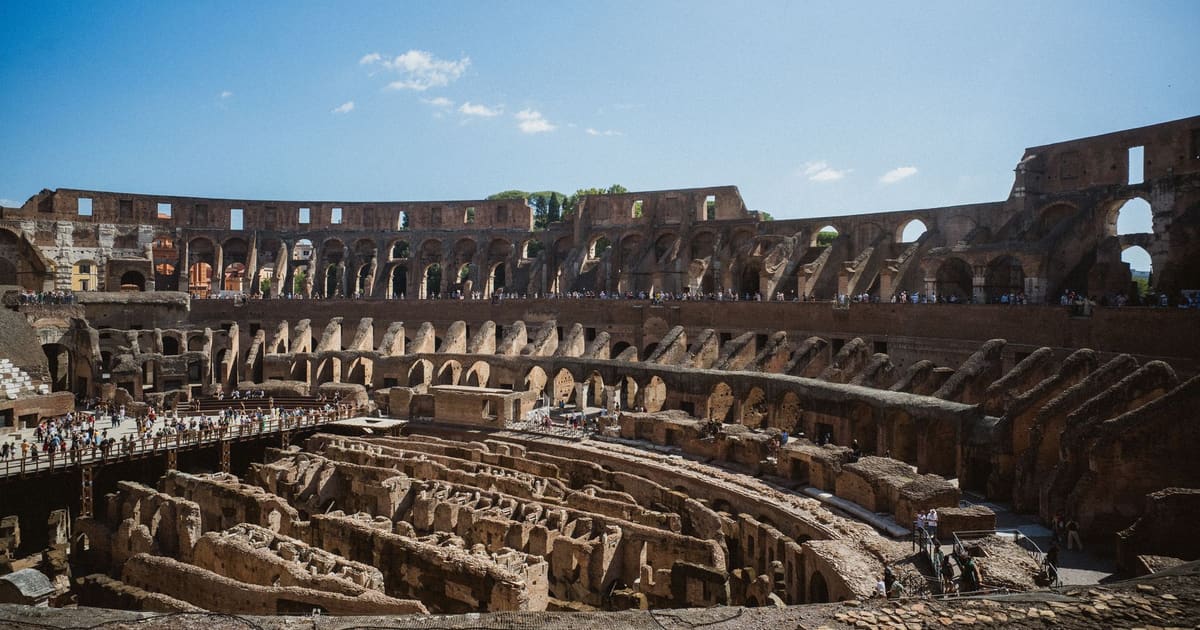
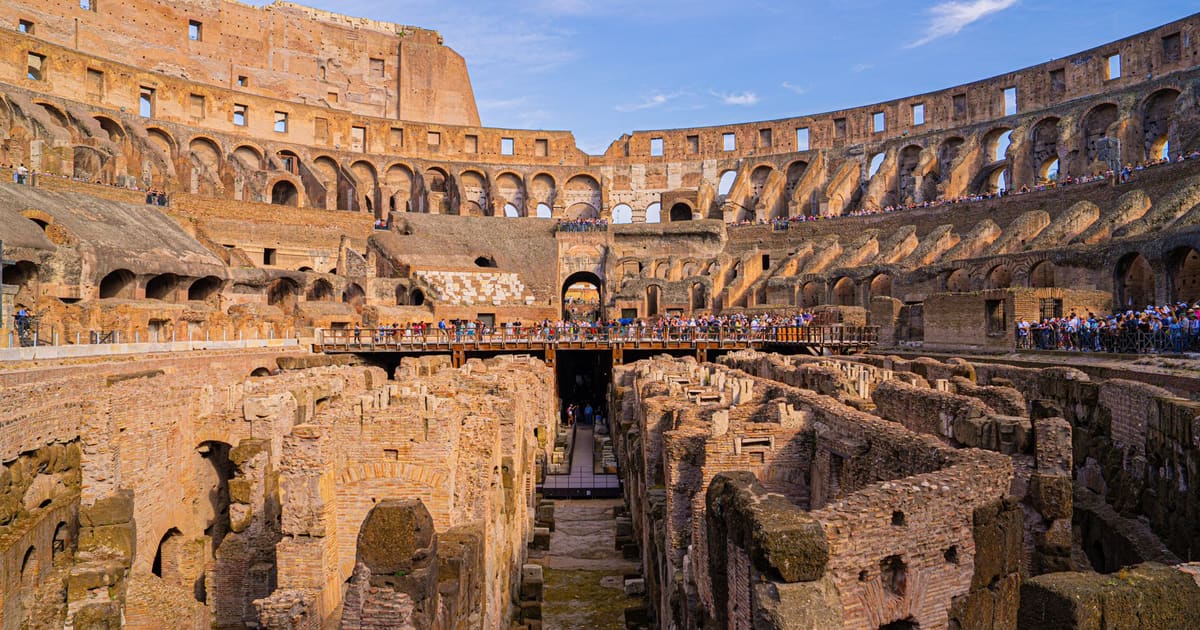
The Colosseum
Stand back from it first, across the road, and let the size settle in. This is the Flavian Amphitheater, opened in AD 80 by the emperor Titus with a hundred days of games.
The rest of this stop is in the full audio tour.
Circus Maximus
This long grassy hollow was the biggest stadium Rome ever built. Chariots raced around a central barrier that ran down the middle of the valley, and ancient writers put the crowd at well over a hundred thousand, far more than the Colosseum could hold.
The rest of this stop is in the full audio tour.
Bocca della Verita
In the porch of the church of Santa Maria in Cosmedin, behind a railing, hangs a great round marble face with an open mouth. This is the Mouth of Truth.
The rest of this stop is in the full audio tour.
Tiber Island
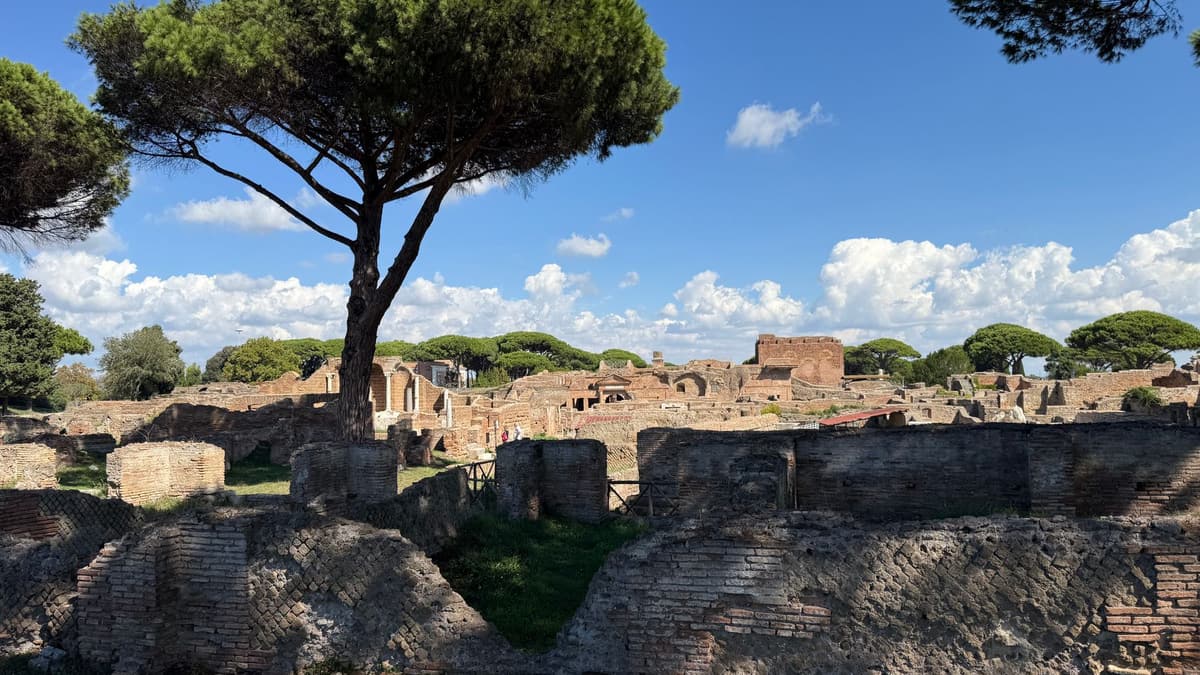
Cross onto the island by the Ponte Fabricio, and look down at the stones under your feet.
The rest of this stop is in the full audio tour.
Do this walk with other people on the next scheduled tour.
About 4.7 km, roughly 66 minutes at an easy pace · 7 stops
Friends walk freeMore audio tours in Rome
$17.99Film & Fiction $14.99Food & Tastings
 $14.99Film & Fiction
 $15.99Film & Fiction
 $17.99Games IRL
 $14.99Turning Points
 $8.99City Highlights
 $9.99City Highlights