October 2, 2026 · 6 min read
Geo Guessing Tips to Win More Rounds
My best Geo Guessing tips: read the photo before the map, spend the weekly hint on the right round, and post photos people love to guess.
657

September 25, 2026 · 8 min read
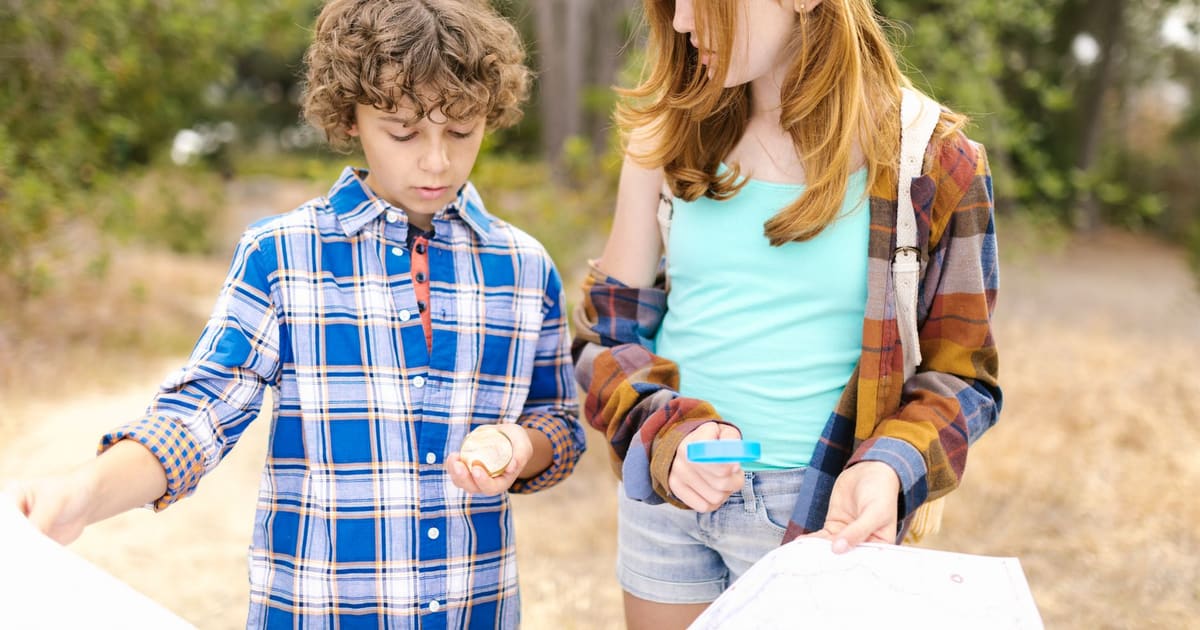
Kids who moan about a twenty-minute walk will happily walk an hour if there's a treasure at the end of it. A treasure hunt walk for kids takes about half an hour to set up, costs next to nothing, and turns your own neighbourhood into a map full of secrets. The trick is writing clues that fit the child's age and setting boundaries before anyone starts running. Here's how I'd set one up, from the first clue to the prize. It's one of the family games in our walking games guide, and the one that gets the most excited faces.
You plan a route with five to eight stops. At each stop there's a clue, and the clue leads to the next stop. The last clue leads to the treasure. The kids walk the route solving the clues, and you walk with them.
There are two ways to deliver the clues. You can hide them in advance, which feels most like a real treasure hunt but means walking the route twice and hoping nobody moves your clue. Or you can carry them with you in numbered envelopes and hand the next one over when the kids reach the right spot. For a public street, I prefer the second. Nothing gets lost, nothing gets thrown away, and you can adjust on the fly if a clue is too hard.
The clue is where the game lives, and the right clue depends on who's reading it.
Ages 3 to 5: picture clues. They can't read yet, so draw it or print a photo. A picture of the postbox on the corner. A drawing of a tree with a bench under it. They look at the picture, find the real thing, and get the next one. Keep the stops close together, one or two minutes apart, so they never lose interest.
Ages 6 to 8: simple riddles. Short rhymes work well. "I'm red and tall, and I eat letters, that's all" for a postbox. "Where the ducks all go to float, you'll find your clue beside a boat" for a pond. Read them out loud together if reading is still slow going.
Ages 9 to 12: real puzzles. Now you can be sneaky. Count-and-walk clues: "Count the houses with blue doors on this street. That's how many lampposts to walk past." Code clues: a simple letter swap where A=1, B=2. Observation clues: "Find the house number that's the year Grandma was born." These kids want to feel clever, so make them work for it.
Mixed ages: give each clue two versions, a picture for the little one and a riddle for the older one. Let the older child read it out and the younger one spot the place. They end up working as a team, which is the dream.
On a street, safety comes before everything else. A few rules make the whole thing calm.
For a group of kids, bring one adult per three or four children. More eyes means more fun and less shouting.
The treasure doesn't need to be big. It needs to feel like treasure. A few ideas that work better than a bag of sweets:
Rain. Put on the boots and do it anyway, with clues in sealed plastic bags. Puddle clues are fun ("Jump in the biggest puddle by the green gate"). If it's truly miserable, play the indoor version in the house and garden, then save the street route for the next dry day.
Photo hunt. Instead of a final treasure, give each child a list of eight things to photograph: a cat in a window, a red door, a dog, something shaped like a heart. The photos are the treasure. Great for older kids who've outgrown toy prizes.
Map hunt. Draw a rough map of the neighbourhood with an X on it. No clues, just the map. Kids work out where the X is, which teaches them to read a map without a lesson.
Two teams. Two different routes that end at the same treasure. First team there gets first pick from the box.
Clues that are too hard. A stuck child is a bored child. If they're stuck for more than a minute, give a hint. The goal is the feeling of solving, not the puzzle itself.
Too many stops. Eight is plenty for most kids. After that, attention drops. Fewer, better clues beat a long list.
A route that's too long. For young kids, keep the total walk under half an hour. For older ones, an hour is fine if the clues keep coming.
Treasure that's an anticlimax. Wrap it, hide it, make the last clue dramatic. The final reveal is the moment they'll remember.
A treasure hunt works well as a monthly family ritual, with a different route and a different child in charge of the clues each time. It gets everyone walking without anyone noticing it's exercise.
If you'd like other families to join, a scheduled walk makes it easy to plan: Walk With Me lets you schedule a walk, add a route with up to five stops, and keep it to friends only. Five stops is a nice length for a family hunt, too. Walk With Me is free on iOS and Android, so pick a Saturday and start writing clues.
October 2, 2026 · 6 min read
My best Geo Guessing tips: read the photo before the map, spend the weekly hint on the right round, and post photos people love to guess.
October 2, 2026 · 7 min read
GPS Doodle is coming to Walk With Me. My tips for a higher match score: choosing the shape and the streets, sizing it right and walking every corner.

October 2, 2026 · 7 min read
Mystery Destination is coming to Walk With Me. My tips for solving it faster: reading the compass, trusting the warmth bands and choosing where to start.